
Reviews
High-Quality filter Allowing for Control in Uncontrollable Lighting Circumstances.
I’ve been a fan of K&F Filters for some time now, and have come to appreciate the consistency and the quality of the brand. The majority of my lenses live their lives with K&F UV protective filters on their front element.
Like many others, as the caliber of mobile phone imagery and videography have improved to levels of near professional quality, I’ve begun to concentrate more energy into taking advantage of those attributes, not to mention the portability.
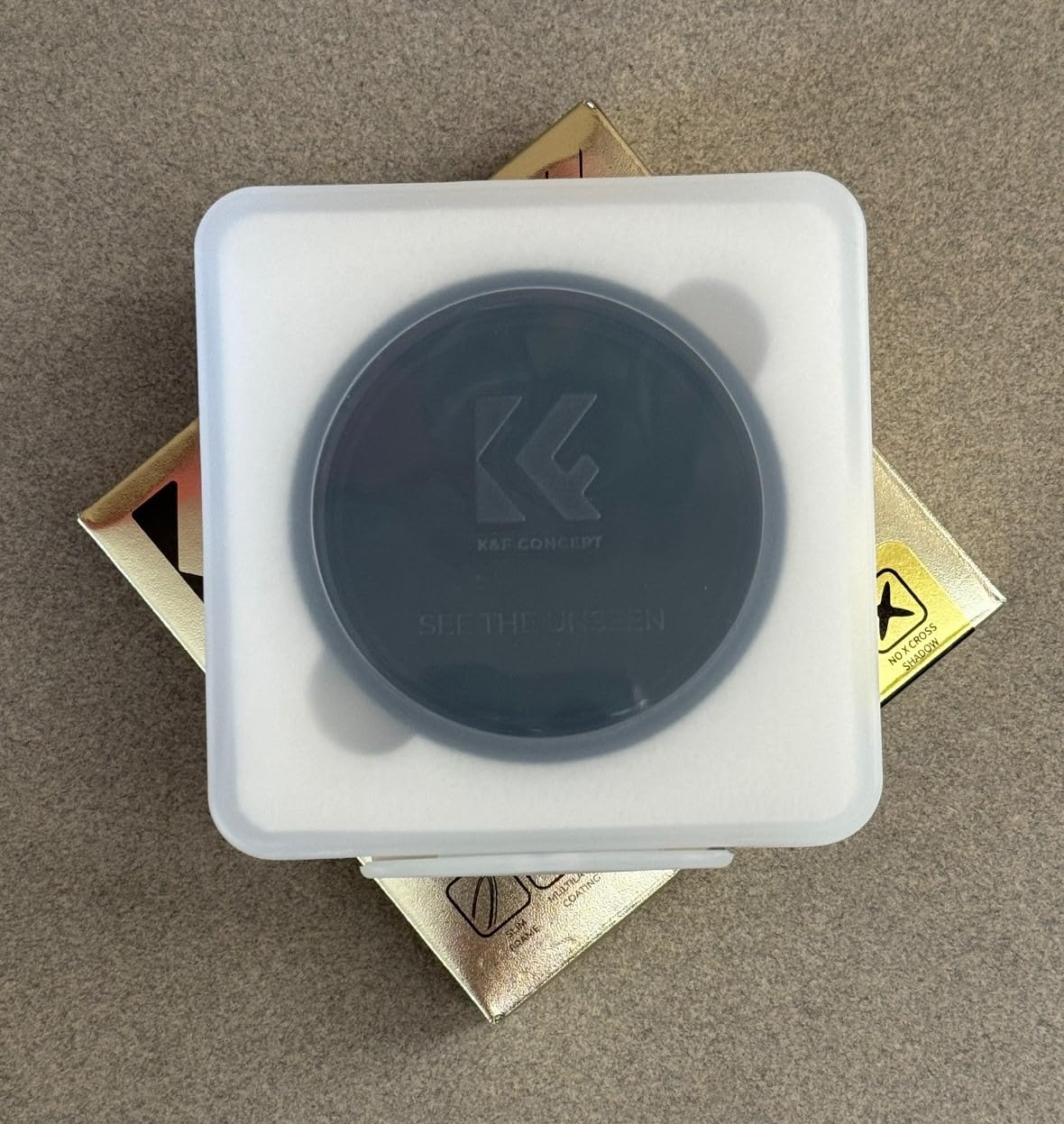
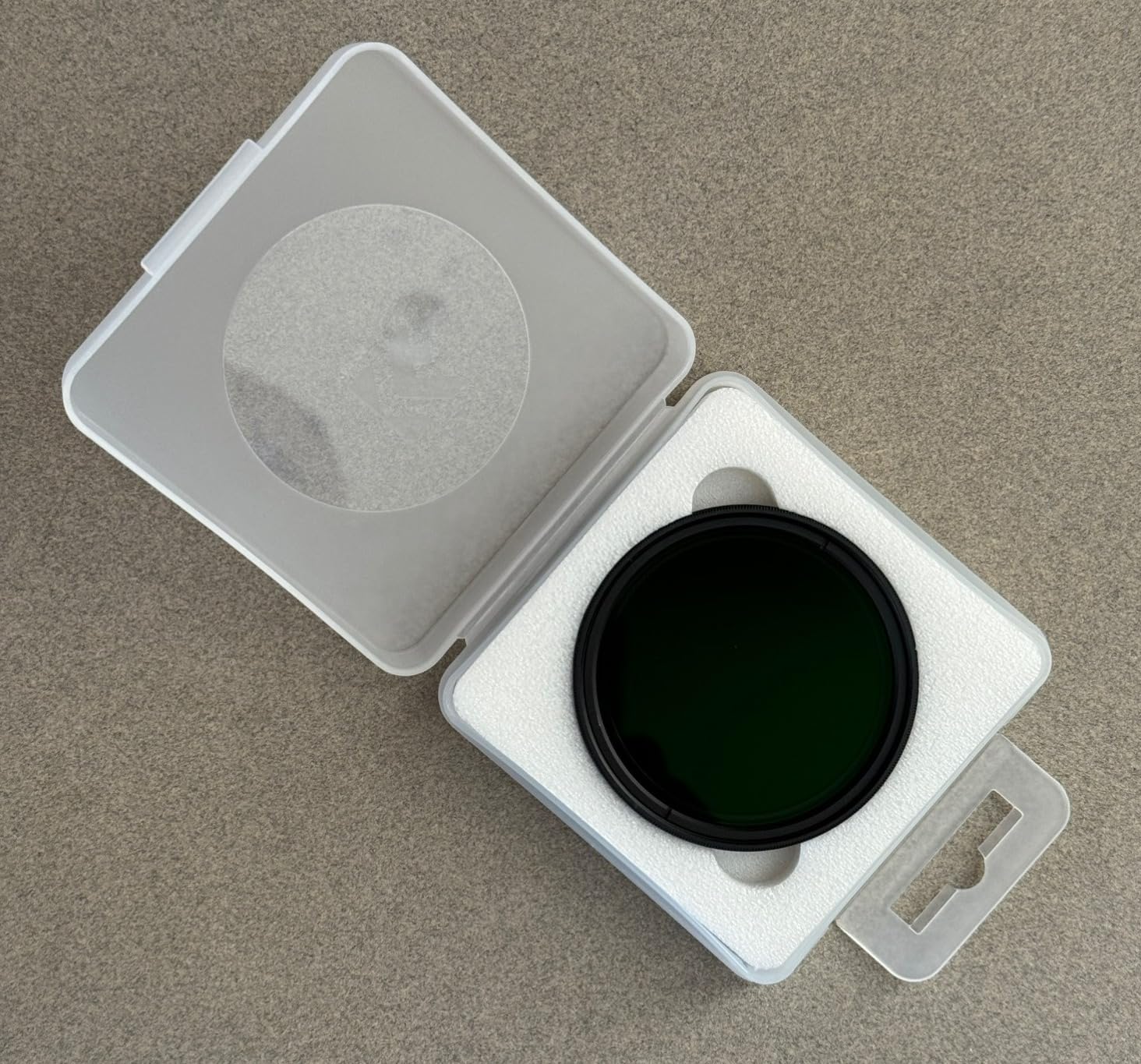
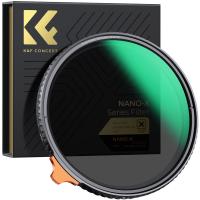
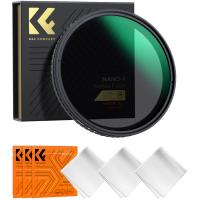
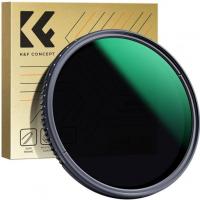
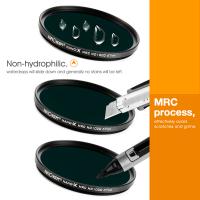
In hand, the K&F Concepts Variable ND2-32 filter does give the impression of quality. In fact, I own the same K&F variable ND filter in a larger size, 67mm. All modern quality optical glass is coated to reduce reflections with K&F following that convention; the 24 multi-layers of anti-reflection coating the seller asserts are appealing and evident to behold.
A variable ND filter works in a similar manner to a CPL, that is, there are two-rings, one that attaches it to a lens and the other that is turned to control the degree of transmission from more or less light, effectively allowing control of exposure. With that in mind, the K&F filter has a comfortable amount of thickness along with knurled edges on one of the rings that allows for ‘sure-footed,’ precise control while being rotated. K&F has not skimped on material or fabrication.
A ND filter, whether variable or not, is used to reduce the amount of light reaching a light sensitive material. In videography, it is generally to follow the convention of a low ISO and a low shutter speed. In still photography, to allow for the use of a wider aperture in bright light situations. In either case, the benefit of the K&F Concepts variable ND filter is that the transitions between minimum and maximum light reduction are not stepped, but infinitely variable between its 2 - 5 stop range. In other words, one can set their camera to the desired settings, then rotate the light reducing transition ring to achieve the desired exposure. Also, adding a second, fixed ND filter to the lens, for example an ND8, effectively increases the K&F variable ND from its 2 – 5 stop range, to 6 – 10 stops, a range of needed light reduction not uncommon when shooting video in bright sunlight.
There are two conventions for stating the amount of ND a filter provides, Optical Density Number, stated in thirds, with each third being a stop of density, for example .3, .6., .9, etc would be 1, 2 and 3 stops. The other is Filter Factor, the convention used by K&F. The Filter Factor rating is based on the actual amount of light reduction between stops, and is related to the inverse square law of light transmittance. Simply put, for each doubling of the FF number, there is a reduction of one stop of light. So, in the case of the K&F Concept ND2 – 32, you have 0 – 2 = 1 stop, 2 – 4 = 2 stops, 4 – 8 = 3 stops, 8 – 16 = 4 stops and 16 – 32 = 5 stops. And so on.
The K&F Concept Variable ND2 - 32 Filter comes from a trusted manufacturer, is high quality in both fabrication and materials, and serves very well the need for which it's designed. That is, by facilitating the means by which the standard video convention of keeping shutter speed and ISO low, can be followed. It does this by precisely reducing the amount of light in brightly lit scenarios. In other words, it allows some control over otherwise uncontrollable circumstances.
Like many others, as the caliber of mobile phone imagery and videography have improved to levels of near professional quality, I’ve begun to concentrate more energy into taking advantage of those attributes, not to mention the portability.
In hand, the K&F Concepts Variable ND2-32 filter does give the impression of quality. In fact, I own the same K&F variable ND filter in a larger size, 67mm. All modern quality optical glass is coated to reduce reflections with K&F following that convention; the 24 multi-layers of anti-reflection coating the seller asserts are appealing and evident to behold.
A variable ND filter works in a similar manner to a CPL, that is, there are two-rings, one that attaches it to a lens and the other that is turned to control the degree of transmission from more or less light, effectively allowing control of exposure. With that in mind, the K&F filter has a comfortable amount of thickness along with knurled edges on one of the rings that allows for ‘sure-footed,’ precise control while being rotated. K&F has not skimped on material or fabrication.
A ND filter, whether variable or not, is used to reduce the amount of light reaching a light sensitive material. In videography, it is generally to follow the convention of a low ISO and a low shutter speed. In still photography, to allow for the use of a wider aperture in bright light situations. In either case, the benefit of the K&F Concepts variable ND filter is that the transitions between minimum and maximum light reduction are not stepped, but infinitely variable between its 2 - 5 stop range. In other words, one can set their camera to the desired settings, then rotate the light reducing transition ring to achieve the desired exposure. Also, adding a second, fixed ND filter to the lens, for example an ND8, effectively increases the K&F variable ND from its 2 – 5 stop range, to 6 – 10 stops, a range of needed light reduction not uncommon when shooting video in bright sunlight.
There are two conventions for stating the amount of ND a filter provides, Optical Density Number, stated in thirds, with each third being a stop of density, for example .3, .6., .9, etc would be 1, 2 and 3 stops. The other is Filter Factor, the convention used by K&F. The Filter Factor rating is based on the actual amount of light reduction between stops, and is related to the inverse square law of light transmittance. Simply put, for each doubling of the FF number, there is a reduction of one stop of light. So, in the case of the K&F Concept ND2 – 32, you have 0 – 2 = 1 stop, 2 – 4 = 2 stops, 4 – 8 = 3 stops, 8 – 16 = 4 stops and 16 – 32 = 5 stops. And so on.
The K&F Concept Variable ND2 - 32 Filter comes from a trusted manufacturer, is high quality in both fabrication and materials, and serves very well the need for which it's designed. That is, by facilitating the means by which the standard video convention of keeping shutter speed and ISO low, can be followed. It does this by precisely reducing the amount of light in brightly lit scenarios. In other words, it allows some control over otherwise uncontrollable circumstances.

03/06/2026
Related products
NEW
Arrival
Products You May Like
$35.99 $17.99
Related articles



Blog You May Like


Popular products
Related searches
High Quality Action Camera
High Quality Digital Microscope
High Quality Compact Binoculars
High Quality Usb Video Camera
Headphones With High Bass Quality
Best Smartphone With High Quality Camera
Lens Filter For Hps Lighting
Red Light Filter Lens For Lighting
Lighting Gear For Photography
Lighting Stands For Photography
Related Scenes
Best High Quality Digital Camera
Best High Resolution Security Camera System
Best Camera For In Home Security
Best Camera For Recording In Car
Best In House Camera
Best Lens Filter For Landscape
Best Polarizing Filter For Canon
Best Nd Filter For Photography
Best Camera For Video Quality
Best Uv Filter For Camera