kfconcept

KENTFAITH
K&F Concept    Blog >

Enjoy Your Selected Digital Life

Recently Viewed
  • Recently Viewed
  • Recently Viewed list is empty.

Compare (0) 0
  • Compare
  • You have not chosen any products to compare.

  • Compare
Currency: USD
  • Currency
Shop by Scene Shop by Rank

Log Into Your Account

Account

Order History

Wish List

Login

Forgotten Password?

or connect with

Register Account

Already have an Account?Log In

  • Shopping Cart
  • Your shopping cart is empty!

  • Register/Login to purchase, earn points
  • Favorite
  • Your wish list is empty.

  • Register/Login to like, earn points
  • Activities
  • Guide
    • Filter Guide
    • Lens Adapter
    • Product Review
  • News & Reviews
    • Camera Reviews
    • Sample Gallery
    • News
  • Tutorials
    • Solar eclipse photography
    • Photography Basics
    • Landscape Photography
  • Inspiration
    • Travel
    • Travel Stories
  • Home
  • Blog
  • What Lenses Are In A Microscope?

What Lenses Are In A Microscope?

Kentfaith 2026-06-06 14:07:20 0 Comments

If you look through a typical classroom or lab microscope, you are not looking through just one lens. A compound light microscope uses several lenses working together to make a tiny specimen appear larger, sharper, and brighter.

The main lenses in a microscope are:

  • Eyepiece lens, also called the ocular lens
  • Objective lenses
  • Condenser lens
  • Sometimes additional lenses inside the illumination system or camera attachment

The two lenses most people notice first are the eyepiece and the objectives. Those are the ones directly responsible for the magnified image you see.

The eyepiece lens
what lenses are in a microscope 1

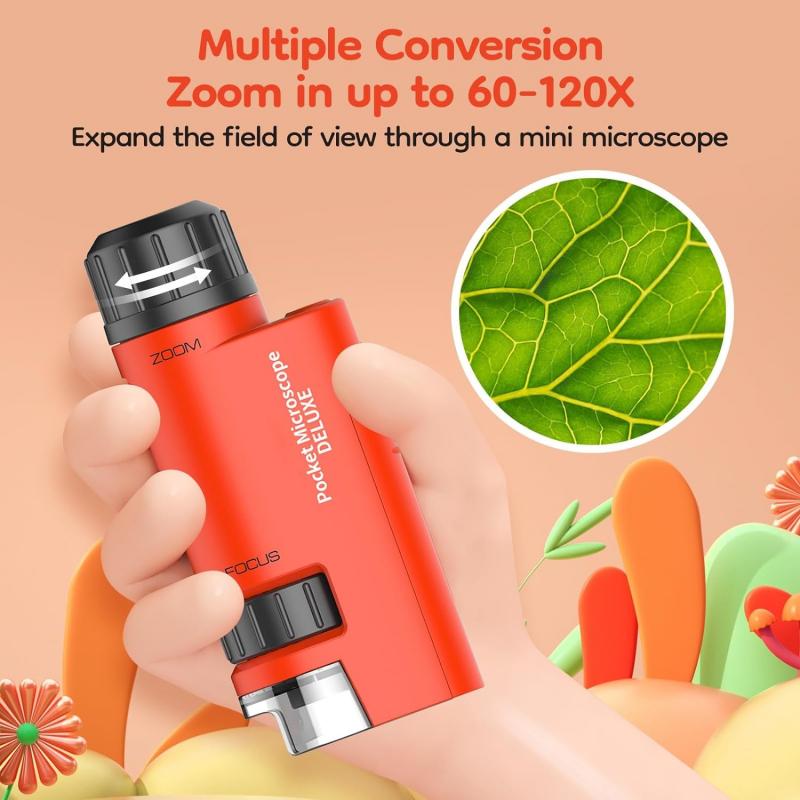
The eyepiece, or ocular lens, is the lens you look through at the top of the microscope.

On most student microscopes, the eyepiece is marked 10x. That means it magnifies the image 10 times. Some microscopes use 15x eyepieces, but 10x is by far the most common because it gives a good balance of magnification, brightness, and image quality.

A common beginner mistake is thinking the eyepiece does all the magnifying. It does magnify, but it is really magnifying an image that has already been enlarged by the objective lens below. If the objective lens is poor quality or out of focus, the eyepiece will simply enlarge a blurry image.

Many binocular microscopes have two eyepieces, one for each eye. These are still eyepiece lenses, just paired for more comfortable viewing. On better microscopes, the eyepieces may have diopter adjustment rings so you can compensate for small differences between your eyes.

The objective lenses
what lenses are in a microscope 2

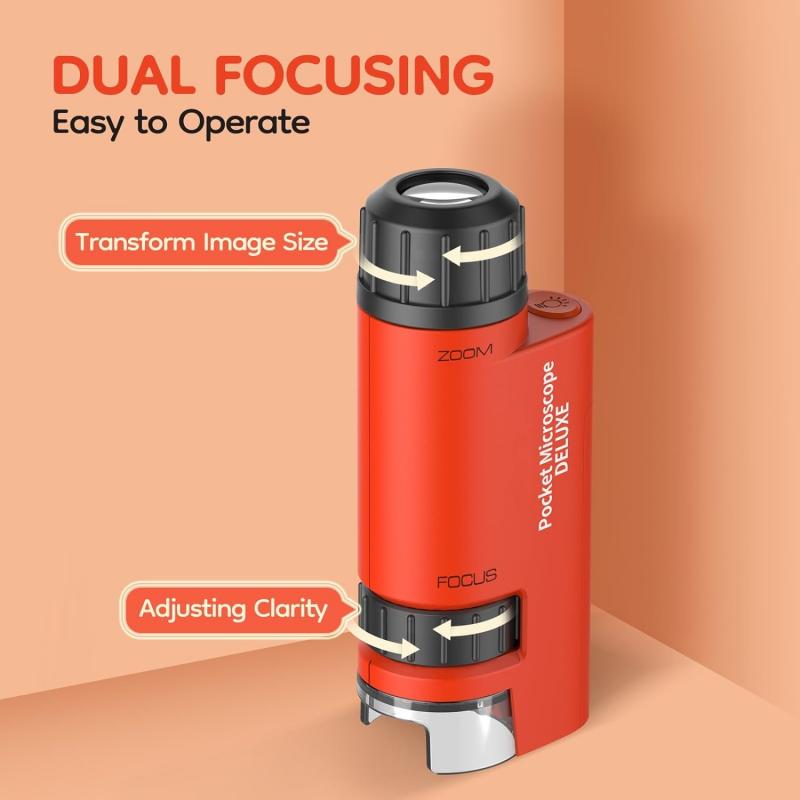
The objective lenses are the small lenses mounted on the rotating nosepiece just above the slide. These are the most important lenses in a compound microscope.

Most microscopes have three or four objectives, commonly:

  • 4x scanning objective
  • 10x low-power objective
  • 40x high-power objective
  • 100x oil immersion objective on many lab microscopes

The objective lens sits very close to the specimen and forms the first magnified image. This is why objective quality matters so much. A good objective gives better sharpness, contrast, and detail. A cheap or dirty objective can make even a properly prepared slide look disappointing.

The 4x objective is usually used first. It gives a wide view and makes it easier to find the specimen. If you are looking at pond water, onion skin, a prepared tissue slide, or a small insect part, starting at 4x saves a lot of frustration.

The 10x objective is useful for general viewing. Many specimens look best here because you get enough detail without losing too much brightness or field of view.

The 40x objective shows much finer detail, but it is also less forgiving. The slide must be positioned carefully, the focus becomes more sensitive, and the image is darker. Beginners often crank the coarse focus knob at 40x and accidentally drive the objective into the slide. With high power, use the fine focus knob only unless you know there is plenty of clearance.

The 100x objective is usually an oil immersion lens. It is used with a tiny drop of immersion oil between the slide and the objective. This improves resolution, especially for bacteria and other very small specimens. Without oil, a 100x oil objective gives a poor image. It is not just “extra magnification”; it is designed to work with oil. After using it, the lens must be cleaned properly with lens paper. Leaving oil on the objective is one of the fastest ways to ruin a microscope.

How total magnification is calculated

what lenses are in a microscope 3

To find the total magnification of a compound microscope, multiply the eyepiece magnification by the objective magnification.

For example, with a 10x eyepiece:

  • 10x eyepiece × 4x objective = 40x total magnification
  • 10x eyepiece × 10x objective = 100x total magnification
  • 10x eyepiece × 40x objective = 400x total magnification
  • 10x eyepiece × 100x objective = 1000x total magnification

This is why a microscope with a 10x eyepiece and a 40x objective is described as viewing at 400x.

Magnification is not the same as useful detail, though. A microscope can claim very high magnification and still show a blurry image. Past a certain point, you are only making the blur larger. Resolution, lens quality, lighting, and specimen preparation all matter.

This is especially noticeable on toy microscopes that advertise huge numbers like 1200x or 2000x. In real lab use, a good 400x image is often more useful than a dim, fuzzy 1000x image.

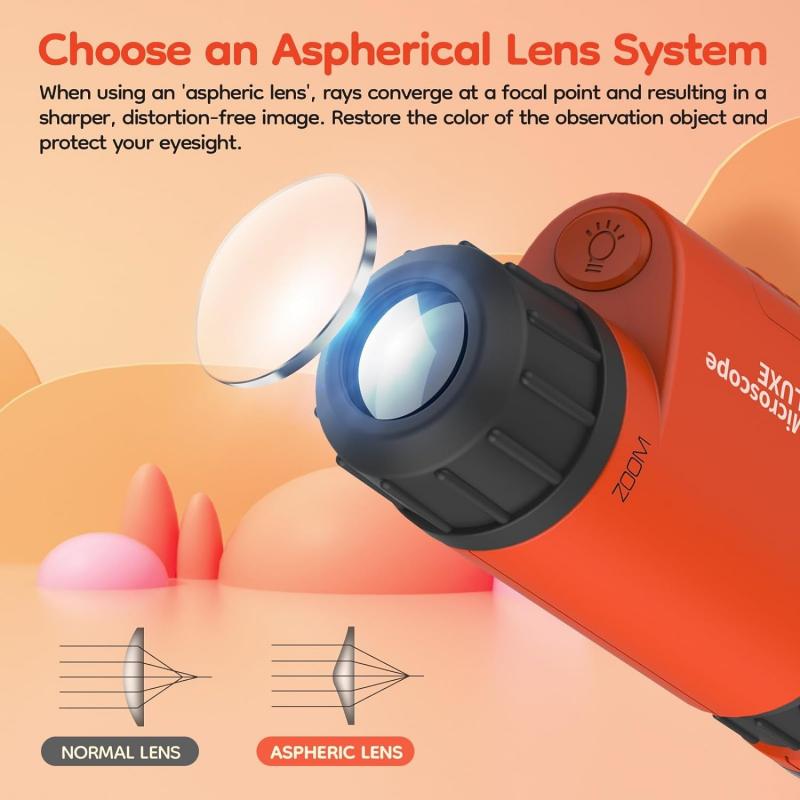
The condenser lens
what lenses are in a microscope 4

The condenser lens sits underneath the stage, below the slide. Its job is not to magnify the specimen for your eye. Instead, it focuses light onto the specimen so the objective can produce a clear image.

On simple student microscopes, the condenser may be fixed in place. On better microscopes, it can be raised, lowered, and adjusted with an iris diaphragm.

The condenser is easy to ignore, but it makes a big difference. If the condenser is too low, the image may look dim or washed out. If the diaphragm is opened too wide, the image can look bright but low in contrast. If it is closed too much, the image may look dark and grainy, with strange shadows.

In practical use, you often adjust the condenser and diaphragm when moving between objectives. A setting that looks good at 10x may not be ideal at 40x. This is one reason experienced microscope users spend a little time tuning the light instead of just turning the brightness knob all the way up.

Other lenses inside a microscope

Some microscopes have additional optical parts that are not as obvious.

The illuminator may include a small lens to help direct light upward through the condenser. Binocular microscopes use prisms and internal optics to split the image between both eyes. Trinocular microscopes, which can connect to a camera, may include projection optics or adapters.

Stereo microscopes are a little different from compound microscopes. They usually have eyepieces and objective lenses too, but the optical design gives a three-dimensional view and lower magnification. A stereo microscope is better for looking at coins, insects, circuit boards, plant parts, or anything you do not want to squash under a glass slide.

Digital microscopes may use a camera sensor and a small lens system instead of traditional eyepieces. Some still have optical magnification, while others rely heavily on digital zoom. Digital zoom can be convenient, but it does not reveal more real detail in the same way a better optical lens can.

Why microscopes use more than one lens

A single magnifying lens can enlarge an object, but it cannot usually provide the high magnification and detail needed for cells, bacteria, or thin tissue sections. A compound microscope uses two main stages of magnification.

First, the objective lens creates a magnified image of the specimen. Then the eyepiece magnifies that image again for your eye.

This system allows much higher useful magnification than a simple hand lens. It also lets you switch objective lenses depending on what you need: a wide view for finding the sample, low power for general observation, and high power for fine detail.

The trade-off is that higher magnification is harder to use. The field of view gets smaller, the depth of focus becomes thinner, and every small movement matters more. At high power, even a slightly thick slide or a cover slip that is not lying flat can make focusing difficult.

What matters more: eyepiece or objective?

If you are choosing or evaluating a microscope, pay more attention to the objective lenses than the eyepiece.

Changing from a 10x eyepiece to a 15x eyepiece might make the image look larger, but it usually will not add real detail. In many cases it just makes the image dimmer and less comfortable to view.

Better objectives, on the other hand, can noticeably improve sharpness and clarity. Terms like achromatic, plan achromatic, and apochromatic refer to objective lens corrections. For most students and hobby users, achromatic objectives are acceptable. Plan achromatic objectives give a flatter, sharper image across more of the field, which is especially helpful for photography or scanning slides.

For normal school or hobby microscopy, a 10x eyepiece with 4x, 10x, and 40x objectives is enough for a lot of real work. A 100x oil objective is useful if you plan to look at bacteria or prepared microbiology slides, but it adds maintenance and requires proper technique.

A simple way to remember the microscope lenses

Think of the microscope like this:

The objective lens does the serious close-up work near the specimen.

The eyepiece lens enlarges that image so your eye can see it comfortably.

The condenser lens manages the light so the image is clear enough to be useful.

If the image looks bad, do not automatically assume you need more magnification. Check that the slide is clean, the objective lens is clean, the condenser is adjusted, and the specimen is thin enough for light to pass through. In everyday microscope use, those things often matter more than adding another lens or chasing a bigger magnification number.
Leave your comment
Cancel reply
Note: HTML is not translated!
Related products
7" LCD Screen Digital Microscope, 1080P 50x-2000X Magnification Biological Microscope, with Dual Lenses
HOT Seller
7" LCD Screen Digital Microscope, 1080P 50x-2000X Magnification Biological Microscope, with Dual Lenses
89
$191.99 $189.99
Digital Microscope with 10.1" Screen & 3 Lenses, 1000X, 1500X, 2500X for Coin, Soldering, Electronics Repair, Biology, Kentfaith Microscope
79
$362.49 $299.99
Minolta A / Sony A Lenses to Pentax Q Lens Mount Adapter K&F Concept M22161 Lens Adapter
$45.99 $23.99
Minolta A / Sony A Lenses to Pentax Q Lens Mount Adapter with Tripod Mount K&F Concept M22162 Lens Adapter
$55.99 $28.99
50X-2000X Digital Microscope, 500W Pixel, HD Visual WiFi Digital Microscope, Portable Microscope
67
$151.19 $129.99
Sony A Lenses to M43 MFT Lens Mount Adapter K&F Concept M22121 Lens Adapter
112
$53.99 $29.99
Sony A Lenses to Fuji X Lens Mount Adapter K&F Concept M22111 Lens Adapter
7
$53.99 $27.99
Digital Handheld Microscope with 4.5 in IPS Screen, Detachable Base, 1000X Magnification, Captures 12MP Photos, 1080P Videos, Kentfaith
$112.49 $89.99
4.3” LCD Digital Microscope for Kids, 50X-1000X Magnification, USB Microscope
79
$107.99 $68.99
Digital Mini Microscope for Kids, 100x-1000x Handheld Microscope with 32GB SD Card & Battery
32
$92.99 $65.99
Products You May Like
72mm Black Pro-Mist 1/4 Filter Effect Filter 28 layers of anti-reflection green film waterproof and scratch-resistant with Metal Lens Cap Nano-X Series
101
$59.99 $30.00
95mm CPL Filter 28 Layer Super Slim Circular Polarizing Filter Multi-coated Polarized MRC Filter Nano-Xcel Series
68
$87.99 $72.99
67mm Snap-On Center Pinch Lens Cap 7 in 1 with Anti-Loss Keeper Leash Compatible with Nikon, Canon, Sony, Fujifilm Camera Lenses
$7.49
55mm MCUV Filter Ultra-Thin Trapezoid Patterned Frame Coating with a Vacuum Cleaning Cloth Nano-Klear Series
145
$13.99 $10.89
43mm Black Diffusion Mist Effect 1/4 & Variable ND2-32(1-5 Stops) & Circular Polarizing Filter CPL 3 in 1 Lens Filter with 18 Multi-Coatings Nano-Klear Series
NEW Arrival
43mm Black Diffusion Mist Effect 1/4 & Variable ND2-32(1-5 Stops) & Circular Polarizing Filter CPL 3 in 1 Lens Filter with 18 Multi-Coatings Nano-Klear Series
58
$56.99 $44.99
112mm ND Filter ND1000 (10 Stop) Lens Filter Multi-Coated Optical Glass (Special Filter for Nikon Z 14-24mm f2.8S Lens)
88
$162.99 $129.99
67mm Filter Set (Graduated & Full Color Orange, Blue, Red, Green, Yellow, Purple, Pink, Grey, Brown)
5
$65.99 $32.99
62mm Camera UV + Polarizing Lens Filters + Lens Cap Kit, 3pcs of Cleaning Cloths and a Filter Pouch Included, K&F Concept Nano-Klear Series
30
$45.99 $36.99
Celluar Trail Cameras
9
$135.99 $74.99
Accessories Set for GoPro Hero 13/12/11/10/9/8/7/6/5/4/ DJI Osmo Action Series / Pocket 3/2 / Insta360 X4/X3, Chest Strap Harness+Backpack Clip+360° Rotating Head Strap Mount and Wrist Strap
39
$27.99
Related articles
What Are Fujifilm X Mount R Lenses?
What Are The Uses Of A Compound Microscope?
What Are Microscope Slides Used For?
What Is Resolution In Microscope?
How To Zoom In On A Microscope?
How To See Cells In A Microscope?
What Is A Good Microscope Magnification?
What Does A Scanning Electron Microscope Show?
What Does A Scanning Electron Microscope Do?
What Is A Ring Light With Stand?
Blog You May Like
What Are Different Nd Filter Numbers Used For?
How To Find Value Of Old Cameras?
How To Record The Cool Radio Sounds?
What Is Filter Thread In Lens?
how to clean microfiber cloth?
How To Speed Up A Video On Camera?
How To Draw A Camera Flash?
How To Use A Mic With Action Camera?
How To Keep Earphones Long Lasting?
How To Change Battery On Selfie Stick L01?
Related categories
minolta a mount lenses A Mount Lens Adapter Sony A Mount Lens Adapters 2 in 1 Filter Screw-In Filter sony mount lenses nikon mount lenses canon m mount lenses nikon z mount lenses
Popular products
Digital Microscope leica m sony e mount adapter sony minolta adapter handheld digital microscope usb sony a mount to minolta adapter digital microscope 2000x mft adapter sony Fuji Mount Adapter sony a57 lens adapter minolta md to sony lens adapter
Related searches
Objective Lens In A Microscope Objective Lenses In Compound Microscope Objective Lenses On A Compound Microscope Stage In Microscope Minolta A Mount Lenses Pentax A Mount Lenses Cost Of A Light Microscope Eyepiece Lens On A Microscope Microscope With Built In Camera Best Camera In A Smartphone
Related Scenes
Best Camera Backpack For Long Lenses Best Batteries For A Trail Camera Best Digital Microscope Camera Best Usb Digital Microscope Best In House Camera The Best Digital Microscope Best Handheld Digital Microscope Best Microscope For Phone Best In Home Video Camera Best In Car Dash Camera
Blog Category
  • Activities
  • Guide
    • Filter Guide
    • Lens Adapter
    • Product Review
  • News & Reviews
    • Camera Reviews
    • Sample Gallery
    • News
  • Tutorials
    • Solar eclipse photography
    • Photography Basics
    • Landscape Photography
  • Inspiration
    • Travel
    • Travel Stories
Search Article
Latest from the Blog
How Fast Is A Camera Flash?
How To Focus An Image On A Microscope?
How To Take Great Photos With Digital Camera?
What Camera Has The Best Video Quality?
How To Setup A Tripod?
How To See Cells In A Microscope?
What Is A Good Video Camera For Vlogging?
How To Take Pictures Through A Telescope?
How To Receive Notifications On Smartwatch?
What Hi Fi In Ear Headphones?
  • Easy Payment Multilple Payment Options

  • Free Shipping Global WareHouse Shipment

  • No Risk 30-Day No Reason Return

  • Limited Deals Buy More, Save More

  • Tax Free No any surcharges or tax fee

Information
  • About us
  • Contact Us
  • Site Map
  • Blog
  • Video
  • Gallery
  • VIP Membership Rewards
Service
  • Privacy Policy
  • Terms & Conditions
  • Shipping & Delivery
  • Payment Info
  • Warranty, Return & Refund
  • Intellectual Property Rights
  • Ambassador
  • Affiliates
  • Wholesale
Support
  • My account
  • Order History
  • FAQs
  • Extend Warranty
  • Logistics Tracking
Follow us
NewsLetter

Get the latest product, K&F Concept respects your privacy.
Powered By KENTFAITH © 2026