How Fast Is A Camera Flash?
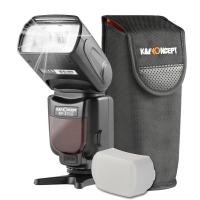
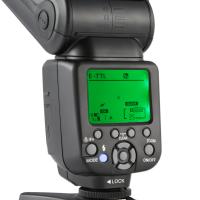
A camera flash is usually much faster than most people expect. A typical hot-shoe flash can emit its burst of light in roughly 1/1,000 to 1/20,000 of a second, depending on power setting. At very low power, some flashes can be even shorter — fast enough to freeze splashing water, falling powder, insects in flight, or a bouncing balloon.
The confusing part is that people often mix up three different “speeds”:
- the flash duration — how long the flash actually emits light
- the camera shutter speed — how long the shutter stays open
- the flash sync speed — the fastest shutter speed your camera can use with normal flash
Those three things are related, but they are not the same.
The short answer
For most practical photography:
- Full-power speedlight flash: often around 1/500 to 1/1,000 second
- Medium power: often around 1/2,000 to 1/5,000 second
- Low power: often around 1/10,000 to 1/30,000 second
- Studio strobes: can range widely, from around 1/300 to 1/10,000 second, depending on design and power setting
- Camera flash sync speed: commonly 1/160, 1/200, or 1/250 second
If you are trying to freeze motion, the number you care about is usually flash duration, not the shutter speed shown on the camera.
Why your camera may say 1/200 even though the flash is much faster
This catches a lot of people the first time they try flash.
You set your camera to 1/200 second, fire the flash, and assume the exposure lasted 1/200 second. In reality, if the room is dark and the flash is the main light, the subject may only be lit for maybe 1/5,000 second or less. The shutter was open for 1/200 second, but the useful light existed for a much shorter time.
Think of the shutter as opening a window in a dark room. The flash is like someone briefly flicking on a very bright light. The window may be open for a while, but the room is only illuminated during that tiny burst.
This is why photographers can freeze water drops using a shutter speed like 1/125 second. The trick is not the shutter speed. The trick is that the flash burst is extremely short and the ambient room light is low enough that it does not blur the subject.
Flash duration changes with power
A speedlight does not always fire for the same length of time.
At full power, it dumps a large amount of energy, so the flash lasts longer. At lower power, the flash is cut off sooner, so the burst is shorter. This is why low-power flash is often better for freezing fast movement.
For example, with a typical small flash:
- At 1/1 power, the flash may be relatively slow.
- At 1/16 power, it becomes much faster.
- At 1/64 or 1/128 power, it can be extremely fast.
This matters in real use. If you are photographing a dancer jumping, a dog shaking off water, or liquid splashing into a glass, full power may still leave a little blur. Dropping the flash power and moving the flash closer often gives a cleaner, sharper result.
That last part is the practical fix most beginners miss: instead of increasing flash power, bring the flash closer, raise ISO a little, or open the aperture. Lower power usually means shorter duration.
The difference between t.5 and t.1 flash duration
Flash duration specs can be a little slippery because manufacturers may quote different measurements.
You may see two terms:
- t.5 duration
- t.1 duration
The t.5 time measures how long the flash stays above 50% of its peak brightness. It gives a shorter, more flattering number.
The t.1 time measures how long the flash stays above 10% of peak brightness. This is usually a better real-world number because the dimmer “tail” of the flash can still record motion blur.
If a studio strobe advertises a very fast flash duration, check whether it is quoting t.5 or t.1. For freezing motion, t.1 is the number to trust.
This is especially relevant with studio strobes. Some older or cheaper studio lights have a long fading tail at lower power, even if the headline number looks good. You may not notice it in portraits, but you can see it in splashes, sports movement, fabric movement, or flying hair.
Speedlights versus studio strobes
Small hot-shoe flashes are often surprisingly good at freezing motion, especially at low power. They are not as powerful as studio strobes, but they can have very short flash durations.
Studio strobes vary much more. Some are designed mainly for power and portrait work. Others are built specifically for action-freezing. A powerful studio head may be excellent for lighting a group or overpowering daylight, but not necessarily the fastest tool for stopping a hummingbird’s wings.
Battery strobes also differ a lot. Some modern units have dedicated “freeze” modes or IGBT control, which can produce very short durations at reduced power. Other units become slower as you lower the power because they dump excess energy differently. The brand and model matter.
In practical terms:
- For portraits, product shots, events, and general work, almost any decent flash is fast enough.
- For splashes, powder, smoke, breaking objects, and rapid sports detail, flash duration becomes critical.
- For extreme motion, low-power speedlights or action-oriented strobes are usually better than big, slow studio heads.
Shutter speed still matters, but mostly for ambient light
If flash duration freezes the subject, what does shutter speed do?
Mostly, shutter speed controls how much continuous light appears in the photo — room light, daylight, lamps, neon signs, and so on.
Suppose you photograph someone spinning at night with flash. If your shutter is 1/30 second, the flash may freeze their face sharply, but streetlights or background light may create motion trails. At 1/200 second, those trails may be much less visible. The flash portion is sharp either way, but the ambient exposure changes.
This is why flash photos can have two layers:
- a sharp flash-lit image
- a blurred ambient-light image
Sometimes that blur looks creative. Sometimes it looks like a mistake. If you want the flash to do the freezing, keep the ambient exposure low enough that it does not record much motion.
A quick way to check: take a photo with the flash turned off using the same camera settings. If the subject is nearly black, the flash will dominate. If you can still clearly see the subject, ambient light may add blur.
Why normal flash has a sync speed limit
Most cameras with mechanical shutters have a maximum normal flash sync speed, commonly around 1/200 or 1/250 second.
Above that speed, the shutter curtains do not fully uncover the sensor all at once. Instead, a narrow slit travels across the sensor. A normal flash burst is so brief that it would only light part of the frame, causing a dark band.
That is why your camera may refuse to go past 1/200 with flash, or why you may see black bands if you use manual triggers beyond sync speed.
Leaf-shutter cameras are different. Many can sync with flash at much higher shutter speeds, sometimes 1/500, 1/1000, or even faster. That is one reason leaf-shutter medium format and compact cameras have long been popular with certain portrait and outdoor flash photographers.
High-speed sync is not the same as a faster flash
High-speed sync, often called HSS, lets you use flash above your camera’s normal sync speed. It is useful outdoors when you want a wide aperture in bright light, like shooting a portrait at f/1.8 in sunlight.
But HSS does not work like one instant flash burst. Instead, the flash pulses rapidly or emits a longer series of light as the shutter slit moves across the sensor.
The trade-off is important: HSS usually reduces flash power and is not as good for freezing fast motion as a short normal flash burst.
Many photographers discover this the hard way. They switch to 1/4000 second with HSS and expect razor-sharp action, but the effective flash illumination is no longer a single tiny pop. For action freezing in a controlled environment, normal flash at low power often works better than HSS.
HSS is great for balancing flash with bright daylight. It is not automatically the best choice for stopping motion.
Real examples of flash speed in use
For a simple portrait indoors, flash duration is rarely a concern. Even full power is usually fast enough because the subject is not moving very quickly.
For photographing kids running around a living room, a bounced speedlight at moderate power can freeze expressions well, but you may still see blur if the room lights are bright and your shutter speed is slow. Lower the ambient exposure or use a faster shutter within sync limits.
For water drops or splashes, low power is your friend. A speedlight at 1/32 or 1/64 power in a dim room can freeze droplets much better than blasting full power from across the room.
For sports in a gym, the situation is harder. You may need a lot of light, which pushes flash power up and duration longer. Also, many venues restrict flash use. If flash is allowed, larger strobes mounted safely and used at controlled power can work, but setup matters.
For outdoor portraits in sunlight, flash duration often matters less than power and sync method. You may use HSS to shoot wide open, or stay under sync speed and use an aperture like f/8 or f/11. The “fastness” of the flash is not always the main issue outdoors.
So how fast is a camera flash, really?
Fast enough that, in many photos, the flash is effectively your shutter.
A normal camera shutter might be set to 1/200 second, but the flash may light the subject for only 1/5,000 or 1/10,000 second. At lower power settings, small flashes can be fast enough to freeze motion that no ordinary shutter speed would handle cleanly in poor light.
The practical rule is simple: if flash is the main light and ambient light is low, flash duration controls motion freezing. If ambient light is strong, shutter speed and ambient exposure become just as important.
For most photographers, the best way to get a faster effective flash is not to buy something exotic right away. Start by lowering flash power, moving the light closer, controlling room light, and checking whether your subject is being lit mainly by flash or by ambient light. Those small changes often make a bigger difference than the number printed in a spec sheet.