ND Filter: The Complete Guide to Neutral Density Filters for Photography and Video
Photography is all about mastering light — but what happens when there’s too much light? Bright conditions can ruin a perfect exposure, wash out skies, and prevent creative effects like motion blur or shallow depth of field. The solution is simple and elegant: the ND filter.
In this in-depth guide, you’ll learn everything about what is ND filter, when to use ND filter, how to use ND filter, what the numbers on ND filters mean, and finally, which ND filter is best for you.
Whether you’re a beginner photographer or a professional filmmaker, understanding ND filters will change how you see light — forever.
1. What is ND Filter?
An ND filter, short for Neutral Density filter, is a piece of high-quality optical glass or resin that reduces the amount of light entering your camera lens — without affecting color accuracy or image quality. Think of it as sunglasses for your camera.
When too much light hits the sensor, your image becomes overexposed. With an ND filter camera setup, you can shoot at slower shutter speeds or wider apertures, even under harsh sunlight, and still maintain perfect exposure.
2. How ND Filters Work ?
The concept behind the ND filter is simple but powerful: it uniformly darkens the scene. This allows photographers and videographers to:
l Use slower shutter speeds for motion blur in daylight.
l Open apertures wider for shallow depth of field in portraits.
l Maintain consistent shutter angles in filmmaking.
l Create balanced exposures in high-contrast scenes.
Because of these capabilities, the ND filter is essential for professionals shooting landscapes, portraits, or cinematic videos.
If you’ve ever wondered what is ND filter, it’s the key tool that lets you control light creatively, instead of being controlled by it.
3. When to Use ND Filter ?
Understanding when to use ND filter is crucial for producing professional-quality images and videos. While ND filters are most commonly associated with sunny outdoor photography, their use cases extend far beyond that.
Here are the most common (and most powerful) scenarios where an ND filter becomes indispensable:
a. Capturing Long-Exposure Landscapes
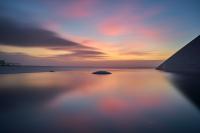
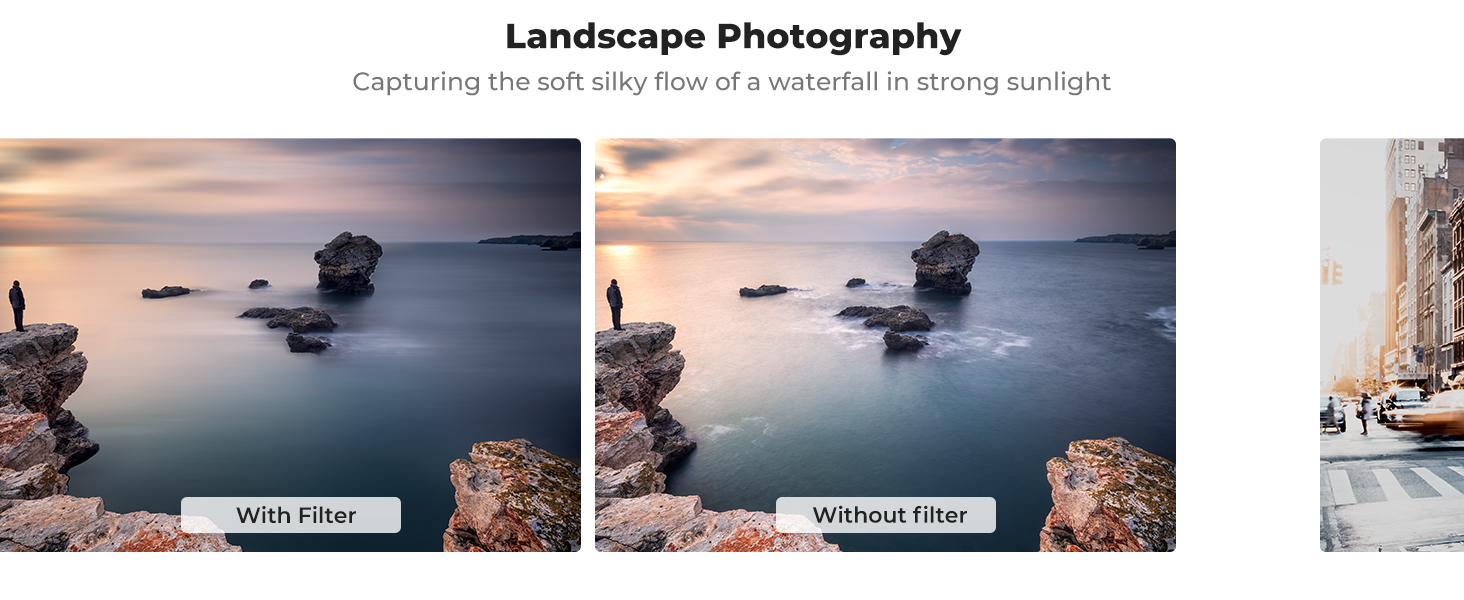
Want silky-smooth waterfalls, glassy lakes, or soft-moving clouds? The secret is a slow shutter speed — but you can’t achieve that in daylight without an ND filter. By cutting light, you can extend exposure to several seconds or minutes. The result: motion blur that transforms static scenes into dynamic art.
b. Shooting Portraits in Bright Sunlight
Wide apertures (like f/1.8 or f/2.8) create stunning bokeh — but they also let in a ton of light. Without an ND filter, outdoor portraits at wide apertures will overexpose instantly. Using a K&F Concept ND filter allows you to open up your lens and still capture perfect exposure with creamy background blur.
c. Filming Cinematic Videos
Videographers must obey the 180° shutter rule — meaning shutter speed should be double the frame rate (e.g., 1/50s for 25fps). In bright light, that exposure is impossible without an ND filter camera setup. Variable ND filters allow filmmakers to fine-tune brightness while maintaining cinematic motion.
d. Creating Motion Effects
From light trails to star movement to soft ocean waves — ND filters unlock motion creativity. Without them, long-exposure photography during the day would be impossible.
e. Reducing Glare and Overexposure
Even when not doing long exposures, ND filters help balance high-contrast environments — like shooting reflective water surfaces, snowfields, or desert sunlight.
Knowing when to use ND filter empowers you to take control of exposure — and that’s where your creativity truly begins.
4. How to Use ND Filter?
Now that you understand its purpose, let’s dive into how to use ND filter effectively. Mastering this process will dramatically improve your photography workflow.
Step 1: Choose the Right ND Filter Strength
ND filters are available in various strengths (ND2, ND4, ND8, ND64, ND1000, etc.), each reducing light by a specific number of stops.
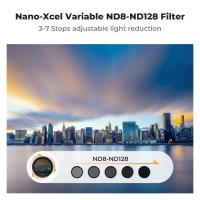
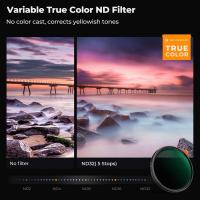
If you need flexibility, a Variable ND filter lets you rotate the ring to adjust light reduction in real time — perfect for run-and-gun shooters or travel creators.
For example:
l ND8 = 3 stops of light reduction (ideal for light control)
l ND64 = 6 stops (good for smooth water)
l ND1000 = 10 stops (great for long exposures)
Step 2: Mount the Filter
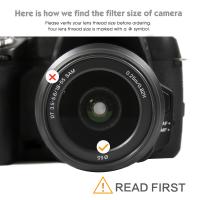
Screw the filter onto your lens’s front thread. K&F Concept ND filters are available in multiple diameters (49mm–82mm) and come with anti-slip grip designs for easy installation. If you own multiple lenses, use step-up rings to adapt one filter to all.
Step 3: Compose and Focus First
ND filters darken your viewfinder, especially at higher densities. Always compose and focus before attaching the filter for maximum precision.
Step 4: Adjust Exposure Settings
Once the ND filter camera setup is ready:
l Slow your shutter speed for motion effects.
l Open your aperture for shallow depth of field.
l Keep ISO low to minimize noise.
l Check your histogram to avoid over/underexposure.
Step 5: Use a Tripod for Long Exposures
Even with optical stabilization, slow shutter speeds need a tripod. K&F Concept tripods are a perfect companion for stable long-exposure shooting.
Step 6: Post-Processing Tip
Because ND filters darken images, shoot in RAW format for maximum flexibility in color correction and detail recovery.
Understanding how to use ND filter properly can transform flat, overexposed photos into balanced, professional-grade masterpieces.
5. What Do the Numbers on ND Filter Mean?
One of the most confusing things for beginners is interpreting the numbers printed on ND filters. What does ND2, ND8, or ND1000 actually mean?
Here’s the breakdown:
ND Filter | Stops of Light Reduction | Light Transmission | Example Use Case |
ND2 | 1 stop | 50% | Slight brightness reduction |
ND4 | 2 stops | 25% | Soft light control |
ND8 | 3 stops | 12.5% | Portraits in sunlight |
ND64 | 6 stops | 1.6% | Smooth water and clouds |
ND1000 | 10 stops | 0.1% | Long exposures, motion blur |
Each “stop” of light reduction halves the amount of light reaching the sensor.
So, an ND1000 (10 stops) allows 1/1000th of the light through compared to no filter — perfect for capturing several-second exposures in daylight.
Some manufacturers, including K&F Concept ND filters, also use optical density notation (e.g., 0.3 = 1 stop, 0.6 = 2 stops, 3.0 = 10 stops). The higher the number, the darker the filter.
Understanding these numbers helps you pick the best ND filter for every situation.
6. Which ND Filter is Best for You?
Choosing the best ND filter depends on your photography style, shooting conditions, and goals. Let’s explore the ideal ND filter setup for different use cases.
a. For Beginners and Travelers
If you’re just starting to explore what is ND filter, a Variable ND Filter is your best bet. It gives you the flexibility to adjust between multiple stops without swapping filters.
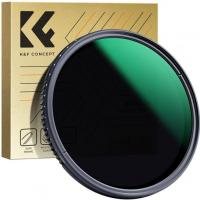
➡️ Recommended: K&F Concept Variable ND2–32 Filter
Ideal for travel, portraits, and outdoor shooting. Multi-coated glass ensures clarity and prevents color shifts.
b. For Landscape Photographers
When shooting seascapes, rivers, or skies, you’ll need a fixed ND filter with strong light reduction (like ND64 or ND1000).
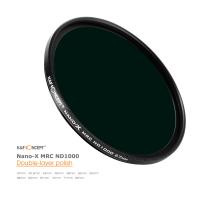
➡️ Recommended: K&F Concept Nano-X ND1000 Filter
This 10-stop filter allows exposures up to several seconds even in full daylight — perfect for smooth water and moving clouds.
c. For Videographers
Filmmakers require consistent exposure control. A Variable ND Filter with precise markings allows seamless adjustment during shooting.
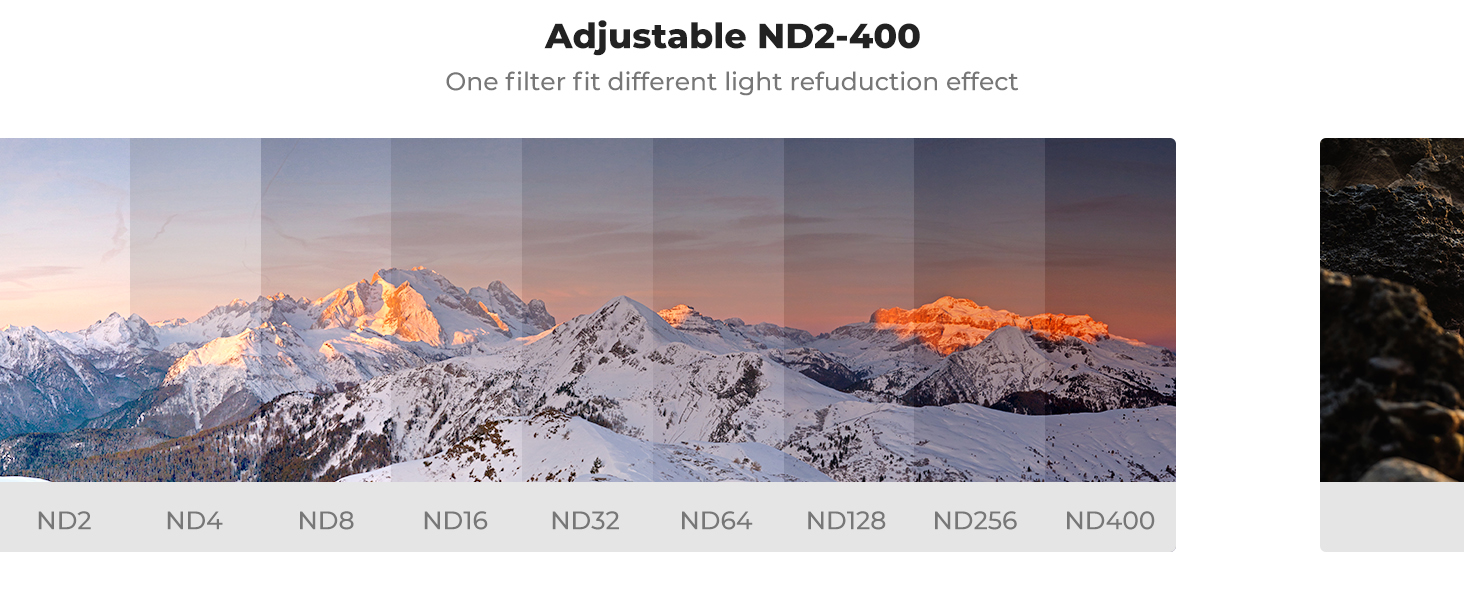
➡️ Recommended: K&F Concept Variable ND2–400 Filter
Engineered with high-transmission optical glass, ensuring no color cast or cross-polarization.
d. For Professionals
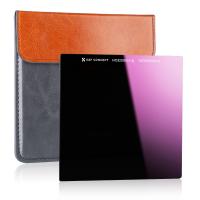
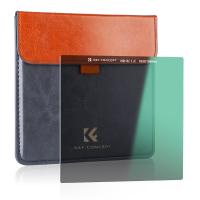
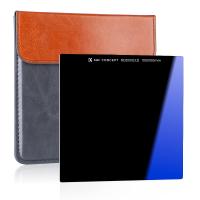
Advanced photographers may prefer square ND filter systems that slot into matte boxes or filter holders. They provide ultimate flexibility for stacking filters.
➡️ Recommended: K&F Concept Pro Square ND Filter Kit
Perfect for high-end landscape or studio setups.
e. For Everyday Shooters
If you love street or travel photography, a compact ND64 is a versatile middle ground — easy to carry and suitable for most lighting situations.
No matter your level, the best ND filter is one that balances build quality, coating, and optical precision. That’s why professionals around the world trust K&F Concept ND filters for consistent, high-quality performance.
7. ND Filters vs. Other Filters
It’s common to confuse ND filters with polarizing filters or UV filters, but each serves a unique purpose:
Filter Type | Main Function | Effect on Exposure |
ND Filter | Reduces light uniformly | Yes |
Polarizer | Reduces reflections, enhances contrast | Slightly |
UV Filter | Protects lens, blocks UV rays | No |
Only the ND filter allows true exposure control for long exposures and wide apertures.
If your goal is creative exposure or cinematic consistency, the ND filter is irreplaceable.
8. Expert Tips for Using ND Filters
To get the most from your ND filter camera setup, keep these expert tips in mind:
1. Stack with Caution – Avoid stacking too many filters; it can cause vignetting.
2. Keep It Clean – Smudges and dust reduce contrast; clean your K&F Concept ND filter regularly.
3. Avoid Cheap Filters – Low-quality filters degrade image sharpness and color.
4. Use Tripod and Remote Shutter – Especially for long exposures.
5. Experiment with Light – Try shooting at sunrise, sunset, or midday to see how ND filters perform differently.
Mastering how to use ND filter takes practice — but once you do, you’ll have full creative control over every shot.
9. Why Choose K&F Concept ND Filters
K&F Concept is a global leader in high-quality optical accessories trusted by photographers in over 150 countries. Each K&F Concept ND filter features:
l 28-layer Nano Coating: Scratch-resistant, waterproof, and anti-reflective.
l Premium Japanese Optical Glass: Ensures zero color cast and maximum sharpness.
l Slim Frame Design: Prevents vignetting on wide-angle lenses.
l Smooth Variable Rotation: Ideal for precise light control in both photo and video.
Whether you’re seeking the best ND filter for travel, portrait, or landscape photography, K&F Concept ND filters deliver professional-grade performance at an accessible price.
Conclusion
An ND filter isn’t just another accessory — it’s a creative tool that allows you to shape light, capture movement, and elevate your visual storytelling.
Understanding what is ND filter, when to use ND filter, and how to use ND filter gives you total command over exposure — whether you’re shooting stills, time-lapses, or cinematic footage.
From the flexible Variable ND to the precision ND1000, K&F Concept ND filters are engineered to help you realize your creative vision.
Discover the best ND filter for your needs today at Kentfaith.com — where innovation meets photography.