What Are The Uses Of A Compound Microscope?
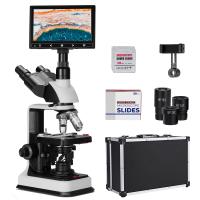
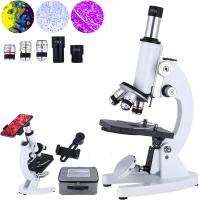
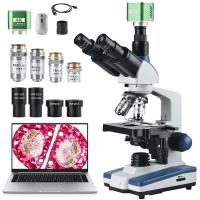
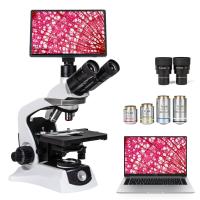
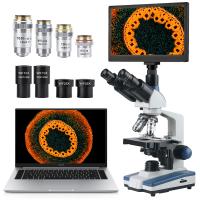
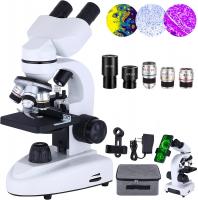
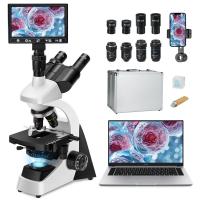
A compound microscope is mainly used to look at objects that are too small to see clearly with the naked eye, especially thin, transparent, or stained specimens such as cells, microorganisms, tissues, fibers, and small structures in plants and animals. Unlike a simple magnifying glass, a compound microscope uses two sets of lenses: the objective lens near the specimen and the eyepiece lens you look through. This gives much higher magnification, usually from about 40x to 1000x in school and laboratory microscopes. Because of that, it is one of the most common tools in biology classrooms, medical labs, research labs, and quality-control work.
Studying cells
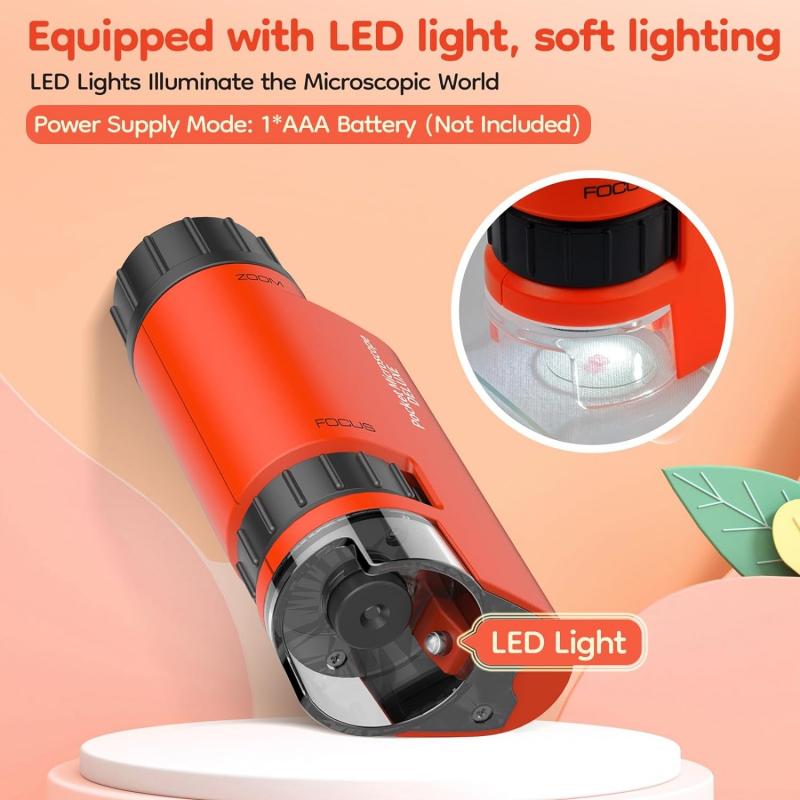
The most common use of a compound microscope is observing cells. In a biology class, students often use it to view onion skin cells, cheek cells, or leaf cells. These are popular specimens because they show basic cell structures clearly, especially after staining. With onion cells, for example, you can usually see the cell wall, cytoplasm, and nucleus if the slide is prepared well. With human cheek cells, you can see the cell membrane and nucleus more easily after using a stain such as methylene blue. This is where a compound microscope becomes more useful than a hand lens. A magnifying glass may show the general surface of a leaf or insect wing, but it cannot show individual cells in useful detail. A compound microscope lets you see the tiny repeating units that make up living organisms. In practical use, the quality of the slide matters almost as much as the microscope itself. A thick clump of cells will look like a dark blur. A thin, well-spread sample with the right amount of light shows far more detail.
Observing microorganisms
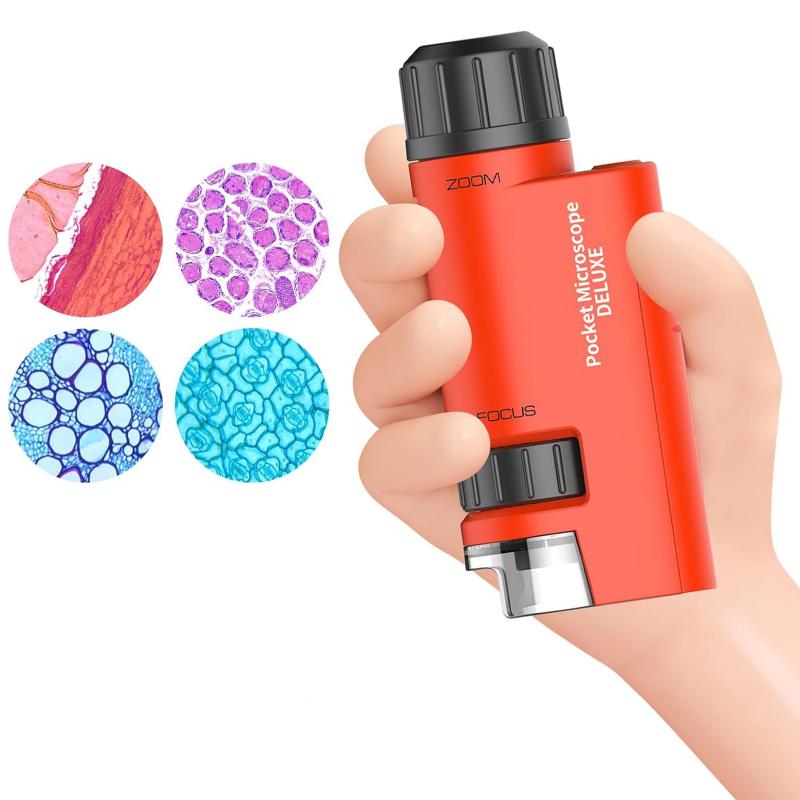
Compound microscopes are widely used to observe microorganisms such as bacteria, algae, protozoa, and yeast. Pond water is a classic example. A single drop can contain tiny organisms moving around, feeding, or drifting through the water. Under low power, you may see larger organisms such as paramecium or euglena. Under higher power, smaller details become visible, though very tiny bacteria usually need staining and a stronger objective lens to be seen clearly. Yeast cells are another common specimen. They are easy to prepare and useful for showing budding, which is how yeast reproduces. In schools, yeast is often used because it is safe, inexpensive, and visible under ordinary classroom microscopes. For bacteria, compound microscopes are useful but have limits. Many bacteria are extremely small, and they often appear as tiny dots or rods rather than detailed organisms. A properly stained bacterial smear can show cell shape and arrangement, such as clusters or chains, but not internal structures in much detail. For finer detail, more advanced microscopes are needed.
Medical and clinical diagnosis

Compound microscopes are heavily used in medical laboratories. One everyday use is examining blood samples. A technician can look at red blood cells, white blood cells, and platelets. Blood smears can reveal signs of infection, anemia, abnormal cell shapes, or parasites such as malaria. In malaria diagnosis, for example, a stained blood smear is examined carefully under high magnification to look for parasites inside red blood cells. Urine samples may also be examined under a microscope. Lab workers can look for crystals, cells, bacteria, or casts that may suggest kidney or urinary tract problems. In hospitals and clinics, compound microscopes are also used to examine tissue samples, vaginal swabs, sputum samples, and other prepared slides. The microscope itself does not “diagnose” a disease; trained people interpret what they see. Still, without compound microscopes, many routine lab tests would be much harder or impossible.
Studying plant structures
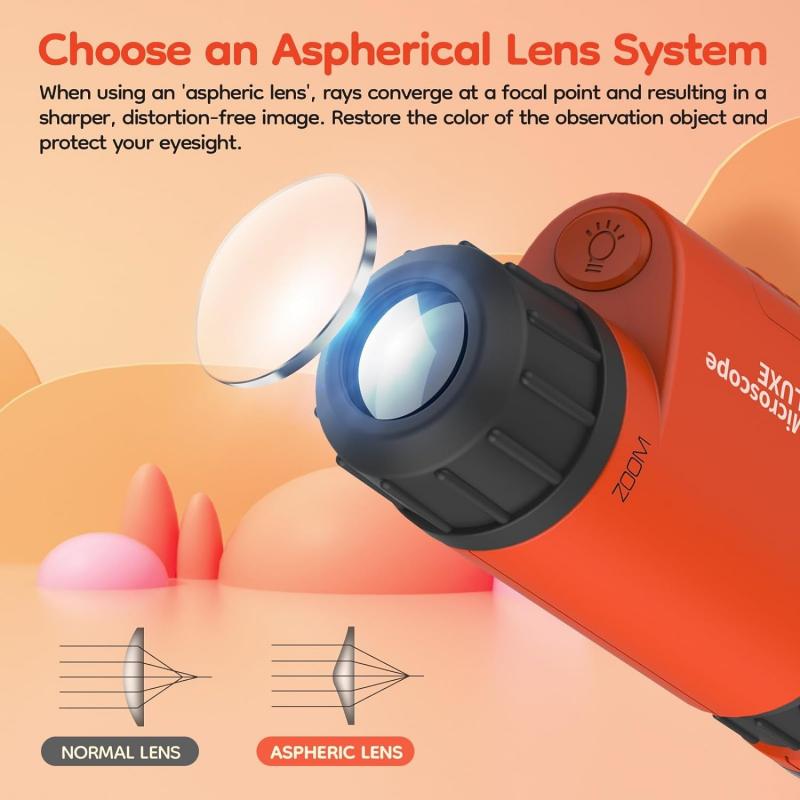
Compound microscopes are very useful in botany. Thin sections of roots, stems, and leaves can show structures such as xylem, phloem, stomata, guard cells, and chloroplasts. Students often view the underside of leaves to see stomata, the tiny openings that help plants exchange gases and control water loss. Leaf cells from plants such as Elodea are especially good for viewing chloroplasts. Under the microscope, chloroplasts can often be seen as small green bodies inside the cells. In a fresh sample, you may even see cytoplasmic streaming, where the contents of the cell slowly move around. Plant slides also teach a useful lesson about preparation. A section must be very thin for light to pass through it. If you cut a thick slice of stem and put it under a compound microscope, you may see little more than darkness and shadows. Thin sections reveal the real structure.
Compound microscopes are used to examine animal tissues such as muscle, nerve tissue, epithelial tissue, and connective tissue. Prepared slides are common here because animal tissues usually need careful cutting, staining, and mounting. Under the microscope, different tissues have distinct appearances. Muscle tissue may show fibers or striations, epithelial tissue may show tightly packed layers of cells, and nerve tissue may show branching cells depending on the preparation. This is useful in anatomy, physiology, veterinary science, pathology, and medical training. Students can connect what they learn from diagrams to real tissue structure. The first time someone sees an actual tissue slide, it often looks messier than a textbook drawing. That is normal. Real biological samples are not perfectly arranged, and learning to recognize patterns takes practice.
Compound microscopes are a standard part of school and college science labs. They help students learn how living things are built, how cells differ, and how scientific observation works. Common classroom uses include: - Viewing onion epidermis - Observing cheek cells - Comparing plant and animal cells - Studying pond water organisms - Looking at prepared slides of tissues - Observing pollen grains - Examining mold or yeast A big part of using a compound microscope in education is learning technique. Beginners often start on high power and then wonder why they cannot find anything. The better method is to begin with the lowest objective lens, focus slowly, center the specimen, and only then move to higher magnification. Another common mistake is using too much light. More light does not always mean a better image. Some transparent specimens show more detail with moderate light and careful adjustment of the diaphragm.
In research laboratories, compound microscopes are used for many types of biological and material observation. Researchers may use them to study cell growth, tissue changes, microorganisms, parasites, reproductive cells, or stained samples from experiments. In cell culture work, microscopes help researchers check whether cells are healthy, contaminated, too crowded, or growing as expected. Research microscopes may include extra features such as phase contrast, fluorescence, digital cameras, or specialized illumination. These are still based on the same basic idea as a compound microscope, but they allow scientists to see things that ordinary bright-field microscopes cannot show well. For example, living unstained cells are often difficult to see clearly with a basic compound microscope because they are nearly transparent. Phase contrast improves visibility without staining. Fluorescence microscopy can show specific cell parts tagged with fluorescent markers.
Compound microscopes are also used outside biology. In forensic science, they can help examine hair, textile fibers, powders, paint fragments, and small particles collected from a scene. Hair samples may show differences in color, thickness, medulla pattern, or surface features. Fibers can be compared by shape, color, and structure. A compound microscope cannot answer every forensic question by itself, but it can provide useful visual information and help decide what further testing is needed. Textile labs and quality-control departments may also use compound microscopes to inspect fibers, check weave structure, identify contamination, or examine defects in materials.
Compound microscopes can be used to inspect food and water samples. In water testing, they help identify algae, protozoa, and other microscopic organisms. This can matter in environmental monitoring, aquarium care, wastewater treatment, and public health work. In food-related settings, microscopes may be used to look for mold, yeast, starch grains, adulterants, or tiny contaminants. For example, starch grains from different plants can have different shapes under a microscope. Food labs may use microscopy along with chemical and microbiological tests. For home users, a compound microscope can also make everyday samples surprisingly interesting: a drop of aquarium water, a bit of yogurt, a thin slice of fruit skin, or bread mold can reveal a lot. Safety still matters, though. Unknown mold and contaminated water should be handled carefully, and slides should be cleaned or disposed of properly.
Many specimens need staining before they show much detail. A compound microscope is commonly used with stains because most cells are nearly transparent. Stains such as iodine, methylene blue, crystal violet, and safranin help highlight different parts of cells or tissues. Iodine, for example, is often used with plant samples and starch. Methylene blue is commonly used for cheek cells. Gram staining is used to help classify bacteria. The stain does not simply make the slide “prettier.” It increases contrast, making structures easier to recognize. Poor staining, overstaining, or thick samples can make the view confusing, so slide preparation is a skill of its own.
A compound microscope is powerful, but it has limits. It is not the best tool for viewing large solid objects such as coins, rocks, circuit boards, insects as whole specimens, or jewelry. Those are usually better viewed with a stereo microscope, which gives a lower-magnification, three-dimensional view and more working space. A compound microscope also cannot show viruses with ordinary light microscopy. Viruses are too small and usually require an electron microscope or specialized methods. Very thick or opaque objects do not work well either, because compound microscopes rely on light passing through the specimen. The sample usually needs to be thin enough for light to travel through it.
For students, hobbyists, and home science users, a compound microscope can be used to explore: - Pond water - Onion skin - Cheek cells - Leaf cells - Pollen - Yeast - Mold samples - Thin plant sections - Prepared biology slides - Textile fibers - Hair samples The best results usually come from simple, thin, clean samples. A beginner often gets more from a well-prepared onion skin slide than from a random thick chunk of material. Start at low magnification, focus gently, adjust the light, and move up only after the specimen is centered. That one habit prevents most frustration. A compound microscope is useful because it opens up the small-scale structure of life and materials. Its main strength is showing cells, microorganisms, tissues, and thin specimens in detail. From classrooms to hospitals to research labs, it remains one of the most practical tools for seeing what the unaided eye cannot.