What Is The Use Of Compound Microscope?
# Understanding the Use and Practical Applications of a Compound Microscope
The compound microscope is, without a doubt, one of the most significant instruments in scientific exploration and education. Its ability to magnify objects up to several hundred times their actual size has opened doors to microscopic worlds, enabling researchers and learners to observe biological cells, microscopic organisms, and other tiny structures. While often associated with academic and research institutions, the utility of a compound microscope spans far beyond laboratories, serving essential purposes in medicine, forensics, industry, and even environmental science.
In this article, we aim to explore the fundamental uses of compound microscopes and address common questions surrounding their practical applications, functionality, and importance across various fields of study. If you’ve ever wondered why this instrument remains indispensable despite advancements in modern imaging technologies, you'll find clarity here.
## What is a Compound Microscope and How Does it Work?
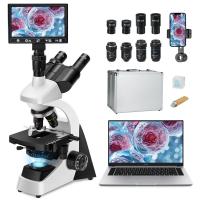
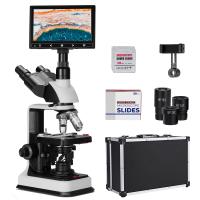
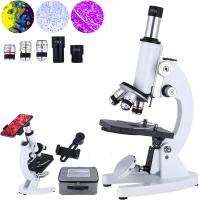
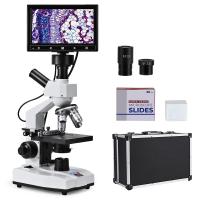
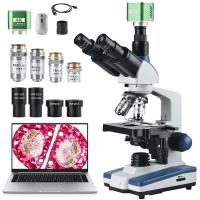
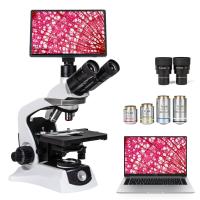
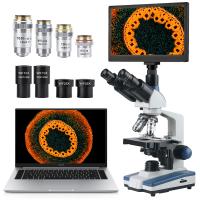
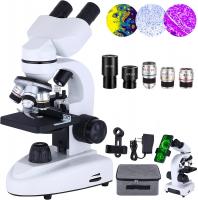
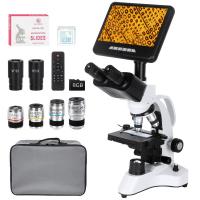
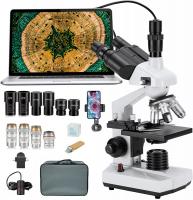
A compound microscope is an optical instrument designed to magnify small objects using lenses. It is equipped with two types of lenses: the objective lenses (located close to the object being observed) and the eyepiece lenses (the lens through which the user views the magnified object). This dual-lens system is what differentiates compound microscopes from simpler single-lens configurations.
The magnification power of compound microscopes is determined by the combination of the objective and eyepiece lenses. For example, if an objective lens has a magnification power of 40x and the eyepiece lens magnifies 10x, the total magnification will be 400 times the original size of the observed specimen.
Compound microscopes often integrate additional mechanisms such as illumination systems (e.g., reflective mirrors or LED lights) and fine and coarse adjustment knobs for clear focusing. These features collectively enhance visual precision and user accessibility, particularly when observing transparent or delicate specimens like biological cells or bacteria.
## Practical Uses of Compound Microscopes Across Fields
1. Biological Research and Education

The most well-known use of a compound microscope lies within the realm of biology. It allows scientists and students alike to delve into the structural complexities of cells, tissues, and microorganisms. In research, compound microscopes are often the cornerstone of discoveries related to cellular anatomy and physiology. For instance:
- Students can examine onion cells, plant tissues, or human blood cells to understand biological processes and structural features.
- Researchers use compound microscopes to study cancer cells, bacteria, and viruses, contributing to progress in medicine and healthcare.
From the high school classroom to cutting-edge laboratories, this instrument serves as a fundamental tool for biological learning and discovery.
2. Medical Diagnosis and Pathology
Compound microscopes play a crucial role in understanding diseases and diagnosing medical conditions. Pathologists depend on these microscopes to examine tissue samples, blood smears, and biopsy specimens to identify cell abnormalities or the presence of microbial pathogens. Some common examples include:
Histopathology: Analysis of tissue samples helps to diagnose cancer, organ damage, and other diseases.
Microbiology: Bacteria and fungi samples collected from patients are viewed under compound microscopes to identify infectious agents.
Haematology: It enables the examination of blood samples to detect disorders such as anemia, leukemia, or clotting irregularities.
Without compound microscopes, many diagnostic processes would face serious limitations in accuracy and efficiency.
3. Forensic Investigations
Forensic analysts rely on compound microscopes for the examination of trace evidence left behind at crime scenes. By magnifying minute substances, investigators can identify fibers, hair, skin cells, or traces of other materials associated with suspects or events. The utilization of microscopes not only aids in determining the identity of the perpetrators but also plays a critical role in reconstructing crime scenes.
Compound microscopes may also be applied to counterfeit detection, analyzing details on currency, legal documents, or valuable artifacts for signs of tampering.
4. Material Science and Industry

In industrial applications, compound microscopes are used to observe and inspect materials or components at microscopic levels. Quality control departments frequently use microscopes to analyze the integrity of materials, detect flaws, and ensure adherence to manufacturing standards. Common uses include:
- Examination of grain structures in metals or alloys.
- Testing the quality of textiles or plastics.
- Studying the wear and tear on machinery components.
By providing insights into material behavior and defects, compound microscopes contribute to innovations in engineering and manufacturing.
5. Environmental Science
Environmental scientists use compound microscopes to observe water and soil samples and examine microorganisms crucial for maintaining ecological balance. In particular:
- Water samples can reveal the presence of algae, plankton, or parasitic organisms.
- Soil analysis can uncover microbial activity vital for nutrient cycling and farming practices.
This instrument provides invaluable data for understanding how microscopic life impacts large-scale ecological systems.
6. Botanical Research
Plant study requires detailed observation of structures like root tips, leaf cross-sections, and vascular tissues. Botanists use compound microscopes to investigate plant anatomy, development, and interactions with pathogens under different environmental conditions. This is instrumental for agricultural advancements, plant disease control, and conservational efforts.
7. Education at All Levels
Compound microscopes are a mainstay in general education curricula worldwide. From middle school biological lessons to advanced university labs, students use microscopes to explore the microscopic universe and learn foundational principles of biology, chemistry, and physics. This tactile learning experience enriches knowledge, fosters curiosity, and inspires careers in science.
## Key Advantages and Limitations of Compound Microscopes
Strengths
High Magnification: Compound microscopes deliver powerful magnification, enabling detailed observation of specimens at micro and nano scales.
Affordability: Compared to electron microscopes, compound microscopes are cost-effective while still offering sufficient functionality for most applications.
User-Friendly Design: They are accessible even to beginners, allowing learners and scientists to derive insights with relatively straightforward usage.
Limitations
Resolution Boundaries: Compound microscopes cannot resolve structures smaller than about 200 nanometers due to limitations imposed by optical wavelengths.
Sample Limitations: Specimens must generally be thin enough for light to pass through; opaque objects require specialized tools.
Given these strengths and limitations, compound microscopes remain the preferred choice for routine visualization, while more advanced technologies are employed for ultra-high-resolution imaging.
## Choosing the Right Compound Microscope for Your Needs
Selecting the appropriate compound microscope depends on your specific requirements. Consider factors such as:
1. Magnification Range: Ensure the maximum magnification meets your needs (e.g., 400x or 1000x).
2. Illumination Type: LED lighting systems are often superior due to their energy efficiency and brightness.
3. Build Quality: Durable metallic frames and high-quality lenses result in longer-lasting instruments.
4. Additional Features: Features like digital cameras for recording observations or phase-contrast capabilities for studying transparent specimens may be desirable for advanced applications.
With careful selection, a compound microscope can significantly enhance your ability to conduct research or exploration effectively.
## Compound Microscopes in Modern Science and Everyday Life
While they are foundational instruments of traditional biology labs, compound microscopes have achieved relevance in virtually every sector of science and technology. They provide avenues to study phenomena invisible to the naked eye, paving the way for discoveries that shape our understanding of health, environment, industry, and beyond.
Importantly, compound microscopes continue to evolve with features like digital capture and live streaming, integrating easily into modern workflows. These advancements broaden their utility and make them increasingly accessible to students and professionals alike.
## Conclusion
The compound microscope's significance is twofold: it not only unveils unseen worlds but also empowers critical research, diagnostics, and analyses. Its applications across biology, medicine, forensics, industry, and environmental science demonstrate its indispensable role in modern society. Whether you’re an aspiring scientist, a dedicated professional, or simply curious about exploring microscopic wonders, a compound microscope is your window to realms beyond perception.
In the age of technological leaps, the simplicity and dependability of the compound microscope remain unmatched. This tool continues to fuel scientific curiosity and innovation for generations to come. So, the next time you marvel at something invisible to the naked eye, remember the essential role that compound microscopes play in bridging the gap between the visible and invisible.