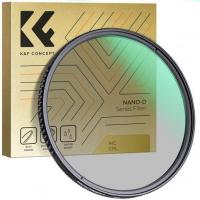
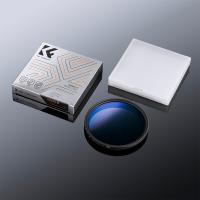
What Is A Circular Polarizer Filter Used For?
exactly what does a polarizer do?
circular polarizer filter one of the best—and most difficult—filters to use.
it’s both simple and difficult to understand what polarizing filters accomplish. technically, per our expert product writers, a circular polarizer “helps to reduce reflections and glare by filtering out light that has become polarized due to reflection from a non-metallic surface.”
- essentially, this means it cuts down on certain types of light in a way that can benefit your imagery.
- more specifically, it will reduce glare and reflections, including certain haze.
- in real-world applications this can help eliminate reflections on glass or water, reduce some reflected light on certain subjects, or improve overall contrast in a landscape.
you may have heard of linear polarizers, in addition to the now standard circular polarizer. in practice, both filters accomplish the same goal.
- however, circular polarizers have an extra quarter wave-plane element that helps convert the light back into a form that is suitable for modern autofocus and auto-exposure systems.
- since this tech wasn’t around years ago, early filters were fine with linear polarization, but if you are shopping today, circular is the safe bet.
reduce reflections and glare
- controls reflections on glass, water, leaves, and sky.
- provides 1-2 stops of neutral density for longer exposures
- it reduces polarized light, which are usually reflections but not all reflections are polarized.
- cpl filters reduce reflections and deepen colors.
- you absolutely cannot remove reflections in post - only a pol filter can do this.
- you can darken the sky in post, for sure, but you run the risk of odd haloing effects at edges if you overdo it.
i know this isn’t related to landscape photography, but i find using a cpl most beneficial for real estate photography when removing glare on shinny surfaces like glass tables and polished hardwood floors.
i thought about including more reasons outside of landscape photography. this is definitely a huge reason to own one if you shoot any form of architecture. there are a ton of other practical and real world uses for owning one that i couldn't fit in here.
oh for sure and i thought the article was great as is. i just remember the first time i thought to use a polarizer indoors and was blown away by how much detail i could recover just by rotating my cpl.
- i'll use one for portraits to cut down on a sweaty or oily face.
- i do use polarizers for people with shine that can't be killed by normal techniques--like me.
- actually i never take cpl from my lens when doing outside portraiture. it makes backgrounds so much more interesting that i can't believe that anyone does portraiture without it ;)
landscape photography accessory
given the choice to bring one accessory when shooting landscapes, it absolutely needs to be a circular polarizer and this is why.
i recently got back from a trip where i was tasked with taking very minimal gear with me because of weight restrictions. i know many of us enjoy having all the options in the world to shoot with but it can be really liberating to take as little as possible and shoot with a minimal setup.
while i was packing, i realized that i absolutely didn’t want to leave home without my circular polarizer and in my opinion it’s the most important accessory you will own as a landscape photographer; i would even go as far to say that it’s more important than a secondary lens.
- as long as you have a camera, lens, and tripod, the next thing in your bag should be a circular polarizer (cpl).
- personally i think a cpl is the best bang for your buck that you can buy to improve your photos in landscape photography.
- spend less than $100 and completely open up new worlds of results.
- i think it's the first item any new photographer should pick up after a camera and lens.
- i'd even go as far to say to get it before a tripod unless your only wanting to shoot astro or landscapes.
i seldom use polarizing filters but when i do, i use them to cut down harsh reflections on a stream that make exposure really difficult. too much reflection will cause the rest of the image to be too dark.
- over expose and the whites are even more blown out.
- use a polarizer to tame the reflections and the rest of the exposure falls into place.
- it's a miracle.
sky color and sun angle
- the sun is directly ahead in this shot and you can see the relative ineffectiveness of the polarizer.
- a very deep blue transitions quickly to a normal sky in this image made with a wide-angle lens.
- wide angle lenses will cause the sky to be uneven in brightness.
- using it at a wide angle with a sunny sky will always mess with the sky.
- it isn't just cpl. all polarisers have the same effect on wide lenses and it's more pronounced the wider you go.
experiment with the polarizer. rotate it to different angles and take several photos. depending on the location of the sun, it will have little to no effect or it might deepen the color of the sky to an exaggerated amount.
imagine you have a pair of special sunglasses. when you wear them, they block out some of the glare from the sun, so you can see colors more clearly and the sky looks a bit more intense blue. a cpl filter does something similar for your camera lens: it cuts down reflections and makes colors, especially in the sky, look richer.
now, here’s the catch: the cpl filter works best at certain angles to the sun (about 90 degrees from it). so, if you point your camera toward one part of the sky, you might see a deep, even blue, but if you turn it a little, the sky could look lighter or uneven. this uneven color happens because the cpl filter’s effect changes depending on how it’s facing the sun.
- they work differently depending on the angle to the sun.
- this can make the sky look uneven in color if you’re not at the right angle.
- depending on the angle of the sun relative to the subject you may not be able to get rid of it entirely, but can also adjust it in post too
- your angle of view is so wide that the polarizer is filtering glare at wildly different angles.
- you're going to run into this pretty reliably at angles wider than 35 or 40 mm.
light are waves. lightwaves come from all different angles. also reflected in the atmosphere. air, particles, clouds etc. reflect light. the filter lets through light only at specific angles. depending on how the light is coming towards the lens, some parts will have more light that fits through the filter some parts will have less.
- so you will see darker parts.
- cpl eliminates reflection, because it filters out like coming from an angle.
reflections that remain
great article. i would like to say though that the circular polarising lens does not remove all reflections. only polarised reflections, not direct reflections (as far as i am aware, i am not a pro).
- try it out and see what reflections remain and which ones disappear as you rotate the filter.
- this post is aimed at beginners as they may think all reflections can be removed, but as you see in the lake cabin even the wood panels retain some reflection and elsewhere in the photo.
- metal surfaces don't polarize the light they reflect, so those reflections are not reduced by a "polarized light filter" (to be more accurate).
those are excellent points chris! there is also a lot of dependency on the angle you are shooting relative to where the sun is sometime allowing you to cut out a lot of reflects and other times not as much.
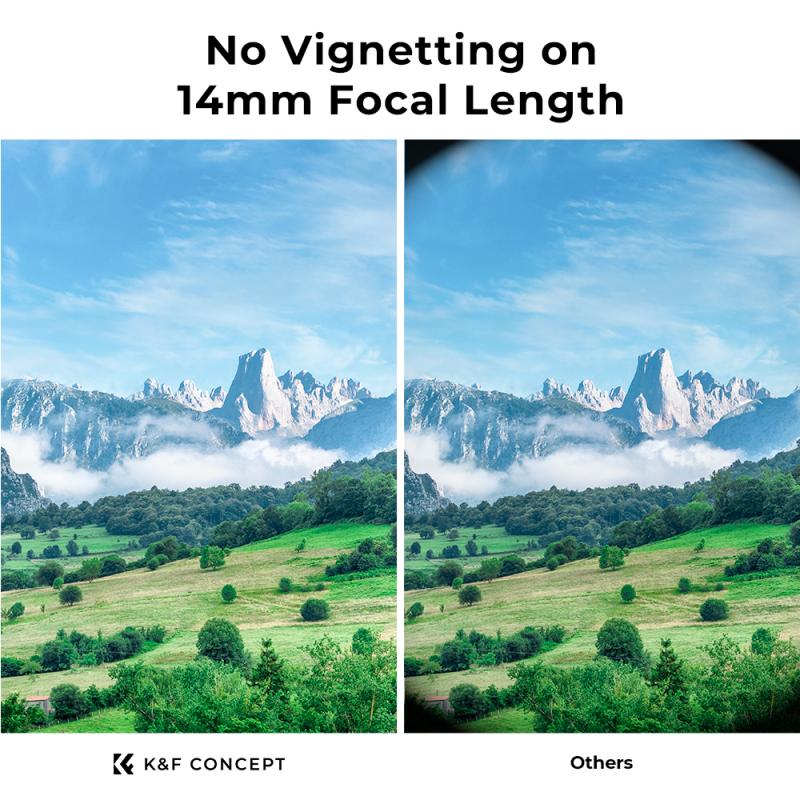
wide-angle lenses and vignetting
- vignetting your lens - that is, since it projects in front of the lens a bit, it cuts off some of the light that is supposed to reach the very corners.
- this is a common issue with filters on wide angle lenses.
- filter shapes that don't vignette the lens.
- agreed, it looks like cut-off.
- you can get 'step-up' rings which fit into your lens filter-thread and take a bigger filter.
- for example a 62mm thread would take a step-up to a 72mm filter which avoids cut-off.
- but that does mean buying the step-up and a bigger polariser.
panoramas and sky
my problem with polarizer is when i am shooting panos. then it's not usable... the sky is just completely unusable.
as stiching panos requires additional work, you can as well do a one swipe with polarizer (for the non-sky elements) and the other one without (just for the sky) and blend them together in post.
- it requires, of course, an extra 15 minutes in post, but if the result seems worth the effort, then it's a one way to try. :)
- that isn't necessarily true.
- having clouds in the sky completely fixes that issue and ideally i want some form of atmosphere in my sky.
- sometimes that isn't the case like the image of the boat that i put here where there are clouds and enough blue sky to have that dark sky effect.
- there are ways around it that might be worth the extra effort.


![K&F CONCEPT Screen Protector for Insta360 X5, [3 Pack] 9H Hardness Tempered Glass Cover Anti-Scratch Anti-Bubble Anti-Dust LCD Screen Protector Curved Edge Protection for Insta360 X4/X5 Accessories](https://img.kentfaith.com/cache/catalog/products/us/KF31.184/KF31.184-1-200x200.jpg "K&F CONCEPT Screen Protector for Insta360 X5, [3 Pack] 9H Hardness Tempered Glass Cover Anti-Scratch Anti-Bubble Anti-Dust LCD Screen Protector Curved Edge Protection for Insta360 X4/X5 Accessories")