What Is Resolution In Microscope?
Understanding Microscope Resolution: A Comprehensive Guide
Microscopes stand as one of the most groundbreaking inventions in science, allowing us to peer into the microscopic world with unprecedented clarity. Among the myriad features that determine the quality and effectiveness of a microscope, resolution holds a paramount place. While magnification tends to be more widely recognized by the general public, resolution defines how well a microscope can distinguish between two closely spaced objects as separate entities. It’s the quality aspect of microscopy that often dictates the success of scientific observation. In this article, we will delve deep into the concept of resolution in microscopes, break it down for practical understanding, clarify frequently asked questions, and explore examples and implications in modern applications.
What Is Resolution in Microscopy?
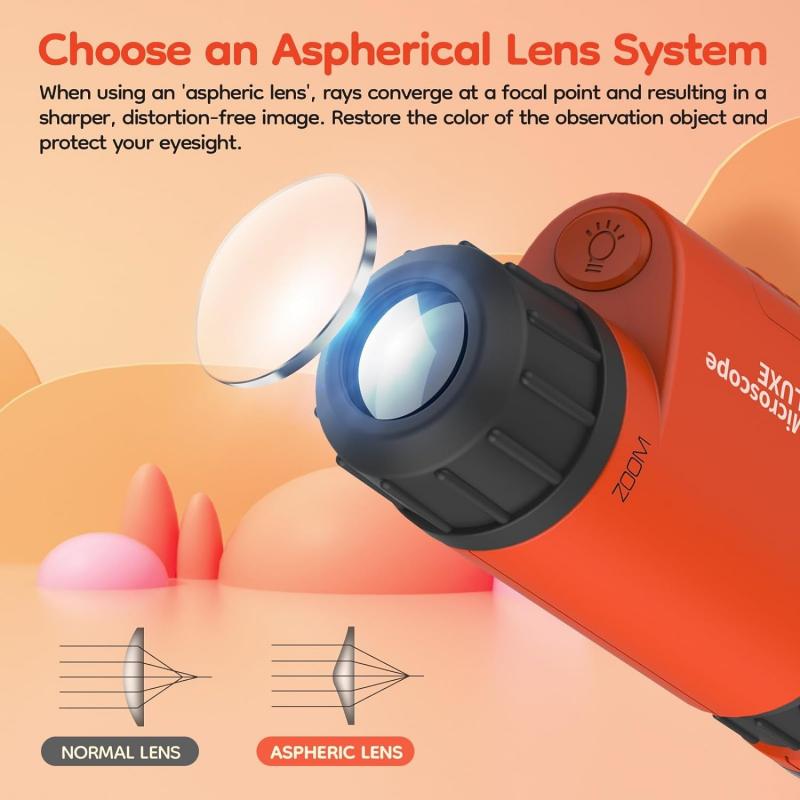
In simple terms, resolution refers to the ability of a microscope to distinguish between two closely situated objects. Imagine observing two dots on a piece of paper. If the dots are very close to each other, their boundaries might blur, making them appear as a single dot. However, with higher resolution, you can distinguish the space between them as two separate dots. Microscopic resolution works similarly—it's the level of detail a microscope can reveal about the specimen under observation.
Resolution is fundamentally different from magnification, although the two are often misconstrued. Magnification enlarges the image captured by the microscope, but resolution determines how clear and detailed that image appears. You can have high magnification without high resolution—a situation that results in a larger, but blurry image. Resolution, therefore, is the cornerstone of effective microscopy.
How Does Resolution Work in Microscopes?

The principle driving resolution in microscopes is light diffraction. Light waves bend when passing through small apertures or interacting with objects at microscopic scales. This phenomenon limits the ability of optical systems to distinguish fine details. Thus, resolution in microscopy is largely determined by the wavelength of light used and the numerical aperture (NA) of the lens system.
Resolution is typically expressed by the following formula, known as Abbe’s diffraction limit:
Resolution (d) = λ / (2NA)
Where:
λ is the wavelength of light used (typically visible light in optical microscopes).
NA is the numerical aperture of the lens, which is a measure of the light-gathering ability of the objective lens and condenser.
In optical microscopes using light with a wavelength of around 550 nanometers (green light) and an NA close to 1.4, the theoretical limit of resolution is approximately 200 nanometers. This means objects closer than 200 nanometers in the sample will appear as a single entity rather than two separate structures.
Types of Resolution in Microscopy

Microscope resolution can be categorized based on the dimensions of the image captured:
1. Spatial Resolution: This is the ability to resolve two points in space. It is the most commonly discussed type and pertains to differentiating physical structures that are close together.
2. Spectral Resolution: This applies to microscopes in spectroscopy or fluorescence studies. Spectral resolution measures the ability to differentiate between various wavelengths or frequencies of light.
3. Temporal Resolution: While unusual in traditional microscopes, temporal resolution is significant when observing dynamic processes, such as movement in live cells or chemical reactions on a microscopic scale.
Enhancing Resolution in Microscopy

Advances in microscopy aim to break the constraints imposed by conventional optical resolution limits. Some methods or technologies include:
1. Shorter Wavelength Illumination:
Using light of shorter wavelengths improves resolution. UV microscopy employs ultraviolet light, which has a shorter wavelength than visible light, enabling improved detail.
2. Oil Immersion Lenses:
Immersion techniques improve resolution by enhancing the numerical aperture. An oil medium sits between the objective lens and the sample, reducing light refraction and increasing the lens's ability to gather light.
3. Electron Microscopy:
In electron microscopes, beams of electrons replace light waves. Electrons have a much shorter wavelength, allowing resolution on the nanometer scale. Transmission electron microscopes (TEM) and scanning electron microscopes (SEM) are excellent examples.
4. Confocal Microscopy:
Confocal systems employ laser light for imaging. They achieve high-resolution imaging by focusing on a thin layer and minimizing diffraction.
5. Super-Resolution Microscopy:
Techniques such as STED (Stimulated Emission Depletion), PALM (Photoactivated Localization Microscopy), and SIM (Structured Illumination Microscopy) overcome diffraction barriers, enabling visualization of structures below the conventional limit of resolution.
Applications of High Resolution in Modern Science
High-resolution microscopy has revolutionized scientific research and practical applications in numerous fields:
1. Biology: Precise examination of cell organelles, bacteria, viruses, and molecular processes in cells is possible only with high-resolution systems.
2. Material Science: Observing nanostructures and evaluating material properties, such as crystalline defects, requires superior resolution.
3. Medical Diagnostics: Visualizing tissue biopsies and cellular abnormalities relies on clarity and detail in medical microscopy.
4. Nanotechnology: Development and optimization of nanoscale devices and products are contingent on imaging that meets high-resolution demands.
Practical Challenges and Considerations
Despite the advancements in enhancing resolution, practical challenges persist. These include:
Cost: High-resolution microscopes such as electron or super-resolution systems are expensive, making them inaccessible for many institutions.
Sample Preparation: Higher levels of resolution often involve complex sample preparation techniques, which can be time-consuming or prone to errors.
Artifacts: In some cases, the imaging process introduces distortions or artifacts that hinder accurate interpretation.
Operator Expertise: Operating high-resolution microscopes and interpreting images requires significant training and expertise.
Tips to Choose a Microscope Considering Resolution
If you're in the market for a microscope or need advice on selecting one that meets resolution requirements, here's a practical guide:
1. Define Your Purpose: Consider what types of specimens will be observed. For standard biological samples, an optical microscope may suffice. For nanoscopic details, TEM or SEM might be necessary.
2. Balance Magnification and Resolution: Avoid falling solely for magnification—ensure your microscope delivers clarity.
3. Numerical Aperture Matters: Check the NA ratings of available objective lenses. Higher NA values correlate with better resolution.
4. Advanced Techniques (if needed): If your examination requires breaking conventional resolution limits, consider super-resolution microscopy.
5. Budget: Ensure the features of the microscope align with both your needs and financial capacity.
Resolution, the crux of microscopic imaging, goes far beyond what meets the eye. It ensures that magnified images aren’t mere enlargements but represent precise details of the microscopic world. From biology and materials science to diagnostics and nanotechnology, resolution transforms discoveries by allowing us to visualize and understand structures previously unseen.
Understanding the basics of resolution, its constraints, and methods of improvement provides critical knowledge for anyone working with microscopes—whether students, researchers, engineers, or hobbyists. With ever-evolving technological advancements, the microscopic imaging field continues to push boundaries, enabling visibility at the level of molecules and atoms. As we comprehend finer details, we bring clarity and innovation to science, technology, and beyond.