Can Security Cameras Detect Motion Through Glass?
Can Security Cameras Detect Motion Through Glass? An Expert Insight
Security cameras have become a vital tool in protecting homes, businesses, and other premises. As they advance in technology, their capabilities and features are constantly expanding. One common question many users have is whether security cameras can detect motion through glass. While it seems like a straightforward query, the answer involves delving into the science of motion detection and the design principles behind these cameras. In this article, we will explore how motion detection works, the challenges of detecting motion through glass, and practical solutions to this problem.
How Do Security Cameras Detect Motion?

To understand the limitations and possibilities of detecting motion through glass, it's crucial to grasp how security cameras handle motion detection. Typically, cameras employ one of two common technologies for detecting motion: pixel-based motion detection and infrared (IR)-based motion detection.
1. Pixel-Based Motion Detection
Pixel-based motion detection works by analyzing video frames. It compares consecutive frames and identifies changes in pixel patterns. For example, if a person walks into the frame or an object moves, the pixel values in that portion of the image will change, and the camera interprets this as motion.
Suitability Through Glass: Pixel-based detection is not influenced by barriers like glass, as long as the camera has a clear view of the scene. As a result, it can technically detect motion through a pane of glass — but only if the camera is positioned to face the moving object directly. Reflections, smears, dirt on the glass, or changes in lighting may hinder its effectiveness.
2. Infrared (IR)-Based Motion Detection

The second type of motion detection relies on infrared (IR) sensors, often employed in Passive Infrared (PIR) motion detection technology. PIR sensors do not "see" objects like conventional lenses do. Instead, they detect heat signatures emitted by warm objects, such as humans or animals, and identify motion when there is a sudden change in thermal energy.
Suitability Through Glass: Infrared motion detection struggles to work through glass because glass acts as a barrier to infrared light. Most types of glass, including standard window panes, block IR radiation, which prevents the sensor from detecting motion. Even if an object is emitting heat behind the glass pane, the camera’s PIR sensor won’t pick it up effectively.
Why Detection Through Glass Can Be Challenging

When examining whether a security camera can detect motion through glass, it’s essential to consider two primary limitations: infrared interference and visual obstructions.
1. Infrared Interference
As mentioned earlier, glass does not allow infrared radiation to pass freely. Because PIR motion detectors work by sensing heat, the inability of thermal IR radiation to penetrate glass means the camera won't be able to detect any motion happening behind a window or glass door.
For example, if you point an outdoor camera with a PIR motion sensor at your driveway from inside your home and expect it to detect movement outside the window, it’s unlikely to work as you might expect. The IR rays emitted from people or vehicles outside won’t reach the PIR sensor, causing the system to fail in registering motion.
2. Reflections and Lighting Issues
Even if you rely on a camera with pixel-based motion detection, glass surfaces can introduce their own issues. The glass may reflect light from external sources, like sunlight or streetlights, creating glare or mirrored images that confuse the camera. Additionally, dirt, condensation, or smudges on the glass can obscure the camera's view, reducing its accuracy and effectiveness.
For instance, when a beam of sunlight reflects off the glass, pixel-based motion detection may misinterpret the light change as motion, resulting in false alarms. Similarly, shadows or poor lighting conditions may also impact the ability of the camera to detect motion effectively.
How to Improve Motion Detection Through Glass
Assuming you want to monitor an area through a glass window or door, there are several steps you can take to optimize your security camera setup. Below, we explore practical ways to overcome the challenges of detecting motion through glass.
1. Position Your Camera Strategically
If you want pixel-based motion detection to work effectively, place the camera close to the glass and ensure it has an unobstructed, direct view of the area you want to monitor. Avoid angled placements that might increase glare or reflection, and clean the glass regularly to reduce interference from smudges or grime.
2. Disable Infrared Mode or Night Vision
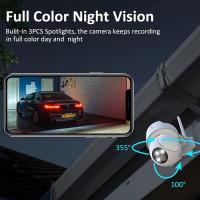
Many security cameras come with IR or night vision capabilities that automatically activate in low-light conditions. When cameras work in nighttime mode, the built-in IR LEDs can reflect off the inside of the glass, rendering the image unusable. Check the camera settings to turn off IR mode or use an external IR illuminator placed outside the glass to solve this problem.
3. Use Cameras With Advanced Features
Some security cameras are designed with enhanced motion detection algorithms or alternative sensing technologies that perform better through glass. These cameras might use radar-based detection, intelligent AI-assisted software, or other methods that bypass the limitations of standard motion detection. Investing in a camera with these features can improve performance in scenarios involving glass.
4. Consider Outdoor Placement
To bypass the limitations of motion detection through glass entirely, consider placing a weatherproof security camera outside the building. Outdoor placement provides an unobstructed view, allowing both pixel-based and PIR motion detection to function more effectively without interference from glass. Make sure to install the camera securely and choose a model with a durable design to withstand harsh weather conditions.
5. Place Sensors in Blind Spots
If placing a camera outside the building isn’t an option, consider augmenting your security system with additional sensors placed in blind spots. For instance, you could use door and window sensors that trigger an alert when opened. Motion-activated lights can also be a helpful addition to detect and deter activity outdoors, even if your camera’s motion detection isn’t working as intended.
Which Cameras Are Best for Motion Detection Through Glass?
Not all security cameras are created equal when it comes to their ability to detect motion through glass. Here are a few popular categories of cameras specifically suited for overcoming the challenges posed by glass barriers:
Wi-Fi Window Cameras: These cameras are designed to sit directly on windows, with their lenses facing outward. Some models come with advanced software that minimizes glare and enhances nighttime visibility without relying on IR. Look for cameras like the Ring Indoor Cam or the Nest Cam Indoor if you’re considering this option.
Dual-Lens or Motion-Sensor Cameras: These combine traditional video recording with advanced motion sensing capabilities, such as radar or heat-map analysis. They’re effective at minimizing false alarms triggered by light reflections or other environmental factors. Newer models in this category may come with object-recognition features powered by Artificial Intelligence (AI), reducing errors significantly.
Outdoor Cameras with Smart Detection: A weatherproof outdoor camera often provides the most straightforward solution. Models like the Arlo Pro series and Google Nest Doorbell come equipped with reliable motion detection technologies, night vision, and a durable setup designed for outdoor use.
Conclusion: Can Security Cameras Detect Motion Through Glass?
The answer to whether security cameras can detect motion through glass depends primarily on the technology used in the camera. Pixel-based motion detection can work through glass under the right conditions, but only if you position the camera correctly and account for potential glare or reflections. On the other hand, PIR motion detection, which is heavily reliant on infrared for identifying changes in heat, is generally ineffective through glass, as standard window panes block the IR signal.
To ensure optimal performance, consider the environment in which you’re placing your camera, account for the limitations of motion detection through glass, and choose the appropriate hardware for your specific needs. If monitoring through glass remains ineffective, placing cameras outside or employing complementary security systems can help you build an efficient and reliable setup.
Ultimately, by understanding the challenges of motion detection and following best practices, you can design a security system that ensures the safety of your property—whether or not glass stands in the way.