How To Live Stream Security Camera?
Direct Live Stream Without Cloud
i don't need a 'cloud' connection; just want to have a small window on one of my monitors showing the view from the front of the house (in real time) pretty much continuously.
i've already tried 3 different wifi cameras and all of them upload to a cloud and i have to watch them via the cloud server; not directly. that only give me a few minutes of 'live streaming' at a time before they timeout requiring a refresh and there is a notable lag/delay of several seconds between what is happening in real time and what my monitor is displaying from that cloud feed.
are there any wifi cameras currently on the market that can allow me to simply connect directly from my computer and get the video stream directly from the camera without going across the internet?
- any camera claiming to be onvif-conformant or listing "rtsp" as a feature should do what you want.
- "onvif" or "rtsp" sounds like exactly what i'm after; i have a private (not connected to internet at all) wifi network already for several things in the house that have no need to ever connect to the internet; ideally i want these camera accessible exclusively on that network.
- i know some of the older d-link wifi cameras would allow a direct connection but it seems that they dropped that capability rather than fix their weak unsecure implementation of it so now all they have are cloud based solutions.
RTSP Support
- lack of the rtsp support
- this is the most crucial and the most important absolute top 1requirement! if the camera does not support rtsp, then simple as it is:you won't be able to use it for live streaming on your website!
- moreover, even if the camera says it does support rtsp, you need to beable to figure out what it is actually!
- the only other option i have found is what others have described,: setting up these cameras through a 3rd party app such as: tinycam or vlc by using a rtsp stream over an onvif protocol and creating multiviewers there, but that (depending on camera and home configuration) may require forwarding ports on your router (i had to for my testing) and going through a separate vpn for added security.
- in my opinion, while this gives you the most flexibility, it is a lot of extra headache that i don't like doing if i just want basic live view of a position or position(s) at home.
- cam v3 4.36.16.6114 update three cams today - all working with rtsp
- looking for small outdoor wifi camera's with rtsp for synlogy
Live Stream From NVR
- i haven't personally tried it but i do use other reolinks to live stream at my desk and have access (live only) from my phone without using a cloud subscription.
- i also have them recording to an nvr so i have archive footage available for the past ~10 months
- basically on my desktop i use a personal dashboard page with a widget that reads the live stream directly from the nvr.
- i just leave it running pretty much full time on one of my monitors so i can see around the house when i'm working.
nvr if you want to store video locally. (they also have an sd card for local storage but it's not going to hold much data and can't be accessed remotely.
Camera Configuration For Live Streaming
- the camera can be configured only via its own mobile app, or evenworse, it can be configured via a 3rd party app
- although mobile apps are very popular nowadays, but in this case andespecially in the area of tech, they have their limitation.
- soon orlater, you might end up asking for remote support from a tech company,and if this happens, the support company may not be happy installingrandom apps on their own (sometimes even personal) phone.
- having aclear web browser-based configuration interface always makes thesupport more time efficient, more transparent and well organised.
- the camera offers very limited video stream settings
- some people may think that the video you can see on the local monitoror stored on your local hdd, will be the same as what you will see onthe live stream server.
- i would like to reassure you that this is notthe case!
- in fact, when you send a stream to an encoder software, theresult on the other end could be quite different.
- so, to ensure thatyour live stream has a really good quality, you need to pay attentionto the details, do your homework and finetune your stream settings.
- a camera which has 3 options to change stream settings, will just notgive you the result, that you and your audience would like to see.
Encoding Option
- the only encoding option is h.265 or h.265+
- to clarify the difference between different encoding types, probablyworth another article.
- however, for now, let's just stick, to why acamera that doesn't offer encodings other than h.265 could beproblematic.
- 98% of the security cameras on the market offer h.264,however, i hear some chinese hyper-modern camera that doesn't.
- withoutgoing into too technical details, h.264+ and h.265+ encodings are notsuitable for live streaming at all.
- h.265 is a good way, but on theother hand requires more hardware resources from the encoder software,thus live streaming in h.265 can be more expensive.
Camera Features And Stream Settings
here are a few things to consider when choosing a camera for livestreaming.
- 1. resolution
- a high-resolution camera is essential for producing a clear and crispimage. a resolution of 720p or 1080p is ideal for most live-streamingpurposes. 4k cameras are great, but in many cases, viewers won't watchthe stream in 4k from their mobile or using mobile broadband. however,to have a 4k option is definitely an advantage.
- 2. autofocus
- autofocus, is essential for live streaming, as it ensures that the imageremains in focus even if the subject moves.
- 3. frame rate
- frame rate refers to the number of frames captured per second. ahigher frame rate produces smoother video, so a camera with a framerate of 30 frames per second (fps) or higher is recommended.
- 4. keyframe interval
- keyframe interval refers to how often a video encoder creates acomplete image, think of this as a snapshot of a video. beaware that keyframe interval may have different names dependingmake and models. e.g.: i-frame; p-frame or gop
- 5. bitrate and bitrate type
- bitrate and bitrate types will determine the bandwidth/quality of yourstream.
- 6. low-light performance
- good low-light performance is essential for live streaming inenvironments with limited lighting. a camera with a large aperture andhigh iso sensitivity is ideal.
- 7. audio codecs
- to have the option to choose between different audio codec types inyour camera has an absolute benefit as some of the codecs can breakthe live stream itself. the most common codecs are aac, mp3, he-acc,aiff etc.
a note here: it is absolutely crucial to have the option to change thevalue of the last 4 stream properties. if a camera doesn't providethese options, i don't recommend to use the camera for live streaming!
Real-Time Monitoring And Live Streaming
- security cameras, also known as surveillance cameras, are used to monitor homes, businesses, and other types of properties.
- typically, they are connected to a recording device such as a video tape recorder or a disk.
- in the last few years, ip-based security cameras have become increasingly popular.
- security cameras enable you to remotely monitor a scene and play back recorded images.
- an internet protocol camera or network camera is a type of digital video camera that can send and receive data via a computer network.
- this type of camera has become increasingly popular among homeowners and business owners in the last few years because of steep price drop.
- a webcam can also be considered as a network camera because it can send or receive data via a computer.
all security cameras are video cameras. most security cameras support real-time monitoring / live streaming via a web browser within the same network. from the internet, it requires more complicated network configuration.
- some security cameras can store video files to a network file server within the same network.
- almost all security cameras can upload image snapshots to an ftp/smtp server;
- some cameras can also upload video clips to an ftp/smtp server.
Wireless Security Cameras
- wireless security cameras transmit video and audio signals wirelessly to a receiving device.
- there are analog and digital types of wireless cameras.
- digital security cameras have become much more popular recently because they can be accessed over the internet.
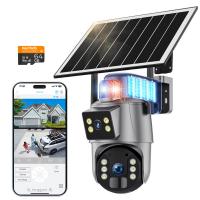
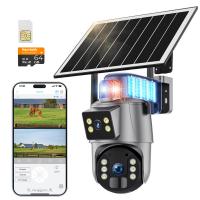
i am looking for a wifi solar camera that i can look at some pickleball courts to see if they are occupied. i cant use the mobile app and i must view through the web browser. all the ones i have tried, eufy and reolink time out on the web browser.
this amcrest wifi is continuous and not dependent on any cloud. you need something that is wired for power. i wouldnt mess with anything that uses batteries only like arlo.
Local Storage And Cloud Storage
- most dvr/nvr security camera systems can store recorded images and videos to a tape, hard drive, or onsite storage server.
- however, storing data in this manner leaves it susceptible to tampering and damage by intruders.
- for better protection and security, offsite storage is the best solution.
- the required amount of storage is dependent on your camera’s image resolution, frame rate, compression ratio and days of retention.
- setting up your camera to use motion detection can significantly reduce storage usage.
- security cameras can generate a large amount of data.
- the amount depends on the compression ratio, images captured per second, and image size.
- most cameras provide a limited amount of storage space; therefore, recordings are usually kept for a preset amount of time before being overwritten by new images.
Real-Time Viewing Over The Internet
real-time viewing camera ftp supports real-time viewing (live streaming) of a scene using the camera viewer feature.
- many ip cameras can support live viewing;
- however, such feature usually only works at the same location and only supports few connections.
- with cameraftp service, you can view images/videos over the internet from anywhere using any device.
- it also allows many people to live stream the video concurrently.
Bandwidth And Resolution
- an analog security camera usually supports pal (768x576 pixels) or ntsc (720x480 pixels) format.
- a digital security camera can support many different image resolutions, e.g. 640x480, 800x600, 1280x960, 1920x1080 and more.
while the resolutions of still image cameras can go as high as 20 million pixels, for a video surveillance camera, the standard resolution is lower. the main reason is because of storage and bandwidth requirement.
- the higher the resolution, the more storage space and the more bandwidth it requires.
- if you set the resolution to higher than 1920x1080 and if you have multiple cameras, you could run out of upload bandwidth if your internet connection is not very fast.