Which Ring Camera Is Wireless?
If by “wireless” you mean no video cable and it connects over Wi‑Fi, almost every Ring camera is wireless. If you mean no power wire at all, the Ring cameras you want are the battery-powered models. Those are the ones you can mount without hiring an electrician or drilling near an outlet. The main wireless Ring camera options are: - Ring Stick Up Cam Battery - Ring Spotlight Cam Plus Battery - Ring Spotlight Cam Pro Battery - Ring Stick Up Cam Pro Battery - Ring Battery Doorbell models if you’re looking for a front-door camera rather than a general security camera The simplest answer for most people: Ring Stick Up Cam Battery is the basic fully wireless Ring camera. It runs on a removable rechargeable battery and connects to your home Wi‑Fi.
What “wireless” means with Ring cameras

This is where a lot of confusion starts. Ring uses “wireless” in a couple of different ways, and shoppers often mean something more specific. A Ring camera can be wireless because it sends video over Wi‑Fi instead of a physical data cable. But some Wi‑Fi cameras still need to be plugged into power. For example, a plug-in Ring camera does not need an Ethernet cable, but it still has a power cord. A truly wire-free Ring camera has two things: - Wi‑Fi connection - Battery power So if you want to mount a camera on a fence, garage, shed, brick wall, porch post, or anywhere without an outlet nearby, choose a Battery model.
Best basic wireless Ring camera: Stick Up Cam Battery
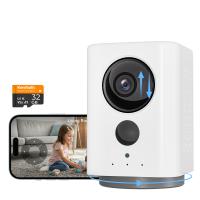
The Ring Stick Up Cam Battery is usually the easiest choice if you just want a wireless camera that works indoors or outdoors. It is small, simple, and flexible. You can place it on a shelf indoors, mount it to a wall outside, or use it to watch a side gate, driveway, back patio, or garage area. It uses Ring’s removable battery pack, so when the battery gets low, you slide it out, recharge it, and put it back. This is the model I’d look at first for everyday use because it does not overcomplicate things. It gives you motion alerts, live view, two-way talk, night vision, and app control without needing a hardwired installation. The main limitation is that it does not have a powerful built-in spotlight like the Spotlight Cam. At night, it can still see using infrared night vision, but it will not light up the area in the same way. If you want the camera to visibly brighten a dark driveway or backyard when someone walks by, the Stick Up Cam Battery may feel a little underpowered. It works best in places where you want awareness, not floodlight-style deterrence. Good places for it: - Covered porch - Side yard - Garage interior - Back door - Apartment balcony - Pet monitoring area - Shed entrance - Hallway or indoor entry area One practical tip: if the camera is going outside, avoid mounting it too high. People often put security cameras way up near the roofline because it feels safer. The problem is that you end up with a great view of the top of someone’s head. Around 7 to 9 feet high is usually more useful, depending on the layout.
Best wireless Ring camera with lights: Spotlight Cam Battery

If you want a wireless Ring camera for outside and you also want lights, look at the Ring Spotlight Cam Plus Battery or Ring Spotlight Cam Pro Battery. These are better for driveways, dark side yards, detached garages, and backyards because they have built-in spotlights. When motion is detected, the light can turn on, which makes the camera more useful at night and also makes the camera more noticeable. For many homes, the Spotlight Cam Plus Battery is the better value. It covers the basics well: battery power, Wi‑Fi, motion alerts, two-way talk, a siren, and motion-activated lights. The Spotlight Cam Pro Battery adds more advanced features, such as improved motion detection and extra mapping-style features depending on your setup and subscription. It is the nicer camera, but not everyone needs it. If your goal is simply “tell me if someone is near the garage and light the area up,” the Plus version is often enough. Battery life varies a lot with Spotlight Cams. This is one thing product pages never fully communicate. If you mount it facing a busy sidewalk, street, or tree that moves in the wind, the battery will drain much faster. If it only catches occasional movement near a gate, it can last much longer. You can improve battery life by adjusting: - Motion zones - Motion sensitivity - Recording length - Alert frequency - Camera angle A second battery pack is worth considering for outdoor Ring cameras. Some models can hold more than one battery, and even if yours only uses one at a time, having a charged spare means you do not leave the camera offline while the battery charges.
Stick Up Cam Pro Battery: a step up, but not always necessary
The Ring Stick Up Cam Pro Battery is another fully wireless option. It is more advanced than the regular Stick Up Cam Battery and is aimed at people who want better motion features and a more refined camera. It can make sense if you care about more precise motion detection or you want a higher-end Ring camera without built-in spotlights. But for many homes, I would not start here unless you already know why you want the Pro features. The regular Stick Up Cam Battery is often enough for a porch, garage, or general outdoor view. The Spotlight Cam Battery is usually better if the area is dark. The Pro version sits in between: nicer than the basic camera, but not as visually deterrent as a camera with lights.
Yes, many Ring doorbells are wireless in the battery-powered sense. If your real question is about a front door camera, then you may not need a Stick Up Cam at all. You may want a Ring Battery Doorbell instead. Battery Ring doorbells are designed for renters, older homes, or doors without existing doorbell wiring. They connect through Wi‑Fi and run from a rechargeable battery. Some models have a removable battery pack; others require you to remove the unit or charge it directly, depending on the model. A battery doorbell is better than a general camera for: - Seeing visitors at the door - Package alerts - Two-way talking with delivery drivers - Replacing a traditional doorbell - Monitoring the front step A Stick Up Cam is better than a doorbell for: - Side gates - Backyards - Driveways - Garages - Angled views away from the front door - Places where a doorbell shape would look odd One common mistake is using a doorbell camera to cover too much. A doorbell is great for the person standing right in front of it. It may not be the best tool for watching a whole driveway or side yard.
Some Ring cameras are wireless only in the Wi‑Fi sense, but they still need power. For example, Ring Indoor Cam and Stick Up Cam Plug-In connect over Wi‑Fi, but they need to be plugged into an outlet. They are easy to install, but they are not fully wireless. The Ring Floodlight Cam models are typically hardwired. They are excellent for replacing an existing outdoor floodlight, but they are not the right choice if you want a no-wire installation. So if you see terms like: - Plug-In - Wired - Hardwired - Floodlight Cam Assume you need a power source. If you see: - Battery - Battery Doorbell - Solar-compatible Those are the models closer to what most people mean by wireless.
For outdoor battery Ring cameras, a solar panel can be a very practical upgrade. It does not make the camera completely maintenance-free in every climate, but it can reduce how often you need to recharge. Solar works best if the panel gets several hours of direct sun. A panel mounted under a porch roof or facing a shaded fence may not do much. In winter, performance can also drop, especially in cloudy regions. For high-traffic areas, solar may help but not fully keep up. If your camera records dozens of motion events every day, the battery can still drain faster than the panel replenishes it. A good setup is: - Camera mounted for the best view - Solar panel mounted separately where it actually gets sun - Motion zones tightened so the camera is not recording every passing car Do not buy solar just because it sounds convenient. Buy it if you have the right sunlight and the camera is somewhere annoying to reach for charging.
Battery cameras are convenient, but they do have trade-offs. First, they depend heavily on Wi‑Fi quality. A camera mounted outside on brick, stucco, or far from the router may struggle even if your phone shows a signal nearby. Phones are not always a reliable test because they have different antennas and can switch between networks. If your camera is going on a detached garage or far corner of the house, you may need a Wi‑Fi extender or mesh system. Second, battery cameras wake up when they detect motion. They are not exactly the same as a wired camera that can record more continuously. For normal home security use, this is fine, but expectations matter. If you want constant recording, Ring battery cameras are probably not the right fit. Third, video history usually requires a Ring subscription. Without a plan, you can still use live view and receive some alerts, but recorded clips and event history are limited. This catches some buyers off guard. The camera works without a subscription, but it becomes much more useful with one. Fourth, placement matters more than specs. A modest camera in the right spot beats an expensive one aimed badly. Avoid pointing it straight at a busy street if you only care about your driveway. Avoid aiming it into direct sunlight if possible. Keep it close enough to capture faces, not just movement.
For the simplest fully wireless Ring camera, choose the Ring Stick Up Cam Battery. For a wireless outdoor camera with lights, choose the Ring Spotlight Cam Plus Battery. For a higher-end wireless outdoor camera with more advanced features, consider the Ring Spotlight Cam Pro Battery or Stick Up Cam Pro Battery. For your front door, choose a Ring Battery Doorbell rather than a regular security camera. If I were choosing for a typical house, I’d use a Battery Doorbell at the front door, a Spotlight Cam Battery for the driveway or backyard, and a Stick Up Cam Battery for a side entrance or garage. That covers the most common weak spots without running new electrical wiring.