Which Night Vision Monocular Is Best?
The best night vision monocular for most serious users is still a good PVS-14-style Gen 3 monocular. It is expensive, not flashy, and not the kind of thing most people impulse-buy, but it remains the standard for a reason: it works in real darkness, it can be helmet-mounted, it has proven durability, and it gives a natural-looking view that digital night vision still struggles to match. For casual backyard use, camping, wildlife watching, or checking a field from a porch, you probably do not need to spend PVS-14 money. A decent digital monocular can be perfectly useful if you understand its limits. The main mistake people make is buying the cheapest “night vision” monocular online and expecting military-style performance. Most of those budget units rely heavily on infrared illumination, which means they work more like an invisible flashlight and camera than true passive night vision. So the honest answer is this: the best night vision monocular depends heavily on what you need it for. If you want the best all-around serious monocular, get a PVS-14 with a quality Gen 3 white phosphor tube. If you want affordable night viewing for animals, camping, or property checks, a digital infrared monocular is the practical choice. If you want to detect living things at distance, especially in brush or total darkness, you may actually want thermal instead of night vision.
The best overall choice: a quality PVS-14 Gen 3 monocular
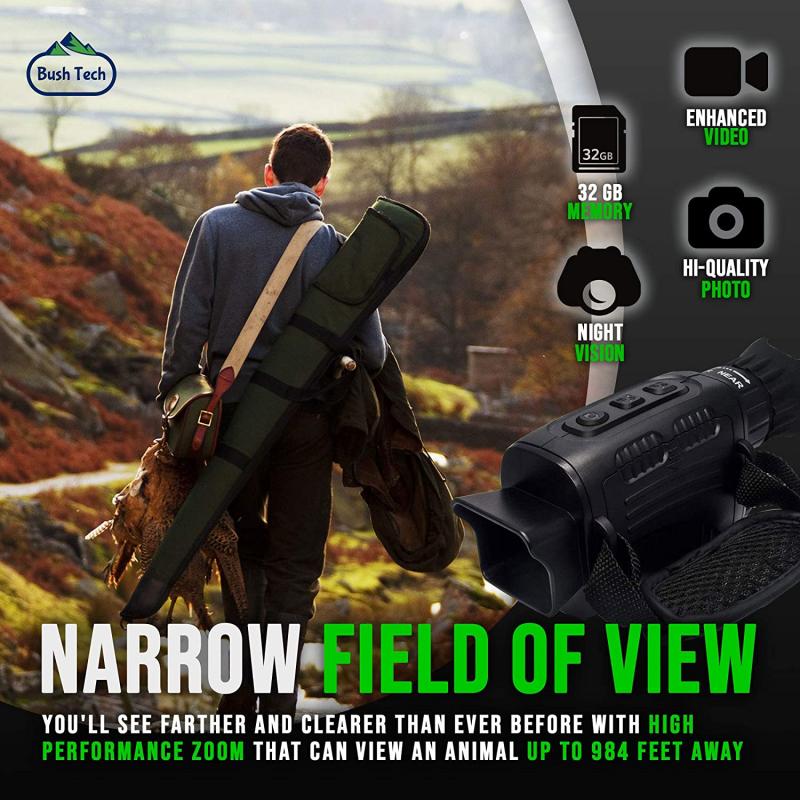
The PVS-14 is the benchmark because it gets the basics right. It is compact, rugged, repairable, widely supported, and extremely versatile. You can hand-hold it, mount it on a helmet, attach it behind certain optics, or use it for navigation in very low light. A good Gen 3 white phosphor PVS-14 gives you a bright, detailed image with excellent low-light performance. White phosphor is easier on the eyes for many users than older green phosphor tubes, especially during longer sessions. Green still works, and some people prefer it, but white phosphor usually feels more natural and less fatiguing. The biggest advantage of a real image intensifier monocular is that it does not need an infrared illuminator in many conditions. Moonlight, starlight, distant city glow, or reflected ambient light can be enough. That matters if you are trying to move around discreetly, observe wildlife without blasting IR everywhere, or use the monocular in a tactical setting where other night vision users could see your illuminator. The downside is cost. A good PVS-14 can cost several thousand dollars, and the tube quality matters more than the housing name. Two PVS-14s can look very different through the eyepiece depending on the tube specs, blemishes, gain, resolution, signal-to-noise ratio, and overall build quality. If you are buying one, do not shop by the lowest price alone. Buy from a reputable night vision dealer that provides actual tube data and photos through the unit. You want to see what you are getting, not just a stock image and vague claims.
Best for helmet use
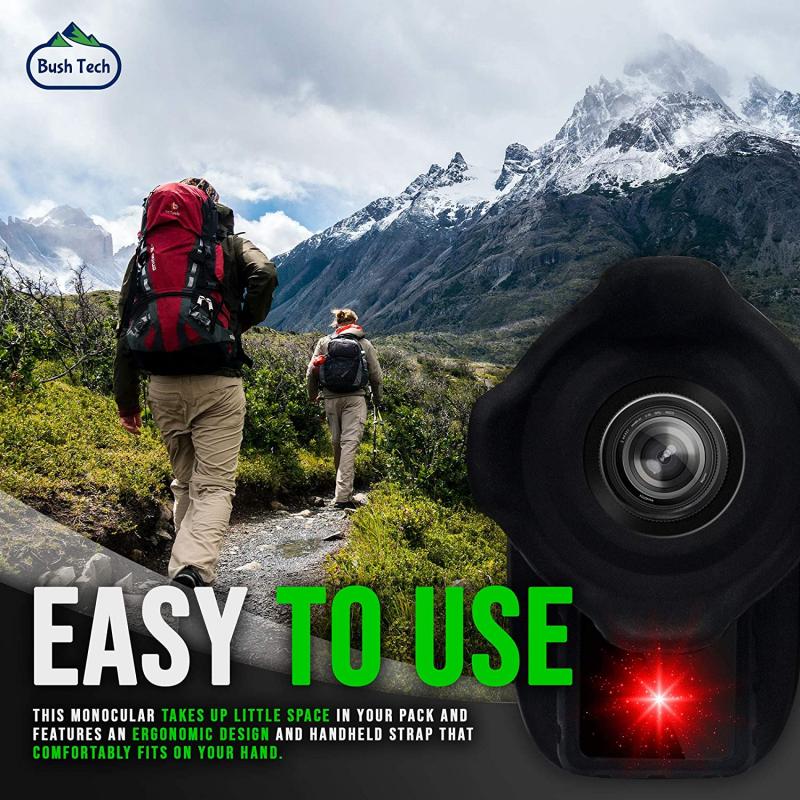
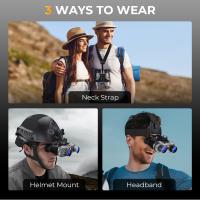
For helmet-mounted use, the PVS-14 is again the safest recommendation. It is light enough to wear for long periods, has endless mounting support, and is familiar to anyone who has spent time around night vision gear. Weight matters more than beginners expect. A monocular that feels fine in the hand can become annoying when hanging off the front of a helmet for hours. You also need to budget for the mount, helmet, counterweight, and possibly an IR illuminator. A cheap skull-crusher-style head mount may technically work, but most people outgrow it quickly because it is uncomfortable and unstable. If your plan is walking trails, farm work, security use, or training, helmet-mounted night vision is far more useful than hand-holding. Keeping both hands free changes the whole experience. The first time you try to open a gate, climb over deadfall, or carry gear while using a hand-held monocular, the value of a proper helmet setup becomes obvious.
Best budget option: digital night vision monoculars
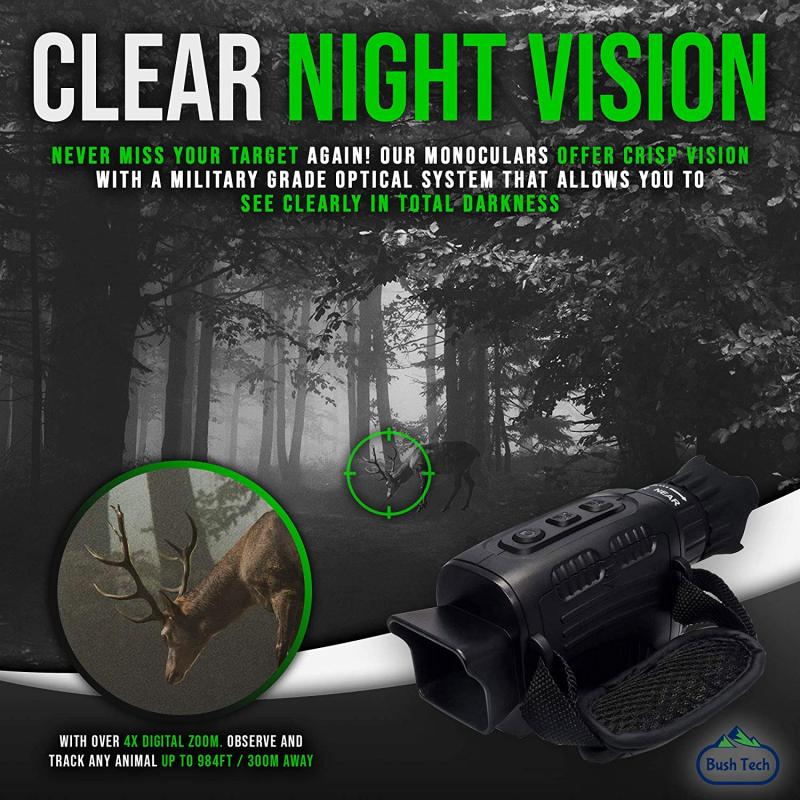
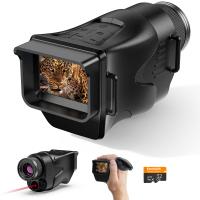
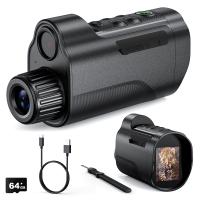
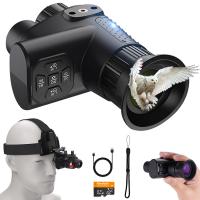
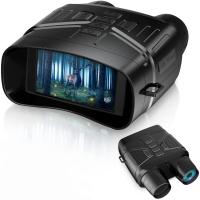
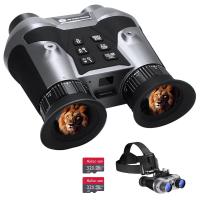
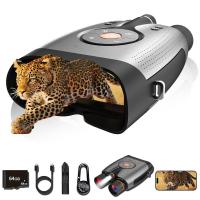
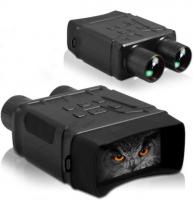
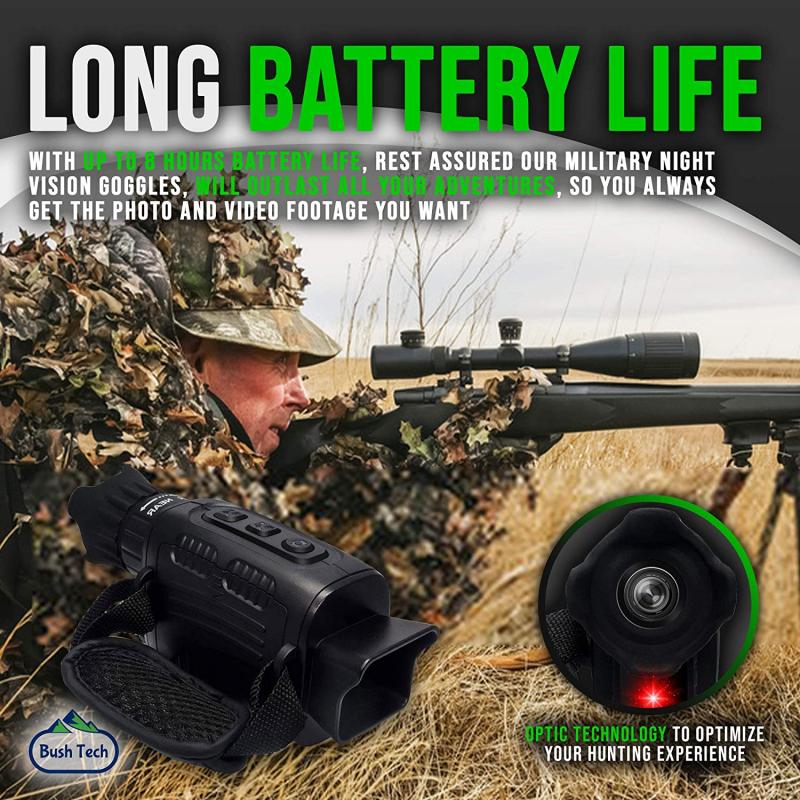
Digital monoculars are the realistic choice for many buyers because they cost a fraction of analog night vision. They use a sensor and screen, usually combined with an infrared illuminator. In total darkness, the IR light does most of the work. For casual users, this can be completely fine. If you want to watch raccoons behind the house, scan a campsite, check livestock, or look across a field from a fixed position, digital night vision can be very satisfying. You usually get photo and video recording too, which analog night vision does not provide without extra equipment. The trade-off is that digital units often feel slower and less natural. The screen can be bright against your eye, depth perception is not as good, and movement can feel slightly delayed on cheaper models. Battery life can also be underwhelming, especially in cold weather or when recording. Another practical issue: built-in IR illuminators are not magic. They may work well at short to medium distances, but performance drops quickly as range increases. Manufacturers often advertise optimistic distances based on ideal conditions. In real use, trees, humidity, rain, fog, and dark ground absorb light and reduce what you can see. For budget digital monoculars, look for models with a usable display, replaceable or rechargeable batteries, decent IR power, and simple controls. Avoid tiny no-name units with exaggerated “4K military night vision” claims. The image may look acceptable in product photos but disappointing outside.
Sionyx Aurora-style digital night vision
The Sionyx Aurora line is often mentioned because it performs better in low light than many cheap digital devices and can record usable color footage in certain conditions. It is not the same as a Gen 3 PVS-14, though. Some new buyers expect it to replace analog night vision for navigation, and that usually leads to disappointment. Where the Aurora-type devices make sense is filming, boating, casual observation, and situations with some ambient light. They can be fun and genuinely useful, especially if video matters to you. In very dark woods or overcast rural areas with no moon, they need help from IR and will not feel like high-end analog night vision. If your priority is recording what you see, digital has an advantage. If your priority is moving naturally through darkness, analog still wins.
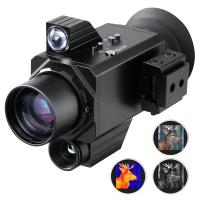
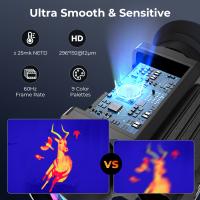
Thermal monoculars are not night vision in the traditional sense, but for some users they are the better tool. A thermal monocular detects heat rather than amplifying light. Animals, people, warm engines, and fresh tracks can stand out even in total darkness. For hunting, property security, search work, and spotting animals in brush, thermal can be more useful than night vision. A deer that blends into the shadows through a night vision monocular may pop immediately on thermal. The same applies to coyotes, hogs, or a person standing near a tree line. The limitation is identification. Thermal helps you detect that something is there, but it may not show fine details clearly enough to identify exactly what you are seeing at distance. Night vision gives a more natural image of the scene. Many experienced users like having both: thermal for detection, night vision for navigation and identification. If you are asking “which monocular lets me find animals fastest at night,” thermal deserves a serious look. If you are asking “which monocular lets me walk, drive slowly, navigate, or see the world naturally in darkness,” night vision is the better fit.
For analog night vision, tube quality matters more than marketing language. Resolution matters, but signal-to-noise ratio is often more noticeable in difficult lighting. A cleaner tube with better low-light performance is worth paying for if you actually plan to use it in dark rural areas. Do not obsess over one number while ignoring the whole device. A monocular with great specs on paper but poor assembly, questionable warranty support, or unknown tube origin is a risky buy. Night vision is expensive enough that after-sale support matters. For digital monoculars, sensor quality, IR illuminator strength, screen quality, and battery setup matter most. Magnification is often overdone. High digital zoom sounds appealing, but it usually makes the image grainy and shaky. For hand-held night viewing, moderate magnification is easier to use than a huge zoom number. Field of view is another overlooked detail. A narrow field of view makes scanning frustrating. It feels like looking through a straw, and you will miss things unless you move very slowly. For navigation, a wider view is much more comfortable.
The most common mistake is buying too cheap. Very low-cost night vision monoculars can be entertaining, but they are often disappointing outside a backyard. If the listing shows unrealistic military imagery and costs less than a decent flashlight, expectations need to be low. Another mistake is buying too much magnification. A 6x or 8x night vision monocular may sound powerful, but it is harder to hold steady and worse for close-range use. For general use, lower magnification is usually more practical. People also underestimate accessories. With a PVS-14, the monocular is only part of the setup. A good mount, helmet, lanyard, batteries, storage case, and IR light may all matter. With digital, you may want spare batteries, a better IR illuminator, or a tripod adapter. The last big mistake is ignoring local laws. Night vision and thermal devices may be restricted for hunting in some areas, especially when paired with firearms or artificial illumination. Check your local rules before buying for hunting use.
If you want the best monocular and can afford it, buy a high-quality Gen 3 white phosphor PVS-14 from a reputable dealer. It is still the most dependable all-around answer and the one least likely to feel like a compromise after the novelty wears off. If your budget is limited and your use is casual, buy a decent digital monocular and treat it as an IR-assisted viewing device. It will not perform like military night vision, but it can be very useful for wildlife, camping, and basic property observation. If your main goal is finding animals or people in darkness rather than navigating, consider a thermal monocular before buying night vision. Many outdoor users discover thermal solves their actual problem better. For most people, the smartest purchase is not the most powerful monocular on paper. It is the one that matches how you will really use it at night: walking, scanning, recording, hunting, watching wildlife, or keeping an eye on land around the house. Get that part right, and the choice becomes much easier.