kfconcept

KENTFAITH
K&F Concept    Blog >

Enjoy Your Selected Digital Life

Recently Viewed
  • Recently Viewed
  • Recently Viewed list is empty.

Compare (0) 0
  • Compare
  • You have not chosen any products to compare.

  • Compare
Currency: USD
  • Currency
Shop by Scene Shop by Rank

Log Into Your Account

Account

Order History

Wish List

Login

Forgotten Password?

or connect with

Register Account

Already have an Account?Log In

  • Shopping Cart
  • Your shopping cart is empty!

  • Register/Login to purchase, earn points
  • Favorite
  • Your wish list is empty.

  • Register/Login to like, earn points
  • Activities
  • Guide
    • Filter Guide
    • Lens Adapter
    • Product Review
  • News & Reviews
    • Camera Reviews
    • Sample Gallery
    • News
  • Tutorials
    • Solar eclipse photography
    • Photography Basics
    • Landscape Photography
  • Inspiration
    • Travel
    • Travel Stories
  • Home
  • Blog
  • Telescope How Does It Work?

Telescope How Does It Work?

Kentfaith 2024-07-03 01:13:40 0 Comments

Telescopes have long fascinated both amateur stargazers and professional astronomers alike. These remarkable instruments allow us to peer into the vast expanse of the universe, revealing celestial wonders that are otherwise invisible to the naked eye. But how exactly do telescopes work? In this article, we will delve into the mechanics of telescopes, exploring the different types, their components, and the principles that enable them to magnify distant objects. By the end, you will have a comprehensive understanding of how telescopes function and how they have revolutionized our view of the cosmos.

The Basics of Telescopes
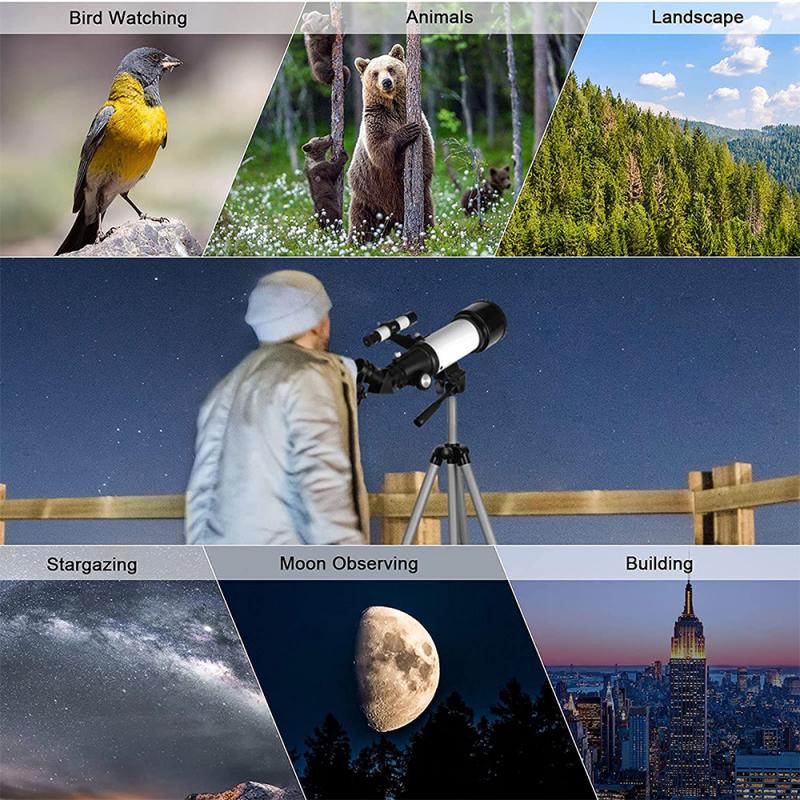
telescope how does it work 1

At its core, a telescope is an optical instrument designed to collect and magnify light from distant objects. The primary purpose of a telescope is to gather more light than the human eye can, thereby making faint and distant objects visible. This is achieved through a combination of lenses, mirrors, or both, which focus the incoming light to create a magnified image.

Types of Telescopes
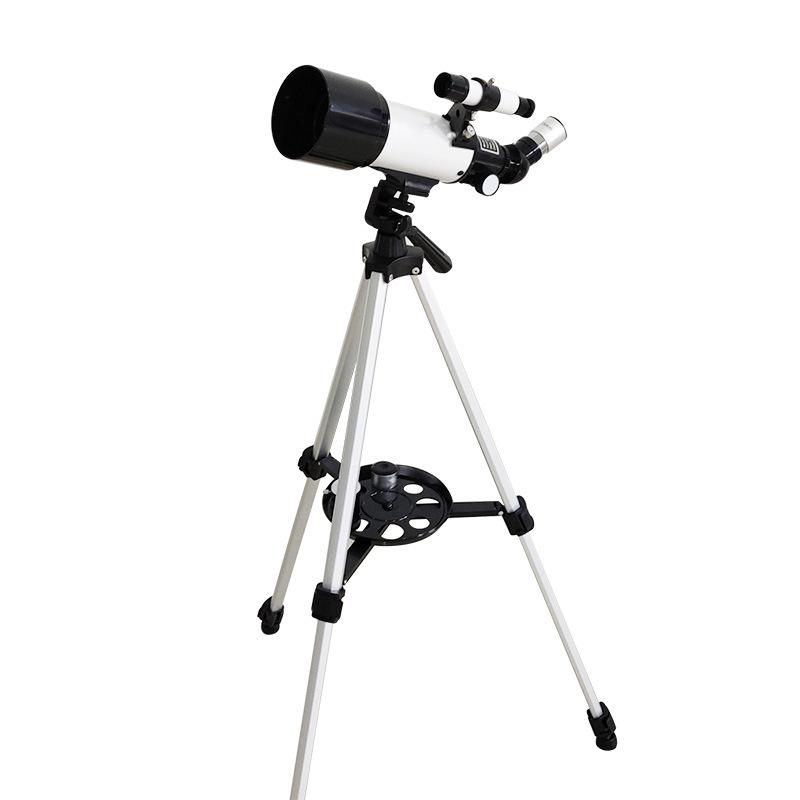
telescope how does it work 2

There are three main types of telescopes: refracting telescopes, reflecting telescopes, and catadioptric telescopes. Each type has its own unique design and method for focusing light.

Refracting Telescopes
telescope how does it work 3

Refracting telescopes, also known as refractors, use lenses to bend and focus light. The main component of a refractor is the objective lens, which is located at the front of the telescope. Light from a distant object enters the telescope and passes through the objective lens, which bends the light rays to a focal point. The eyepiece lens, located at the back of the telescope, then magnifies the image formed at the focal point.

One of the advantages of refracting telescopes is their simplicity and ease of use. They are also known for producing sharp and high-contrast images. However, refractors can suffer from chromatic aberration, a phenomenon where different colors of light are focused at slightly different points, resulting in a blurred image. This issue can be mitigated by using achromatic or apochromatic lenses, which are designed to reduce chromatic aberration.

Reflecting Telescopes
telescope how does it work 4

Reflecting telescopes, or reflectors, use mirrors instead of lenses to gather and focus light. The primary mirror, located at the back of the telescope, collects incoming light and reflects it to a focal point. A secondary mirror then redirects the light to the eyepiece, where the image is magnified.

Reflectors have several advantages over refractors. They do not suffer from chromatic aberration, as mirrors reflect all colors of light equally. Additionally, reflectors can be made larger than refractors, allowing them to gather more light and observe fainter objects. However, reflectors can suffer from other optical issues, such as spherical aberration and coma, which can distort the image. These issues can be minimized by using parabolic mirrors and other corrective optics.

Catadioptric Telescopes

Catadioptric telescopes combine elements of both refractors and reflectors, using a combination of lenses and mirrors to focus light. The most common types of catadioptric telescopes are Schmidt-Cassegrain and Maksutov-Cassegrain telescopes. These designs use a primary mirror to collect light, a secondary mirror to redirect the light, and a corrector lens to reduce optical aberrations.

Catadioptric telescopes offer a compact and versatile design, making them popular among amateur astronomers. They provide good image quality and are relatively easy to transport and set up. However, they can be more expensive than other types of telescopes due to their complex optical design.

Key Components of a Telescope

Regardless of the type, all telescopes share several key components that work together to gather and magnify light.

Objective Lens or Primary Mirror

The objective lens (in refractors) or primary mirror (in reflectors and catadioptrics) is the main light-gathering element of the telescope. Its size, or aperture, determines the amount of light the telescope can collect and, consequently, its ability to observe faint objects. Larger apertures allow for better resolution and more detailed images.

Eyepiece

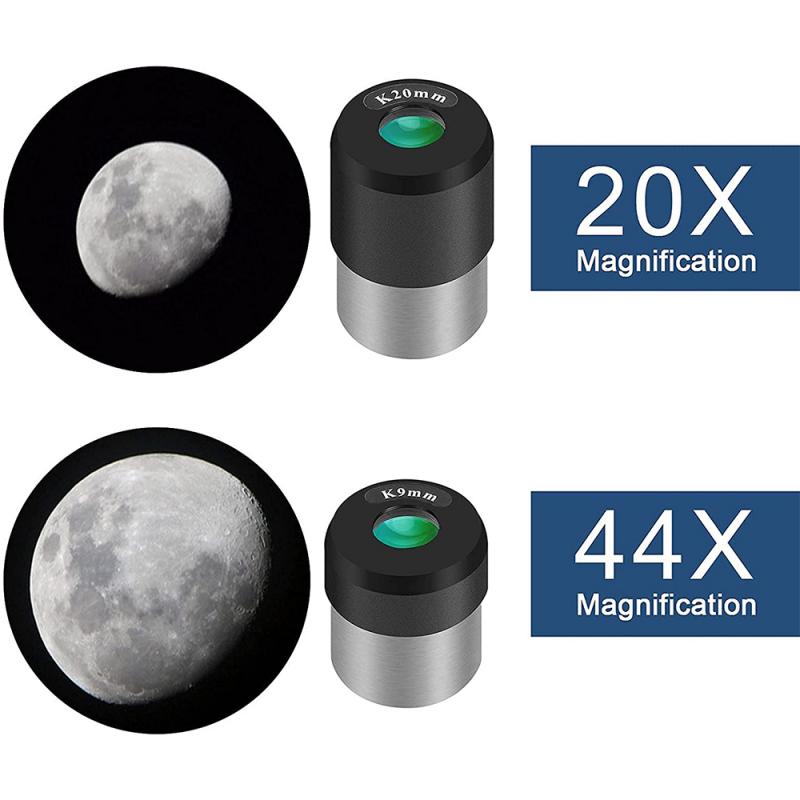
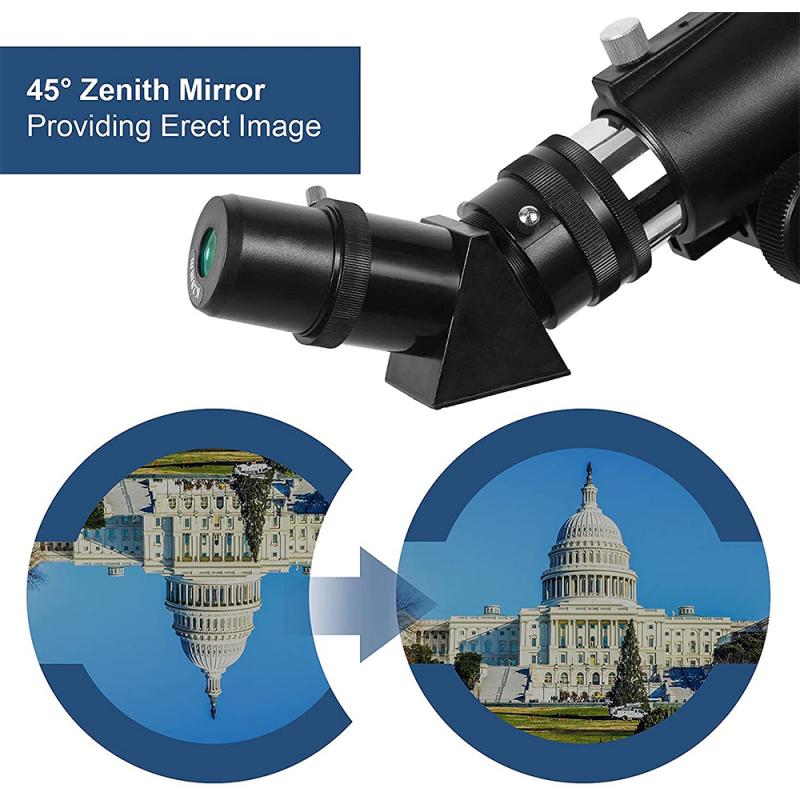
The eyepiece is the lens through which the observer views the magnified image. It works in conjunction with the objective lens or primary mirror to provide the desired level of magnification. Different eyepieces can be used to achieve varying levels of magnification, allowing for a more versatile observing experience.

Focuser

The focuser is a mechanism that allows the observer to adjust the position of the eyepiece or the primary mirror to achieve a sharp and clear image. Precise focusing is crucial for obtaining the best possible view of celestial objects.

Mount

The mount is the structure that supports the telescope and allows it to be pointed at different parts of the sky. There are two main types of mounts: altazimuth and equatorial. Altazimuth mounts move in altitude (up and down) and azimuth (left and right), making them simple and intuitive to use. Equatorial mounts are aligned with the Earth's axis of rotation, allowing for easier tracking of celestial objects as they move across the sky.

The Principles of Light and Magnification

To understand how telescopes work, it is essential to grasp the basic principles of light and magnification.

Light Gathering

The primary function of a telescope is to gather light from distant objects. The amount of light a telescope can collect is directly proportional to the area of its objective lens or primary mirror. This is why larger telescopes, with bigger apertures, can observe fainter objects and reveal more detail.

Focal Length and Magnification

The focal length of a telescope is the distance between the objective lens or primary mirror and the point where the light rays converge to form a focused image. The magnification of a telescope is determined by the ratio of the focal length of the telescope to the focal length of the eyepiece. For example, if a telescope has a focal length of 1000mm and the eyepiece has a focal length of 10mm, the magnification would be 100x.

Resolution

Resolution refers to the ability of a telescope to distinguish between two closely spaced objects. Higher resolution allows for more detailed and sharper images. The resolution of a telescope is primarily determined by its aperture, with larger apertures providing better resolution.

Practical Applications of Telescopes

Telescopes have a wide range of practical applications, from amateur astronomy to professional research.

Amateur Astronomy

For amateur astronomers, telescopes provide a window into the universe, allowing them to observe planets, stars, galaxies, and other celestial objects. Telescopes can be used for visual observation, astrophotography, and even citizen science projects, where amateur astronomers contribute to scientific research.

Professional Astronomy

In professional astronomy, telescopes are essential tools for studying the universe. Large observatories, such as the Hubble Space Telescope and the Very Large Telescope, have made groundbreaking discoveries about the nature of the cosmos. Telescopes are used to study everything from the formation of stars and galaxies to the search for exoplanets and the investigation of dark matter and dark energy.

Other Applications

Telescopes are also used in other fields, such as meteorology, where they are used to observe weather patterns and atmospheric phenomena. In addition, telescopes play a role in surveillance and defense, where they are used to monitor satellites and other objects in space.

Telescopes are powerful instruments that have revolutionized our understanding of the universe. By gathering and magnifying light from distant objects, they allow us to explore the cosmos in unprecedented detail. Whether you are an amateur stargazer or a professional astronomer, understanding how telescopes work can enhance your appreciation of these remarkable tools and the wonders they reveal. From the simple refractor to the complex catadioptric designs, each type of telescope offers unique advantages and capabilities, making the night sky accessible to all who seek to explore it.

Leave your comment
Cancel reply
Note: HTML is not translated!
Related products
4K Solar Eclipse Telescope Electronic Eyepiece with 1600mAh battery for 1.25in Telescope WiFi Connection
12
$128.99 $85.99
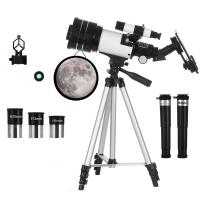
Children Solar Eclipse & Astronomical Telescope 70mm Aperture 300mm Focal Length, Portable Telescope with Tripod, Phone Holder & Bluetooth Remote Control
90
$203.99 $73.99
70mm Aperture Solar Eclipse & Astronomical Refracting Telescope (15X-150X) for Adults and Children, Beginners in Astronomy, 300mm Portable Telescope
141
$209.99 $94.99
4.3" LCD Screen Digital Coin Microscope, 50X-1000X Magnification, Work with Windows/Mac iOS
24
$107.99 $88.99
8-32x50 Continuous High-Definition Zoom Monocular Telescope, Black, with Mobile Phone Clip
11
$99.99 $46.99
Monocular Telescope Camera WiFi 8x42mm BAK4 Prism 2K Photo 1080P Video 4000mAh Battery
NEW Arrival
Monocular Telescope Camera WiFi 8x42mm BAK4 Prism 2K Photo 1080P Video 4000mAh Battery
14
$659.99 $461.99
Portable Telescope for Solar Eclipse, Stargazing 80mm Aperture 600mm Focal Length for Solar Eclipse
20
$209.99 $176.99
Wireless WiFi Microscope with Foldable Stand, 50X-1000X Magnification, Work with iPhone, iPad, Android, Mac, Windows
11
$47.99
Telescope Electronic Eyepiece with 4.3in Screen, WiFi Live Stream, Capture 1080P Photos & Videos, Rechargeable, Kentfaith
13
$144.99 $115.99
Mini Body Camera FHD 1080P 64G, 270min for Recording, Wearable POV Anti-Shake for Work Travel, Kentfaith
16
$87.49 $69.99
Products You May Like
K&F Concept 49mm Variable ND Filter ND8-128 (3-7 Stop) HD Hydrophobic VND Filter for Camera Lens No X Cross Nano-Xcel
40
$62.99 $49.99
2 Pack NP-FW50 Battery with Type-C Fast Charging for Sony ZV-E10, Alpha 7, A7, A7II, A7RII, A7SII, A7S, A7S2, A7R, A7R2, A5000, A6400, A6500, A6300, A6000, NEX-3, NEX-5, 1100mAh
49
$42.99
10x42 High Power Binoculars Compact HD Waterproof Low Light Night Vision Binoculars For Bird Watching / Traveling / Hunting / Football
333
$59.99 $36.99
K&F CONCEPT Popod 72" Phone Tripod, 3-in-1 Clip & Magnetic Selfie Stick with Remote, Automatic Phone Tripod Stand, Compatible with iPhone 17-12 Series Android Phones 1/4" Screw Accessories
88
$35.99
Pentax K/M/A/FA/DA Lenses to Fuji X Lens Mount Adapter K&F Concept M35111 Lens Adapter
5
$60.99 $33.99
SJCAM SJ7 Star Wifi Action Camera 4K/30FPS
22
$172.99
40X-5000X Trinocular Microscope with WiFi Electronic Eyepiece & Mechanical Stage, WF10X + WF25X Eyepieces, Abbe Condenser, Kentfaith
$462.49 $399.99
AI Smart Glasses with 164 Languages Real-Time Translation, 4 Translation Modes, Voice Control, AI Assistant, Music Playing All-in-one Bluetooth Smartglasses for iPhone, Android, iPad
NEW Arrival
AI Smart Glasses with 164 Languages Real-Time Translation, 4 Translation Modes, Voice Control, AI Assistant, Music Playing All-in-one Bluetooth Smartglasses for iPhone, Android, iPad
12
$99.99 $79.99
58mm Variable Fader ND2-400
$61.99 $17.99
46mm ND2-32 (1-5 Stop) Variable ND Filter and CPL Circular Polarizing Filter 2 in 1 No X Spot for Camera Lens Nano-Xcel Series
64
$69.99 $62.99
Related articles
Laser Rangefinder How Does It Work?
How Does Refractor Telescope Work?
360 Trail Camera How Does It Work?
360 Degree Video Camera How Does It Work?
How To Work A Telescope?
How Does Sd Card Work?
How Much Does It Cost For Security Cameras?
Cpl Camera Filter What Does It Do?
When Screen Recording Does It Record Audio?
How To Watch Recorded Security Camera Footage?
Blog You May Like
77mm Filter Fits What Lens?
How To Use Camera Selfie Stick?
Which Camera Works With Surveillance?
Can Any Tripod Fit A Mobile Phone?
Which lens is used for a camera?
When To Use A Camera Flash?
How To Remove Memory Card From Nikon Camera?
Does A Trail Camera Flash At Night?
What Is An Adapter Ring For Cameras?
When Was The Telescope Made?
Related categories
beginner telescope camera lens cap Magnetic Lens Filter camera filter pouch Lens Filter Holder canon ef lens mount Light Pollution Filter magnetic variable ND filter reverse graduated neutral density GND filter​
Popular products
Electronic Eyepiece For Telescope​ cell phone monocular telescope best telescope for beginner Children Astronomical Telescope portable monocular telescope monocular telescope phone clip Monocular Camera Telescope solar eclipse Solar Eclipse Telescope beginner telescope for adults
Related searches
M50 It Lens 18-45mm Lens Filter Good Telescope Binoculars Telescope Amateur Telescope Monocular Telescope Lens Telescope For Stargazing Electronic Telescope Eyepiece Tripod For Telescope Telescope Phone Adapter Monocular Zoom Telescope
Related Scenes
Best Telescope For Stargazing Best Telescope For Viewing Best Telescope For Bird Watching Best Telescope For Viewing Stars Best Portable Telescope For Stargazing Best Telescope For Viewing Wildlife Best Telescope For Viewing The Moon Best Camera For Both Pictures And Video Best Digital Video Camera Best Wifi Camera For Home
Blog Category
  • Activities
  • Guide
    • Filter Guide
    • Lens Adapter
    • Product Review
  • News & Reviews
    • Camera Reviews
    • Sample Gallery
    • News
  • Tutorials
    • Solar eclipse photography
    • Photography Basics
    • Landscape Photography
  • Inspiration
    • Travel
    • Travel Stories
Search Article
Latest from the Blog
How To Allow Camera And Microphone?
What Size Screen For Projector?
How To Reduce Noise In Bluetooth Headphones?
How To Clean Cleaning Cloth For Glasses?
Which Smartwatch Is Most Accurate For Calories?
When Will A Speed Camera Flash?
Prime Day 2026 - K&F Concept 15th Anniversary Celebration
How To See Cells In A Microscope?
Which Sony E Mount Lens?
Which Camera Is Best For Video And Photography?
  • Easy Payment Multilple Payment Options

  • Free Shipping Global WareHouse Shipment

  • No Risk 30-Day No Reason Return

  • Limited Deals Buy More, Save More

  • Tax Free No any surcharges or tax fee

Information
  • About us
  • Contact Us
  • Site Map
  • Blog
  • Video
  • Gallery
  • VIP Membership Rewards
Service
  • Privacy Policy
  • Terms & Conditions
  • Shipping & Delivery
  • Payment Info
  • Warranty, Return & Refund
  • Intellectual Property Rights
  • Ambassador
  • Affiliates
  • Wholesale
Support
  • My account
  • Order History
  • FAQs
  • Extend Warranty
  • Logistics Tracking
Follow us
NewsLetter

Get the latest product, K&F Concept respects your privacy.

Powered By KENTFAITH © 2026