What Is The Best Dash Camera For Cars?
The best dash cams of 2026, tested
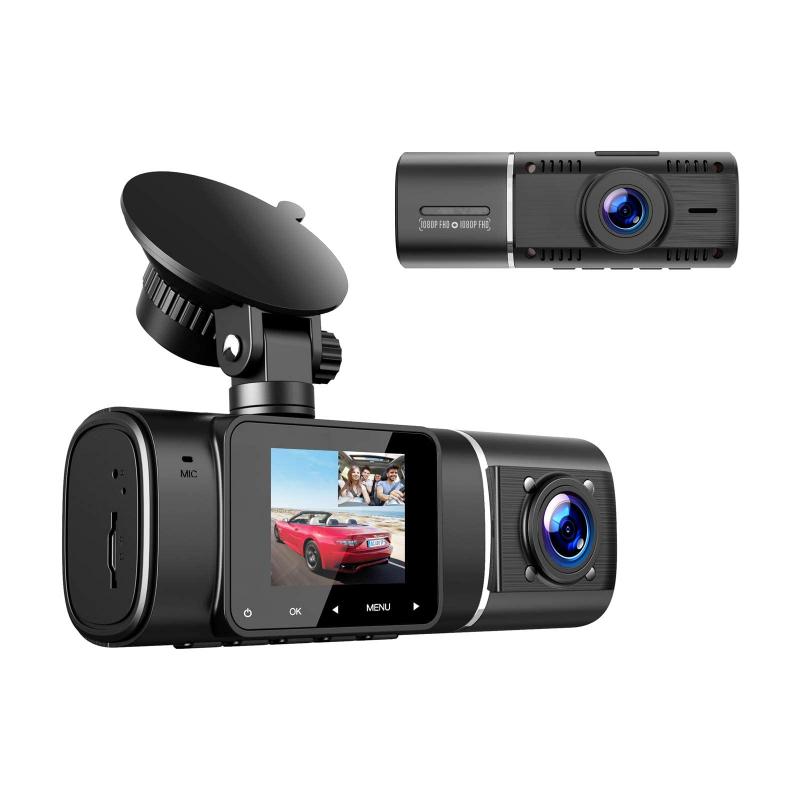
as we've seen from countless crash videos on social media, dash cams are among the best ways to capture evidence of an accident for insurance or law enforcement. but like anything in the technology market, there are way too many options to choose from. should you get one with an interior camera? what about nighttime resolution? do you need functions like gps locating and vehicle speed?
the gear team ran a handful of the top dash cams available today through a set of rigorous testing to separate the decent from the great. here's everything you need to know about choosing the best dash cam for your vehicle.
equipping your vehicle with a dash cam is one of the most potentially prudent (and entertaining) investments you can make for your vehicle. figuring out which one to buy might seem tough, so we've broken down our top favorites to make that decision a bit easier.
- viofo a329s
- vantrue e1 pro
- 70mai t800
- miofive s1
Viofo A329S
editor's note: we tested the a329 model, which viofo discontinued. this article links to the viofo a329s, an upgraded model supporting up to three camera feeds—the front, rear, and cabin.
look through the comments below and you'll see viofo was one of the most-requested brands we didn't feature in our initial testing. as such, we made sure to add the viofo a329 unit to our testing pool this time around, and lo and behold, it's now our favorite.
image quality was, quite frankly, incredible. the 4k sensor captured extremely well-resolved footage at 60fps. this extra frame rate compared to some of the competition meant moving subjects were captured in even more detail, as the faster shutter speeds required (1/60th of a second shutter compared to 1/30th for 30fps footage) meant moving objects were sharper than nearly every other camera we tested.
another nice tech feature is the inclusion of wi-fi 6 connectivity, which offers transfer speeds up to 30mb/s. with this, you can pull files from the camera to your smartphone or tablet much faster compared to much of the competition.
the only knock we had against the viofo is that when installed on windshields with a steep angle, it can be difficult to see the display on the rear of the camera. once installed though, there shouldn't be much reason to ever move the camera, especially considering the accompanying viofo app, which is easy to set up and simple to navigate.
as a whole, the viofo a329 lived up to its expectations, delivering incredible image quality and a seamless user experience. yes, it will cost you, but even at full price, it's worth it knowing you'll have peace of mind should you be involved in an accident and need footage for insurance or law enforcement.
Vantrue E1 Pro
the vantrue e1 pro shows that good things can come in small(er) packages. this compact camera cube records true 4k/30 via sony's starvis 2 image sensor, and while its footage skews saturated, dynamic range stays intact across various lighting conditions, so plates and signage don't disappear when the sun is shining bright. a magnetic adhesive mount makes installation a one-hand job, the bundled cpl filter knocks down dashboard glare, and the 1.54-inch screen plus tactile buttons are handy when you don't want to futz with your phone.
when you do, the 5-ghz wi-fi app is quick for settings tweaks or yanking a clip, and built-in gps writes speed and location to your files. you also get buffered parking capture and support for monster 1-tb cards. value and size are the hooks here: it's compact, easy to live with, and delivers consistently sharp 4k without overcooking the shadows.
- resolution
- 4k (3840×2160)
- field of view
- 158°
- parking crash video protection?
- yes (24/7 parking modes incl. buffered)
- crash detection video protection?
- yes (emergency lock/g-sensor)
- app?
- yes, android and ios
- micro sd included?
- no (car optional in bundles, supports up to 1tb)
- camera(s)
- front only
Vantrue N5S
vantrue's flagship, the n5s is a rolling surveillance rig: four starvis 2 sensors cover front, rear, and both sides of the cabin, with the front shooting up to 2.7k and the rear at 1440p. the big win is consistency across the image: highlights stay in check, shadows don't mush out, and nighttime footage looks rather clean.
the on-body screen simplifies alignment and quick reviews, while 5-ghz wi-fi, gps logging, and an optional lte module fill out the feature set. it's a hefty unit on the glass, but the payoff is 360-ish-degree coverage and a 10-second buffered parking mode to catch the lead-up to an incident.
one interesting thing is that we did notice a hint of fringing at times, depending on the scene. so, for example, you'll see in the license-plate comparison image below that there's some blue fringing around the letters and numbers on the plate; that is, it's not a clear black-to-white transition between the test and the background. in the context of dash cams, we wouldn't say this is a deal breaker, but it's something worth noting given the price of this unit.
- resolution
- front 2.7k; rear 1440p; front cabin 1080p; rear cabin 1080p
- field of view
- front 158°; rear 165°; front cabin 160°; rear cabin 160°
- parking crash video protection?
- yes (24/7 parking with 10-sec pre-roll; hardwire required)
- crash detection video protection?
- yes (g-sensor locks events)
- app?
- yes, android and ios
- micro sd included?
- no (supports up to 1tb; cards bundled only in some kits)
- camera(s)
- front, rear, front cabin, rear cabin
70mai T800
the 70mai t800 is a reasonable and respectable choice for a company that's continuing to establish itself in the dash-cam space. it features a three-channel setup with 4k resolution front recording, 4k rear recording, and a 1080p interior camera, plus sony starvis 2 sensors in front and back, hdr across all three views, and wide fields of view that promise broad coverage around the car.
dynamic range is decent, exposure control is generally solid, and the overall image looks good at a glance. it captures a broad, useful view around the vehicle, and there's clearly a lot of hardware here for drivers who want front, rear, and cabin coverage in one package. details can get a bit blurry, especially in low-light situations, but overall, it performs admirably considering its price point. features like 24-hour parking surveillance, buffered emergency recording, wi-fi 6, and support for up to 512 gb of storage add to its appeal.
sure, it might not be on par with the likes of viofo or vantrue, but it's a great midrange three-channel option for those who want full coverage without completely breaking the bank.
- resolution
- front: 4k (3840×2160); rear: 4k (3840×2160); interior: 1080p (1920×1080)
- field of view
- front: 146°; rear: 146°; interior: 147°
- parking crash video protection?
- yes (24h parking surveillance plus three-channel collision detection and time-lapse recording)
- crash detection video protection?
- yes (buffered emergency recording; up to 3 minutes pre-collision plus 30 seconds after)
- app?
- yes, android and ios
- micro sd included?
- yes, 32gb
- camera(s)
- front + rear + interior
70mai Omni
the 70mai omni is one of the more interesting ideas in this category. the hook is the rotating front camera, which gives you 360-degree coverage up front and can use ai motion detection in parking mode to track activity around the vehicle when properly hardwired. it also backs that up with 4k front recording, a 1080p rear camera, sony starvis 2 sensors, wi-fi 6, and buffered emergency recording.
it is a clever setup, but the novelty does not always translate into dependable real-world protection. in our brief testing, the subject-tracking feature did not consistently pick up people moving around the vehicle, especially outside of bright daylight, and cars with thick pillars, tall headrests, or dark window tint can make that trick even more situational. as a straight dash cam, performance is adequate but not exceptional. while image quality is a bit underexposed, the omni is not far off 70mai's pricier t800 overall.
- resolution
- front: 4k (3840×2160); rear: 1080p (1920×1080)
- field of view
- front: 360° rotating coverage; rear: 130°
- parking crash video protection?
- yes (collision detection, ai motion detection, time-lapse recording, and lumi vision parking features)
- crash detection video protection?
- yes (buffered emergency recording; 10 seconds to 3 minutes before collision and 30 seconds after)
- app?
- yes, android and ios
- micro sd included?
- yes, 32gb
- camera(s)
- front + rear
Vantrue E360
more than just a dash cam, the vantrue e360 combines dash-cam monitoring with the unique view of a 360-degree camera. it also includes a selfie stick, so you can remove the dash cam and use it as a 360-degree camera no matter where you are.
as a dash cam, the e360 captures 5.2k 360-degree video both inside the cabin and outside facing the road. that sounds impressive in theory, but what you gain in perspective, you lose in resolution. the fisheye-style 360-degree view sacrifices details for coverage; license plates and other details outside the car were more difficult to see clearly compared to some of the competition.
the unit itself is an oblong box that hangs from its mount. we found the mount secure, but the magnetic attachment that holds the camera in the mount is suspect. this magnet makes it possible to easily take the camera out and use it with the included selfie stick, but we're not confident the magnet would hold the dash cam in place in the event of an accident.
as a whole, this camera feels like it's the embodiment of "jack of all trades, master of none." while it can do a lot, it doesn't do anything particularly well. that's not to say this is necessarily a "bad" dash cam—just that it serves a different purpose than most other dash cams. we know vantrue can create an impressive dash cam, as the company's n4 3 shows (it was our previous best overall pick), but as a dashboard camera for cars, the pricey e360 misses the mark.
- resolution
- front 5.2k; rear 2.7k; cabin 5.2k
- field of view
- front 210º; rear 165º; cabin 210º (diagonal)
- parking crash video protection?
- yes
- crash detection video protection?
- yes
- app?
- yes
- micro sd included?
- yes
- camera(s)
- front, rear, cabin
Baseus VD1 Pro
the baseus vd1 pro is an interesting first effort from a brand that's still new to the dash-cam space. its headline feature is the solar-assisted parking setup, which helps it stand apart from the usual hardwire-heavy competition, and the compact body is small enough to tuck neatly behind the mirror. baseus also gives it a 4k front camera, a 1080p rear camera, gps, and app connectivity, so it's a more ambitious choice than your average bargain-bin cam.
in our testing, image quality was respectable. resolution was decent, dynamic range held together reasonably well, and overall performance felt good enough for capturing everyday driving footage. it did not blow us away, but it also did not seem cheap or sloppy, which is a good place for a newcomer to start.
just as important, it was easy to live with day to day. the app is straightforward, setup is not especially fussy, and the small size makes it easier to hide than some bulkier competitors. we still need more time with its solar-charging feature before drawing final conclusions, but based on our first round of testing, the vd1 pro feels like a promising start.
- resolution
- front: 4k; rear: 1080p. baseus also says parking-mode capture is front 4k 25 fps and rear 1080p 25 fps.
- field of view
- 170° front / 120° rear
- parking crash video protection?
- yes (battery- and solar-assisted parking mode, motion detection, g-sensor collision detection, protected 30-second event clips)
- crash detection video protection?
- yes (g-sensor-triggered protected clips)
- app?
- yes, android and ios
- micro sd included?
- yes, 32gb
- camera(s)
- front + rear
Best dash cams for 2026
i’ve tested dozens of dash cams with real-world video comparisons, parking mode testing, and long-term reliability evaluation. here are my top picks for the best dash cams of 2026, including 4k dash camera options, front and rear dash cam setups, cloud-connected dashcams, and budget models for everyday drivers.
- thinkware u3000 pro
- viofo a119 mini 2.
- viofo a119 mini 2
- viofo a229 plus
- viofo a329s
- vueroid s1 4k infinite
- thinkware u3000 pro
- blackvue elite 9: cloud connectivity
What to consider
when it comes to buying a dash cam, there are three things you should look out for: figure out how much you want to spend, what capabilities you’re looking for from your dash cam, and how big a dash cam you’re willing to have stuck to your windshield.
- some people refer to best, wanting the cheapest
- some people refer to best, as wanting the fastest wi-fi transfer speeds
- some people refer to best, meaning has the highest resolution
- some people refer to best, meaning they want high frame rate
- low light performance
- others may think best means smallest
- there is no one single best, there is no one size fits all.
not too many 360 ones. i think vantrue is the most popular 4ch one which is close to 360.
for front and rear, there are a lot more options. viofo is well regarded for video quality, including at night. for a discrete, almost built-in look, fitcamx is popular.
most cheaper cameras use the same camera sensors so there is no big difference between them.. look for dashcam with sony starvis 2 sensor.. viofo or other
most dashcams use the same few cameras. the differences are mostly the physical hardware (size, how it mounts, if it has a screen, if it has a second camera, ...). other than that, they have slightly different software, which adjusts the camera differently. some will work better in the dark, some better in the day.
it really depends on your needs.