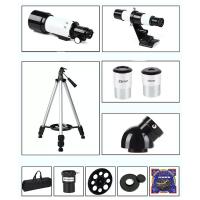
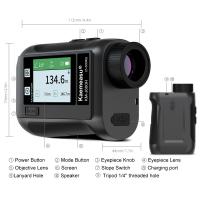
How To Clean A Scope Lens?
When to Clean Your Scope Lens
Your riflescope should be cleaned as little as possible, or only when you see a problem. If it's not dirty, don't clean it. You should clean your riflescope only when you see a problem or it affects your visibility. The body of your optic can be wiped down periodically, but the lenses require special handling.
Minor dust or debris on the exterior of the lenses is extremely unlikely to obstruct your view, so cleaning them should only be done when necessary. Dust on the eyepiece lens of your riflescope will be more noticeable than dust on the objective lens, therefore the eyepiece lens will likely require more frequent cleaning. But a few specs of dust on the objective lens will be harder to see and can usually be left alone.
You may not actually need to clean your lens each time you hunt. If you can still see through it clearly, leave it be. Even if you try to be thorough when you dust the glass, the world is full of tiny dust particles so no matter how careful you are, you'll still get itty bitty scratches on it each time you clean it.
Cleaning Tools and Solutions
- Compressed air: A rocket air blaster makes a great addition to your field kit. Use compressed air or a soft lens brush to clear away large particles of dust or debris first.
- Lens brush / LensPen: A lens pen is a dual-ended tool specifically designed for cleaning lenses. It's popular among photographers and hunters because it cleans thoroughly without using any liquids. One end has bristles for dusting off the lens, and the other has a pad with a carbon cleaning compound that you can use to rub out smudges. Make sure the dusting bristles are free of oil and dust before using them on your lens or you'll scratch it.
- Cleaning solutions: Eyeglass cleaner or 90+% isopropyl alcohol can be used to clean the lenses, as they dry faster than water. Water may also be used, but eyeglass cleaner and alcohol will evaporate more quickly, leaving fewer water spots. If there are some hard-to-clean spots on the body of the scope, a simple degreaser like 409 works well — do not use that on the lenses. Windex is too strong and could harm the coating on your lens. Make sure you spray the lens cleaner onto the microfiber cloth, not directly on the lens. Too much moisture can damage your scope's seals, so use it sparingly.
- Microfiber lens cloth or cleanroom swab: A lint-free microfiber cloth or cleanroom swab should be used sparingly. Even a soft cloth can scratch lenses if debris are not cleared away first. Always use one continuous motion when wiping with a cloth or swab. Kleenex, paper towels, and toilet tissue aren't suitable for wiping your lens either because they're a bit too rough and could scratch the coating.
- Q-tip: Your scope has a lot of small nooks and crannies that are tough to clean. Use a q-tip to clean ridges and tight spots. If you really want to protect your lens, you could wrap your microfiber cloth around the q-tip to help you get your lens clean without leaving wisps of cotton behind.
Step-by-Step Lens Cleaning Process
- Clear away large particles: Always start your cleaning by clearing away large particles of dust or debris from your optic using compressed air or a soft lens brush. It's essential that you dust off your lens before you even think about using a cloth to rub the glass. Every tiny speck of dust and dirt will create little scratches in your lens and degrade the clarity over time.
- Wipe down the body: With a soft towel or cloth, use some water to wipe down the body of the scope. There may be times where dirt builds up on moving parts, especially if the scope features external dials. A soft-bristled toothbrush is a great tool to remove stubborn debris without damaging the finish of the scope.
- Wet the lenses: If needed, wet the lenses with a generic eyeglass cleaner or 90+% isopropyl alcohol. Water may also be used, but eyeglass cleaner and alcohol will evaporate more quickly, leaving fewer water spots.
- Wipe the lenses: Using a soft microfiber lens cloth or cleanroom swab, wipe the lenses in a spiral pattern from the center out to the edge.
- Allow to dry: Give your optic time to air dry before repeating any of the steps above.
More often than not, you should be good to go after the air blower and brush cleaning, especially in the field. Remember, you shouldn't clean more than you have to.
Cleaning by Dirt Level
- Slightly dirty optics
- Slightly dirty optics typically have only fine dust or some pollen coating. First, remove the dust cap and rubber eyecup, then blow out any dust or debris with compressed air. If any stubborn particles remain, you can use a lens brush to gently slide them off the glass. After removing all visible particles, spray the optical element downward with pure distilled water and blow out all surfaces with compressed air until dry.
- Very dirty optics
- Very dirty optics may have fingerprints or heavy dust, pollen, or other contaminants that make the optical material appear hazy. All visual scenes through a very dirty optic will appear with reduced contrast, so cleaning is absolutely recommended. Begin the cleaning process by removing visible particles and rinsing the optical elements with cold running water. Then spray the optical element with pure isopropyl alcohol and gently wipe with a dry tissue swab. Finish by spraying the optical element with pure distilled water, then blow out all surfaces with compressed air until dry.
- Severely dirty optics
- Sometimes optical elements are exposed to heavy accumulations of dust or other materials such as food, candy, cosmetics, pollen, tree resin, contaminants, etc. Begin the cleaning process by removing visible particles and rinsing the surfaces of the optical element with cold running water. Then spray the optical element with a lens cleaning solution mixture and gently wipe the optical surface with a dry tissue swab. Next spray the optical element with pure isopropyl alcohol and gently wipe with another dry tissue swab. Finish by spraying the optical element with pure distilled water, then blow out all surfaces with compressed air until dry.
- Waterproof optics
- Waterproof optics eliminate concern about trapped liquid because they are sealed and purged of gases to prevent liquids. This makes them the simplest optics to clean. They are not water-resistant, which means cleaning solutions can easily flow off the edges. After removing all visible particles, rinse both surfaces of the optical element under cold running water. There is no need to worry about internal water leakage because of the waterproof seal. Then spray the optical element with pure distilled water and blow out all surfaces with compressed air until dry.
Additional Scope Maintenance Tips
When you clean your rifle, keep the cap on your scope. The solvents and powders you use to clean your gun can damage the lens coating and waterproof seals on the scope. It is also recommended to always use lens covers to help keep dust and other debris off the glass. Keep your cap on when you're trekking in and out of your hunting spot — you kick up a lot of dust along the way, plus you could encounter rain or even pollen that will dirty your lens.
If you were hunting in especially windy or wet conditions, you should remove your turrets and thoroughly clean them so that they don't rust. A q-tip works well, and so does a microfiber cloth. If you decide to use the cloth, be sure to clean your turrets after you clean your lens. You don't want to risk scratching your lens with dust from the turrets. You can also use a LensPen on the turrets — your safest bet would be to have a separate one for your turrets, so you don't spread any moisture or oils to the lens.
If your scope is battery-powered, you should take out the batteries periodically to clean the compartment. When you expose your scope to environmental conditions, moisture can get inside any nook or cranny. If your batteries get old or wet, they can begin corroding inside the compartment. Keep spare batteries in your hunting pack so that you never run out of power.
When cleaning optical elements, absolutely avoid wiping sand or dust around over the surface of the lens. Over time, this will wear away any coating. Regardless of the steps you take to clean the lenses, always exercise care and caution.