What Is The Best Rangefinder For 1000 Yards?
A great tool for any shooter or hunter in the field is a laser rangefinder. When you need to accurately determine the distance to your target at 1,000 yards or beyond, having the right rangefinder makes a significant difference. Before choosing a model, there are a few key points to consider: range capabilities, angle compensation, magnification, durability, and power source.
Key Features to Consider
- Range Capabilities
- Ideally you would want to be looking for a rangefinder that can accurately determine the distance to your desired range. You should also be looking for a rangefinder that is accurate to +/- 1 yard.
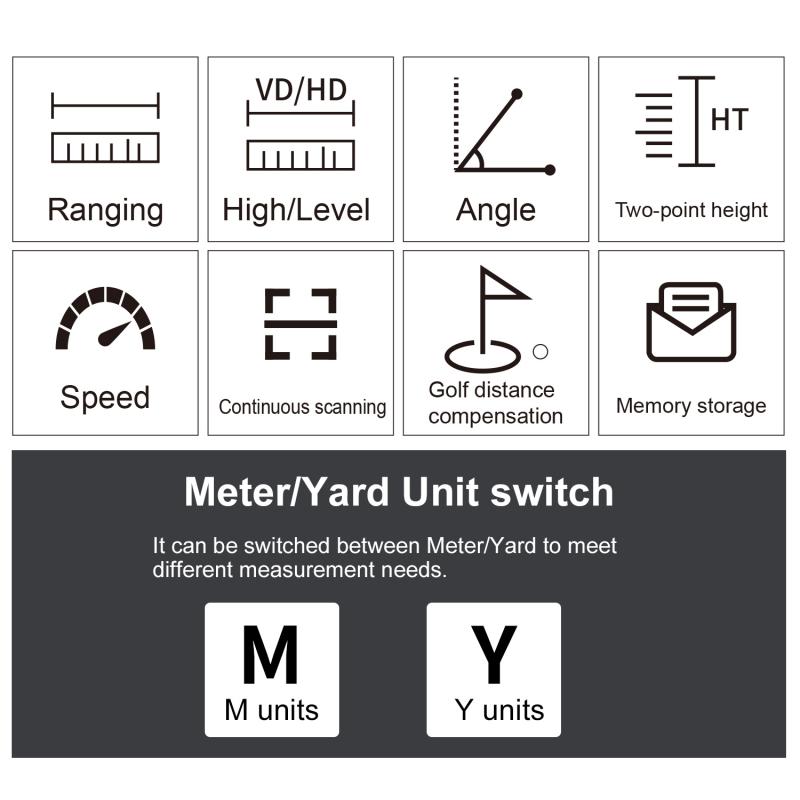
- Angle Compensation
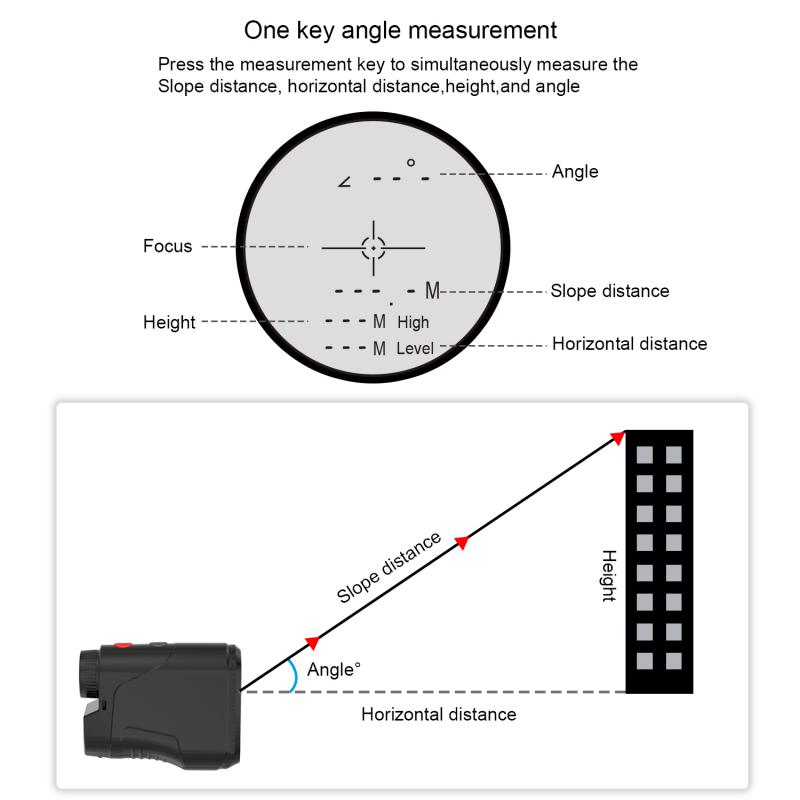
- This feature will calculate the true horizontal distance to your target by taking into consideration the angle either up or downhill.
- Magnification
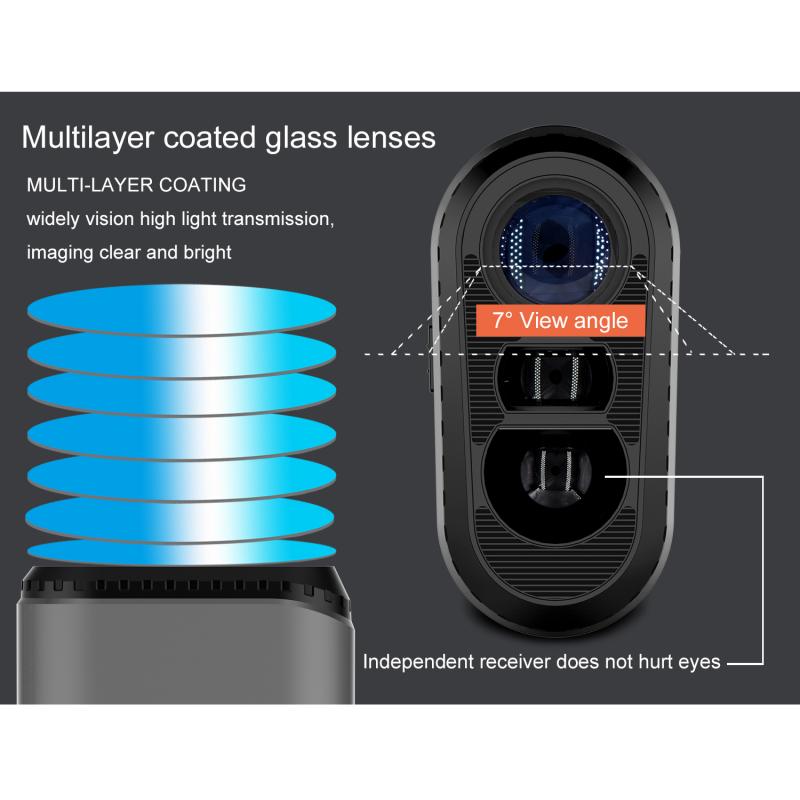
- Once you locate your target, having a rangefinder with some magnification will help you re-acquire that target quickly and keep you on task.
- Durability
- It's always beneficial to have a rangefinder that is waterproof and fog proof, as well as shock and impact resistant.
- Power Source
- Some range finders run off batteries, others are rechargeable via a USB cable, and some models combine both options so you can use either.
Important Note on Rated Range vs. Real-World Range
Manufacturers state that the number mentioned after the logo is how many yards it's able to read on a reflective surface. On a non-reflective surface, you can cut that number in half and that's what you're going to be able to read with that rangefinder. A vortex rated at 1,000 meters, for example, has only been used reliably out to about 400 yards by some users, and anything greater than 650 yards on desert sand in bright light can be a "crap shoot." If you actually want to range stuff at 1,000 yards, you should look for something rated farther than 1,000 to get usable performance at that distance.
Top Picks for 1,000 Yards and Beyond
- Vortex Razor HD 4000 GB ($677) — Laser range: 4,000 yds (reflective), 2,500 yds (tree), 2,200 yds (deer). 7x magnification with ballistic capability. The glass is excellent and it's tough enough for a PRS match or hunting season. Has been used to range coyotes at 700 yards and flags at two miles when mounted on a tripod. Features a ¼-inch-threaded tripod mount. Vortex also offers a lifetime warranty.
- Leupold RX-2800 TBR/W (~$350–$500) — Maximum reading of 1,570 yards, including in sagebrush and low-lighting conditions — almost a mile in distance. Extremely reliable at long range and very fast. Comes with a two-year warranty. Both Ricky and the reviewer's personal pick for general use in the field due to its easy usability and fantastic capability at distance.
- Sig Sauer Kilo 2400 BDX (~$800) — Max readings up to 2,120 yards on a hard surface. 7x25mm magnification. Best option when you need to read the farthest ranges. It is substantially larger in size than other range finders and does have a plastic frame. Double the price of mid-range options.
- Sig Kilo 5K — 7x25mm laser rangefinding monocular with a maximum reflective range of 5,000 yards. Includes Applied Ballistics Ultralite onboard along with environmental sensors, and supports BDX external (BDX-X) for connecting to external devices such as Kestrel and Garmin devices.
- Leupold RX-5000 TBR/W — 5,000-yard ranging capability. Integrates with the Leupold Control App, allowing you to remotely drop location pins to your phone using digital maps like onX Hunt.
- Maven RF.1 (~$450–$550) — Supposed to range out to 4,500 yards. Users have personally ranged over 2,000 yards resting off a solid surface. Field/forest toggle lets you switch ranging modes quickly. Does not offer ballistic calculations or Bluetooth. Maven also offers a less expensive version, the CRF.1, which maxes out at 2,500 yards.
- Garmin Xero L60i ($2,499) — 7,500 yds (reflective), 4,000 yds (trees), 1,500 yds (deer). Includes GPS capability and ballistic calculations. Described as a next-level augmented-reality navigation system. Works best with several other Garmin devices and apps.
Mid-Range Options Around 1,000 Yards
- Nikon Monarch 2000 (~$220) — Waterproof build. Maximum reading in good lighting: 1,570 yards, same in sagebrush. In dim lighting: 1,621 yards. Outperformed the Sig Kilo 1000BDX by about 500 yards in testing. The glass is less forgiving if you're slightly off-axis, and it can take the longest to get a reading compared to higher-end options.
- Sig Sauer Kilo 1000 BDX (~$240) — Longest reading in testing: 1,100 yards on reflective surface, 1,100 yards in sagebrush, and 1,025 yards in low lighting. Feels like a quality device but has a fine plastic protector that doesn't offer much protection.
- Sig Kilo 3000 — Functions as both a range finder and binoculars in one unit, reducing the amount of gear to carry.
- Bushnell 1-Mile ARC (~$400–$450) — Seen as low as $400–$450. A popular choice among users for open terrain use.
- Leica 1600B — Gives accurate and repeatable measurements to 1,000 yards and beyond. At those ranges, a tripod really helps. Users have ranged out to 1,400 yards with it. Considered hands-down a top recommendation for a handheld laser under $1,000, though it is at the higher end of the price range.
Budget Options Under $200
- Nikon Prostaff 1000 ($169.99) — Maximum reading in good lighting: 875 yards. Maximum reading in low lighting: 640 yards. Compared to more expensive options, accuracy is only about 1–2 yards off even at 400 yards. Build quality is plastic but functional. A solid choice if you aren't planning on shooting more than around 600 yards.
- TideWe (~$100) — Tested side by side with a Sig 5K and was spot on out to 1,100 yards. No features other than ranging. Comes with an actual belt pouch. Has a feature that measures speed to target. Outside is made of rugged, heavy-duty plastics covered with rubber for grip. Described as waterproof on the box, but weather resistant in the instructions.
- Bushnell Prime 1300 ($169.99) — At 50–60 yards it would consistently be off by around 10 yards, which is a significant inaccuracy at closer ranges. Performed decently at long range.
Real-World Performance Notes
Snow conditions can significantly impact rangefinder performance. One hunter in the snow-covered mountains of Montana could not get a reading past 200 yards with a budget model — the guide attributed this to the snow and cheaper models. At extreme long-range distances such as 2 miles, using a tripod with a ¼-inch-threaded mount and not touching the controls after setting the target is necessary to eliminate wiggle and get a stable reading. At around 1,000 yards, even higher-end units can get shaky, but having something to lean against makes it easier to get a reading. The Leupold RX-2800 inside of 750 to 800 yards was trusted to be spot on — though users recommend shooting it three times to confirm. For the Leupold specifically, it also ranged around 1,570 yards in sagebrush and low-lighting conditions.