How Does A Lavalier Microphone Work?
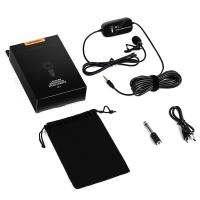
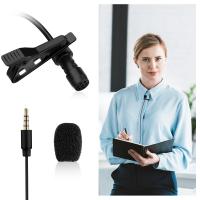
A lavalier microphone is a very small microphone that is attached either directly to an actor's body or their clothing. They come in both wired and wireless varieties, and are designed to be discrete and lightweight. You may have also heard this type of microphone referred to as a lav mic, a lapel collar mic, a body mic, a clip mic, a neck mic, or a personal mic. "Lav mic" and "lapel mic" or "lapel collar mic" are the most common names you will hear used for these little microphones.
Audio is 50% of the film experience, yet many beginning filmmakers don't place nearly as much focus on audio as they do on the visual side of things. A lavalier microphone is one piece of technology that can make a significant difference to the quality of your recordings.
Lavalier Microphone Characteristics
- Size
- Small, compact size that can be attached to an actor's clothing or body without being visible in the shot.
- Audio Focus
- Collects audio focused on a single actor, meaning multiple lav mics can be used to isolate different audio tracks for each actor.
- Pickup Pattern
- Omnidirectional or cardioid pickup pattern. Most lavalier microphones have an omnidirectional polar pattern, which means that the microphone picks up sound well from all sides, so you don't have to speak directly into the microphone to record sound properly.
- Connectivity
- Available in wired and wireless varieties. A wired lav may restrict an actor's movement, but a wireless lav mic requires only a small transmitter pack that is typically clipped onto an actor's belt or in their pocket.
How Wired Lavalier Microphones Work
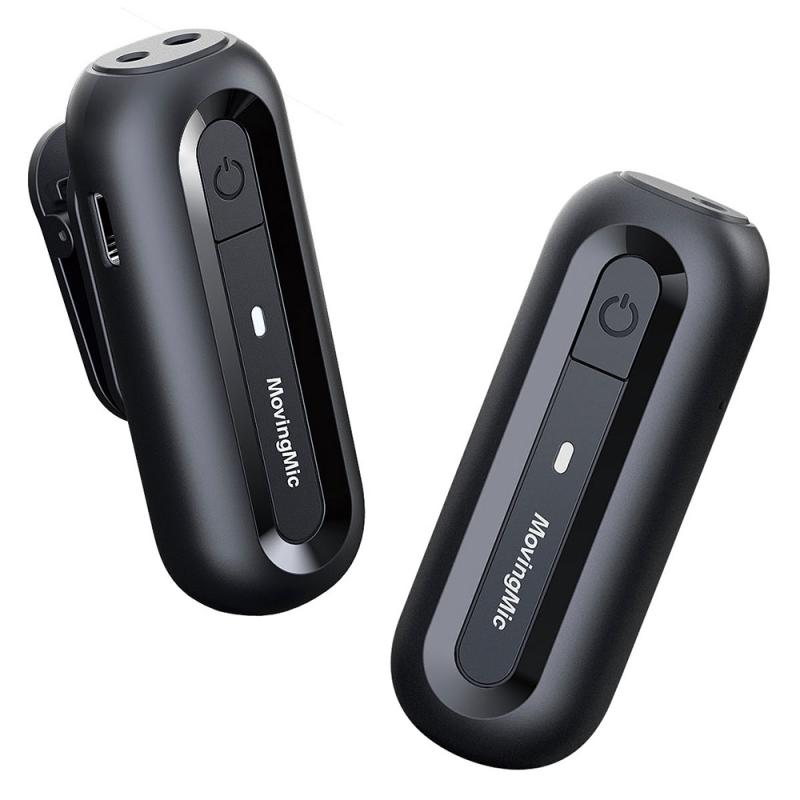
Professional lavalier mics have two parts: the microphone and cable, which usually terminates in some type of miniature connector, and the in-line preamplifier, which usually looks like a small tube, and has a full-size 3-pin XLR connector on one end. You can usually connect the microphone and cable to a wireless bodypack transmitter, or connect it to the in-line preamplifier. That connects to a standard XLR microphone input on a mixer or recorder. Lavalier mics also need phantom power from the mic input.
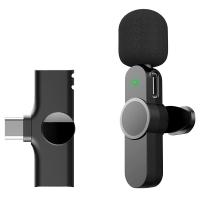
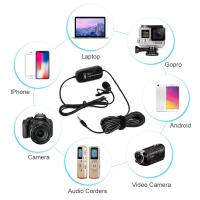
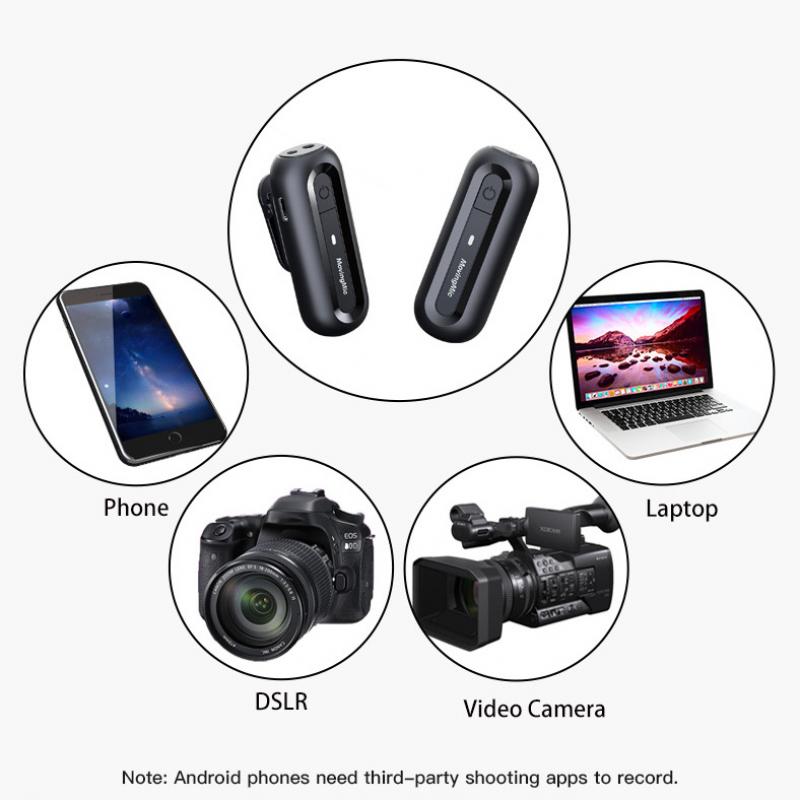
There are various types of lavalier microphones with different connection options. You can connect the lavalier microphone to your smartphone via a USB-C or Apple Lightning connection, 3.5mm connection, or via a supplied transmitter of a wireless microphone set. When using a 3.5mm connection, it is necessary to use an adapter cable if your smartphone, tablet or laptop does not have a 3.5mm connection.
When it comes to using mics with a 3.5mm jack, you need to pay close attention to what kind of output your microphone has and what kind of input your recording device has — specifically, whether they are TRS or TRRS. TRS/TRRS incompatibility is a very common reason for microphones not working with certain devices.
How Wireless Lavalier Microphones Work
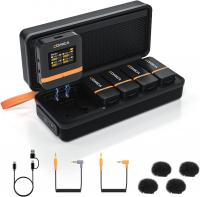
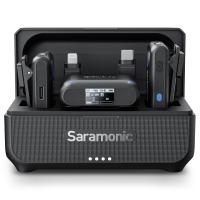
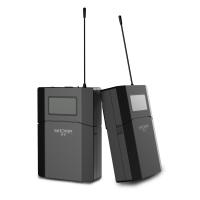
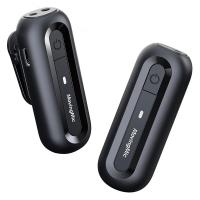
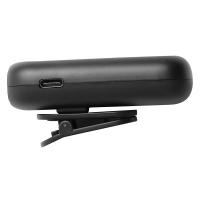
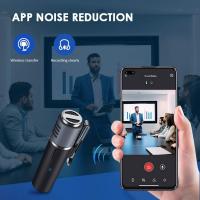
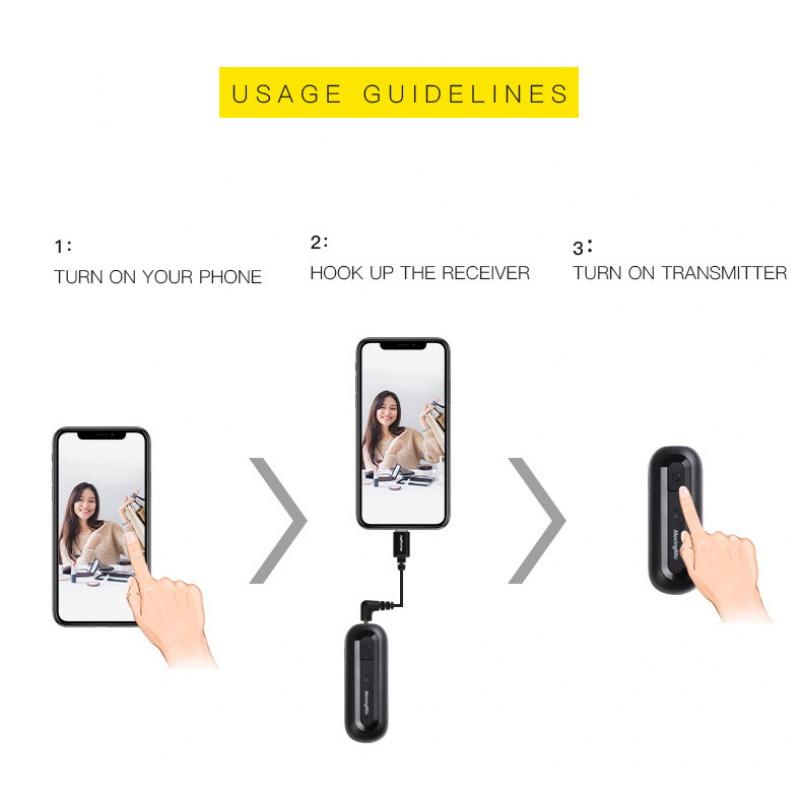
Wireless lavalier microphones eliminate the need for cumbersome connection cables, making the shooting process more flexible and efficient. Wireless systems are comprised of two main components: a transmitter pack, which is attached to the subject and captures and transmits the audio, and a receiver pack, which plugs into the recording device and receives the audio from the transmitter wirelessly.
Wireless lavalier microphones transmit their audio feeds via radio frequencies directly to a receiver that a sound mixer can control and adjust. A wireless lav mic works in the following steps:
- The microphone picks up the sound
- The transmitter transmits the sound wirelessly
- The receiver receives the wireless signal
- The receiver transmits the sound to the device
- The device records the sound successfully
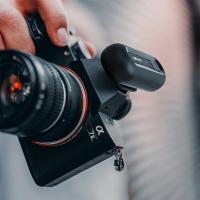
Simply attach the transmitter close to what you want to record, insert the receiver, and you're free to get around — whether that's along a busy shopping street or hiking through the mountains — and as long as the two are no more than 100–250 feet (approx. 30–75 meters), depending on model, you'll have the freedom to record what you want.
How to Position a Lavalier Microphone
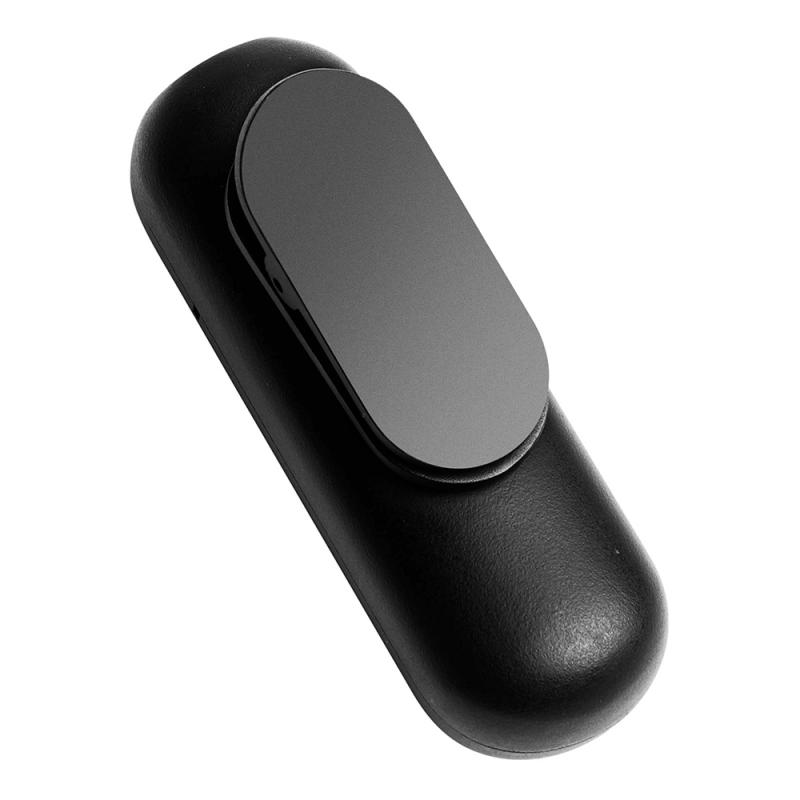
When positioning a lavalier mic, it's important to think about its proximity to your sound source — usually you or your subject's mouth — in order to get the best sound possible. The ideal distance between the sound source (your mouth) and the microphone is approximately the distance between your little finger and your thumb. As a general rule, it's recommended that you position the mic on the chest, about a hand-span distance (20–30cm) from the mouth. This will give you a natural, uncoloured sound.
The most common place to attach a lavalier lapel microphone is near the neckline, either on the collar or the knot of a tie if applicable. Positioning a lavalier mic is easiest when there is an edge of clothing to secure it to, such as the lapel of a jacket, seam of a button-up shirt, or the edge of a tie. Just be sure to keep the mic clear from any other piece of clothing that may rub against it, as this will be audible in your recording.
For a lav mic to be truly invisible, it must be underneath the actor's clothes, either attached to their skin, or to the inside of the clothing. When the equipped actor moves, their clothing may produce a rustling sound on the mic, which will harm the integrity of the audio recording. One common solution is to shield the mic with a material that will not produce a rustling sound. Another frequent solution is to package the microphone within a pillow of body tape, preventing the head of the mic from making direct contact with cloth.
Pros and Cons of Lavalier Microphones
- Discreet: The biggest selling point of lapel microphones is their ability to be hidden. This means the ability to record clean audio directly from the actor is possible in just about any circumstance.
- Portable: Their compact size makes them easy to carry and deploy in a variety of locations and situations.
- Hands-free: Once the lavalier microphone is attached, turned on and levels are set, it requires very little operation. Especially when using a wireless lavalier microphone, you can have 10 actors mic'd at once and all the sound recordist has to do is monitor and mix from their station.
- Clothing rustle: Clothing rustle can be a challenge. If the lav mic is not positioned properly, you can spend minutes of valuable time on set trying to adjust for clean audio.
- Sound quality: Sound quality can sometimes be lower than other microphone types. Where portability and invisibility are clear advantages, there can be a dropoff in quality.
- Power: Lavalier microphones are battery-powered, so be prepared to change and recharge batteries at particularly inopportune times. Make sure you have extra batteries fully charged and waiting to minimize the disruption when a battery dies.
Omnidirectional vs. Cardioid Lavalier Mics
Omnidirectional lavalier mics have equal sensitivity to sounds coming from any direction, making them particularly useful for on-the-move recording. Omnidirectional mics also pick up sounds from a distance. This gives them an open feel and, as a result, recordings sound natural and realistic even with the mic positioned close to the mouth. In virtually all recording scenarios, omnidirectional lav mics will yield superior results to cardioid mics.
Cardioid lavalier mics focus audio capture on the vocal and reduce the potential for feedback on amplified stages. They are well suited for noisy environments such as interview, presentation, broadcast, and film applications where background noise rejection is important.
When to Use a Lavalier Microphone
Lavalier mics are best suited for any kind of video recording involving a speaker who is stationary, such as interviews or presentations. They're also a lot less conspicuous than hand-held mics and often more practical than shotgun mics, allowing for a cleaner and more natural presentation from the speaker.
Lavalier mics are intended to gather audio for only the equipped actor, meaning multiple lav mics can be used to isolate different audio tracks for each actor — especially helpful in situations with a great deal of cross-talk or in environments with distracting background chatter. Use a lavalier mic when a boom mic would be impractical or impossible to keep out of the shot. Wide frames with excess headroom and shots with fast and/or complex movement are instances where a lavalier mic may make shooting go much more smoothly.
Lavalier mics are used frequently in mediums outside of filmmaking. Many theater and musical performances make use of lavalier mics. News programs may use lav mics if the anchors are required to be hands free. A lav mic can also be preferable for anyone in a one-man crew type situation — if there is no one to hold a boom and you don't want to rely on a camera mounted microphone, a clip-on lavalier mic is your best bet.