kfconcept

KENTFAITH
K&F Concept    Blog >

Enjoy Your Selected Digital Life

Recently Viewed
  • Recently Viewed
  • Recently Viewed list is empty.

Compare (0) 0
  • Compare
  • You have not chosen any products to compare.

  • Compare
Currency: USD
  • Currency
Shop by Scene Shop by Rank

Log Into Your Account

Account

Order History

Wish List

Login

Forgotten Password?

or connect with

Register Account

Already have an Account?Log In

  • Shopping Cart
  • Your shopping cart is empty!

  • Register/Login to purchase, earn points
  • Favorite
  • Your wish list is empty.

  • Register/Login to like, earn points
  • Activities
  • Guide
    • Filter Guide
    • Lens Adapter
    • Product Review
  • News & Reviews
    • Camera Reviews
    • Sample Gallery
    • News
  • Tutorials
    • Solar eclipse photography
    • Photography Basics
    • Landscape Photography
  • Inspiration
    • Travel
    • Travel Stories
  • Home
  • Blog
  • How Does A Microphone Record Sound?

How Does A Microphone Record Sound?

Kentfaith 2026-07-31 01:24:01 0 Comments

Sound Waves and the Diaphragm

when we speak or make noise, we create sound waves, which are physical vibrations that travel through the air.

the sounds we hear are vibrations of air molecules. the pitch of those sounds relates to the frequency of those vibrations.

sound waves consist of pressure variations traveling through the air. when the sound wave travels, it compresses air molecules together at one point. this is called the high pressure zone or positive component(+). after the compression, an expansion of molecules occurs. this is the low pressure zone or negative component(-).

the frequency of a sound wave is the rate at which the pressure changes occur, and determines the "pitch" of the sound. it is measured in hertz (hz), where 1 hz is equal to 1 cycle-per second.

the fluctuation of air pressure created by sound is a change above and below normal atmospheric pressure. the greater the pressure change, the louder the sound.

every microphone follows the same principle. sound waves hit a membrane and make it move according to the source.

these sound waves strike a very sensitive material known as a diaphragm inside a microphone, causing it to vibrate.

a microphone is a form of transducer. that means it converts a sound wave into an electronic signal carried by wire.
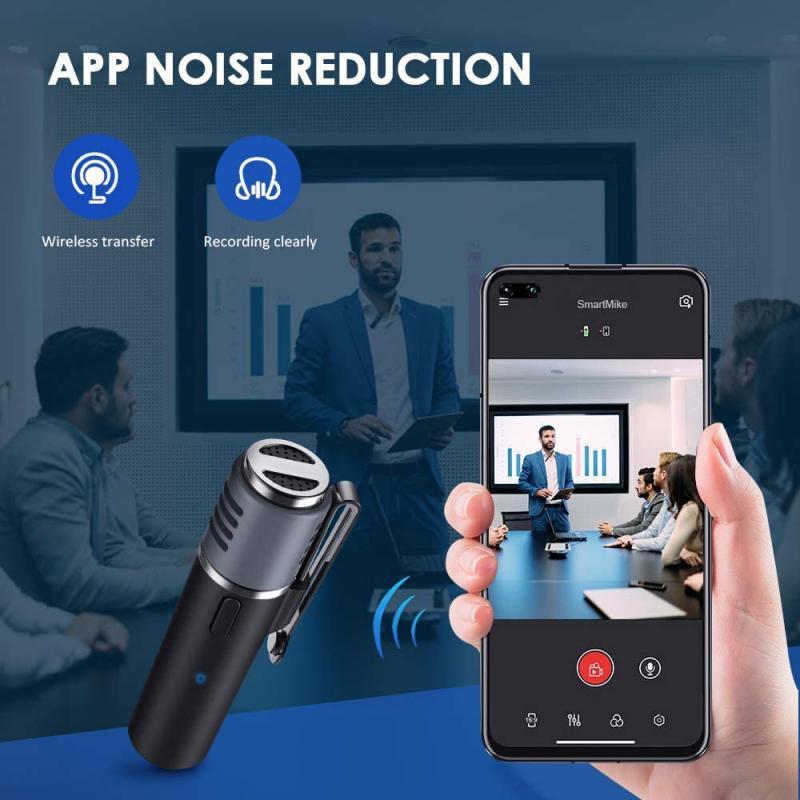
how does a microphone record sound 1

Electrical Signal Conversion

  1. when you start speaking, youstart to make a sound.
  2. the sound waves then hit the membrane of the microphone.
  3. the microphone converts this movement into an electrical signal that we can now use for different purposes such as – recording communication amplification

microphones are audio devices that convert sound waves into electrical signals, which can then be recorded or amplified for easier communication.

the energy of the sound wave needs to be converted into an electrical signal or voltage. and, there are different ways of doing this.

the vibration is converted into an electric signal in different ways, depending on the type of microphone being used.

this signal is then amplified or recorded.

amplifier which reads the current and makes it stronger while keeping its frequency untouched.

we can then take this current and feed it to a speaker or a recording device.

with a microphone, it's the outside sound that pushes and pulls on the cone (or usually a dome in the case of microphones), causing the coil to move back and forth against the magnet. that movement produces a tiny electrical current through the coil's wire, and that current gets picked up by an electrical device where the signal's either amplified to a speaker or transferred to a recording or transmission device.

microphones work like a speaker, but in reverse.

reverse microphones . sound waves vibrate a magnet in a microphone which generates a current. a current vibrates a magnet in a speaker which generates sound waves.

how does a microphone record sound 2

Dynamic Microphones

  • the back of the membrane is attached to a coil of wire.
  • both the diaphragm and coil move back and forth according to the incoming sound waves.
  • the coil is placed inside a magnetic field, and when it moves an electrical signal is induced.

dynamic microphones use a process known as electromagnetic induction to create electrical signals. the diaphragm is connected to a magnet via a coil of wire inside the microphone. the diaphragm's vibration causes the wire within the magnetic field to move, creating an electrical current.

in a moving coil microphone, the conductor is designed as a small coil attached to a membrane of plastic or metal. the coil is positioned in the air gap of a strong circular permanent magnet. the construction is very similar to the electrodynamic loudspeaker.

dynamic microphones work according to the induction principle. an electric conductor moves due to the sound in a magnetic field. this induces an electrical voltage across the endpoints of the conductor, which is proportional to the speed of the conductor in the sound field.

dynamic microphones employ a diaphragm/voice coil/magnet assembly which forms a miniature sound driven electrical generator. the motion of the voice coil in the magnetic field generates an electrical signal that corresponds to the sound.

if you think about it, it may remind you of the way a loudspeaker works.that’s because they both work with the same acoustic principle, and you could say that a dynamic microphone is a reversed loudspeaker.

dynamic microphones are versatile, durable, and can be used to capture sound in loud environments, such as live music events or crowded spaces.

dynamic microphones are extremely sturdy and perfect for live vocals guitar cabinets snare and kick drums
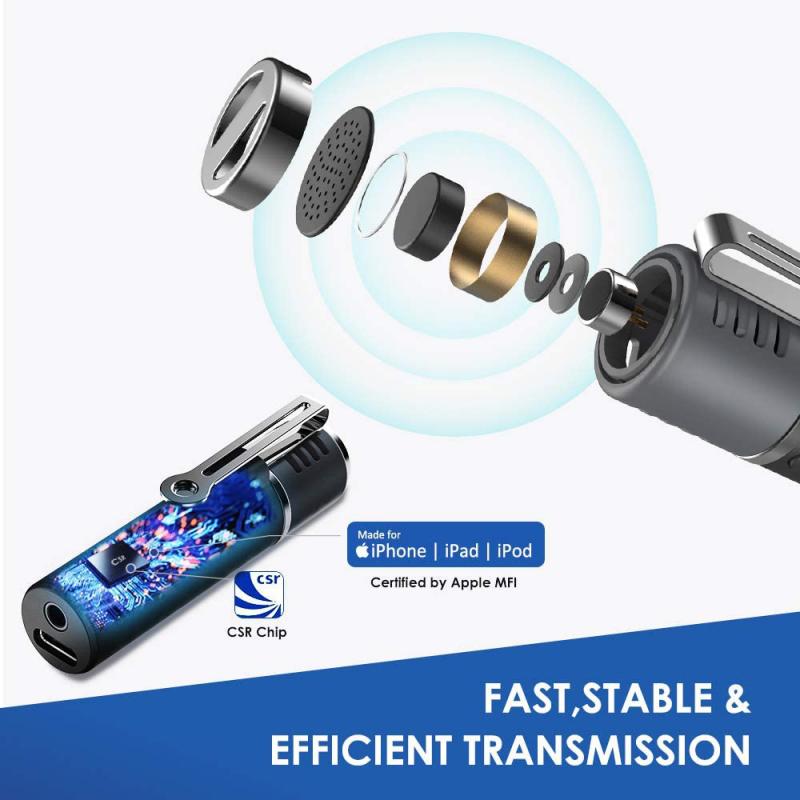
how does a microphone record sound 3

Condenser Microphones

condenser microphones
condenser microphones use capacitance to create electrical signals. the distance between the diaphragm and the back plate changes with its vibrations. as it moves, it creates an electrical signal.
condenser microphone
condensers use two charged plates; one fixed and one which can move acting like a diaphragm.
phantom power
it’s 48 volts and comes from an audio interface or mixing console.

in a condenser microphone, the incoming sound vibrates one plate of a capacitor. the varying capacitance is converted into a corresponding electrical signal.

a condenser microphone consists of an electrically conductive diaphragm stretched out in front of a fixed backplate/back electrode. when supplying the diaphragm and back electrode with a bias voltage, an electric field is created between the two parts, similar to a capacitor's plates.

when exposed to sound, the distance of the diaphragm to the back electrode will vary. i.e., the capacity will vary with the sound field. since the charge through the electrical bias is kept constant, the capacitor microphone's instantaneous voltage is proportional to the diaphragm's displacement from the neutral position.

the membrane is extremely thin and light and therefore reacts very accurately to sound. that’s why condenser mics sound so detailed.

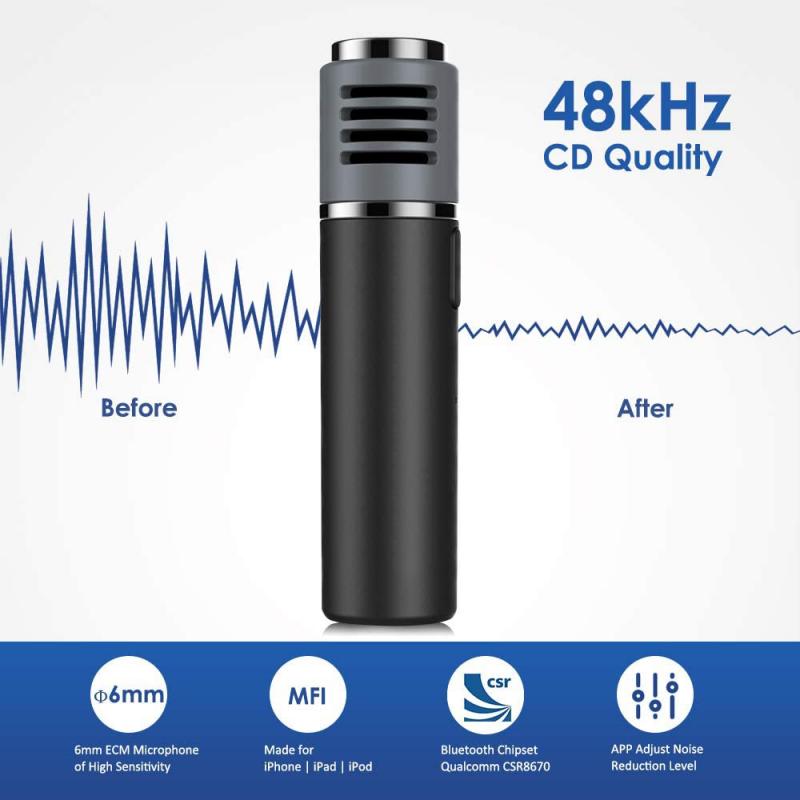
condenser microphones are more sensitive than dynamic microphones and can easily pick up unwanted background noise.

they’re ideal for studio audio recording, livestreaming, voiceovers, and gaming in a quiet environment.

because condensers work with electrically charged plates, they require some sort of outside power.some microphones have the option of an onboard battery while all condensers can utilize something called phantom power.
how does a microphone record sound 4

Ribbon Microphones

  • ribbon microphones capture sound using a very conductive ribbon of metal that’s suspended inside a magnetic field.
  • sound waves cause the ribbon to vibrate, which creates an electric signal.
  • ribbon microphones produce a warm, natural sound that's great for smoothing out harsh frequencies and capturing sound from instruments, such as electric guitars, clarinets, and trumpets.

in a ribbon microphone, the sound field acts directly on the conductor, typically designed as a thin metallic tape. the band is suspended between the poles on a strong permanent magnet.

when the ribbon moves, voltage is generated across the ends of the ribbon. both voltage and impedance are very low, so the ribbon is connected to a transformer built into the microphone itself.

the ribbon mass is small, often less than 0.5 mg. the suspension is incredibly soft, which leaves the system with a resonance in the range of 20-70 hz.

if the sound reaches both sides of the ribbon, it is a pure pressure-gradient microphone with figure 8 characteristics. the polarity of the two lobes is opposite each other.

ribbon microphones are generally quite sensitive to mechanical impact and wind exposure due to the loosely suspended ribbon. in return, they have a relatively good transient reproduction.

Directionality and Sound Pickup

the directionality of a microphone is defined as the variation of its output when it is oriented at different angles to the direction of the sound.

it determines how best to place the microphone relative to the sound source(s) in order to enhance pickup of desired sound and to minimize pickup of undesired sound.

the polar pattern of a microphone is the graphical representation of its directionality. the two most common directional types are omnidirectional and unidirectional.

  • an omnidirectional microphone is equally sensitive to sound coming from all directions.
  • an omnidirectional microphone can therefore pick up sound from a wide area, but cannot be “aimed” to favor one sound over another.
  • a pressure microphone will detect sound pressure no matter from which direction the sound enters. a pressure microphone is omnidirectional.
  • a pressure gradient microphone is bi-directional and exhibits a directional characteristic of a figure 8.

in a pressure gradient microphone, sound pressure can reach the diaphragm from both front and back. the output voltage from a microphone is proportional to the pressure gradient, i.e., the pressure difference between the diaphragm's front and back.

if sound comes from the side, the same pressure exists on both sides of the diaphragm. then there is no gradient and thus no signal out of the microphone.

if you combine pressure and pressure gradient principles, you get a directional microphone – including wide cardioid (subcardioid), cardioid, supercardioid and hypercardioid characteristics.

dynamic microphones are mainly front-addressed, meaning that we need to point the mic towards its source like this.

Leave your comment
Cancel reply
Note: HTML is not translated!
Related products
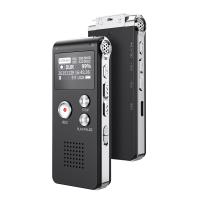
128G Mini Digital Voice Recorder with Color Screen Bluetooth Call Record 3072kbps Kentfaith
HOT Seller
128G Mini Digital Voice Recorder with Color Screen Bluetooth Call Record 3072kbps Kentfaith
15
$119.99 $83.99
Instant Cross-APP Translator Device for Business & Trade, Video Call Translation, Record, & Transcription, Kentfaith AI Translator Devices
12
$124.99 $99.99
5K Video Camera with 75MP Photos, 8X Optical Zoom, WiFi Transfer, Wireless Mic, Dual Batteries, Support PIP Record, Kentfaith
16
$369.99 $239.99
Mini Voice Recorder, Sound-activated & Magnetic, 128GB 1600H Capacity with AI Noise Cancelling Kentfaith
13
$94.99 $74.99
Mini Sound Recorder 128GB 1600H Recording Capacity with 1.4" Screen, Voice Activated Mode Kentfaith
NEW Arrival
Mini Sound Recorder 128GB 1600H Recording Capacity with 1.4" Screen, Voice Activated Mode Kentfaith
12
$99.99 $79.99
5K Video Camera with 75MP Photos, 8X Optical Zoom, WiFi Transfer, Foldable Tripod, Wireless Mic, Dual Batteries, Support PIP Record, Kentfaith
16
$312.49 $249.99
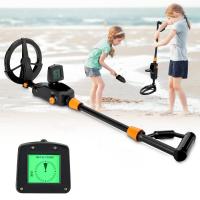
Children’s Entry-Level Metal Detector, High Sensitivity, With LCD Display and Sound Indication, Suitable for Beginners
TOP Best
Children’s Entry-Level Metal Detector, High Sensitivity, With LCD Display and Sound Indication, Suitable for Beginners
144
$64.49 $50.99
AI Translator Device for Business & Trade, 142 Languages Real-Time Online & Offline, Smart Office/Cross-App/Video/Photo Translation, Record & Transcription, Kentfaith
15
$182.49 $145.99
Digital Voice Recorder with 64Gb Storage, 1536 kbps, Voice Activated & Line-in Record, 85H Battery Life, Stores 800 Hours of Recording, Kentfaith
18
$99.99 $79.99
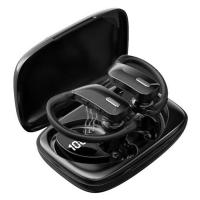
Wireless Earbuds Bluetooth Headphones TWS Waterproof with Microphone
66
$31.99
Products You May Like
62mm Gold Diffusion 1/4 Filter Mist Soft Glow Warm Highlights Vintage Cinematic Aesthetic Camera Lens Filter Nano-Xcel Series
NEW Arrival
62mm Gold Diffusion 1/4 Filter Mist Soft Glow Warm Highlights Vintage Cinematic Aesthetic Camera Lens Filter Nano-Xcel Series
72
$115.49 $76.99
67mm Single-sided Linear Pentaprism Filter Optical Glass Prism Special Effect Camera Lens Filter Nano-Basic Series
NEW Arrival
67mm Single-sided Linear Pentaprism Filter Optical Glass Prism Special Effect Camera Lens Filter Nano-Basic Series
$59.24 $39.49
K&F Concept Camera Cage Compatible with Insta360 X5, Aluminum Alloy Protective Frame Case with Silicone Lens Cover + Screen Protector |1/4" Screw Hole | 2 Cold Shoe Mounts for Microphone, LED Light
NEW Arrival
K&F Concept Camera Cage Compatible with Insta360 X5, Aluminum Alloy Protective Frame Case with Silicone Lens Cover + Screen Protector |1/4" Screw Hole | 2 Cold Shoe Mounts for Microphone, LED Light
3
$44.99
MS04 62''/1.58m Tripod Phone Selfie Stick, Black And Orange With Bluetooth Remote Control + Gopro Adapter
99
$49.99 $29.99
52mm Variable ND Filter Kit 2pcs ND2-32 & ND32-512 with Waterproof Anti-scratch Anti-reflection Green Film NANO-X Series
62
$149.99 $88.99
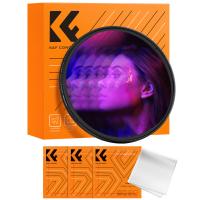
77mm Star Filter 4-8 Points Variable Starburst Filter Cross Screen, 18 Layer Coating Ultra Slim Optical Glass, with 3 Pcs Cleaning Cloths
$23.99
SanDisk Ultra 64GB SDXC UHS-I Card, C10 Up to 80MB/s SDSDUNC-064G-ZN6IN
239
$29.99
best rated trail camera
10
$135.99 $106.99
55mm Shimmer Diffusion 1 Filter Optical Glass Glimmer Effect Filter for Camera Lens Nano-Xcel Series
34
$62.99 $41.99
43mm ND8-ND2000 (3-11stop) Variable ND Filter Neutral Density Filter with Multi-Resistant Coating Nano-Dazzle
72
$43.99 $34.99
Related articles
Does Screen Record Include Sound?
What Does Static Sound Like On A Record?
How To Record Clear Audio Without A Microphone?
How To Record Your Voice Without A Microphone?
How To Make A Screen Record Have Sound?
How To Record Your Microphone?
How Do Records Record Sound?
How To Improve Sound Quality Of Microphone?
How To Record Videos Without Sound?
How To Connect Your Phone To A Projector Using Usb ?
Blog You May Like
Where To Position Lights For Photography?
Can Security Cameras Detect Motion Through Glass?
Where To Find A Disposable Camera?
How Do I Get To My Sd Card?
What Size Filter For 24-70mm Lens?
Where To Set Up Ring Light?
What Are Two Different Types Of Electron Microscopes?
How Do We Record In Car?
How To Choose A Lens For Your Camera?
What Is The Most Accurate Metal Detector?
Related categories
A Mount Lens Adapter Sony A Mount Lens Adapters minolta a mount lenses streaming video camera Soft Box digital microscope
Popular products
Mini Digital Voice Recorder​ sony camera with video sony professional video camera translation device real time bluetooth earbuds for swimming wireless open ear earbuds digital voice recorder with usb microphone for iphone wireless ai voice recorder device metal detector best for gold
Related searches
Sound System With Microphone Surround Sound For A Projector Bluetooth Sound Box And Microphone Best Sound Cancelling Headphones With Microphone Cheap Camera To Record Videos Night Vision Binoculars That Record Best Microphone For A Laptop Wired Headphones With A Microphone Microphone For A Laptop Computer External Microphone For A Laptop
Related Scenes
Best Video Camera To Record Sports Best Sony A Mount Camera Best Batteries For A Trail Camera Best Sony A Camera For Video Best Compact Camera Microphone Best Vlogging Camera Microphone Best Camera Microphone For Vlogging Best Vlogging Camera And Microphone Best Vlogging Camera With Microphone Best Camera And Microphone For Streaming
Blog Category
  • Activities
  • Guide
    • Filter Guide
    • Lens Adapter
    • Product Review
  • News & Reviews
    • Camera Reviews
    • Sample Gallery
    • News
  • Tutorials
    • Solar eclipse photography
    • Photography Basics
    • Landscape Photography
  • Inspiration
    • Travel
    • Travel Stories
Search Article
Latest from the Blog
What Do You Plug A Microphone Into?
How To Rate Binoculars Magnification?
Can You Overcharge A Battery?
What Is The Use Of A Compound Microscope?
How To Use Earbuds As Mic And Headphones?
How To Pick Binoculars For Bird Watching?
What Type Of Battery In Power Bank?
Where To Find Coins With A Metal Detector?
How To Reset Earbuds Without Buttons?
How To Take Photos Without A Tripod?
  • Easy Payment Multilple Payment Options

  • Free Shipping Global WareHouse Shipment

  • No Risk 30-Day No Reason Return

  • Limited Deals Buy More, Save More

  • Tax Free No any surcharges or tax fee

Information
  • About us
  • Contact Us
  • Site Map
  • Blog
  • Video
  • Gallery
  • VIP Membership Rewards
Service
  • Privacy Policy
  • Terms & Conditions
  • Shipping & Delivery
  • Payment Info
  • Warranty, Return & Refund
  • Intellectual Property Rights
  • Ambassador
  • Affiliates
  • Wholesale
Support
  • My account
  • Order History
  • FAQs
  • Extend Warranty
  • Logistics Tracking
Follow us
NewsLetter

Get the latest product, K&F Concept respects your privacy.
Powered By KENTFAITH © 2026