What Is The Digital Camera Used For?
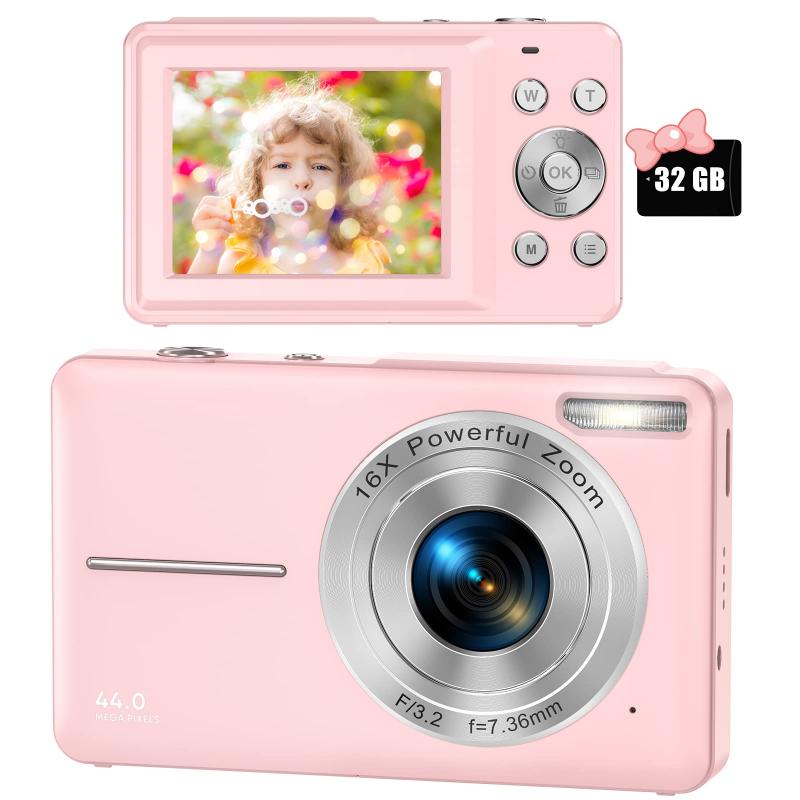
Digital cameras are devices designed to capture and record images by converting light into electronic signals. They represent a significant evolution from traditional film cameras, which relied on chemical processes to create photographs. Instead, digital cameras use a light-sensitive electronic chip, such as a charge coupled device (CCD) or complementary metal-oxide-semiconductor (CMOS), to convert incoming light into electrical signals. This information is processed by a small computer within the camera, transforming it into binary code for storage on digital media. The digital information that represents an image can easily be copied onto a computer, manipulated, published electronically, and printed.
Digital cameras bring a new level of enjoyment to picture taking and have numerous advantages, many of which were simply not possible with an ordinary film camera. Digital cameras are more convenient than film cameras, and since buying and developing film are not necessary, operating costs are lower. Also, a captured image can be instantly checked on the monitor and, if necessary, retaken. In addition, you can view your digital images on a TV or PC, print them out at home, and even send them to friends over the internet.
How a Digital Camera Captures an Image
The operation of a digital camera involves a lens that focuses light through an adjustable aperture and a shutter that controls the duration of light exposure. Like most cameras, a digital camera begins the process of taking a photograph by letting light in through a lens — a curved piece of glass or plastic — that bends light through the principle of refraction and focuses the image. The light then passes through an opening called an "aperture" whose size can be adjusted to let more or less light pass.
Apertures are described by an f-stop number, which is proportional to the focal length of the lens over the diameter of the entrance pupil. Since it is a ratio, larger f-stop numbers refer to smaller apertures. Each doubling or halving of the f-stop number translates to a change in amount of light let in by a factor of four. Thus, an f-stop of 11 lets in four times more light than an f-stop of 22. Finally, the light comes to a shutter that opens for a period of time when the shutter release is triggered, allowing light into the camera body. Usually, a shutter speed is a fraction of a second, though long shutter speeds can be used in low light, or for a variety of effects. With especially long shutter speeds, heat can build up in the CCD or CMOS, causing electrical interference that interferes with accurate, binary recording of the image, resulting in error or "noise," though camera manufacturers are developing a number of processes that have made this less of a problem over time.
The CCD or CMOS Chip
In order to capture an image, the light that comes into the camera falls on the CCD or CMOS chip, which changes the image into electric current. A CCD is made up of tiny regions called "picture elements" or "pixels" that will correspond to the points in the photograph. A CMOS works similarly, though the specific underlying technology is a bit different.
- Some cameras have one CCD for all three primary colors of visible light — red, green, and blue — and each pixel records only one color of light from the scene.
- More advanced cameras use three different CCDs, one for each primary color, resulting in a more accurate image.
- Ultimately, the electric current from the CCD is encoded by a small computer in the camera into a stream of binary information in the form of "ons" and "offs" that will be stored on a flash memory card.
Sensitivity and ISO
In film cameras, different formulations of film are used for different light conditions, with more sensitive films employed in low light. In a digital camera, the signal from the CCD can be boosted to handle low light levels; however, doing so introduces noise in the signal. The setting for camera sensitivity is described as its "ISO number," an international standard for measuring the speed of color film. It uses both an arithmetic and logarithmic scale to combine two previous film standards.
In the arithmetic scale, which is commonly the only one given, each doubling of the ISO represents a doubling of the sensitivity. Thus, a camera set to ISO 100 will be half as sensitive to light — and will require twice as long an exposure for a given scene to achieve the same result, given the same f-stop setting — as one with an ISO of 200.

Pixel Dimensions and Image Quality
- Pixel count
- One of the factors that determines the picture quality of an image produced by a digital camera is the number of pixels it records. This is especially relevant when images are blown up to large dimensions, as the individual pixels begin to become visible. Pixels are the individual binary units into which the image is "broken up" and stored during the electronic conversion process by the camera's chip. For example, the Droid Incredible phone, released in 2010, contains an 8 megapixel camera, which means its photographs are composed of about 8 million individual pixels, with each picture having a possible resolution of roughly 3264 pixels wide by 2468 pixels high.
- Chip size
- The size of the electronic chip plays a large role in image quality. When the photosensitive regions of a camera's chip are packed too tightly together, they create electronic interference in their neighbors, potentially affecting the binary storage, and ultimately affecting the accuracy and quality of the stored image.
- Resolution and storage
- Resolution measures how many pixels make up your image. Higher resolution means more detail, so you can crop, reframe, or print large without losing sharpness. However, it is worth remembering that higher resolution means larger file sizes, which equate to a need for more storage.

Types of Digital Cameras
- Point-and-shoot cameras: Compact, user-friendly cameras designed for casual photography, offering simplicity and convenience.
- DSLR (Digital Single-Lens Reflex) cameras: Use a mirror system and an optical viewfinder to show the photographer the same image the lens sees in real time. Known for interchangeable lenses and superior image quality, DSLRs cater to photography enthusiasts and professionals. Due to their complicated optical design, DSLRs are quite heavy and bulky. DSLRs generally have longer battery life, more lens options, and an optical viewfinder for a traditional shooting experience.
- Mirrorless cameras: Don't have an optical viewfinder or a mirror system. Instead, the light goes directly from the lens to the digital sensor, which creates the image and displays it on an electronic viewfinder. This design makes mirrorless cameras lighter and more compact. Like DSLRs, mirrorless cameras have interchangeable lenses, plenty of manual and automatic features, and lots of compatible accessories. Mirrorless cameras are often more compact and offer faster autofocus.
- Action cameras: Compact devices suited for capturing while on the move, including sports and travel scenarios.
- Cinema cameras: Digital cameras designed with videography in mind, providing video capabilities such as 4K video resolution or higher, high frame rates for shooting in slow motion, and raw video formats.
Optical Zoom vs. Digital Zoom
Zooming might seem like a natural benefit, but it can harm your image. There are two types of zoom: optical and digital.
- Optical zoom uses moving lens elements to bring subjects closer without losing clarity. It is a true zoom achieved by physically adjusting the lens, which preserves image quality.
- Digital zoom simply crops into the image, reducing detail and sharpness. Digital zoom is a software-based zoom that crops and enlarges the image, often resulting in loss of quality. Use digital zoom sparingly.
Advantages of Digital Cameras
- Instant image review: Photographers can assess their shots immediately, allowing for on-the-spot adjustments in exposure, composition, or focus.
- Flexible storage: Digital cameras utilize memory cards for storing images. Unlike film rolls with limited exposures, memory cards can hold hundreds or even thousands of photos, enabling photographers to shoot extensively without concern for running out of film.
- Post-processing capabilities: Digital images can be edited and enhanced using a variety of software programs, from basic adjustments like cropping and color correction to advanced techniques such as HDR imaging and creative filters.
- Cost efficiency: With the elimination of film and development expenses, photographers realize significant savings in the long run. The reuse of memory cards reduces ongoing expenditure.
- Instant sharing and connectivity: With the integration of Wi-Fi and Bluetooth capabilities, photographers can transfer images directly to smartphones, computers, or cloud storage, enabling swift sharing on social media or with friends and family.
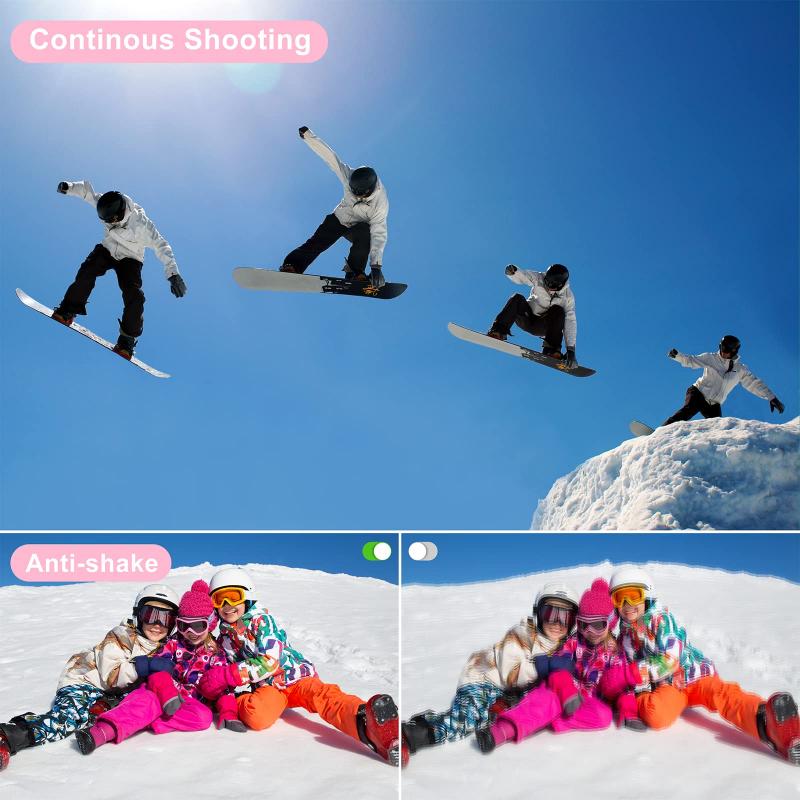
- Wide range of features: Modern digital cameras come equipped with advanced autofocus systems, in-camera filters, high-speed continuous shooting, and video recording capabilities in high resolutions.
Practical Uses Beyond Photography
Digital cameras have many more uses than just taking great photos. The photos are high quality. The optical zoom capabilities are outstanding without adding extra lenses. Image stabilization eliminates tremors when using high magnification, so you don't always need to rely on a tripod. There's no film to carry around, and you can take a hundred shots or a thousand without it costing anything for film or processing. The results are immediate and can be stored easily.
Digital cameras are also used for coastal navigation to identify landmarks with certainty, or for inspecting hard-to-reach areas such as the top of a mast on a sailing vessel. A time saver that has been found useful is having a digital photo on hand for re-assembling whatever has been taken apart — photographing every piece of hardware in place before disassembly, so parts can be easily identified and correctly replaced. The digital information that represents an image can easily be copied onto a computer, manipulated, published electronically, and printed.