What Is The Best Camera For Action Sports?
If you mean a camera you can mount on a helmet, chest rig, bike, surfboard, car, or ski pole, the safest answer for most people is still the GoPro Hero 12 Black or Hero 13 Black. It’s small, rugged, waterproof, easy to mount, and the stabilization is excellent without needing a gimbal.
But “best” depends heavily on the sport. The camera I’d take mountain biking is not always the one I’d choose for filming a soccer match from the sideline, shooting motorsports, or capturing a snowboard follow-cam. Action sports punish cameras in different ways: vibration, water, dust, crashes, low light, fast panning, battery drain, and awkward mounting angles all matter more than spec sheets.
The best all-around action sports camera: GoPro Hero 12 / Hero 13 Black
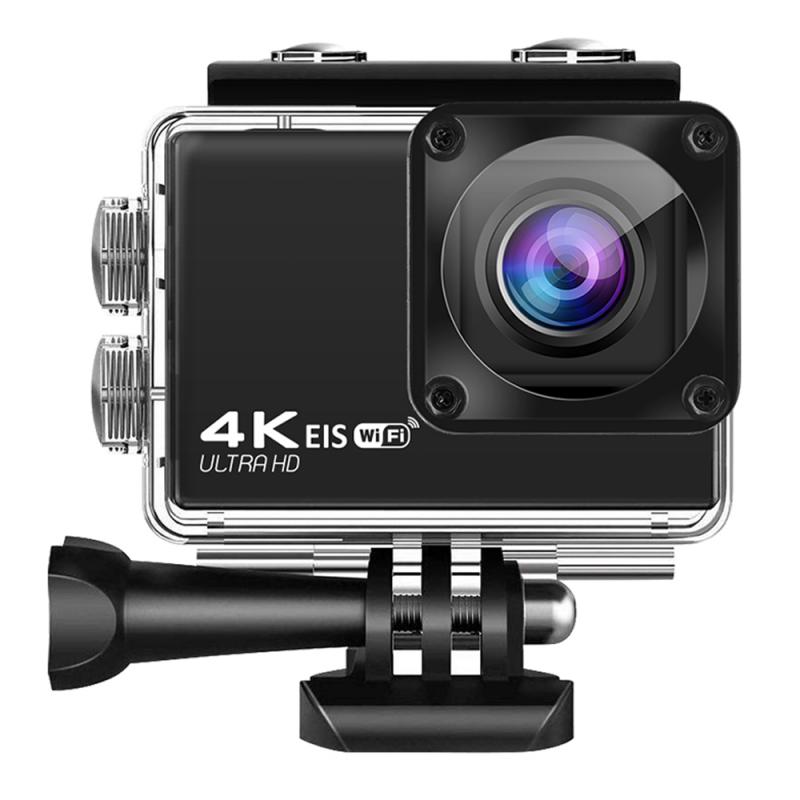
For most people, a current GoPro Hero Black is the most dependable pick.
The biggest reason is not just image quality. It’s the whole ecosystem. GoPro mounts are everywhere. Chest mounts, helmet mounts, suction mounts, handlebar mounts, floaty grips, bite mounts, roll bar mounts — you can usually find a solution for whatever weird angle you want. That matters more than beginners expect.
The stabilization is also excellent. GoPro’s HyperSmooth is one of the main reasons the camera works so well for mountain biking, skiing, snowboarding, motocross, skating, kayaking, and running. You can get very usable footage even when the camera is bouncing around on your body or equipment.
A GoPro is especially good if you want:
- POV footage from a helmet or chest mount
- A camera that can survive crashes and rough handling
- Waterproof shooting without a separate housing in normal conditions
- Easy mounting options
- Good slow motion
- Reliable daytime footage outdoors
- Simple editing through a phone app
The weakness is low light. This is true for most small action cameras, not just GoPro. If you’re filming indoor skateparks, evening games, night riding, or dim forest trails, the footage can get noisy and smeary, especially with stabilization turned up. Bright daylight is where these cameras look their best.
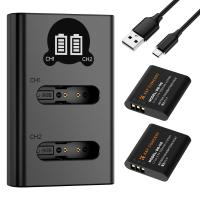
Battery life is another practical issue. In cold weather, especially skiing or snowboarding, batteries drain quickly. If you’re going out for a full day, carry at least two or three batteries and keep spares in an inside pocket where they stay warm.
Best alternative to GoPro: DJI Osmo Action series
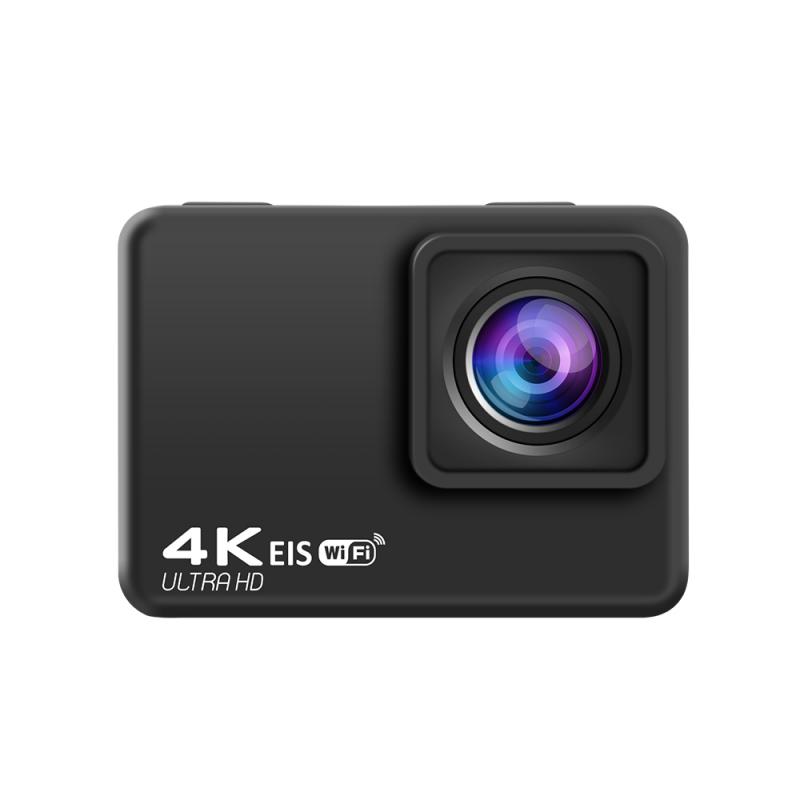
The DJI Osmo Action 4 or Action 5 Pro is a serious alternative and, for some users, the better buy.
DJI’s recent action cameras are very strong in image quality, especially in challenging light compared with older action cams. They also have good stabilization, a useful front screen, and a mounting system that many people prefer because it’s quick to attach and remove.
The DJI is a great choice if you:
- Shoot a lot of biking, skiing, hiking, diving, or travel action
- Want strong stabilization but don’t care about the GoPro brand
- Like fast magnetic mounting
- Want good battery performance
- Often film yourself and need the front screen
In real use, the DJI feels a little less “GoPro universe” and a little more streamlined. The magnetic mount is genuinely convenient when switching between a chest mount, tripod, backpack strap, and selfie stick. If you’re constantly moving the camera around during a session, that convenience adds up.
GoPro still has the edge in accessories and familiarity, but DJI is no longer a compromise pick. It is one of the best choices for action sports right now.
Best for impossible angles: Insta360 X4
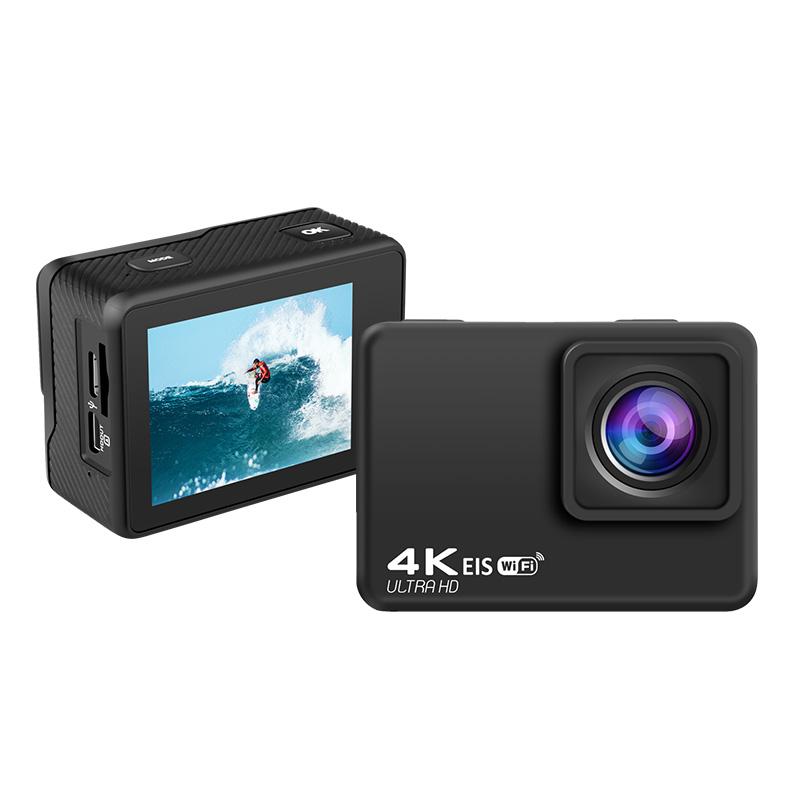
If you want the most creative action sports footage, look at the Insta360 X4.
A 360 camera changes the way you shoot. Instead of worrying about where the camera is pointed, you record everything around you and choose the framing later. For skiing, snowboarding, mountain biking, motorcycles, wakeboarding, skating, and travel adventure footage, that can be a huge advantage.
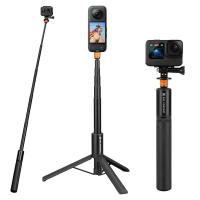
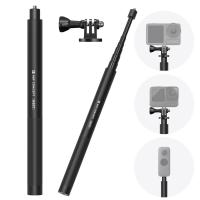
The “invisible selfie stick” effect is the main reason people love it. Mount the camera on a pole, and it can look like a drone or follow-cam is filming you. For solo athletes, that’s incredibly useful.
The Insta360 X4 is best if you want:
- Third-person angles without another camera operator
- Reframing after the action
- Creative social media clips
- Skiing, biking, skating, surfing, motorcycle, or travel footage
- A camera that captures the whole scene, not just one direction
There are trade-offs. A 360 camera needs more editing. You’ll spend more time reframing clips, choosing angles, and exporting final videos. The lenses are also exposed on both sides, so you need to be more careful. One bad drop onto rock or concrete can scratch a lens, and scratches show up badly with 360 footage.
For pure POV, I’d still rather use a GoPro or DJI. For creative action shots, the Insta360 is more fun.
If you’re filming field sports, don’t buy an action camera first
This is where people often buy the wrong thing.
If your goal is filming football, soccer, baseball, lacrosse, rugby, track, or motorsports from the sideline, a tiny action camera is usually not the best main camera. Action cams have very wide lenses. That’s great when the camera is close to the action, but terrible when the subject is far away.
A GoPro mounted on a fence can capture the whole field, but individual players will look small. If you want to follow your kid during a soccer match or record plays from across the field, you need zoom.
For sideline sports, consider:
- A mirrorless camera with a telephoto lens
- A camcorder with strong optical zoom
- A superzoom bridge camera
- A phone with good video only if you can get close
Something like a Sony, Canon, Nikon, or Panasonic mirrorless camera with a 70-200mm or 100-400mm-style lens will beat an action camera for distant sports. It won’t be as rugged or mountable, but the footage will actually show the athlete clearly.
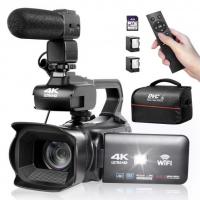
For parents recording games, a camcorder can be underrated. It may not sound exciting, but long zoom, long battery life, easy handholding, and continuous recording are exactly what you need on a sideline.
Best camera for mountain biking, skiing, and snowboarding
For POV riding, use a GoPro Hero Black or DJI Osmo Action.
A chest mount usually gives better footage than a helmet mount for biking because it shows the handlebars, arms, trail, and body movement. Helmet footage can look smoother, but it often feels too high and disconnected. For skiing and snowboarding, helmet mounts are common, but a pole or chest mount can look more engaging.
Use wide or linear-wide settings depending on how much distortion you like. Beginners often shoot everything in the widest mode, then wonder why the trail looks flatter than it felt. Ultra-wide makes speed feel dramatic, but it can also shrink features. Linear modes look more natural.
For snow, check exposure. Bright snow can fool cameras, and faces or jackets can look dark. If your camera has exposure compensation, a small adjustment can help. Also wipe the lens constantly. Snow spray, fingerprints, and water spots ruin more footage than bad settings do.
Best camera for water sports
For surfing, kayaking, paddleboarding, wakeboarding, and snorkeling, GoPro and DJI are both strong.
A GoPro has the advantage of a massive range of surf mounts, floaty cases, and waterproof accessories. DJI also works well, especially if you like the magnetic mount system, but make sure every mount is secure. Water impacts can rip off poorly placed adhesive mounts.
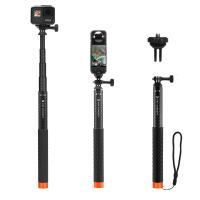
For surfing, a bite mount or board mount gives classic POV footage. For kayaking or paddleboarding, a chest mount or short extension pole often looks better because it captures both the athlete and the water movement.
Always use a float or tether. Even waterproof cameras sink. Plenty of people have lost perfectly good action cameras in lakes, rivers, and surf because they trusted one mount.
Best camera for motorsports
For motorcycles, motocross, karting, rally, and track days, stabilization and mounting security matter more than almost anything.
A GoPro or DJI on a chin mount, chest mount, roll cage, suction mount, or handlebar mount can work well. For motorcycles, chin mounts often give the most natural view because the footage follows your head direction while still showing the cockpit and road.
Avoid cheap mounts for high-speed use. The camera may be tough, but a bad mount can fail quickly from vibration and wind pressure. Use safety tethers on cars and motorcycles. Also test for vibration before recording something important. Some mounting spots on bikes and cars produce ugly buzzing footage even when the camera’s stabilization is good.
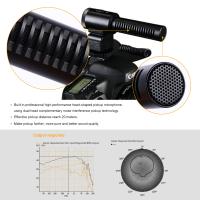
Wind noise is another issue. If you care about engine sound or commentary, use a mic adapter or external recorder. Built-in mics on action cameras are convenient, but they struggle badly in fast wind.
Don’t ignore your phone, but know its limits
A modern iPhone, Samsung Galaxy, or Google Pixel can shoot excellent action video if you’re handholding close to the subject. Phones have good screens, strong processing, and surprisingly good stabilization.
But phones are fragile, awkward to mount, and risky around water, dirt, and impact. I’d use a phone for clips from the sideline, skatepark, gym, or behind-the-scenes footage. I would not mount my main phone to a mountain bike, surfboard, or motocross helmet unless I was very comfortable replacing it.
Phones are also less convenient when you want to start recording with gloves on, mount the camera in odd places, or film in heavy rain, mud, or snow.
What specs actually matter for action sports?
Resolution gets too much attention. 4K is enough for most people. Higher resolutions like 5.3K or 8K can be useful because they let you crop, reframe, or stabilize more in editing, but they also create larger files and drain batteries faster.
Stabilization matters more than resolution. So does lens protection, battery life, mount quality, and how easy the camera is to operate while tired, cold, wet, or wearing gloves.
Slow motion is useful for tricks, crashes, jumps, and technique analysis. Look for 4K at 60fps at minimum if you want smooth action. Higher frame rates are nice, but only if you have enough light.
Audio is usually the weak point. If sound matters, plan for it separately.
My practical recommendation
If someone asked me what to buy without giving more detail, I’d say:
Get a GoPro Hero 12 Black or Hero 13 Black if you want the safest all-around action sports camera.
Get a DJI Osmo Action 4 or Action 5 Pro if you want a GoPro alternative with excellent performance and a very convenient mounting system.
Get an Insta360 X4 if you want creative third-person footage, invisible selfie-stick shots, and the freedom to reframe after recording.
Get a mirrorless camera or camcorder if you’re filming sports from a distance rather than mounting the camera near the action.
The biggest mistake is buying based on video specs alone. The best action sports camera is the one you can mount securely, operate quickly, trust in rough conditions, and actually use without babying it. For most fast, messy, outdoor sports, that still points to a rugged action camera first — and for most people, a GoPro or DJI will be the right place to start.