kfconcept

KENTFAITH
K&F Concept    Blog >

Enjoy Your Selected Digital Life

Recently Viewed
  • Recently Viewed
  • Recently Viewed list is empty.

Compare (0) 0
  • Compare
  • You have not chosen any products to compare.

  • Compare
Currency: USD
  • Currency
Shop by Scene Shop by Rank

Log Into Your Account

Account

Order History

Wish List

Login

Forgotten Password?

Or connect with

Register Account

Already have an Account?Log In

  • Shopping Cart
  • Your shopping cart is empty!

  • Register/Login to purchase, earn points
  • Favorite
  • Your wish list is empty.

  • Register/Login to like, earn points
  • Activities
  • Guide
    • Filter Guide
    • Lens Adapter
    • Product Review
  • News & Reviews
    • Camera Reviews
    • Sample Gallery
    • News
  • Tutorials
    • Solar eclipse photography
    • Photography Basics
    • Landscape Photography
  • Inspiration
    • Travel
    • Travel Stories
  • Home
  • Blog
  • What Is A Good Microscope Magnification?

What Is A Good Microscope Magnification?

Kentfaith 2025-09-02 09:30:15 0 Comments

Choosing the Right Microscope Magnification: Achieving Clarity Through Precision

what is a good microscope magnification 1

Whether you are delving into the microscopic world as a hobbyist, a student, or a professional, understanding the right microscope magnification for your application is critical. Microscopes unlock a hidden universe by magnifying objects too small for the naked eye. However, selecting the correct magnification is not as simple as picking the highest number available. It requires assessing your goals, the sample you’re working with, and the type of microscope you are using. In this article, we will explore the concept of microscope magnification, its appropriate use cases, and the practical factors that influence your decision-making.

An Overview of Microscope Magnification
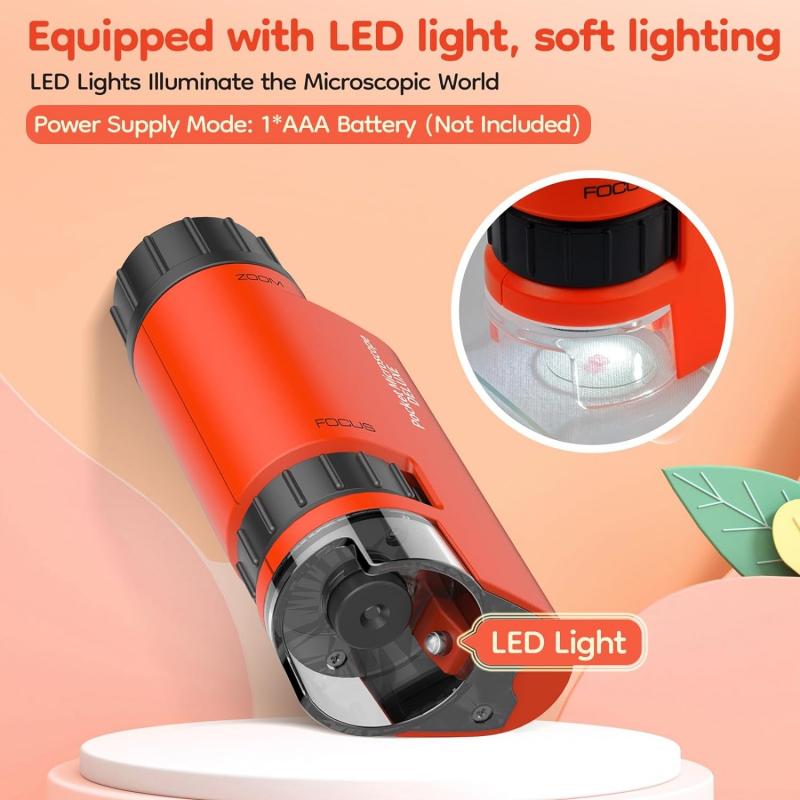
what is a good microscope magnification 2

Microscope magnification refers to how much larger an object appears when viewed through the device compared to its size in reality. This is typically calculated by multiplying the optical power of the objective lens by that of the eyepiece. For example, if using a 40x objective lens and a 10x eyepiece, the total magnification is 400x. However, higher magnification doesn’t always result in better detail or clarity. In fact, overly high magnifications can lead to distorted or fuzzy images due to limitations in resolving power.

Types of Microscopes: How Magnification Varies
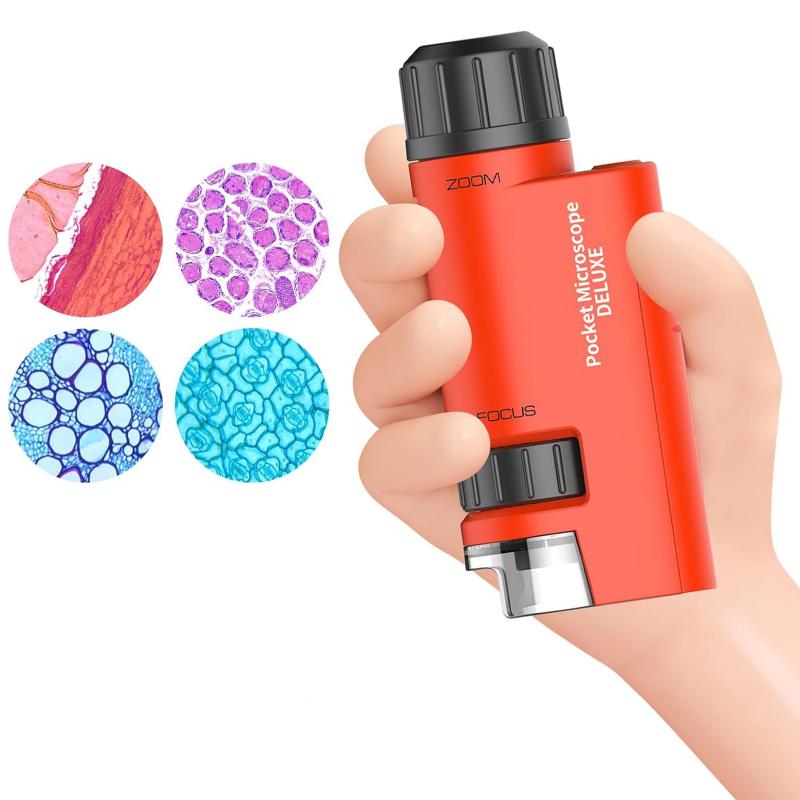
what is a good microscope magnification 3

1. Compound Microscopes:

Commonly used for biological applications, compound microscopes combine multiple lenses to achieve magnifications typically ranging from 40x to 1000x. They are excellent for observing cells, bacteria, or tissue samples. For most biological specimens, magnifications between 100x and 400x are ideal, offering enough detail while maintaining clarity.

2. Stereo Microscopes (Dissecting Microscopes):

These microscopes are designed for viewing larger, three-dimensional specimens at lower magnifications, usually in the range of 10x to 50x. Stereo microscopes are ideal for applications like dissection, circuit board inspection, or observing insects.

3. Digital Microscopes:

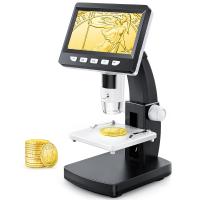
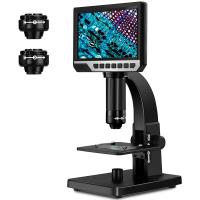
Digital microscopes often have adjustable zoom capabilities and rely on digital screens instead of traditional eyepieces. They offer variable magnifications that can exceed 1000x, though in many cases the digital enhancement comes at the cost of resolution.

4. Electron Microscopes:

These are specialized tools capable of achieving magnifications exceeding 1,000,000x by using electrons rather than light. Such extreme magnifications are necessary for applications in nanotechnology, materials science, and microbiology research but are impractical for everyday use.

Determining the Ideal Magnification

what is a good microscope magnification 4

Finding the "good" magnification isn’t about chasing the highest number—it’s about understanding your needs and balancing magnification with resolution, brightness, and image quality. Below are practical guidelines for selecting magnification based on your application:

1. Cell Observation:

If you are observing plant or animal cells, a total magnification of 100x–400x is recommended. For bacteria or smaller microorganisms, 600x–1000x is better suited.

2. Histology and Slides:

Professional histologists use magnifications of 40x to 400x to study tissue samples, ensuring sharp images with good detail without over-zooming.

3. Material Analysis:

For analyzing metal or mineral samples, a magnification of 10x to 50x on a stereo microscope is often sufficient while maintaining depth perception.

4. Educational and Hobby Use:

For a beginner or casual hobbyist, 100x to 250x is ideal, providing clear and detailed images without requiring advanced calibration or fluorescent lighting setups.

The Pitfalls of Excessive Magnification

Beginners often assume that higher magnification leads to better outcomes, but this is a misconception. Excessive magnification can yield poorer image quality due to limitations in resolving power. Resolution refers to the ability to distinguish between two closely spaced points—a feature dependent largely on the numerical aperture of the lens. When magnification exceeds the resolution capability of the microscope, the image becomes blurred or distorted.

Additionally, higher magnification reduces the field of view and brightness, making it harder to locate and focus on the specimen. For example, if you zoom in at 1000x on slides meant for 400x magnification, you might lose important details or completely miss the context of surrounding elements.

Practical Tips for Beginners

Getting started with microscopes can seem daunting, especially when deciding between the numerous options available. Here are some helpful tips:

1. Set Realistic Expectations: Understand the limits of your microscope. For instance, a student-grade microscope is unlikely to produce images with clarity comparable to a professional-grade instrument.

2. Match Your Magnification to Your Objective: Always consider the type of specimen and your goals. Do you need to observe broad structures or minute details?

3. Start Low and Work Your Way Up: Use the lowest magnification first to center the specimen in your field of view, then gradually increase magnification for detailed observations.

4. Use Proper Lighting Techniques: Adjusting the illumination to suit your magnification can drastically improve image clarity.

5. Learn About Resolution: Magnification is important, but resolution is equally so. If your microscope has a poor lens resolution, even the highest magnifications won’t result in meaningful clarity.

Factors Influencing the Choice of Microscopes

Apart from magnification, several factors play into choosing the right microscope:

1. Purpose: Are you studying biology, inspecting materials, or observing electronics? Each purpose may require a different type of microscope.

2. Budget: High-end microscopes offer excellent resolution and magnification, but budget-friendly options like student-grade microscopes can be just as effective for beginners.

3. Portability: If you need a microscope for fieldwork or casual observation, a compact digital microscope may be better than a bulky compound microscope.

4. Durability and Maintenance: Choose a microscope that is easy to clean and calibrate, especially for beginners.

5. Accessories: Additional tools, such as cameras for image capture or specialized lighting setups, may enhance your experience.

A good microscope magnification is all about finding the balance between your objectives, the characteristics of the specimen, and the capabilities of the microscope. While higher magnifications are alluring, they are not always necessary or practical. For most users, magnifications ranging from 40x to 400x provide the best combination of clarity and usability. By taking the time to understand the properties of magnification, resolution, and supporting equipment, you can unlock the miniature universe in a way that serves your needs without sacrificing image quality.

No matter your level of expertise, the microscopic world can provide fascinating insights—whether you're observing the intricate patterns of a leaf cell or inspecting the precision of a microchip. Choosing the right magnification is not just a technical decision; it’s an invitation to explore more clearly and effectively.
Leave your comment
Cancel reply
Note: HTML is not translated!
Related products
4.3” LCD Digital Microscope for Kids, 50X-1000X Magnification, USB Microscope
79
$107.99 $68.99
7" LCD Screen Digital Microscope, 1080P 50x-2000X Magnification Biological Microscope, with Dual Lenses
HOT Seller
7" LCD Screen Digital Microscope, 1080P 50x-2000X Magnification Biological Microscope, with Dual Lenses
89
$191.99 $189.99
Digital Coin Microscope 7" LCD Screen 1200X Magnification 1080P Image
14
$134.99 $94.99
Optical Microscope for Adults Students, 40X-2000X Magnification, Dual LED Illumination, High-Power Scientific Portable HD Microscope
70
$203.99 $149.99
Trinocular Compound Microscope with 7in Screen 40X- 2500X Magnification Mechanical Stage
27
$704.99 $493.99
K&F Concept Canon EW73D bayonet hood, with a vacuum cleaning cloth *1, for RF 24-105mm F4-7.1 is STM,EF-S 18-135mm f/3.5-5.6 IS USM lenses
$8.99
K&F Concept Canon EW63C bayonet hood, with a vacuum cleaning cloth *1, suitable for RF 24-50mm f/4.5-6.3 IS STM; EF-S 18-55mm f/3.5-5.6 IS STM; EF-S 18-55mm f/4-5.6 IS STM and other lenses
$8.99
DM101 Digital USB Microscope Camera Coin Magnifier, 10X-500X Magnification, PC Compatible
HOT Seller
DM101 Digital USB Microscope Camera Coin Magnifier, 10X-500X Magnification, PC Compatible
41
$77.99 $59.99
Digital Handheld Microscope with 4.5 inch IPS Screen Detachable Base 1000X Magnification
13
$134.99 $94.99
Handheld Microscope, 500X Magnification, 1080P Videos, 2-inch Screen, Autofocus, Rechargeable, Kentfaith
12
$87.49 $69.99
Products You May Like
62mm ND & CPL 2 in 1 Lens Filter, ND2-ND32 (1-5 Stop) Variable Neutral Density and Polarizer for Camera Lens Nano-Dazzle Series
65
$70.99 $56.49
52mm Camera Center Pinch Lens Cap with Lens Cap Leash*3+Cleaning Cloth*3+Anti-lost Rope*3 for Canon Nikon Sony Olympus Fujifilm Pentax Panasonic Leica
29
$28.99 $14.99
DJI Mavic 3 Classic Filter ND32 with Single-sided Anti-reflection Green Film Waterproof and Scratch-resistant
27
$29.99 $17.99
10 X 50 Binoculars for Outdoor Watching
$62.99 $39.99
K&F CONCEPT ND PL Filter Kit Compatible with Insta360 Go Ultra, ND8/PL+ND16/PL+ND32/PL+ND64/PL 4 Pack Neutral Density Polarizing Filter, HD Optical Glass/Multi-Coated/Metal Frame
20
$43.99
62mm Black Mist 1/4 & Circular Polarizing 2-in-1 Filter Cinematic Polarizer Effect Filter with 28-Layer Coating for Camera Lenses Nano-Xcel Series
NEW Arrival
62mm Black Mist 1/4 & Circular Polarizing 2-in-1 Filter Cinematic Polarizer Effect Filter with 28-Layer Coating for Camera Lenses Nano-Xcel Series
27
$146.99 $109.99
49mm Combination Soft & Mist Lens Filter 28 Multi-Layer Coating Waterproof Scratch Resistant Cinematic Effect Filter for Vlog, Portrait Photography - Nano-Xcel Series
NEW Arrival
49mm Combination Soft & Mist Lens Filter 28 Multi-Layer Coating Waterproof Scratch Resistant Cinematic Effect Filter for Vlog, Portrait Photography - Nano-Xcel Series
29
$63.99 $47.99
82mm Circular Polarizer Filter with Lens Cap Optical Glass Ultra Slim 18 Multi-Layer Coatings Polarizing Filter for Camera Lens Nano-Klear Series
86
$37.99 $19.99
Summer Trail Camera Strategies
10
$162.99 $106.99
DJI Drone Mini 3 Pro & Mini 3 Variable ND32-ND512 Filter with Single-sided Anti-reflection Green Film, Waterproof and Scratch-resistant
121
$24.99
Related articles
What Is The Magnification Of Electron Microscope?
What Is Scanning Microscope?
What Is A Good Lavalier Microphone?
What Is Resolution In Microscope?
What Is A Good Starter Video Camera?
What Is A Good Wireless Security Camera?
What Is A Good Inexpensive Digital Camera?
What Is A Good Binoculars To Buy?
What Is A Good Quality Dash Cam?
Can We Put Camera With Microphone?
Blog You May Like
How To Use Metal Detectors Beginner?
How To Get Power For Wireless Security Cameras?
How Much Does A Security Camera System Cost?
How To Remove Sound From A Recorded Video?
How To Focus With Neutral Density Filter?
How To Record Sounds And Turn Into Mp3?
What Does Static Sound Like On A Record?
Can I Connect Apple Tv To Projector?
How To Download Games On A Smart Watch?
How To Make Custom Camera Straps?
Related categories
A Mount Lens Adapter Sony A Mount Lens Adapters minolta a mount lenses digital microscope 43mm Lens Filter drone filters Reverse GND Filter ND8 filter Konica AR Mount Lens Adapters Nikon F mount camera body
Popular products
digital mini microscope LCD Digital Microscope canon 18 55mm stm lens hood Digital Microscope advanced optical microscope wireless digital microscope handheld binocular microscope magnification good trail camera coin USB microscope digital electronic video microscope camera 500x
Related searches
Microscope Lens Magnification Low Magnification Microscope Low Power Microscope Magnification Good Usb Microscope Electron Microscope Range Of Magnification Compound Microscope Ocular Lens Magnification Compound Light Microscope Objective Lens Magnification A Good Webcam For Streaming Phones With A Good Camera Cost Of A Light Microscope
Popular searches
Ltm L39 Leica Screw Adapter Sigma 70-300mm Canon Mount Dslr Lens Battery Security Camera No Wifi Adapter Canon Sony Nex Fujifilm X M42 Adapter Leica M3 A Mount Battery Np F970 Pentax K To M42 Adapter Canon Lens Filters Fuji 617 Center Filter For 90mm Lens
Blog Category
  • Activities
  • Guide
    • Filter Guide
    • Lens Adapter
    • Product Review
  • News & Reviews
    • Camera Reviews
    • Sample Gallery
    • News
  • Tutorials
    • Solar eclipse photography
    • Photography Basics
    • Landscape Photography
  • Inspiration
    • Travel
    • Travel Stories
Search Article
Latest from the Blog
What Is The Difference Between Binoculars And Telescope?
How To Find Camera Roll On Iphone 5s?
Black Friday 2025 Special at Kentfaith
How To Stream Live From Surveillance Camera?
How To Make A Camera Flash After Effects?
How Many Stops Is An Nd 8 Filter?
Can I Charge Camera Battery With Power Bank?
What Is The Best Camera To Record Videos?
Best Metal Detector for Kids in 2025
What Tripod To Buy?
  • Easy Payment Multilple Payment Options

  • Free Shipping Global WareHouse Shipment

  • No Risk 30-Day No Reason Return

  • Limited Deals Buy More, Save More

  • Tax Free No any surcharges or tax fee

Information
  • About us
  • Contact Us
  • Site Map
  • Blog
  • Video
  • Gallery
  • VIP Membership Rewards
Service
  • Privacy Policy
  • Terms & Conditions
  • Shipping & Delivery
  • Payment Info
  • Warranty, Return & Refund
  • Intellectual Property Rights
  • Ambassador
  • Affiliates
  • Wholesale
Support
  • My account
  • Order History
  • FAQs
  • Extend Warranty
  • Logistics Tracking
Follow us
NewsLetter

Get the latest product, K&F Concept respects your privacy.

Powered By KENTFAITH © 2026