Who Made The Digital Camera?
The invention of the digital camera is a fascinating story that spans decades of innovation, collaboration, and technological breakthroughs. While many people associate the digital camera with modern photography, its origins date back to the mid-20th century, when engineers and scientists began exploring ways to capture and store images electronically. In this article, we’ll delve into the history of the digital camera, the key individuals and companies involved in its creation, and how this revolutionary device has transformed the way we capture and share memories.
The Early Beginnings of Digital Imaging

The concept of digital imaging predates the invention of the digital camera itself. In the 1950s and 1960s, researchers were already experimenting with ways to convert analog signals into digital data. This was primarily driven by advancements in computing and telecommunications. The groundwork for digital photography was laid during this period, as scientists developed technologies like charge-coupled devices (CCDs), which would later become a cornerstone of digital imaging.
One of the earliest milestones in digital imaging came in 1969, when Willard Boyle and George E. Smith, two researchers at Bell Labs, invented the CCD. This device could convert light into electronic signals, making it possible to capture images digitally. Boyle and Smith’s invention earned them the Nobel Prize in Physics in 2009, and their work is widely regarded as a foundational breakthrough in the development of digital cameras.
The First Digital Camera: Kodak’s Pioneering Effort
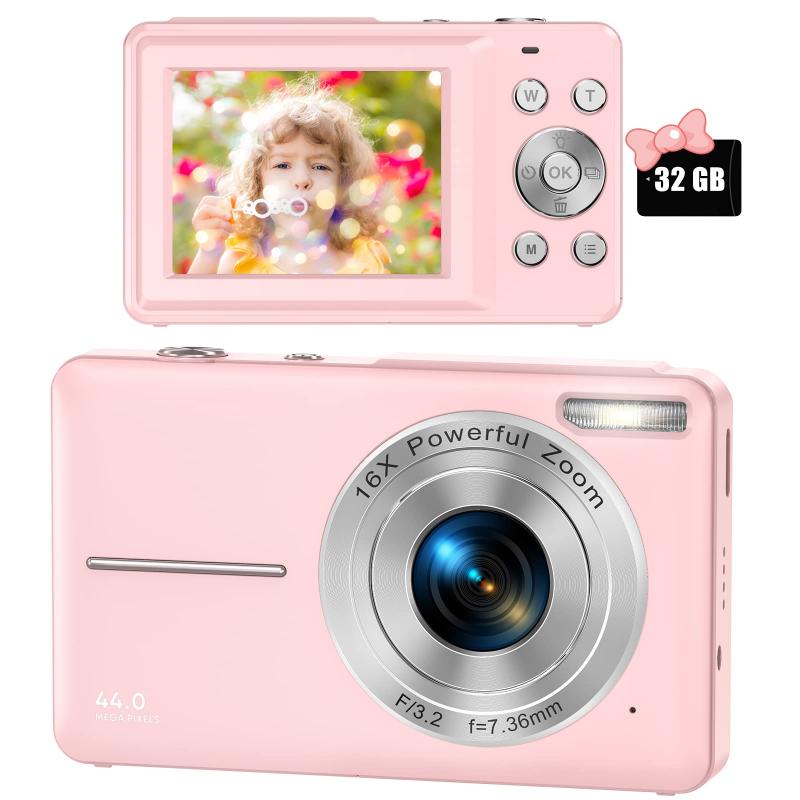
The first digital camera was created in 1975 by Steven Sasson, an engineer at Eastman Kodak. Sasson’s invention was a groundbreaking achievement, as it marked the first time images could be captured and stored electronically without the need for film. The camera used a CCD sensor to capture images and stored them on a cassette tape. It had a resolution of 0.01 megapixels, which is minuscule compared to today’s standards, but it was a revolutionary step forward at the time.
Sasson’s prototype was bulky and slow—it took 23 seconds to capture a single image—but it demonstrated the potential of digital photography. Despite the promise of this technology, Kodak was hesitant to fully embrace it, fearing that it would disrupt their lucrative film business. This reluctance to adapt to the digital age would later contribute to Kodak’s decline as a dominant player in the photography industry.
The Rise of Consumer Digital Cameras

While Kodak pioneered the digital camera, other companies quickly entered the market and began refining the technology. In the 1980s, Sony introduced the Mavica, a camera that used magnetic disks to store images. Although it wasn’t a true digital camera (it captured analog images and converted them to digital), it was an important step toward making digital photography accessible to consumers.
The first commercially available digital camera was the Dycam Model 1, released in 1990. It was a rudimentary device with limited functionality, but it marked the beginning of the consumer digital camera market. Throughout the 1990s, companies like Canon, Nikon, and Fujifilm began developing digital cameras with improved resolution, storage capacity, and user-friendly features.
By the early 2000s, digital cameras had become mainstream, thanks to advancements in technology and falling prices. The introduction of memory cards, USB connectivity, and LCD screens made digital cameras more convenient and versatile. Consumers could now take hundreds of photos, view them instantly, and transfer them to their computers with ease.
The Smartphone Revolution

The next major shift in digital photography came with the rise of smartphones. In 2007, Apple released the first iPhone, which featured a built-in camera. While the camera’s quality was modest by today’s standards, it signaled the beginning of a new era in photography. Smartphones quickly became the dominant platform for capturing and sharing images, thanks to their portability, connectivity, and ever-improving camera technology.
Today, smartphone cameras rival—and in some cases surpass—dedicated digital cameras in terms of image quality. Features like computational photography, optical zoom, and advanced image stabilization have made smartphones the go-to device for casual photographers. Social media platforms like Instagram and Snapchat have further fueled the popularity of smartphone photography, making it easier than ever to share images with a global audience.
The Legacy of the Digital Camera
The digital camera has had a profound impact on society, changing the way we document our lives, communicate, and express ourselves. It has democratized photography, allowing anyone with a camera or smartphone to capture high-quality images. This accessibility has led to an explosion of creativity, as people use photography to tell stories, share experiences, and connect with others.
Moreover, the digital camera has revolutionized industries like journalism, advertising, and entertainment. Photojournalists can now capture and transmit images in real time, while filmmakers use digital cameras to create stunning visuals with greater efficiency and lower costs. The rise of digital photography has also spurred innovations in fields like medicine, astronomy, and security, where imaging technology plays a critical role.
Challenges and Opportunities
Despite its many benefits, the digital camera industry has faced challenges in recent years. The widespread adoption of smartphones has led to a decline in sales of standalone digital cameras, particularly compact models. Camera manufacturers have responded by focusing on high-end devices like DSLRs and mirrorless cameras, which cater to professional photographers and enthusiasts.
At the same time, the industry continues to innovate, exploring new technologies like artificial intelligence, 360-degree imaging, and augmented reality. These advancements promise to push the boundaries of what digital cameras can do, opening up new possibilities for creative expression and practical applications.
The digital camera is a testament to human ingenuity and the power of technology to transform our lives. From its humble beginnings as a bulky prototype to its evolution into sleek, high-performance devices, the digital camera has come a long way. While the rise of smartphones has reshaped the photography landscape, the legacy of the digital camera endures, inspiring new generations of creators and innovators.
As we look to the future, it’s clear that digital imaging will continue to play a central role in how we see and interact with the world. Whether through professional-grade cameras, smartphones, or emerging technologies, the spirit of innovation that drove the creation of the digital camera will remain a driving force in the evolution of photography.


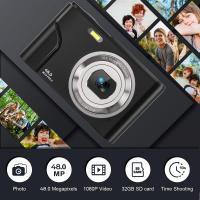
![4K Digital Camera for Photography & Video [Autofocus and Stabilisation] 48MP 16X Digital Zoom 3” 180° Flip Screen Vlog Camera with 32G SD Card, Flash](https://img.kentfaith.com/cache/catalog/products/us/GW41.0065/GW41.0065-1-200x200.jpg "4K Digital Camera for Photography & Video [Autofocus and Stabilisation] 48MP 16X Digital Zoom 3” 180° Flip Screen Vlog Camera with 32G SD Card, Flash")