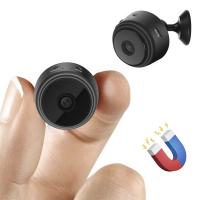
How To Hide A Home Security Camera?
Hiding a home security camera is less about making it “invisible” and more about making it blend in without ruining the camera’s view, signal, night vision, or motion detection. A camera tucked too cleverly behind glass, leaves, or a decorative object often ends up recording glare, shadows, or nothing useful at all.
The best hidden camera setup is boring: it sits where nobody’s attention naturally lands, has a clean view of the area you care about, and is still reachable enough for charging, maintenance, or troubleshooting.
Before getting into placement ideas, one thing is worth saying plainly: only use hidden cameras in places where recording is legal and reasonable. Don’t put cameras in bathrooms, bedrooms used by guests, changing areas, or anywhere someone has a strong expectation of privacy. If you’re recording audio, check your local laws, because audio rules are often stricter than video rules.
Decide what you actually need to see
A common mistake is trying to hide a camera before deciding what the camera needs to capture.
If the goal is package theft, the camera needs a clear view of the porch, walkway, or delivery spot. If the concern is someone entering the yard, you want the gate, side path, or driveway. If you’re watching an indoor entryway, the camera should face the door and catch faces as people come in, not the backs of their heads as they walk away.
For most homes, useful camera coverage comes down to a few areas:
- Front door and porch
- Driveway
- Side gate or side yard
- Back door or patio
- Garage entrance
- Main indoor entry point
- Hallway leading from an exterior door
Try not to hide a camera so high or so far away that it only records the tops of heads. Face-level footage is much more useful. A camera mounted around 7 to 9 feet high is usually a good compromise: high enough to be harder to tamper with, low enough to recognize faces.
Outdoor ways to hide a security camera
Outdoor cameras are harder to hide well because they need a weatherproof location, power or battery access, a stable Wi-Fi signal, and a clear view. Still, there are several practical options that work.
Under the eaves
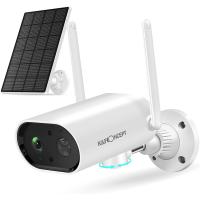
This is one of the cleanest places to hide or disguise an outdoor camera. Eaves naturally create shadow, and people rarely look up there unless the camera is large or has a bright status light.
A small black or white camera matched to the trim can almost disappear. If your soffit is white, use a white camera. If it’s dark wood or black trim, use a black one.
The eave also helps protect the camera from rain and direct sun, which improves long-term reliability. Just make sure the lens is not angled so far downward that it misses faces. Test the view from your phone while someone walks through the area.
Near outdoor lights
A camera placed near a porch light, garage light, or floodlight often gets ignored because people expect fixtures there. Some cameras are built directly into floodlights, which is more of a disguised setup than a hidden one, but it works well because it looks normal.
Be careful with glare. If the camera lens is too close to a bright bulb, nighttime footage may wash out. Ideally, the light should illuminate the scene, not shine into the camera.
Inside a birdhouse or decorative box
A birdhouse-style enclosure can work, especially in gardens, near fences, or overlooking a driveway. The key is to avoid making it look suspicious. A brand-new birdhouse mounted at eye level directly facing the front door may stand out more than the camera would.
If you use an enclosure, leave enough room around the lens and make sure the microphone, speaker, infrared LEDs, and motion sensor are not blocked. Many cameras rely on passive infrared or pixel-based motion detection, and a small hole in a box can limit what the camera “sees.”
Also think about heat. Small sealed boxes can get surprisingly hot in summer, especially in direct sun. Electronics don’t love that.
Behind plants, but not inside them
Plants can help break up the outline of a camera, but they are terrible if they move in front of the lens. Leaves trigger motion alerts, block night vision, collect rain, and create blurry footage when the wind picks up.
A better approach is to mount the camera on a wall or fence and let nearby plants soften the look from a distance. Keep the lens itself completely clear. Trim anything that can sway into the frame.
On fences, posts, and garden structures
Fence posts, pergolas, trellises, and shed corners can hide a camera well because they already have edges, shadows, and hardware. A small camera mounted under a fence cap or tucked into the corner of a pergola is less noticeable than one sitting in the middle of a blank wall.
The downside is signal strength. Yard cameras often struggle with Wi-Fi, especially through brick, stucco, metal garage doors, or long distances. Before drilling holes, hold the camera in the planned spot and check live view for a few minutes. If the feed stalls or drops, hiding it there will only create frustration.
Indoor ways to hide a security camera
Indoor cameras are easier to conceal, but they also raise more privacy concerns. Stick to shared spaces such as entryways, living rooms, garages, and utility areas. If guests, cleaners, babysitters, or tenants may be recorded, be transparent where appropriate and follow local rules.
Bookshelves and cabinets
A bookshelf is one of the most natural indoor hiding spots. Cameras blend well among books, small speakers, picture frames, and decorative objects.
Don’t push the camera too far back. If the shelf creates a tunnel around the lens, the footage may look dark or narrow. Also avoid placing objects close to the lens; many wide-angle cameras will catch the edge of whatever is nearby.
For entryway coverage, a shelf or cabinet across from the front door usually works better than one beside the door.
Among everyday electronics
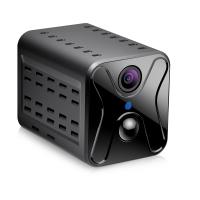
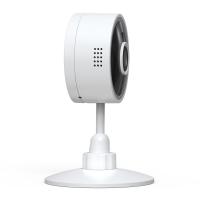
Small black cameras often blend in near routers, smart speakers, TV equipment, alarm panels, or charging stations. People expect little devices and cables in those areas.
This setup works especially well in a living room, office, or garage. Just make sure the camera isn’t aimed straight at a bright TV or window, because changing light can confuse motion detection and exposure.
Decorative objects with open fronts
Some people place cameras inside clocks, tissue boxes, plant pots, or decorative containers. This can work, but it’s easy to overdo. The camera still needs ventilation, a clear lens opening, and access to power.
Avoid covering the lens with tinted plastic or mesh unless you’ve tested it carefully. What looks fine during the day may become unusable at night when infrared light reflects off the material.
Corners near the ceiling
A camera mounted high in an indoor corner is not exactly hidden, but it often goes unnoticed. This is usually the most reliable option if you care more about useful footage than complete concealment.
Corners give a wide view of a room and reduce the chance that furniture, lamps, or people walking close to the camera will block the frame. The trade-off is that very high angles are not always ideal for face identification. For a hallway or entryway, slightly lower is often better.
Don’t accidentally ruin night vision
Night vision is where many hidden camera setups fail.
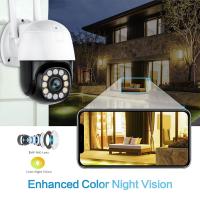
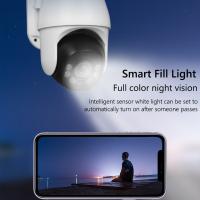
Most home cameras use infrared LEDs around the lens. If the camera is behind glass, inside a tight enclosure, or too close to a wall, the infrared light can bounce back into the lens and create a white haze. During the day the view may look perfect, but at night it becomes useless.
Avoid placing cameras:
- Behind windows if you expect night vision to work
- Inside shiny boxes or reflective housings
- Too close to white walls, trim, or ceilings
- Behind plastic covers not designed for cameras
- Where spider webs can form in front of the lens
Spider webs are a real nuisance outdoors. Infrared light makes them glow, and tiny bugs can trigger alerts all night. If a camera is tucked under an eave or near a porch light, check it occasionally and wipe around the lens.
Hide the wires, or choose battery power carefully
Visible cables are often more noticeable than the camera itself. If you use a wired camera, route the cable along trim lines, under eaves, behind downspouts, or through the wall where possible. Cable clips matching the wall color make a big difference.
For indoor cameras, running the cable behind furniture or along baseboards usually looks cleaner than letting it hang straight down.
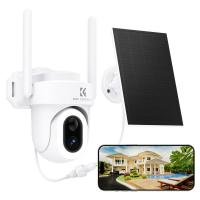
Battery cameras are easier to place discreetly, but they come with trade-offs. A hidden battery camera that requires frequent recharging becomes annoying fast. If it’s mounted high, inside an enclosure, or outdoors in cold weather, battery life may be shorter than advertised.
If you go battery-powered, choose a location you can reach safely. A camera that needs a ladder every three weeks is not a setup most people stick with.
Turn off obvious lights and sounds
Many cameras have small status LEDs that make them easy to spot in a dark room or at night outdoors. In the app settings, look for an option to disable the status light.
Also check for startup chimes, motion alert sounds, two-way talk volume, or clicking noises from the infrared filter. Some cameras make a faint click when switching to night mode. That’s normal, but in a very quiet indoor space it can draw attention.
Don’t cover indicator lights with tape until you’ve checked whether the camera uses that area for a sensor or microphone. If you do cover a light, use a tiny piece and test the camera afterward.
Camouflage is better than concealment
A camera doesn’t always need to be fully hidden. In many homes, the best setup is a mix: one visible camera as a deterrent and one less noticeable camera covering the same general area from another angle.
Visible cameras can discourage casual theft or trespassing. Hidden or discreet cameras can still capture footage if someone avoids, blocks, or damages the obvious one.
For example, a doorbell camera may catch someone approaching the porch, while a small camera under the eave gives a wider view of the walkway and street. In a garage, a visible camera near the opener may deter snooping, while a smaller one on a shelf can capture faces near the side door.
Test the view before committing
Before drilling, mounting, or building a disguise, test the location for a full day if you can.
Check:
- Daytime clarity
- Nighttime clarity
- Motion alerts
- Wi-Fi strength
- Audio quality, if used legally
- Glare from lights or windows
- Rain exposure
- Whether people’s faces are visible
- Battery drain over several hours
Walk through the area like a real person would. Carry a package. Open the gate. Pull into the driveway. Come in through the door at night. You’ll quickly see whether the camera is aimed too high, too low, or too far off to one side.
Keep it maintainable
A hidden camera that can’t be cleaned, charged, updated, or reset will eventually become a dead camera. Dust, bugs, rain spots, firmware issues, Wi-Fi changes, and dead batteries all happen.
Leave yourself a realistic way to access it. Label cables if they run into a closet or attic. Keep spare mounting screws and the reset pin. If the camera is in a decorative object, make sure you can remove it without dismantling half the setup.
The most effective hidden home security camera is usually the one that blends into a normal part of the house, has a clean view, works reliably at night, and doesn’t become a maintenance headache. Subtle beats clever almost every time.