kfconcept

KENTFAITH
K&F Concept    Blog >

Enjoy Your Selected Digital Life

Recently Viewed
  • Recently Viewed
  • Recently Viewed list is empty.

Compare (0) 0
  • Compare
  • You have not chosen any products to compare.

  • Compare
Currency: USD
  • Currency
Shop by Scene Shop by Rank

Log Into Your Account

Account

Order History

Wish List

Login

Forgotten Password?

or connect with

Register Account

Already have an Account?Log In

  • Shopping Cart
  • Your shopping cart is empty!

  • Register/Login to purchase, earn points
  • Favorite
  • Your wish list is empty.

  • Register/Login to like, earn points
  • Activities
  • Guide
    • Filter Guide
    • Lens Adapter
    • Product Review
  • News & Reviews
    • Camera Reviews
    • Sample Gallery
    • News
  • Tutorials
    • Solar eclipse photography
    • Photography Basics
    • Landscape Photography
  • Inspiration
    • Travel
    • Travel Stories
  • Home
  • Blog
  • How Did Galileo Improve The Telescope?

How Did Galileo Improve The Telescope?

Kentfaith 2024-07-05 01:25:21 0 Comments

Galileo Galilei, the renowned Italian astronomer, physicist, and polymath, made significant improvements to the telescope in the early 17th century, which revolutionized the field of astronomy and our understanding of the universe. Before Galileo's enhancements, the telescope was a relatively crude instrument with limited magnification and clarity. Galileo's contributions not only improved the technical aspects of the telescope but also led to groundbreaking astronomical discoveries that challenged the prevailing scientific views of his time.
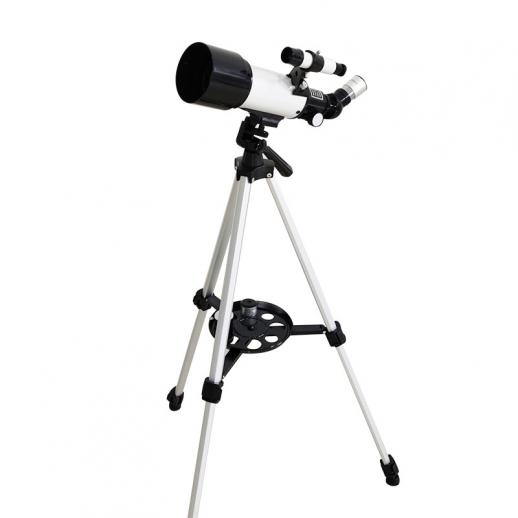

The State of the Telescope Before Galileo

The telescope was invented in the Netherlands in 1608 by Hans Lippershey, a spectacle maker. The early versions of the telescope, known as "spyglasses," had a magnification of about 3x. These rudimentary instruments were primarily used for terrestrial observations, such as spotting ships at sea or observing distant landscapes. The lenses were often of poor quality, leading to significant optical distortions and limited usefulness for detailed astronomical observations.

Galileo's Improvements to the Telescope

Galileo first learned about the telescope in 1609 and quickly set about improving its design. His enhancements can be categorized into several key areas:

1. Increased Magnification:

Galileo significantly increased the magnification of the telescope. His first telescope had a magnification of about 8x, but he soon improved it to 20x and eventually to 30x. This increase in magnification allowed for much more detailed observations of celestial objects.

2. Improved Lens Quality:

Galileo meticulously crafted and polished his lenses to reduce optical distortions. He used a convex objective lens and a concave eyepiece, which helped to minimize chromatic aberration and improve image clarity. This attention to lens quality was crucial for making precise astronomical observations.

3. Enhanced Stability:

Galileo designed a more stable mounting for the telescope, which reduced vibrations and allowed for steadier observations. This stability was essential for making accurate measurements and detailed sketches of celestial objects.

4. Field of View:

By optimizing the arrangement of the lenses, Galileo was able to increase the field of view of the telescope. This allowed him to observe larger portions of the sky at once, making it easier to locate and study celestial objects.

Galileo's Astronomical Discoveries

With his improved telescope, Galileo made several groundbreaking astronomical discoveries that challenged the geocentric model of the universe, which posited that the Earth was the center of the universe and all celestial bodies revolved around it. Some of his most significant discoveries include:

1. The Moons of Jupiter:

In January 1610, Galileo discovered four moons orbiting Jupiter, which he named the "Medicean Stars" in honor of his patrons, the Medici family. These moons, now known as the Galilean moons (Io, Europa, Ganymede, and Callisto), provided clear evidence that not all celestial bodies orbited the Earth, challenging the geocentric model.

2. Phases of Venus:

Galileo observed that Venus exhibited a full set of phases, similar to those of the Moon. This observation was consistent with the heliocentric model proposed by Copernicus, which posited that Venus orbited the Sun, not the Earth.

3. Mountains and Craters on the Moon:

Galileo's detailed observations of the Moon revealed that its surface was not smooth, as previously thought, but covered with mountains and craters. This finding challenged the Aristotelian view that celestial bodies were perfect and unchanging.

4. Sunspots:

Galileo observed dark spots on the surface of the Sun, known as sunspots. He noted that these spots moved across the Sun's surface, providing evidence that the Sun rotated on its axis. This observation further challenged the notion of celestial perfection.

5. The Milky Way:

Galileo's telescope revealed that the Milky Way, which appeared as a diffuse band of light in the night sky, was composed of countless individual stars. This discovery expanded the known scale of the universe and suggested that the cosmos was far more complex than previously imagined.

The Impact of Galileo's Improvements

Galileo's improvements to the telescope and his subsequent discoveries had a profound impact on the field of astronomy and the scientific community as a whole. His work provided strong evidence in support of the heliocentric model of the solar system, which eventually led to the widespread acceptance of this paradigm. Additionally, Galileo's meticulous observations and detailed records set new standards for scientific inquiry and empirical evidence.

Galileo's use of the telescope also demonstrated the power of technology to extend human senses and enhance our understanding of the natural world. His work inspired future generations of scientists and inventors to continue improving telescopic technology, leading to the development of more advanced instruments such as the reflecting telescope by Isaac Newton and, eventually, modern space telescopes like the Hubble Space Telescope.

Galileo Galilei's improvements to the telescope were a pivotal moment in the history of science. By increasing the magnification, improving lens quality, enhancing stability, and optimizing the field of view, Galileo transformed the telescope into a powerful tool for astronomical observation. His discoveries, including the moons of Jupiter, the phases of Venus, and the detailed features of the Moon and Sun, challenged the prevailing geocentric model and laid the groundwork for the acceptance of the heliocentric model. Galileo's work not only advanced the field of astronomy but also exemplified the importance of empirical evidence and technological innovation in scientific progress. His legacy continues to inspire and inform our exploration of the universe today.

Leave your comment
Cancel reply
Note: HTML is not translated!
Related products
4K Solar Eclipse Telescope Electronic Eyepiece with 1600mAh battery for 1.25in Telescope WiFi Connection
12
$128.99 $85.99
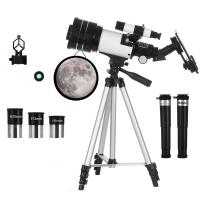
Children Solar Eclipse & Astronomical Telescope 70mm Aperture 300mm Focal Length, Portable Telescope with Tripod, Phone Holder & Bluetooth Remote Control
90
$203.99 $73.99
70mm Aperture Solar Eclipse & Astronomical Refracting Telescope (15X-150X) for Adults and Children, Beginners in Astronomy, 300mm Portable Telescope
141
$209.99 $94.99
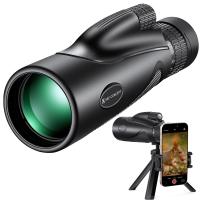
8-32x50 Continuous High-Definition Zoom Monocular Telescope, Black, with Mobile Phone Clip
11
$99.99 $46.99
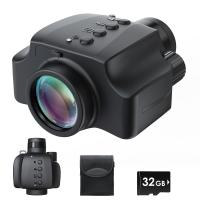
Monocular Telescope Camera WiFi 8x42mm BAK4 Prism 2K Photo 1080P Video 4000mAh Battery
NEW Arrival
Monocular Telescope Camera WiFi 8x42mm BAK4 Prism 2K Photo 1080P Video 4000mAh Battery
14
$659.99 $461.99
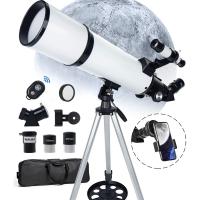
Portable Telescope for Solar Eclipse, Stargazing 80mm Aperture 600mm Focal Length for Solar Eclipse
20
$209.99 $176.99
Telescope Electronic Eyepiece with 4.3in Screen, WiFi Live Stream, Capture 1080P Photos & Videos, Rechargeable, Kentfaith
13
$144.99 $115.99
Telescope for Lunar Eclipse, Stargazing 80mm Aperture, 600mm Focal Length, with 4K Wireless Electronic Eyepiece, Kentfaith
$299.99 $239.99
Telescope Electronic Eyepiece with 2K 30FPS Videos, WiFi Live Feed, 2-inch Screen, 2000mAh Battery, Kentfaith
14
$144.99 $115.99
WiFi Solar Eclipse Telescope Camera with 1.5in Screen 1080P Video 1000mAh Battery for Monoculars Binoculars Microscopes Telescopes
13
$119.99 $83.99
Products You May Like
K&F Concept Beta 20L Camera Backpack, Lightweight Large Capacity Camera Bags with Rain Cover for 15.6 Inch Laptop, DSLR Cameras - Backpack 20L Urban Wander 01 (Dark Green) (Shipped only to the USA)
206
$157.99 $109.99
720P HD 5" Screen Video Baby Monitor Two-Way Audio 360° Wide View Angle and Full Coverage with Night Vision and Temperature Monitoring
42
$111.99
55mm MC UV Protection Filter Slim Frame with Multi-Resistant Coating for Camera Lens Nano-Klear
253
$17.99 $14.99
OM-E Manual Focus Compatible with Olympus OM SLR Lens and Sony E Camera Body
146
$51.99 $32.99
Professional Metal Detector, High-Performance Underground Metal Detector, Five Detection Modes, With LCD Display, Waterproof
56
$281.99 $134.99
D Mount Lenses to Pentax Q Lens Mount Adapter K&F Concept M38161 Lens Adapter
$42.99 $29.99
K&F Concept 2-Pack NP-BX1 Battery and Charger Set, Compatible with Sony ZV-1, ZV-1F, DSC-RX100, DSC-RX100 VII, RX100VA, RX100 VI, RX1R II, HX90V, HX50, WX350, AS100V, HX80, HX95, HX99
14
$39.99 $29.99
49-77mm Step Up Ring Aviation-grade Aluminum Filter Adapter Ring 2-pack with a Cleaning Cloth
99
$6.99
46mm Fader ND2-ND32 (1-5 Stop) Variable ND Lens Filter Neutral Density Filter for Camera Lens NO X Spot Nanotec Ultra-Slim Weather-Sealed
$59.99 $39.99
W108 Plug & Play 2.4 GHz Lavalier Wireless Microphone For iPhone & iPad
$61.49
Related articles
How To Improve The Quality Of Recorded Voice?
When Did The Digital Camera Start Being Used?
What's The Best Telescope?
What Has The Telescope Discovered?
When Was The Telescope Made?
How To Improve Sound Voice Recordings?
What Was The World's Largest Telescope?
When Did Digital Cameras Come Out?
When Did Digital Cameras Become Affordable?
How To On Flash In Camera?
Blog You May Like
Sound Not Working When Screen Recording?
How To Use Camera Detector App?
Selfie Stick Can Hand Carry?
How To Make A Cheap Photography Light Box?
How To Mount Ring Spot Light?
What Is Drone Technology?
How To Measure Smart Watch Size?
How To Choose The Best Digital Camera?
How To Zoom In On A Microscope?
What Is High Dynamic Filter Camera?
Related categories
beginner telescope flash the camera m4/3 adapter Drone Accessories camera card memory trail camera with screen square camera filter system
Popular products
Electronic Eyepiece For Telescope​ cell phone monocular telescope best telescope for beginner Children Astronomical Telescope portable monocular telescope cam trail camera the quarry trail camera the hunting public trail camera best battery powered camera monocular telescope phone clip
Related searches
Telescope For Viewing The Moon Good Telescope Binoculars Telescope Amateur Telescope Monocular Telescope Lens Telescope For Stargazing Electronic Telescope Eyepiece Tripod For Telescope Telescope Phone Adapter Monocular Zoom Telescope
Related Scenes
Best Telescope For Viewing The Moon Best Telescope For Stargazing Best Telescope For Viewing Best Telescope For Bird Watching Best Telescope For Viewing Stars Best Portable Telescope For Stargazing Best Telescope For Viewing Wildlife The Best Security Camera The Best Action Camera The Best Dash Camera
Blog Category
  • Activities
  • Guide
    • Filter Guide
    • Lens Adapter
    • Product Review
  • News & Reviews
    • Camera Reviews
    • Sample Gallery
    • News
  • Tutorials
    • Solar eclipse photography
    • Photography Basics
    • Landscape Photography
  • Inspiration
    • Travel
    • Travel Stories
Search Article
Latest from the Blog
Pressure In Ear When Wearing Headphones?
How To Focus An Image On A Microscope?
How To Pair Wireless Lavalier Microphone?
How To Keep Earbuds In Your Ear?
How To Choose A Home Security Camera System?
How To Save A Video From Security Camera?
What Camera Has The Best Video Quality?
How To Clean Cleaning Cloth For Glasses?
Can You Drive With Headphones?
Where To Buy Solar Filter For Camera?
  • Easy Payment Multilple Payment Options

  • Free Shipping Global WareHouse Shipment

  • No Risk 30-Day No Reason Return

  • Limited Deals Buy More, Save More

  • Tax Free No any surcharges or tax fee

Information
  • About us
  • Contact Us
  • Site Map
  • Blog
  • Video
  • Gallery
  • VIP Membership Rewards
Service
  • Privacy Policy
  • Terms & Conditions
  • Shipping & Delivery
  • Payment Info
  • Warranty, Return & Refund
  • Intellectual Property Rights
  • Ambassador
  • Affiliates
  • Wholesale
Support
  • My account
  • Order History
  • FAQs
  • Extend Warranty
  • Logistics Tracking
Follow us
NewsLetter

Get the latest product, K&F Concept respects your privacy.
Powered By KENTFAITH © 2026