What Is The Aperture Of A Telescope?
The aperture of a telescope is the diameter of its main light-collecting part.
On a refractor telescope, that means the diameter of the front objective lens. On a reflector telescope, it means the diameter of the primary mirror at the back of the tube. On a catadioptric telescope, such as a Schmidt-Cassegrain or Maksutov, it usually refers to the diameter of the front corrector plate, which matches the size of the main mirror system closely enough for normal use.
If someone says, “This is a 6-inch telescope,” they usually mean it has a 6-inch aperture. In metric terms, that’s about 150 mm.
Aperture is one of the most important telescope specifications because it controls two things that matter a lot in real use: how much light the telescope gathers and how much fine detail it can resolve.
Why aperture matters so much
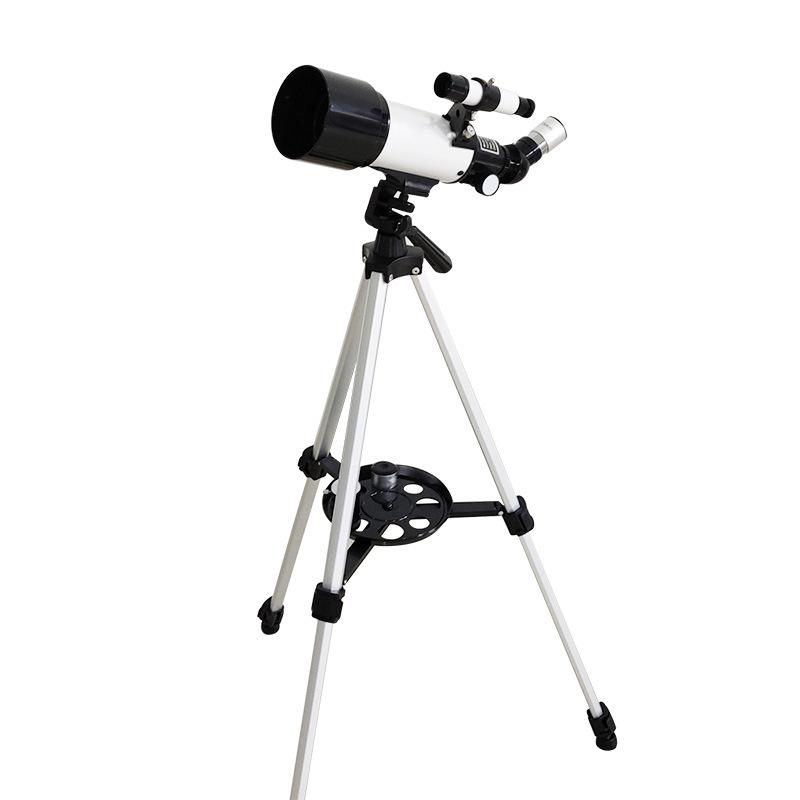
A telescope is basically a light bucket. The wider the bucket, the more light it collects.
A larger aperture lets you see fainter objects, especially deep-sky targets like galaxies, nebulae, and star clusters. It also gives the telescope more resolving power, meaning it can separate close details more clearly. This matters when looking at the Moon, planets, double stars, and fine structure in bright objects.
A 70 mm beginner refractor can show the Moon beautifully, the rings of Saturn, Jupiter’s main cloud bands, and some bright star clusters. Move up to a 150 mm reflector and the experience changes noticeably. Globular clusters begin to look grainy instead of just fuzzy. Nebulae show more shape. Jupiter’s belts have more texture on a steady night. A 250 mm Dobsonian goes further again, especially under a dark sky.
The jump is not subtle because light gathering increases with area, not diameter alone. A 200 mm telescope does not collect twice as much light as a 100 mm telescope. It collects about four times as much, assuming similar optical quality and design.
That’s why aperture is often the first number experienced observers look at.
Aperture is not the same as magnification
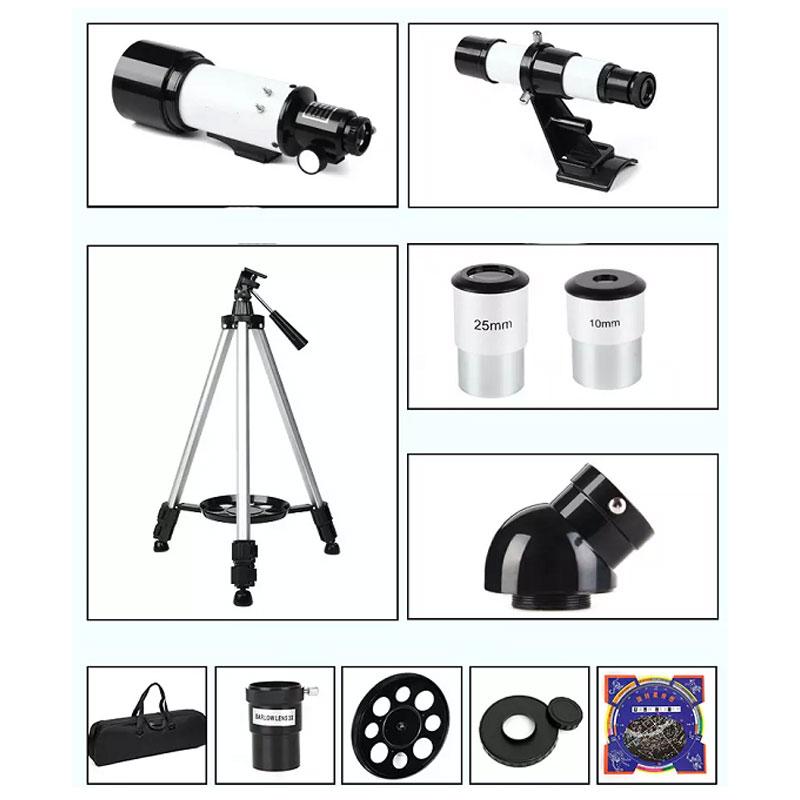
Beginners often assume magnification is the main thing that makes a telescope powerful. In practice, aperture matters more.
A cheap small telescope might advertise “675x magnification” on the box, but that number is usually meaningless. A 60 mm scope cannot produce a sharp, useful 675x image. It will look dim, blurry, and frustrating.
A useful rule of thumb is that a telescope’s practical maximum magnification is around 40x to 50x per inch of aperture, or about 2x per millimeter, under very good conditions. Even that is optimistic in many places because the atmosphere often limits sharpness before the telescope does.
For example:
- A 70 mm telescope may work well up to around 120x–140x on bright targets.
- A 130 mm telescope may handle around 180x–250x when the air is steady.
- A 200 mm telescope might reach 300x or more on rare excellent nights.
Most of the time, you’ll use far less than the theoretical maximum. Many of the best views happen at moderate magnification because the image stays brighter, steadier, and easier to focus.
Aperture gives you the potential for detail. Magnification only enlarges the image the aperture has already formed.
What aperture means for planets
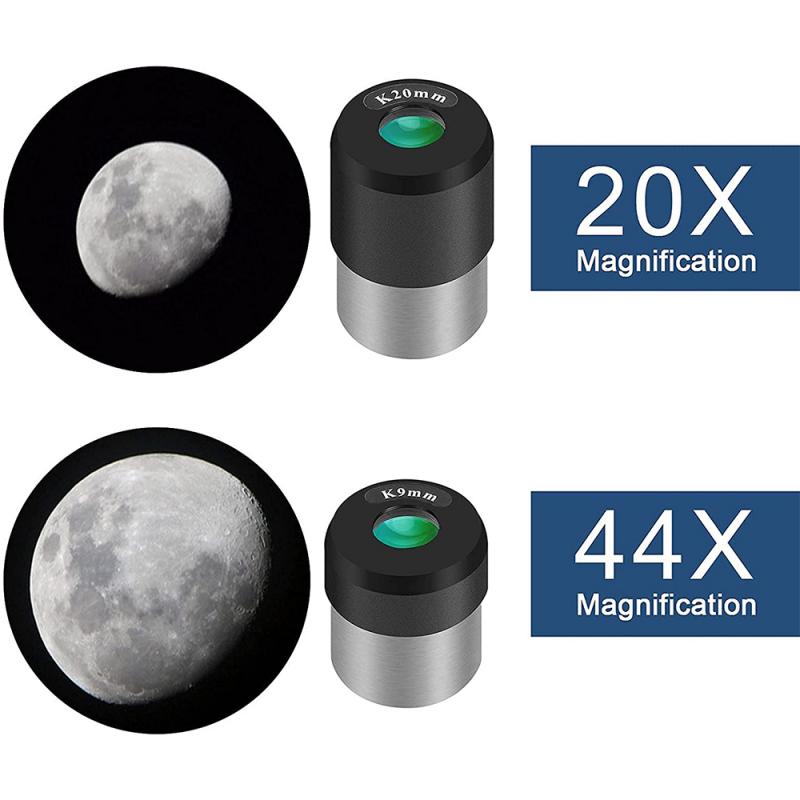
For planets, aperture helps with sharpness and detail, but the atmosphere plays a huge role.
A larger telescope can reveal more on Jupiter, Saturn, and Mars, but only when the air is steady. On a night with poor seeing, a big telescope may show a boiling, shimmering planet that refuses to snap into focus. A smaller scope may look calmer simply because it is not resolving as much turbulence.
This is one reason beginners sometimes feel disappointed after buying a large telescope and pointing it at a planet from a driveway over warm concrete or rooftops. The scope may be fine. The air is the problem.
For planetary viewing, aperture still matters, but so do:
- good collimation, especially on reflectors
- letting the telescope cool to outdoor temperature
- observing when the planet is high in the sky
- using sensible magnification
- waiting for brief moments of steady air
A well-collimated 6-inch or 8-inch telescope can give excellent planetary views. You do not need a giant instrument to enjoy Saturn’s rings or Jupiter’s moons. But more aperture, used properly, does give more detail.
What aperture means for deep-sky objects
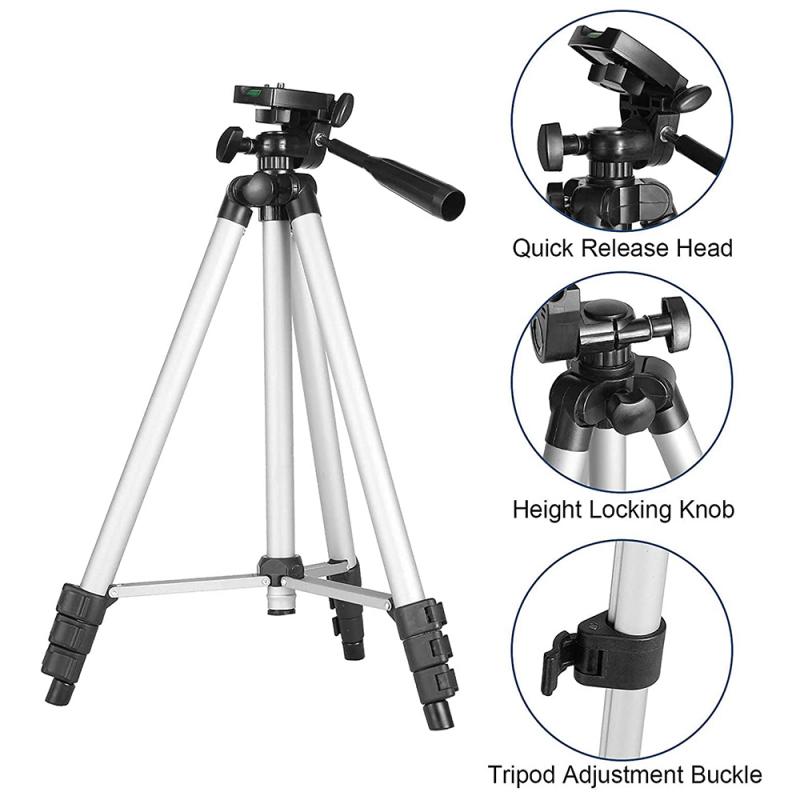
For deep-sky viewing, aperture is often more forgiving and more dramatic.
Galaxies, nebulae, and clusters are faint. More aperture collects more of their light, making them easier to see. Under a dark sky, a larger telescope can make objects appear brighter, more structured, and more memorable.
A small telescope can absolutely show deep-sky objects. The Orion Nebula, the Pleiades, the Andromeda Galaxy, and many open clusters are visible in modest instruments. But many galaxies will look like faint smudges, and some nebulae may be barely visible from light-polluted areas.
With more aperture, those smudges become easier to detect. Some begin to show shape: a brighter core, an elongated outline, hints of dust lanes, or uneven brightness.
Light pollution still matters, though. An 8-inch telescope in a bright city will often struggle on galaxies compared with a 4-inch telescope under a truly dark rural sky. Aperture helps, but it does not magically erase skyglow.
For deep-sky observing, the best combination is aperture plus dark skies. If you can only have one, dark skies often make the bigger difference.
Common aperture sizes and what to expect
Small telescopes, around 60 mm to 80 mm, are light, simple, and easy to carry. They are good for the Moon, bright planets, wide star fields, and casual observing. The downside is limited brightness and resolution. Many deep-sky objects will be faint.
Telescopes around 90 mm to 102 mm are a nice step up, especially in refractors and Maksutovs. They remain portable but show more detail. A 90 mm Maksutov can be a satisfying lunar and planetary scope if you are patient with its narrow field of view.
A 130 mm reflector is one of the better beginner sweet spots. It gathers enough light to make deep-sky observing interesting while still being manageable. The mount quality matters a lot at this size; a shaky mount can ruin an otherwise decent optical tube.
A 150 mm telescope, often sold as a 6-inch Dobsonian or reflector, is a serious beginner-to-intermediate instrument. It can show a lot: lunar detail, planetary detail, many Messier objects, and brighter galaxies from dark sites.
An 8-inch telescope, or 200 mm aperture, is a classic recommendation for people who want strong visual performance without moving into truly bulky equipment. An 8-inch Dobsonian is often the best value in visual astronomy if you have space to store it and can carry it outside easily.
Above 10 inches, the views can be wonderful, but size and convenience start to dominate the ownership experience. A large telescope that rarely gets used is not better than a smaller one you take out often.
Aperture also affects size, weight, and setup
More aperture sounds like an easy win until you have to store, move, cool, and mount the telescope.
A 10-inch Dobsonian gathers plenty of light, but it is not something everyone wants to carry down stairs at midnight. A large equatorial-mounted telescope may look impressive, but if setup takes half an hour and the mount is heavy, casual observing becomes less casual.
This is one of the most common mistakes new buyers make: choosing the biggest aperture they can afford without thinking about how they will actually use it.
Ask yourself practical questions:
- Can I carry it in one trip?
- Will I need to move it through narrow doors or stairs?
- Do I have a place to store it assembled?
- Will I observe from a balcony, backyard, driveway, or travel site?
- How long am I willing to spend setting up?
The best aperture is not always the largest aperture. It is the largest aperture you will use regularly.
Aperture and focal length are different things
Aperture is the diameter of the light-gathering lens or mirror. Focal length is the distance over which the telescope brings light to focus.
These two numbers combine to create the focal ratio, written as f/5, f/8, f/10, and so on.
For example, a telescope with a 200 mm aperture and 1200 mm focal length has a focal ratio of f/6.
Focal ratio affects field of view, exposure time for imaging, eyepiece behavior, and how forgiving the telescope is of optical alignment. But aperture is still the size of the main optic.
Two telescopes can have the same aperture and very different focal lengths. A 100 mm f/5 refractor gives wide, sweeping views. A 100 mm f/10 refractor gives narrower, higher-power views with the same eyepiece. Both gather roughly the same amount of light because the aperture is the same.
Does bigger aperture always mean a better telescope?
Not always.
A larger telescope with poor optics, a wobbly mount, bad collimation, or no time to cool down can perform worse than a smaller, well-made telescope used properly.
Optical quality matters. Mechanical stability matters. Ease of focusing matters. For reflectors, collimation matters. For refractors, chromatic aberration can matter, especially in short, inexpensive achromats.
There is also the human side. A compact 4-inch refractor that can be outside and observing in two minutes may give more enjoyment than a large scope that feels like a chore. On the other hand, if you have a garage, a backyard, and a simple rolling base, a large Dobsonian can be incredibly convenient.
Aperture is powerful, but it is part of the whole telescope system.
A simple way to think about aperture
If you are choosing a telescope, think of aperture as the telescope’s visual engine.
More aperture means:
- brighter views
- better resolution
- fainter objects becoming visible
- more useful magnification potential
But more aperture can also mean:
- more weight
- longer cooldown time
- greater sensitivity to poor seeing
- more storage space
- higher demands on the mount
- more effort to transport
For casual Moon and planet viewing, even a modest aperture can be rewarding. For deep-sky observing, aperture becomes more valuable, especially under dark skies. For a first serious visual telescope, something in the 130 mm to 200 mm range is often a practical sweet spot, depending on your space, budget, and willingness to carry equipment.
So, the aperture of a telescope is simply the diameter of its main lens or mirror — but in real observing, it has a huge influence on what you can see and how satisfying the view feels.