What Is A Borescope Used For?
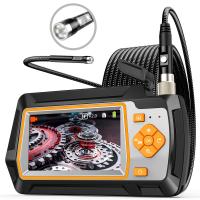
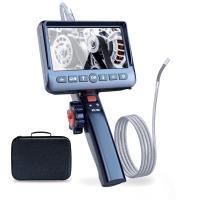
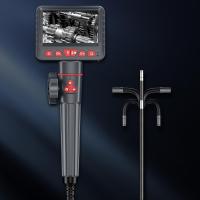
A borescope is a specialized inspection tool that allows users to see inside confined spaces without disassembling machinery or components. It consists of a long, thin probe with a camera and light source at the tip, transmitting real-time visuals to a display screen.
Borescopes are used to view areas that are otherwise inaccessible in machines, structures, or other industrial applications. In simple terms, it is a camera or eyepiece on the end of a rigid or flexible tube, designed to be inserted into equipment without needing to take that equipment apart. Borescopes let engineers, technicians, and inspectors inspect engines, pipes, walls, turbines, and virtually any hard-to-reach cavity to check for defects, blockages, or wear.
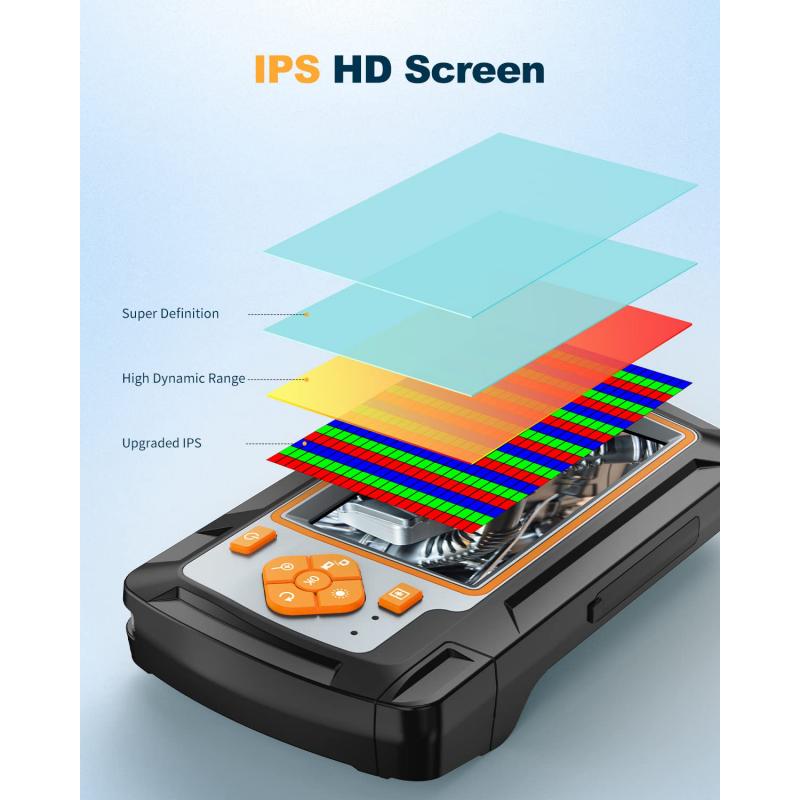
What a borescope is used for
A borescope inspection is performed in automotive, HVAC, plumbing, machine maintenance, and repair because an industrial borescope camera allows for the nondestructive inspection of hard-to-reach places. These places include drains, sewer pipes, heating vents, air ducts, furnaces, motors, pistons, gears, valves, compressors, boilers, and condenser tubes.
An industrial borescope camera is used to see in walls, inspect pipes, and see inside engines. It helps locate potential problems quickly and easily without the need to dismantle a system or machine, allowing corrective measures to be taken before costly downtime occurs.
Borescopes are also used to explore environments to enable us to see areas we would not otherwise be able to view. Using a borescope provides access to hard-to-reach or poorly lit areas as well as the inside of structures. This visual inspection tool facilitates the inspection of structures and environments that are not visible or accessible to the naked eye.
Industrial and mechanical inspection uses
Borescopes are used predominantly for industrial, manufacturing, aviation, and aerospace applications. They are purpose-built for industrial inspection needs, emphasizing durability, versatility, and ease of use in various mechanical scenarios.
Common industrial uses include:
- Inspecting internal components of engines and machinery
- Checking pipes, ducts, and walls
- Looking for cracks, corrosion, defects, debris, blockages, or wear
- Inspecting welds, castings, and other hard-to-reach areas
- Inspecting turbines, compressors, valves, pumps, and other equipment
Borescopes are useful for inspecting machinery like an engine without having to dismantle it, which can save time and money. They are widely used across industries such as aerospace, automotive maintenance, energy, manufacturing, construction, and law enforcement.
Whenever there is a need to inspect inside a machine or structure, a borescope is the go-to tool.
Automotive and aviation inspections
In automotive and aviation inspection, borescope and endoscope camera uses focus on the inspection of internal components of engines, turbines, and other systems.
For engine inspection, borescopes help inspect the internal components of engines, such as cylinders, pistons, and valves, without disassembling the entire engine. The result is more efficient and cost-effective inspections, and earlier detection of potential problems.
For turbine inspection, borescopes help inspect the internal components of turbines, such as blades, without costly disassembly. This supports more accurate inspections and earlier detection of potential problems, which can help prevent costly downtime and repairs.
For weld inspection, borescopes can help inspect welds on critical components, such as aircraft wings or engine mounts. These tools provide a more thorough inspection and earlier detection of potential problems.
For exhaust system inspection, borescopes can inspect the internal components of exhaust systems, such as mufflers and catalytic converters. This allows for more accurate inspections and earlier detection of potential problems, which can help prevent emissions violations and costly repairs.
In automotive inspections, borescopes are also used to inspect cylinders, valves, fuel injectors, turbochargers, and exhaust systems.
Plumbing, HVAC, and home inspection uses
Borescopes can be useful tools for home DIY or inspection projects, allowing users to see and inspect areas that are difficult to access with the naked eye.
In plumbing and HVAC, borescopes are used for detecting blockages, leaks, and corrosion in pipes and ducts. They are used to inspect air ducts and ventilation systems, detect pipe blockages and corrosion, and check plumbing systems. A plumbing camera or snake camera can be used for plumbing blockages, checking for mold or water damage in hard-to-reach areas, and inspecting electrical wiring or components.
For home inspections, borescopes can help examine the inside of walls, air conditioning ducts, and other hard-to-reach areas to identify issues such as mold or water damage.
Borescopes are also used to look inside or behind walls, ceilings, and other areas where pests such as rodents or insects may be present.
Pest control uses
Endoscopes and borescopes can be useful in pest control because they allow professionals to inspect areas that would be difficult or impossible to access otherwise.
If a pest control professional suspects that mice are nesting inside a wall, an endoscope can be used to look inside and locate the nest. Then the professional can take appropriate measures to remove the mice and prevent future infestations.
Endoscopes can also help inspect areas where pests are known to enter a building, such as cracks or gaps in the foundation or walls. The pest control professional can use the scope to identify these entry points and take measures to seal them off, preventing further pest infestations.
Manufacturing, quality control, and energy applications
In manufacturing and quality control, borescopes are used to detect cracks, defects, and poor welds in machinery. They can inspect small components without disassembly and check welds, castings, and other hard-to-reach areas.
In chemical processing, borescopes are used to inspect reactors, pipes, and vessels for corrosion or buildup, detect internal issues in pumps or valves, and monitor the condition of pressure vessels.
In oil and gas, borescopes are used to inspect valves, pumps, and compressors, check internal components of drilling rigs, and monitor pipelines for leaks or corrosion.
In power and energy applications, borescopes are used for turbine engine inspection and other internal equipment inspections where disassembly would be costly or inefficient.
Law enforcement and security uses
Law enforcement uses endoscopes and borescopes for many purposes, including surveillance, evidence gathering, and investigation.
For surveillance, endoscopes help with covert surveillance by allowing law enforcement officers to see inside buildings or vehicles without being seen. For example, an endoscope can be inserted through a small opening in a wall to view activities inside a building.
For evidence gathering, borescopes help gather evidence in criminal investigations. They can examine and document the inside of gun barrels well enough to provide grand jury evidence leading to the issue of a subpoena.
In search and rescue, endoscopes can help locate individuals trapped in confined spaces, such as collapsed buildings or underground tunnels.
In counter-terrorism, endoscopes can help inspect suspicious packages or objects containing explosive devices. Officers can examine the inside of the object without touching it, minimizing the risk of detonation.
Healthcare and sterile processing uses
A borescope is also an inspection device used in sterile processing and surgical settings to visually examine the internal channels of medical instruments, particularly flexible and rigid endoscopes. It consists of a high-resolution camera attached to a flexible or rigid tube, allowing technicians to see inside narrow, hard-to-reach lumens where contaminants may remain even after cleaning.
Borescopes play a crucial role in ensuring surgical instruments are truly clean and ready for sterilization. They are often used as part of enhanced visual inspection protocols to support infection prevention and quality assurance efforts in healthcare facilities.
Visual inspection with a borescope helps detect retained soil, damage, or debris that may not be visible to the naked eye. Even with automated washers and manual cleaning, complex surgical instruments, especially those with internal channels, are vulnerable to residual contamination.
Borescope inspection in sterile processing supports cleaning verification, damage detection, and documentation. It also helps prevent infections and maintain regulatory compliance, and borescope usage is often documented and integrated into instrument tracking systems.
Types of borescopes and how they support different uses
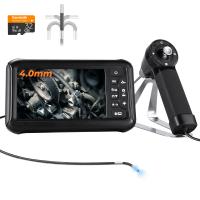
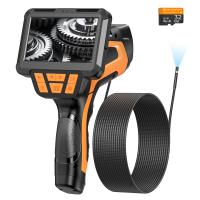
Borescopes come in various forms. A rigid borescope is a straight, inflexible tube useful for inspecting straight-line paths, such as gun barrels or machined holes. A flexible borescope, fiberscope, or videoscope uses a bendable cable that can snake through curves and bends. These often use fiber optics or tiny cameras to transmit images. High-end versions have articulating tips that the user can remotely steer to look around corners.
Video borescopes use a tiny camera fitted to the top of the instrument to capture video footage, which can be viewed using a monitor or computer screen. They can capture stills as well as video clips.
Flexible borescopes use a flexible tube. They use optic glass fibers, rather than lenses, to transmit the image from the camera to the eyepiece. The flexibility of the tube allows for excellent coverage.
Semi-rigid borescopes are not as flexible as fiberscope cameras, but they use the same fiber optic technology to relay images. Their small diameter makes them a choice for inspecting micro components and very small structures.
USB and wireless borescopes connect to smartphones, tablets, or computers. They are portable for quick inspections and can be used for DIY mechanics and general maintenance.
Why borescopes are useful
Borescopes are versatile, functional instruments used by workers and professionals in many sectors to explore, investigate, and view different objects, environments, and structures.
They allow for nondestructive inspection, which means users can inspect internal components without dismantling equipment. They illuminate dark, hard-to-reach areas and provide bright, intense light to aid visibility and produce clear images. They also offer access to environments and structures that would otherwise be inaccessible.
Borescopes are essential inspection tools that allow professionals to see inside tight or hard-to-reach spaces without dismantling equipment. They are widely used in automotive, aviation, manufacturing, HVAC, plumbing, law enforcement, healthcare inspection, and other fields where internal inspection is needed.