What Do Night Vision Goggles Look Like?
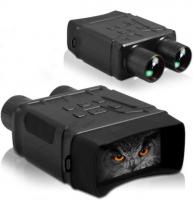
what night vision goggles look like
night vision goggles usually look green for a few different reasons but you get used to it and everything just looks gray scale after a while.
in general it looks like daylight but quite washed out. it is easy to get overexposure if you are looking at a lamp or an explosion. items in the foreground also looks much brighter as items in the background as infrared light does not travel far through atmosphere, similar to if there were some black fog in the air.
from the user perspective it's not as simple as putting them on and you can see everything like normal except for a green tint. from a military perspective they are heavy and cause an uneven weight distribution making them feel awkward on your head which makes shooting more difficult. they also make objects appear further than they are in reality which makes it difficult to do things with your hands at first because your brain is confused about where they actually are. they also narrow your field of vision which makes it difficult to find a good path through unfamiliar terrain.
- night vision goggles allow users to view their natural surroundings in low light as well as complete darkness, using a combination of ambient light, infrared, analogue image intensifier tubes, and state of the art digital sensors.
- the most common way to use night vision is to have it mounted to your head somehow. this allows for hands-free use.
- night vision goggles and monoculars are also easily used as handheld units or mounted to a tripod as well.
- a nvg or night vision goggle system intrinsically is designed to be used with a helmet mount.
monoculars and binoculars
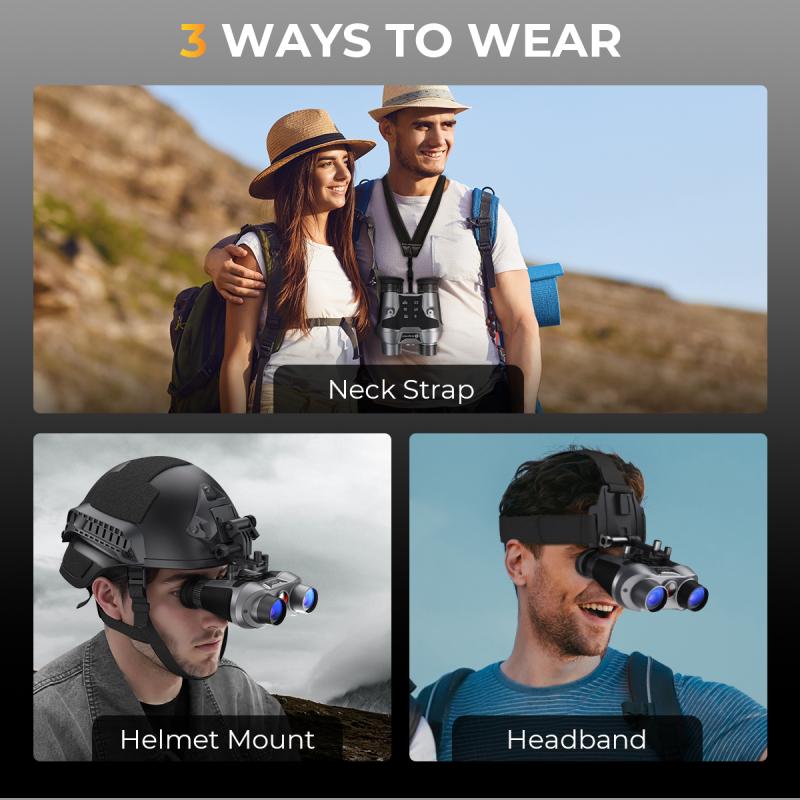
- pvs-14's have been the workhorse of the us military over the course of the last 10 years. they are versatile, light, and relatively inexpensive. they may also be mounted on a weapon system. prices will vary by manufacturer, and tube type/generation.
- night vision goggles/binoculars are going to provide the user with a reasonable fov, the most common bnvd's go by military nomenclature (pvs-15, 21, 23, 31) with small and large differences between all of them. with pricing affected by manufacturer and tube type/generation.
- similar in the single tube design of pvs-14's, these civilian style monoculars come from various manufacturers and are more geared towards recreational use using less expensive tubes and designs. these are well suited for your next camping trip, or for fun home use.
- much like the civilian style monos, these binos come in tons of options for tube type, and of course price. with the majority in the gen 1&2 range and most between 500-2000 dollars. some of the better options would work ok for surveillance and hunting as some do offer additional magnification.
bnvds offer a wider field of view compared to monoculars, providing superior situational awareness crucial for tactical scenarios. they're the go-to choice for military and law enforcement personnel requiring superior nighttime navigation and target identification. military nomenclature like pvs-15, 21, 23, and 31 denotes specific models with varying functionalities and capabilities, catering to diverse operational needs.
helmet mounted and hand held
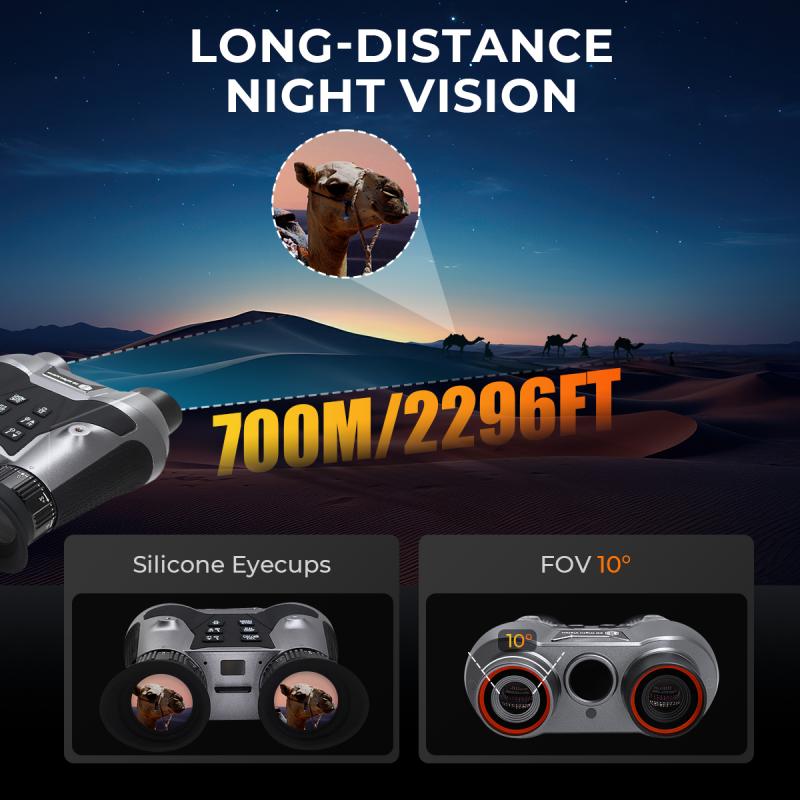
- helmet mounted device.to keep your sensory spatial awareness, a device mounted in front of the eye should be a native 1x mag, so that you arent tripping over objects out of the field of view.
- night vision monocularshave accessory rails which allow you to attach them to helmet mounts for hands free operation.
- a skull crusher type fitment is also common where an elastic head band system incorporates a swing arm or bridge mount to attach a device to hands free, perfect for operating machinery at night hands free, or for search and rescue applications where you may need to navigate in complete darkness but also treat an injured person.
- it is worth remembering that whilst your new night vision goggles are "helmet mount ready" you may need an additional mount to attach them to your equipment.
the most common options are a ballistic helmet such as our ate ballistic, or a non-ballistic helmet like our ate tactical bump helmet. most helmets consist of a shroud that receives the nvg mount of your choice, that then connects to the night vision goggles themselves.
other head-mounted options include "skull" or “face” mounts that are similar to a helmet type retention system, but with only the shroud and no actual helmet shell.
field of view and weight
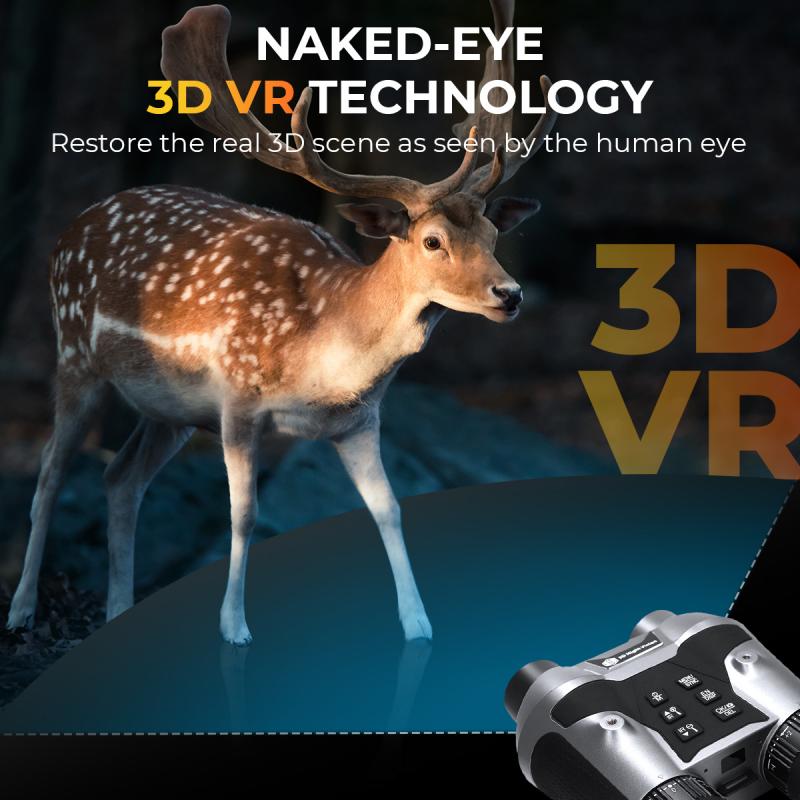
- if you are looking for the very best in field of view (fov), 97 degrees to be exact, and cost isn't an option these should be the first thing you look at. depth perception is improved, and the two outside tubes increase peripheral vision.
- 97 degrees of horizontal field-of-view that allows for observation and/or target identification in low-light conditions and is ruggedized for ground applications.
- individual monoculars can be detached from the system and powered with the included power adapter to provide a low-profile handheld night vision monocular.
- limited fov with only one tube. users may notice increased eye fatigue if constantly switching between the night vision device and the naked eye.
- bnvd's are harder to switch between nvd and naked eye use. most are based on milspec specifications which will bring up the price.
- the current price point will put these out of the reach of even the best funded. slightly heavier than other options.
image inside the goggles
night vision goggles use an image intensifier tube. this is a form of vacuum tube very similar to an old crt television. light first hits a photo cathode where it gets converted to electrons. then it goes through a vacuum tube where the electrons gets focused and amplified before it hits a phosphorous anode where it gets turned into photons again that the user can see. during this process there is a lot of information lost. for example the colors gets lost as electrons do not have color the same way.
- light from the moon, stars, or other sources enters the lens at the front. the light is made of photons (particles of light) of all colors.
- photons enter, they strike a light-sensitive surface called a photocathode. the photocathode converts photons into electrons.
- electrons are amplified by a photomultiplier. each electron entering the photomultiplier has many more electrons leaving it.
- photomultiplier hit a phosphor screen, creating tiny flashes of light.
- with the increased photons than what originally entered the night vision goggles, the screen results in a brighter version of the original scene.
lenses and front parts
while all components play crucial roles, the lenses in night vision goggles are particularly important. they determine the field of view, image clarity, and overall performance of the device.
- wider field of view: new lens designs can provide a much broader field of view, allowing users to see more of their surroundings without moving their head.
- improved clarity: advanced materials and coatings can reduce distortion and increase contrast, resulting in sharper, more detailed images.
- enhanced light transmission: specialized coatings and materials can improve the amount of light that reaches the image intensifier tube, boosting overall performance.
- reduced weight: non-glass lenses are often lighter, making the goggles more comfortable to wear for extended periods.
- increased durability: some advanced materials are more resistant to scratches and impacts compared to traditional glass.
at the very front of a very simple night vision scope is a so called "photo plate" that releases an electron whenever it is hit by a photon, as long as it has enough energy. so it doesn't just detect visible light, it can also detect near infrared (like the light from a tv remote, not thermal infrared - that is an entirely different technology) and uv light.
infrared light and display
night vision goggles infrared light sensitive to light cameras - these cameras can take very little incoming light and make it very bright to the person wearing the goggles. and finally, if there isn't enough light available, you can actually turn on an infrared flashlight on your goggles. this infrared flashlight is invisible to the naked eye, but to your goggles, they're lighting up the room like a big bright flashlight.
- infra-red (ir) illuminators emit light that is nearly invisible to the naked eye, thus acting as a flashlight of sorts for your nvg's when there isn't enough other light to provide a proper image.
- power source and the life of that source are important features to consider as well. the majority of night vision use standard batteries such as aa's, but you will also find dedicated battery packs and other power sources.
- magnification is another feature that depends on your own needs. the majority of night vision goggles are going to be 1x as you wouldn't want to be trying to wander around at 10x magnification.
generations and visual quality
- generation 1: the first generation of night vision devices used an image intensifier tube to amplify available light and provide a clear image in low-light conditions. these devices were relatively bulky, had limited resolution, and were often prone to image distortion.
- generation 2: the second generation of night vision devices improved upon the image intensifier tube technology used in generation 1 devices, resulting in better image quality and resolution.
- generation 3: the third generation of night vision devices saw the introduction of multi-alkali photocathodes, which improved the performance of the image intensifier tube and provided better resolution and image quality.
- generation 4: the fourth generation of night vision devices combined image intensification technology with thermal imaging to provide users with the ability to see in complete darkness.
night vision generations dictate price, clarity, brightness, and longevity. you will typically see them labeled as gen 1-4. the us military after analyzing gen 4 technology decided that it was still just slightly improved gen 3. therefore you will still see some companies marketing gen 4, or 3+, but for simplicity, we will stick with the us military and use 1-3.