kfconcept

KENTFAITH
K&F Concept    Blog >

Enjoy Your Selected Digital Life

Recently Viewed
  • Recently Viewed
  • Recently Viewed list is empty.

Compare (0) 0
  • Compare
  • You have not chosen any products to compare.

  • Compare
Currency: USD
  • Currency
Shop by Scene Shop by Rank

Log Into Your Account

Account

Order History

Wish List

Login

Forgotten Password?

Or connect with

Register Account

Already have an Account?Log In

  • Shopping Cart
  • Your shopping cart is empty!

  • Register/Login to purchase, earn points
  • Favorite
  • Your wish list is empty.

  • Register/Login to like, earn points
  • Activities
  • Guide
    • Filter Guide
    • Lens Adapter
    • Product Review
  • News & Reviews
    • Camera Reviews
    • Sample Gallery
    • News
  • Tutorials
    • Solar eclipse photography
    • Photography Basics
    • Landscape Photography
  • Inspiration
    • Travel
    • Travel Stories
  • Home
  • Blog
  • How Far Can A Telescope See?

How Far Can A Telescope See?

Kentfaith 2024-07-11 01:59:33 0 Comments

When it comes to the question of how far a telescope can see, the answer is not as straightforward as one might think. The distance a telescope can observe depends on several factors, including the type of telescope, its aperture size, the quality of its optics, the atmospheric conditions, and the brightness of the objects being observed. In this article, we will delve into these factors to provide a comprehensive understanding of the capabilities of telescopes and how far they can truly see.

Understanding Telescope Types and Their Capabilities
how far can a telescope see 1

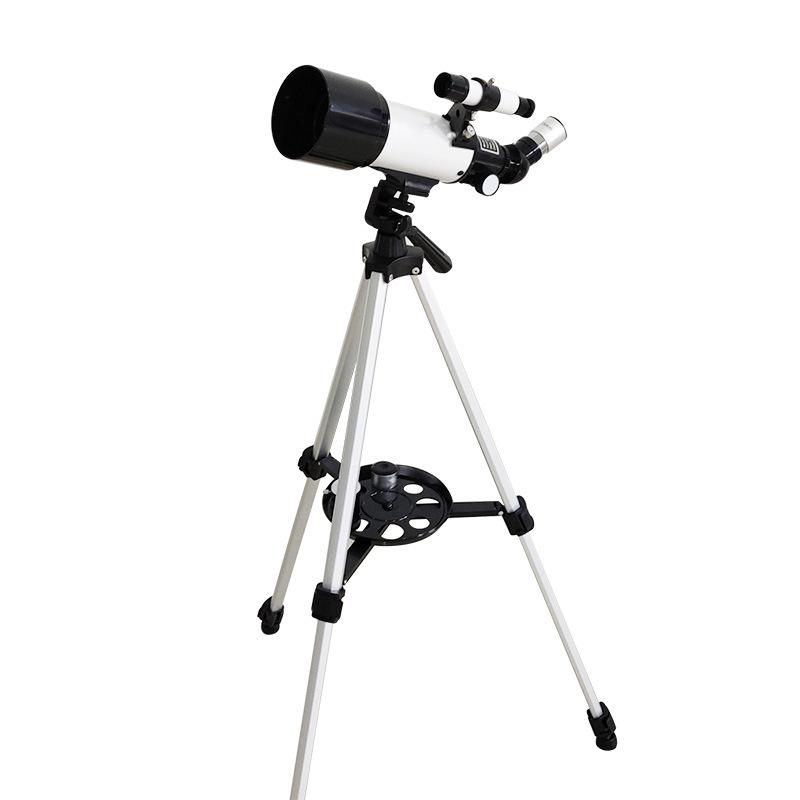
There are several types of telescopes, each with its own strengths and limitations. The most common types are refracting telescopes, reflecting telescopes, and compound (or catadioptric) telescopes.

1. Refracting Telescopes: These use lenses to gather and focus light. They are known for their sharp and high-contrast images, making them ideal for observing planets and the moon. However, they are generally limited in aperture size due to the difficulty and expense of manufacturing large lenses.

2. Reflecting Telescopes: These use mirrors instead of lenses to gather light. They can be made with much larger apertures than refractors, allowing them to collect more light and see fainter objects. Reflectors are often used for deep-sky observations, such as viewing distant galaxies and nebulae.

3. Compound Telescopes: These combine lenses and mirrors to offer a compact design with good optical performance. They are versatile and can be used for a wide range of astronomical observations.

The Role of Aperture Size
how far can a telescope see 2

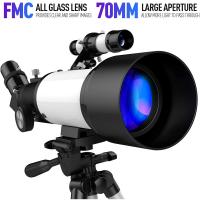
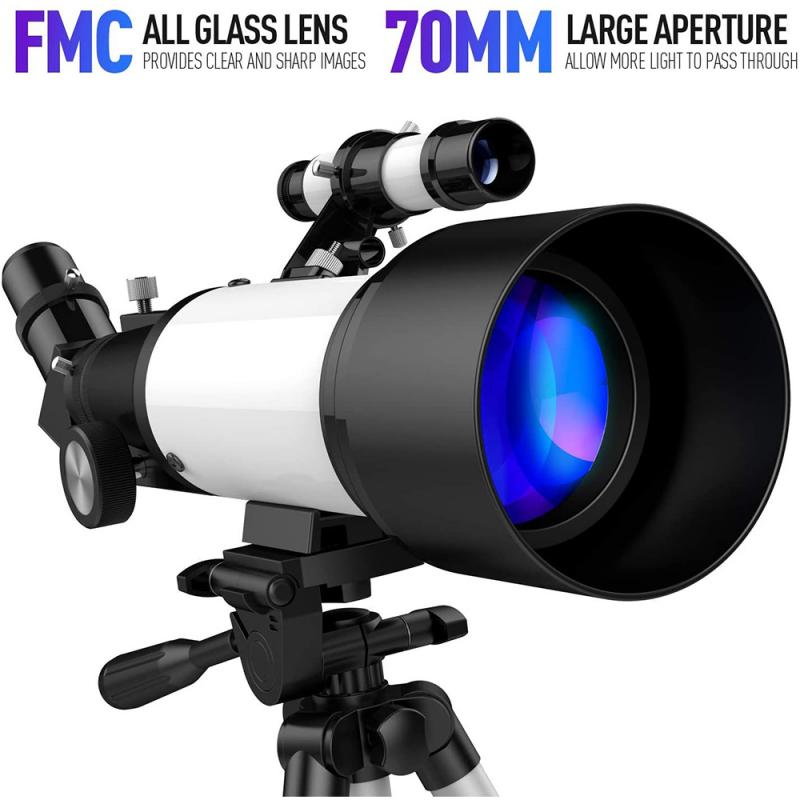
The aperture size of a telescope, which is the diameter of its primary lens or mirror, is one of the most critical factors in determining how far it can see. A larger aperture allows the telescope to gather more light, which is essential for observing faint and distant objects. For example, a small 60mm refractor might be able to see the moons of Jupiter and some of the brighter deep-sky objects, while a large 200mm reflector can reveal much fainter galaxies and nebulae.

Light-Gathering Power and Magnitude
how far can a telescope see 3

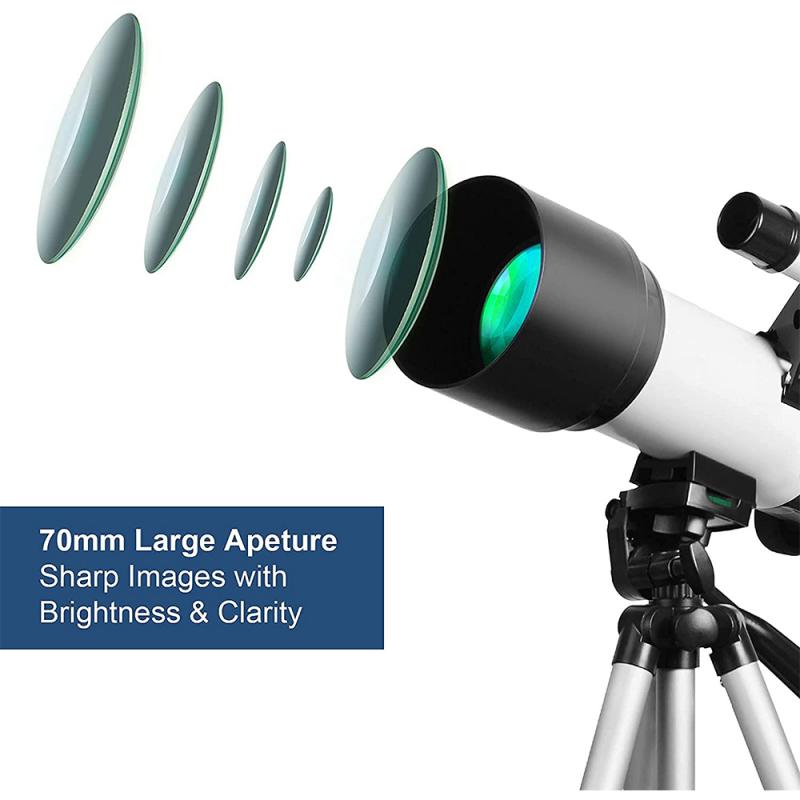
The light-gathering power of a telescope is directly related to its aperture size. This power determines the telescope's ability to see faint objects. Astronomers measure the brightness of objects using a scale called magnitude. The lower the magnitude number, the brighter the object. For instance, the brightest stars have a magnitude of around 0 or 1, while the faintest objects visible with the naked eye have a magnitude of about 6.

A telescope with a larger aperture can detect objects with higher magnitudes (fainter objects). For example, a 100mm telescope can typically see objects with a magnitude of around 12, while a 200mm telescope can see objects with a magnitude of around 14. This means that the larger telescope can observe objects that are about 2.5 times fainter than those visible with the smaller telescope.

Atmospheric Conditions and Light Pollution
how far can a telescope see 4

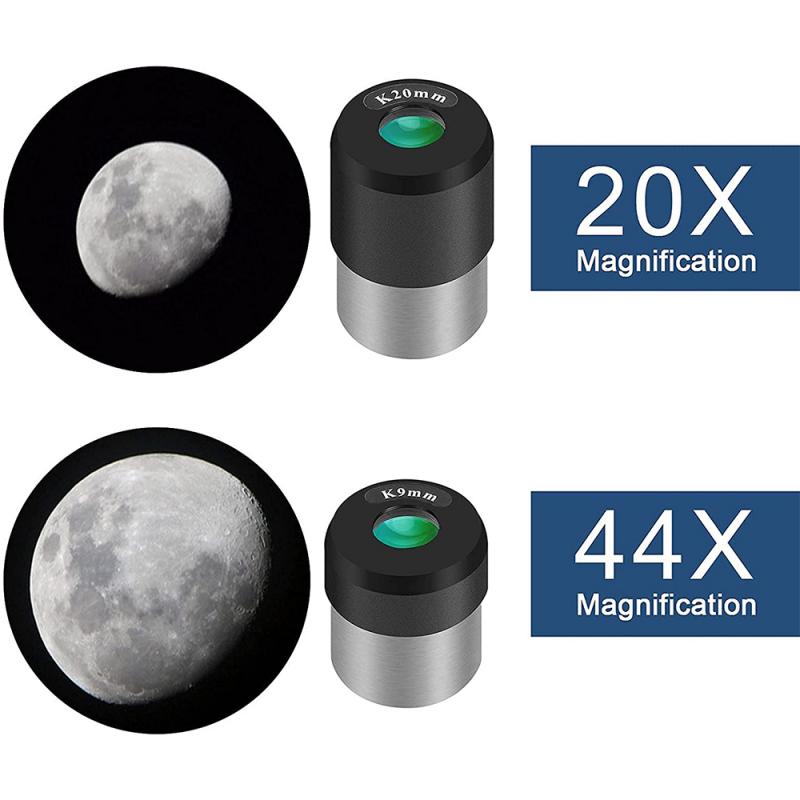
Even the most powerful telescopes are limited by the Earth's atmosphere. Atmospheric turbulence, known as "seeing," can blur images and reduce the telescope's effective resolution. Observatories located at high altitudes, such as those on Mauna Kea in Hawaii, are positioned above much of the Earth's atmosphere, providing clearer and more stable views.

Light pollution from artificial lights in urban areas can also significantly impact a telescope's ability to see faint objects. Observing from a dark-sky location, far from city lights, can greatly enhance the telescope's performance.

Theoretical Limits and Practical Observations

In theory, there is no limit to how far a telescope can see. The Hubble Space Telescope, for example, has observed galaxies over 13 billion light-years away, capturing light that has traveled for most of the age of the universe. However, practical limitations, such as the telescope's aperture, the quality of its optics, and the observing conditions, play a significant role in determining what can be seen.

Examples of Observational Capabilities

To provide a clearer picture of what different telescopes can observe, let's look at some specific examples:

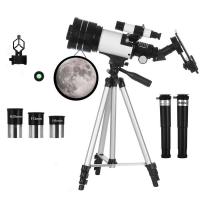
1. Small Refractor (60-80mm): These telescopes are great for beginners and can show detailed views of the moon, the planets (such as Jupiter's moons and Saturn's rings), and some of the brighter deep-sky objects like the Orion Nebula and the Andromeda Galaxy.

2. Medium Reflector (150-200mm): These telescopes can reveal much more detail in deep-sky objects. They can show the spiral arms of galaxies, the structure of nebulae, and many more star clusters. They are also capable of resolving individual stars in globular clusters.

3. Large Reflector (250mm and above): These telescopes are used by serious amateur astronomers and can see very faint objects. They can observe distant galaxies, faint nebulae, and even some of the more obscure objects cataloged by astronomers. They can also provide stunning views of planets and the moon with high resolution.

The Future of Telescopic Observations

With advancements in technology, the capabilities of telescopes continue to improve. The James Webb Space Telescope (JWST), set to launch soon, will have a much larger aperture than Hubble and will observe in the infrared spectrum, allowing it to see even further into the universe and peer through dust clouds that obscure visible light.

Ground-based telescopes are also advancing, with projects like the Extremely Large Telescope (ELT) and the Giant Magellan Telescope (GMT) promising to revolutionize our understanding of the cosmos. These telescopes will have apertures measuring tens of meters, providing unprecedented light-gathering power and resolution.

The question of how far a telescope can see is multifaceted and depends on various factors, including the type of telescope, its aperture size, atmospheric conditions, and light pollution. While small telescopes can provide stunning views of nearby celestial objects, larger telescopes can peer deep into the universe, revealing faint and distant galaxies. As technology advances, the limits of telescopic observations continue to expand, offering exciting possibilities for future discoveries in astronomy. Whether you are a beginner or an experienced astronomer, understanding these factors can help you make the most of your observations and appreciate the incredible capabilities of modern telescopes.

Leave your comment
Cancel reply
Note: HTML is not translated!
Related products
4K Solar Eclipse Telescope Electronic Eyepiece with 1600mAh battery for 1.25in Telescope WiFi Connection
12
$128.99 $85.99
Gift Certificate: $200 Value - Can Use with Any Discounts
$200.00 $190.00
Gift Certificate: $300 Value  - Can Use with Any Discounts
Gift Certificate: $300 Value - Can Use with Any Discounts
$300.00 $285.00
Gift Certificate: $1000 Value  - Can Use with Any Discounts
Gift Certificate: $1000 Value - Can Use with Any Discounts
$1,000.00 $950.00
Gift Certificate: $500 Value  -Can Use with Any Discounts
Gift Certificate: $500 Value -Can Use with Any Discounts
$500.00 $475.00
Gift Certificate: $800 Value - Can Use with Any Discounts
$800.00 $760.00
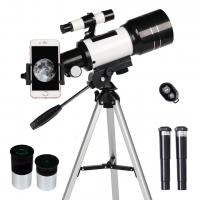
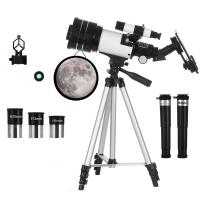
Children Solar Eclipse & Astronomical Telescope 70mm Aperture 300mm Focal Length, Portable Telescope with Tripod, Phone Holder & Bluetooth Remote Control
90
$203.99 $73.99
70mm Aperture Solar Eclipse & Astronomical Refracting Telescope (15X-150X) for Adults and Children, Beginners in Astronomy, 300mm Portable Telescope
141
$209.99 $94.99
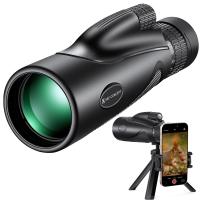
8-32x50 Continuous High-Definition Zoom Monocular Telescope, Black, with Mobile Phone Clip
11
$99.99 $46.99
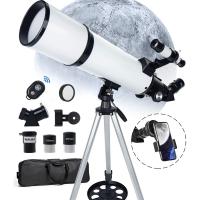
Portable Telescope for Solar Eclipse, Stargazing 80mm Aperture 600mm Focal Length for Solar Eclipse
20
$209.99 $176.99
Products You May Like
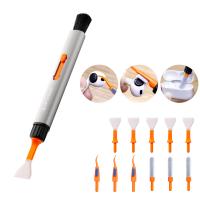
Replaceable Cleaning Pen Set (Cleaning pen + 6 x APS-C Cleaning Stick + 3 x Flocked Sponge  + 3 x Rejector)
Replaceable Cleaning Pen Set (Cleaning pen + 6 x APS-C Cleaning Stick + 3 x Flocked Sponge + 3 x Rejector)
$39.99 $26.99
52mm Slim MC UV Filter
22
$24.99 $12.99
Minolta MD Lenses to Sony A Lens Mount Adapter K&F Concept M15271 Lens Adapter
$37.99
best batteries for trail cameras
10
$135.99 $106.99
40.5mm Variable ND Filter ND2-400 (1-9 Stop) Lens Filter Waterproof Scratch Resistant Nano-Xcel Series
57
$62.99 $49.99
64GB MicroDrive Micro SD UHS-I Memory Card
$15.99
Solar Dark Solar Trail Camera
10
$162.99 $106.99
Pentax K Lenses to Canon EF/EF-S Lens Mount Adapter For DSLR K&F Concept M17131 Lens Adapter
2
$45.99 $29.99
67mm Magnetic Variable ND2-ND32 (1-5 Stop) Lens Filters NO X Spot, Nano-Xcel Series (Compatible with 72mm magnetic cap)
43
$89.99 $71.99
67mm Snap-On Center Pinch Lens Cap 9 in 1 with Anti-Loss Keeper Leash Compatible with Nikon, Canon, Sony, Fujifilm Camera Lenses
73
$18.99 $9.99
Related articles
How Far Can Binoculars See?
How Far Can Security Cameras See At Night?
What Planets Can You See Without A Telescope?
Can I See Saturn Rings With Telescope?
Can You See Flag On Moon With Telescope?
What Size Telescope To See Saturn?
Where Can I Purchase A Telescope?
How Far Does A Camera Flash Reach?
How Far Will A Baby Monitor Work?
How To Make Camera Bag Padding?
Blog You May Like
Where To Buy Microphones?
Digital Camera What Is It?
Does An Nd Filter Affect Depth Of Field?
How To Install Cameras On House?
How To Carry Filters For Lens?
How Many Stops Is An Nd 8 Filter?
Which Camera Is Best For Photos And Videos?
Camera Settings When Using Flash?
How To Make Security Camera From Old Phone?
Can You Zoom In With Binoculars?
Related categories
A Mount Lens Adapter beginner telescope Sony A Mount Lens Adapters minolta a mount lenses canon cameras lens Soft Box Video fill light nd100000 filter Consumer Electronics
Popular products
mini web camera wifi uhf wireless microphone system Electronic Eyepiece For Telescope​ cell phone monocular telescope best telescope for beginner Children Astronomical Telescope portable monocular telescope drone carrying case monocular telescope phone clip Monocular Camera
Related searches
Viewing Saturn With A Telescope Lens Filter See Through Clothes See Vision Solar Security Camera See In The Dark Camera Good Telescope Binoculars Telescope Amateur Telescope Cameras That Can Adapt Canon Fd Lens Ir Lens Filter See Through Clothes Filter Lens To See The Sun
Popular searches
Pentax K Mount Dimensions M42 Adapter Canon 5d Game Camera With Sd Card Most Accurate Smartwatch For Calories K&f Concept Shoulder Bag Canon S5is Lens Adapter Panasonic Bgh1 Lens Mount Sony E Mount Cap 3d Model Good Camera And Video Recorder Portable Handheld Microscope
Blog Category
  • Activities
  • Guide
    • Filter Guide
    • Lens Adapter
    • Product Review
  • News & Reviews
    • Camera Reviews
    • Sample Gallery
    • News
  • Tutorials
    • Solar eclipse photography
    • Photography Basics
    • Landscape Photography
  • Inspiration
    • Travel
    • Travel Stories
Search Article
Latest from the Blog
Which Bluetooth Earphones?
How Much Storage For Security Camera?
What Power Binoculars For Long Distance Viewing?
How To Buy A Security Camera System?
How To Find Camera Roll On Iphone 5s?
Is the Sony A7M5 worth buying?
What To Look For In A Dash Cam?
Camera That Can Wifi Photos To Phone?
What Tripod To Buy?
How Many Stops Is An Nd 8 Filter?
  • Easy Payment Multilple Payment Options

  • Free Shipping Global WareHouse Shipment

  • No Risk 30-Day No Reason Return

  • Limited Deals Buy More, Save More

  • Tax Free No any surcharges or tax fee

Information
  • About us
  • Contact Us
  • Site Map
  • Blog
  • Video
  • Gallery
  • VIP Membership Rewards
Service
  • Privacy Policy
  • Terms & Conditions
  • Shipping & Delivery
  • Payment Info
  • Warranty, Return & Refund
  • Intellectual Property Rights
  • Ambassador
  • Affiliates
  • Wholesale
Support
  • My account
  • Order History
  • FAQs
  • Extend Warranty
  • Logistics Tracking
Follow us
NewsLetter

Get the latest product, K&F Concept respects your privacy.
Powered By KENTFAITH © 2026