What Binoculars Are Best For Stargazing?
what binoculars are best for stargazing
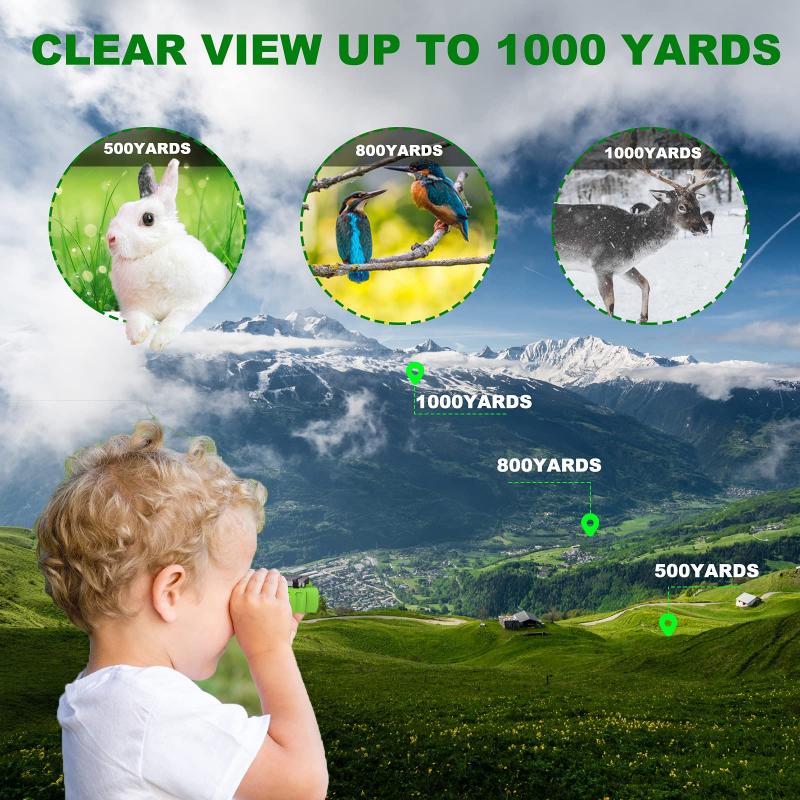
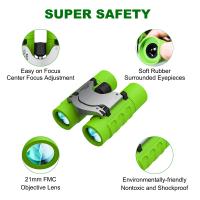
binoculars are often the best piece of equipment for astronomy beginners or those who enjoy a spot of stargazing, offering great views of the moon and stars among other celestial objects.
for those who don’t have a lot to spend or aren’t sure whether they’re interested in astronomy, i believe binoculars are a great choice.
even if you already have a telescope, a good pair of binoculars can be a useful addition. a pair of 40–60 mm binoculars will offer a wide field of view, can be set up quickly, and are capable of showing open star clusters, bright nebulae, and galaxies. smaller handheld binoculars can be used as a reference or for practice when trying to locate new objects in your telescope.
unlike cheap telescopes, you won’t have to worry about bad optics, a wobbly tripod, or low-quality, uncomfortable eyepieces with even the cheapest acceptable binoculars in our rankings.
binoculars are good for learning the night sky. they'll also show you tens of thousands of stars. if you have dark skies and clear weather, the milky way through binoculars is spectacular. you'll see a lot of detail in the moon, which can be almost uncomfortably bright through bins.
handheld binoculars
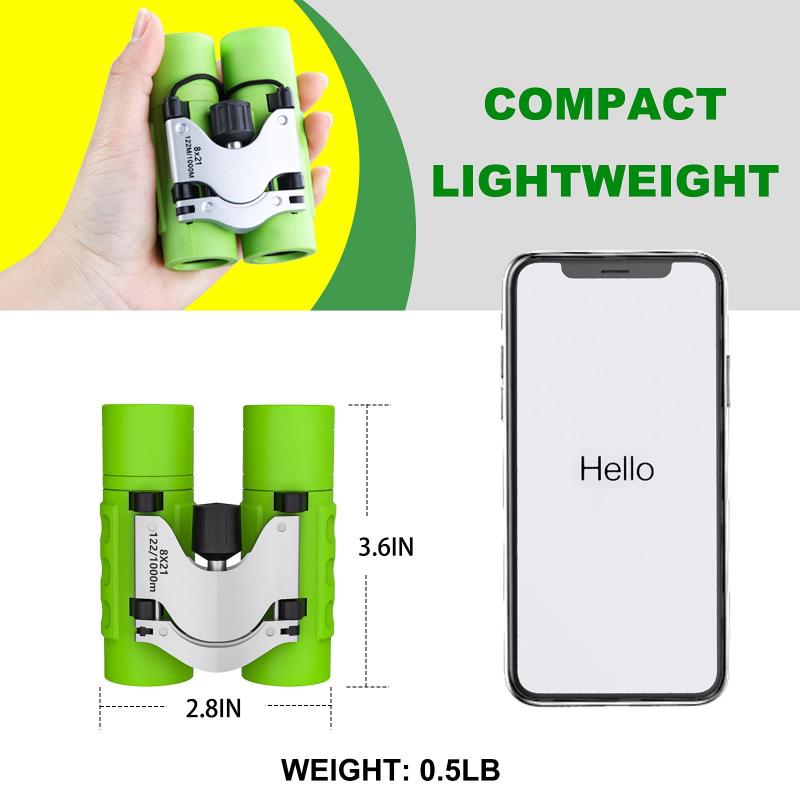
- anything with a decent magnification and a wide enough lens i.e 8x50 will work just fine.
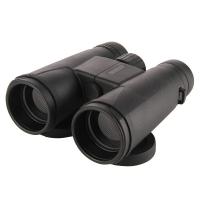
- for handheld astronomy use, the magnification is usually between 7x-10x and the aperture between 42mm and 56mm (7x50, 8x42, and 10x50 being the most common, with 9x56 occasionally).
- for handhelds, higher magnification generally leads to shakier views (i prefer 7x over 10x).
- if you want the bin to double in general-purpose use, then standard sizes like 8x42 or 10x50 are your best bet.
- 50 mm of an aperture is a good general-purpose size. i find them large enough for basically anyone to use them handheld but small enough to be portable and still easy to manage.
- in general, i consider 42 mm to be the minimum for astronomical viewing for adults. 35mm will suffice, but in general, 42mm or larger is better, and anything smaller than 35mm is really for watching birds or sports teams—not astronomy.
magnification and aperture
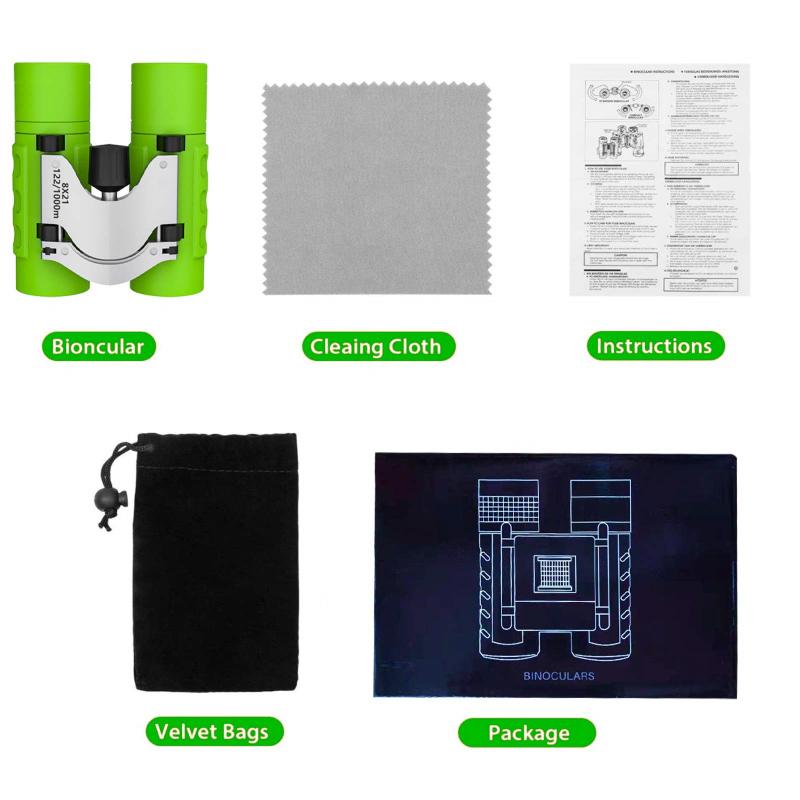
- the second number in a pair of binoculars refers to its aperture in millimeters—e.g., 42 mm, 50 mm, 63 mm, etc.
- the astronomy binoculars range from 35 mm to as large as 152 mm in aperture, though usually, they are between 35 mm and 80 mm.
- while larger is better for light-gathering power, anything larger than 100 mm resembles a pair of telescopes more than binoculars, often has interchangeable eyepieces, and will be very expensive.
- also, a too-large pair means we're unable to hold them steady.
- the first number in a pair of binoculars’ specifications—e.g., 7x50 or 8x42—refers to the magnification, in this case, 7x or 8x.
- in general, astronomy binoculars should have a magnification between 7x and 25x in order to provide a good balance between image detail, stability, sharpness, and field of view.
avoiding shaky views

- 22x50 are going to be pretty heavy and difficult to hand hold at that magnification. would ideally be mounted on a tripod.
- 12x50 is kind of the max in my opinion on being able to hand hold without major shakes, and that’s really on the max.
- if he's going to use the binoculars freehand while standing, avoid magnification higher than 8x.
- if he's going to recline in a good seated position while holding the binoculars, avoid magnification higher than 12x.
- if he's going to use a monopod, cheap photo tripod, or other form of simple support, avoid magnification higher than 15x.
- these are rough rules of thumb and an individual could have different experiences.
tripod-mounted binoculars
- mounted binoculars are also popular for astronomy.
- the tripod allows for higher magnification and aperture, so 15x70, 20x80, or 25x100 are more common.
- more aperture means you can see fainter things.
- more magnification will make things bigger (somewhat less important in astronomy).
- these will cost more with the tripod, but show a bit more too.
- if you want 20x, consider 20x70. it will be big and heavy, tripod-only, and probably astronomy-only.
22x50 and higher power
- for specifications, focus on a good balance of aperture and magnification.
- 22x50 is too much magnification for the aperture.
- as others are saying, skip the 22x50.
- if you want to go above ~20x, then a telescope is a better choice than a binocular.
- one issue with high-power bins is the difficulty keeping the two sides aligned.
- especially at lower price points, durability can be an issue as a result.
exit pupil and field of view
- the exit pupil (aperture divided by magnification) should be between 3 and 7mm depending on the context, we'd need to know more about how dark the skies are, how old your friend is, and whether he can accept the bulk of a large binocular.
- the mix of aperture and magnification is what matters.
- with 10x50 binoculars, i.e. a magnification of 10x, the size of the exit pupil is reduced to a more usable 5mm.
- for most people, the exit pupil should therefore not exceed 5 mm.
- a good pair of 7x or 10x binoculars has a true field of view of 6.5 degrees or greater.
- i've found that binoculars with a true field of less than 4 degrees are very hard to aim.
sky or land marketing
- the brand he wants doesn't specify that it's used for sky, while other brands do mention for sky and land
- that's probably irrelevant marketing copy.
- i wouldn't worry if a particular one is marketed towards sky or land.
- the promotional language about "sky and land" doesn't matter.
- almost any binocular can be useful day and night.
- the practical distinction is more a matter of size, weight, and being tried to a tripod.
what binoculars can show
- you'll see a lot of detail in the moon, which can be almost uncomfortably bright through bins.
- the milky way through binoculars is spectacular.
- a pair of 40–60 mm binoculars will offer a wide field of view, can be set up quickly, and are capable of showing open star clusters, bright nebulae, and galaxies.
- open star clusters, bright nebulae and some galaxies are wonderful targets.
- roaming across the milky way with binoculars on a warm summer night is one of the most wonderful experiences you can imagine.
- there are also many double stars visible through binoculars. a tripod helps stabilise the image and separate the two components.
planets and telescopes
- to get decent views of planets, you need a telescope, not a binocular.
- at the 10x maximum for handheld use, you'll see jupiter as a small oval, like a grain of sand at arm's length.
- you won't see its bands, the great red spot, or anything like that.
- you'll (barely) see it's four galilean moons as small dots.
- other planets will be dots, zero detail.
- even at the 20x max for tripod binocular use, you won't get good views of planets.
- nebula through binoculars are faint smudges.
features to avoid
- zoom binoculars tend to have lower image quality compared to fixed-magnification binoculars.
- additionally, zoom binoculars often have a narrower field of view and less light-gathering ability than fixed-magnification binoculars, which can make it more difficult to locate and observe objects.
- another issue with zoom binoculars is that they are generally less durable and more prone to failure than fixed-magnification binoculars.
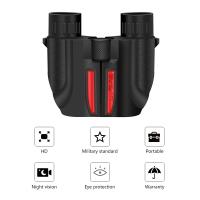
- “ruby-coated lenses” are often used to block out certain wavelengths of light to hide shoddy optical quality in binoculars.
- this reduces light-gathering ability and is also a general indication of a low-quality unit to begin with.
- avoid any binoculars with such claims, even for non-astronomical use.
- “perma focus,” “insta-focus,” and other similarly advertised binoculars are an attempt to sell low-quality units that lack a focus mechanism as somehow advantageous.
- they are essentially a scam; avoid them.