kfconcept

KENTFAITH
K&F Concept    Blog >

Enjoy Your Selected Digital Life

Recently Viewed
  • Recently Viewed
  • Recently Viewed list is empty.

Compare (0) 0
  • Compare
  • You have not chosen any products to compare.

  • Compare
Currency: USD
  • Currency
Shop by Scene Shop by Rank

Log Into Your Account

Account

Order History

Wish List

Login

Forgotten Password?

or connect with

Register Account

Already have an Account?Log In

  • Shopping Cart
  • Your shopping cart is empty!

  • Register/Login to purchase, earn points
  • Favorite
  • Your wish list is empty.

  • Register/Login to like, earn points
  • Activities
  • Guide
    • Filter Guide
    • Lens Adapter
    • Product Review
  • News & Reviews
    • Camera Reviews
    • Sample Gallery
    • News
  • Tutorials
    • Solar eclipse photography
    • Photography Basics
    • Landscape Photography
  • Inspiration
    • Travel
    • Travel Stories
  • Home
  • Blog
  • How To Rate Binoculars Magnification?

How To Rate Binoculars Magnification?

Kentfaith 2026-08-02 01:24:19 0 Comments

How to read binocular specs

  • binocular listings will prominently display two important numbers (8×42, 10×32, 7×25, etc.).
  • the first number is the magnification, and the second number is the size of the objective lens (the far end of the binoculars, in millimeters).
  • that second number is useful for identifying whether a binocular is full-size (around 42 mm), compact (around 32 mm), or pocket (around 25 mm).
  • almost all binocular models are offered in multiple magnifications (8x and 10x are most common).
  • magnification powerobjective lens diameter).
  • in 8x42 binoculars, for example, "8" is the magnification power and "42" is the diameter (in millimeters) of the objective lenses (the lenses closest to the object you're viewing).
  • objective lens size gives you an understanding of how physically big the binoculars are and how much light they can gather.
  • when you understand what these numbers mean and how they affect your viewing, you'll know if you're choosing binoculars that will be good for birding, stargazing or using on a moving boat, for example.
binocular magnification numbers
means:
how ‘zoomed in’ will your view be?
also affects
field of view, steadiness, close focus distance, weight, depth of field (range of focus)
options
& tips:
usually between 7x (7 times) and 10x for birdwatching
7x or 8x = for general and garden birdwatching
10x = consider for greater distances e.g. wetlands/expansive landscapes, hawks
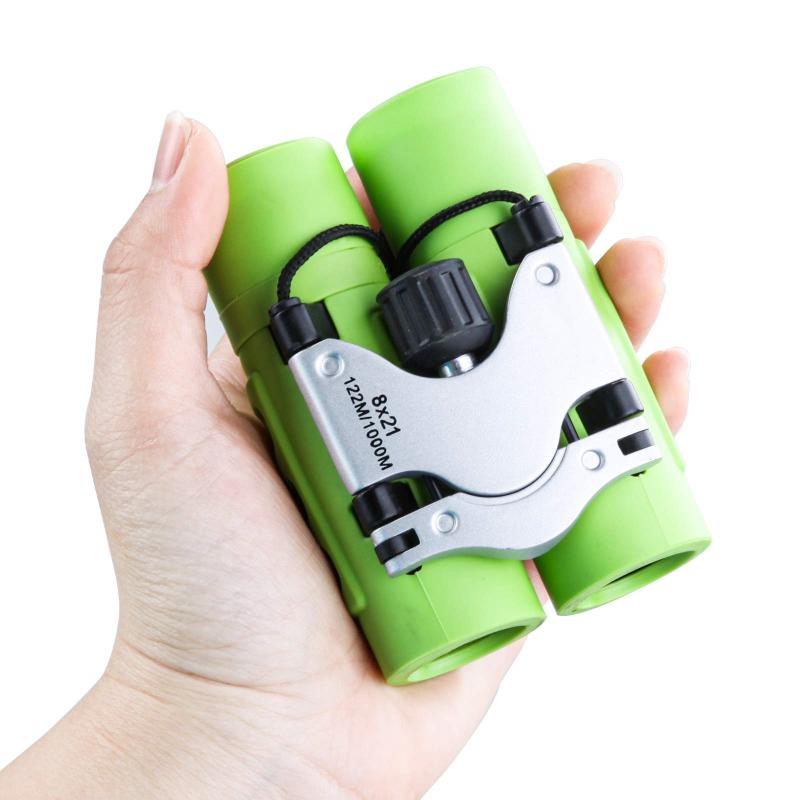
how to rate binoculars magnification 1

Magnification calculation

  • calculation of magnification:
  • magnification= effective objective diameter ÷ exit pupil diameter
  • = focal length of objective lens ÷ focal length of eyepiece lens

what is the relationship between the focal length of slr cameras and the magnification of binoculars?

  • an interchangeable lens with 50mm focal length (in 35mm format) offers about 1x magnification.
  • the effect of 8x binoculars is equivalent to that you can obtain by using a 400mm (50mm x 8 = 400mm) lens.
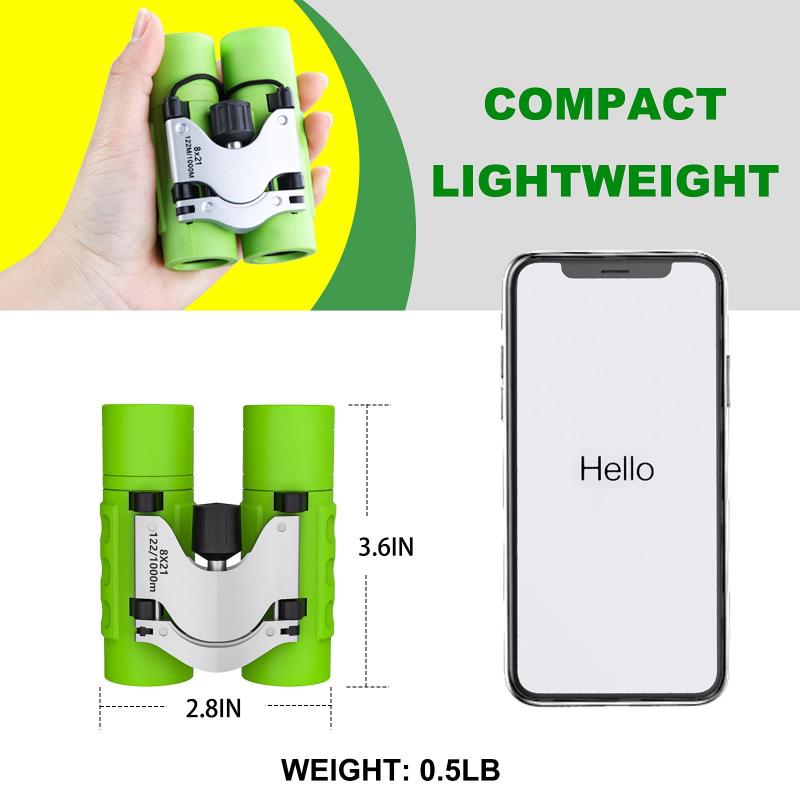
how to rate binoculars magnification 2

Objective lens diameter

objective lens diameter
means:
measured in millimetres, it’s the light-gathering lens.
the larger it is, the more light it can let in (so potentially a brighter image).
also affects
size, weight, cost, field of view
options
& tips:
usually between 25mm and 50mm
40-50mm = better for low-light conditions (astronomy binoculars start at around 80mm, are huge and require a tripod to use!)
32mm = an effective, balanced option popular for general bird watching
25mm = light and small compact models for daytime use - test the brightness
  • bigger and smaller binoculars may offer the same magnification, but larger binoculars perform better in low-light conditions.
  • the first number is the magnification—an 8x42 binocular will make things look 8 times closer.
  • the second number is the diameter of the larger lens (the lens away from your eye), known as the objective lens, measured in millimeters.
  • larger lenses make for a bigger and heavier binocular, but allow more light to enter the prisms, giving a brighter view in low light conditions (at dusk, or in a deeply shaded forest).
  • together, the numbers are generally pronounced “8 by 42.”
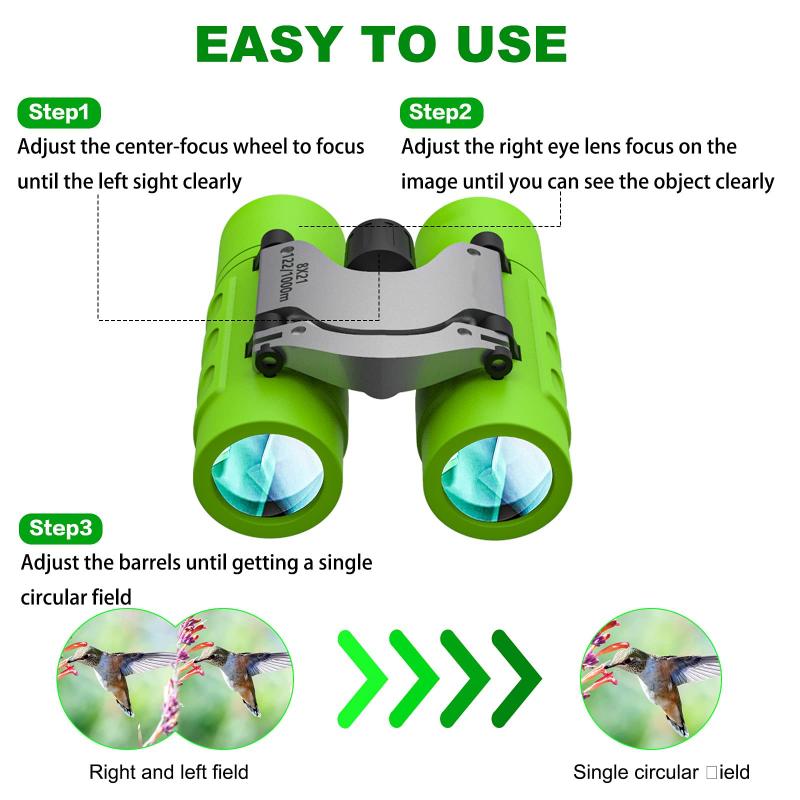
how to rate binoculars magnification 3

Magnification and steadiness

what magnification should i use? is bigger better?

  • for typical birdwatching and general use, most people use 8 or 10 power binoculars (sometimes 6–7 power, occasionally as high as 12 power).
  • while it might seem advantageous to use more powerful binoculars that make distant things seem even closer, there are a number of downsides to increasing magnification: 1) shake from your hands is also magnified, often becoming irritating at 10x or 12x and unusable above that, 2) field of view gets smaller (think of zooming in on a camera - you see less stuff the more you magnify), and 3) brightness decreases.
  • 8x binoculars are the most popular for general use, but many people also use 10x, especially if they have steady hands and spend more time looking at distant, relatively immobile objects such as waterfowl or shorebirds.
  • 12x magnification can be a bit hard to keep stable, i'd choose the 8 x 40.
  • the bigger the magnification, the more even smallest hand movements "shake" the image.
  • high magnification coupled with small lens means it’s harder to keep steady (like mentioned), but also harder to actually find your target.
  • for your use i’d go 6-8 x magnification, with lens size 24-40mm (within that scale: closer to 24mm if you go 6 x magnification, and closer to 40mm if you go 8 x magnification).
  • all depending on how compact and light you want it.
  • 6x24 will be considerably smaller and lighter than 8x40.

how to rate binoculars magnification 4

Field of view

field of view
means:
you could describe this as how wide your view is, so a wide field of view makes following moving objects easier – particularly important when watching birds.
expensive models offer sharp images right to the edge.
measured in degrees or a distance e.g. metres visible at a distance of 1000m.
also affects
magnification, eye relief
options
& tips:
usually between 5 and 9 degrees for typical bird watching binoculars but best to try out before buying to find the right balance for you.
lower number (say under 7 degrees)= narrower field of view.
(usually the case with higher power/magnification)
higher number (say over 7 degrees)= wider field of view so it can be a little easier to follow and spot fast moving wildlife and birds, although you’d most likely have a lower magnification.
  • while 10-power magnification might seem helpful in looking at a small animal, an otherwise identical pair of binoculars with a magnification of 8 will have a wider field of view, which is key to locating birds.
  • field of view and how that impacts your desired use when comparing products.

Exit pupil

exit pupil
means:
helps to indicate low-light performance.
measured in millimetres, it’s the objective lens diameter divided by the magnification.
also affects
-
options
& tips:
usually between 2mm and 5.25mm in birdwatching binoculars.
low exit pupil = don’t expect this to perform well in low light.
high exit pupil = captures more light so potentially better in low light, but test as other factors might affect this!

Uses and magnification choices

how do i choose binoculars for specific uses? if you want binoculars for a specific primary purpose such as bird watching, whale watching or astronomy, the basic guidelines below can help narrow down your choices. magnification and size are the starting point, but optics and features should also factor into your decision.

  • binoculars for backpacking and hiking: because size and weight in a pack are key concerns, you'll want compact binoculars with magnification of 8 or 10 and an objective lens diameter less than about 28 (8x25, 10x25, 8x28 and 10x28 are all fine choices).
  • a pair with a rubber coating will be more durable, and models that are water resistant or waterproof will help with exposure to the elements.
  • binoculars for birding: assuming you're less concerned about size and weight, you can look at midsize and full-size models (8x32 and 8x42 binoculars are popular with birders).
  • water resistance is also a good feature, as are models that won't fog up when they go from a warm vehicle to cooler temps outside.
  • binoculars for whale watching, wildlife viewing and safaris: popular models include 8x32, 8x42, 10x32 and 10x42.
  • go with a higher magnification (10 rather than 8) when you're likely to be far from the animals.
  • choose midsize (32mm objective lens) rather than full-size (42mm objective lens) if you want something a little more compact.
  • water resistance is also good—go with fully waterproof models, though, for whale watching from a boat rather than shore.
  • binoculars for paddling: if you're going to be out on the water on a canoe, kayak, sup or whale-watching boat, you may want to stick with a lower magnification such as 8 or less, because a higher (10-power) magnification can make steady viewing challenging.
  • choosing a waterproof model is a good idea here, too, for obvious reasons.
  • 8x32 is a popular size.
  • binoculars for stargazing: here's where you want to maximize magnification as well as the light gathering ability of full-size binoculars.
  • 10x42 or 10x50 are options to consider; if you go with higher magnification, you'll need a tripod to hold the binoculars steady.

Size and light gathering

what objective size should i use? is bigger better? is smaller better?

  • in short, your choice of binocular size primarily involves a tradeoff between light gathering capacity and size/weight.
  • there are limits to the usefulness of more light—on a bright sunny day, even a small compact binocular may provide bright, clear images and it is only in low light conditions that you will see the full benefit of large objective lens sizes.
  • the quality of the optics also affects the brightness of your image—a top-shelf compact may outperform an inexpensive full size binocular.
  • but to simplify a little, most nature-viewing binoculars fall into three categories:
  • full-size (42mm): generally offers good optical performance even in borderline lighting conditionsin a size that is still manageable by most, though some models will seem heavy to some people.
  • the most popular size among serious birders today, though mid-size binoculars have been gaining ground.
  • larger, 50mm binoculars are sometimes seen, but are generally too bulky and heavy for most people to use comfortably, while only offering a major brightness advantage at dawn/dusk or at night.
Leave your comment
Cancel reply
Note: HTML is not translated!
Related products
Thermal Imaging Monocular with 4K Infrared Night Vision 60Hz Frame Rate <25mk NETD Kentfaith
$687.49 $599.99
Head-Mounted Night Vision Binoculars with 3D VR Viewing & 6X Zoom, Up To 700M/2296FT Night Vision Range, Kentfaith Night Vision Binoculars
11
$629.99 $439.99
4K Thermal Night Vision Monocular, Kentfaith Infrared Night Vision, with 60Hz Frame Rate <25mk NETD, 7X Zoom, 1640yd/1500m Full Color Observation Range
TOP Best
4K Thermal Night Vision Monocular, Kentfaith Infrared Night Vision, with 60Hz Frame Rate <25mk NETD, 7X Zoom, 1640yd/1500m Full Color Observation Range
86
$809.99 $589.99
3×25 Opera Binoculars All Metal With Handle Ladies Retro Small Binoculars
34
$59.99 $31.99
30X60 Small Pocket Binoculars Compact Adults Mini Kids Binoculars Boys For Bird Watching / Concert Theater Opera
328
$47.99 $19.99
10x42 High Power Binoculars Compact HD Waterproof Low Light Night Vision Binoculars For Bird Watching / Traveling / Hunting / Football
333
$59.99 $36.99
8x21 Kids Binoculars High Resolution Shockproof Compact Kids Binoculars for Bird Watching / Hiking / Camping / Travel / Learning And Exploration Green
22
$59.99 $24.99
8x21 Kids Binoculars High Resolution Shockproof Compact Kids Binoculars for Bird Watching / Hiking / Camping / Travel / Learning And Exploration Pink
13
$59.99 $24.99
Digital Coin Microscope 7" LCD Screen 1200X Magnification 1080P Image
14
$134.99 $94.99
4.3” LCD Digital Microscope for Kids, 50X-1000X Magnification, USB Microscope
79
$107.99 $68.99
Products You May Like
58mm MCUV+CPL+ND4 Lens Filter Kit with Lens Cleaning Cloth and Filter Bag Nano-Klear
80
$42.99 $37.99
72mm Solar Filter 16.6-Stops,ND100000 Solid Neutral Density Filter For Eclipse With 18 Multi-Layer Coatings Nano-Klear Series (Only Ship to US)
44
$28.99 $22.99
4G Cellular Security Camera, Dual Lens 6X Optical Zoom 1080P, Magnetic 360-Degree PIR Motion Detection, 8m/26ft Infrared Night Vision, 90 Days Standby, 2-Way Audio, Kentfaith
14
$149.99 $119.99
Insta360 GO3 UV+CPL+ND4 Filter Set, Optical Glass with 28 Multi-Coated Filter  Action Camera Accessories
Insta360 GO3 UV+CPL+ND4 Filter Set, Optical Glass with 28 Multi-Coated Filter Action Camera Accessories
3
$51.99 $31.99
K&F Concept Photography Tripod Dolly, Heavy Duty with 3" Rubber Wheels 44lbs Capacity Tripod Wheels, Compact Video Tripod Dolly with Adjustable Legs and Carry Bag for DSLR Cameras Camcorder.
9
$79.99 $59.99
55mm MCUV Lens Protection Filter with Lens Cap Optical Glass Ultra Slim 18 Multi-Layer Coatings UV Filter for Camera Lens Nano-Klear Series
82
$16.99 $12.99
77mm CPL+MCUV+ND1000+Lens Cap Circular Polarizing Filter MCUV Protection Neutral Density Lens Filters Kit with 24 Layer Coatings Nano-Dazzle Series
36
$88.49 $58.99
M42 Lenses to Fuji GFX Lens Mount Adapter K&F Concept M10211 Lens Adapter
11
$81.99 $45.99
49-67mm Step Up Ring Aviation-grade Aluminum Filter Adapter Ring 2-pack with a Cleaning Cloth
100
$8.99
K&F Concept 55mm Variable ND Filter ND8-128 (3-7 Stop) HD Hydrophobic VND Filter for Camera Lens No X Cross Nano-Xcel
46
$66.99 $52.99
Related articles
What Magnification For Binoculars?
What Is The Best Magnification For Binoculars?
How Smart Watch Measure Heart Rate?
How To Calculate Telescope Magnification?
How To Increase Magnification On A Microscope?
How To Find Magnification Of A Camera Lens?
Which Monocular Magnification Is Better?
What Is A Good Microscope Magnification?
How To Use Binoculars?
How To Use Security Cameras Without Wifi?
Blog You May Like
How To Open Sd Card On Macbook Pro?
Can We Call From Smart Watch?
Where Does The Slide Go On A Microscope?
How To Clean A Lens Filter?
How To Find Ip Cameras On Google?
How To Find The Uv Filter Size?
How To Put Wireless Earbuds In Your Ear?
Which Smart Watches Are Waterproof?
How To Record On Pc With Audio?
What Are Your Different Types Of Studio Lights?
Related categories
hunting binoculars C mount lens adapter m4/3 adapter Baby Movement Monitor Video Shooting magnetic adapter ring Snake Camera
Popular products
night vision goggles helmet best small travel binoculars great binoculars for bird watching Opera Binoculars microscope with output video small bird watching binoculars Best High Power Binoculars for Hunting best infrared night vision binoculars 8x21 compact binoculars Binoculars for Kids
Related searches
Microscope Lens Magnification Low Magnification Microscope Low Power Microscope Magnification Best Smartwatch To Monitor Heart Rate Smart Watch To Monitor Heart Rate Best Smartwatch To Measure Heart Rate Electron Microscope Range Of Magnification Compound Microscope Ocular Lens Magnification Dji Phantom 4 Magnification Lens Filter Compound Light Microscope Objective Lens Magnification
Related Scenes
Best Camera To Video Sports Best Camera To Capture Wildlife Best Tripod To Travel With Best Video Camera To Record Sports Best Easy To Use Compact Digital Camera The Best Easy To Use Digital Camera Best 10X42 Hunting Binoculars Best Binoculars For Travel Best Compact Travel Binoculars Top Binoculars For Hunting
Blog Category
  • Activities
  • Guide
    • Filter Guide
    • Lens Adapter
    • Product Review
  • News & Reviews
    • Camera Reviews
    • Sample Gallery
    • News
  • Tutorials
    • Solar eclipse photography
    • Photography Basics
    • Landscape Photography
  • Inspiration
    • Travel
    • Travel Stories
Search Article
Latest from the Blog
What Sd Card For Drone?
How To Take Photos Without A Tripod?
How To Pick Binoculars For Bird Watching?
Smartwatch That Can Make And Receive Calls?
What Do You Use Your Smartwatch For?
What Do Night Vision Goggles Look Like?
What To Clean Camera Lens With?
How To Level Your Scope?
How To Use Earbuds As Mic And Headphones?
How To Reset Earbuds Without Buttons?
  • Easy Payment Multilple Payment Options

  • Free Shipping Global WareHouse Shipment

  • No Risk 30-Day No Reason Return

  • Limited Deals Buy More, Save More

  • Tax Free No any surcharges or tax fee

Information
  • About us
  • Contact Us
  • Site Map
  • Blog
  • Video
  • Gallery
  • VIP Membership Rewards
Service
  • Privacy Policy
  • Terms & Conditions
  • Shipping & Delivery
  • Payment Info
  • Warranty, Return & Refund
  • Intellectual Property Rights
  • Ambassador
  • Affiliates
  • Wholesale
Support
  • My account
  • Order History
  • FAQs
  • Extend Warranty
  • Logistics Tracking
Follow us
NewsLetter

Get the latest product, K&F Concept respects your privacy.

Powered By KENTFAITH © 2026