How To Increase Contrast On Microscope?
microscope contrast techniques
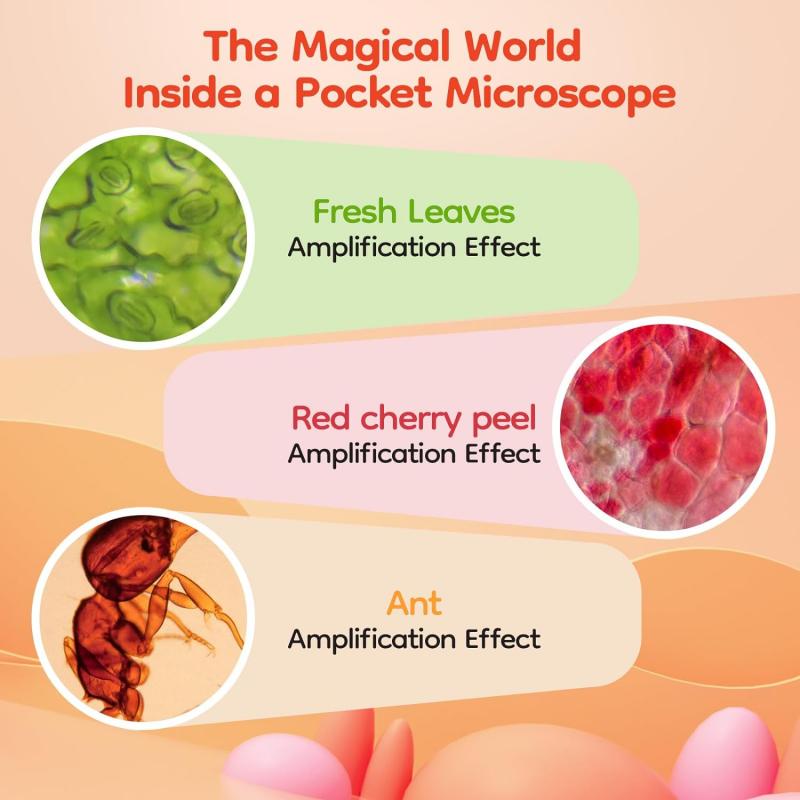
when using a microscope with brightfield, some samples will have a natural contrast that is easily viewed, such as bright plants and flowers, metals, and pigments. some samples can be stained to increase the microscope contrast. however, low contrast samples such as unstained bacteria, thin tissue slices, live cells, or reflective metal parts require the use of additional microscope contrast techniques in order to view the sample.
- darkfield
- phase contrast
- polarization
- fluorescence
- oblique illumination
- differential interference contrast (dic)
- improved hoffman modulation contrast (ihmc)
darkfield microscopy

- darkfield microscopy, no light from the illuminator will pass into the imaging system, only light diffracted by the structure is captured by the objective.
- this is what makes the structures appear rich in contrast, and very bright against a dark background.
- darkfield microscopy is especially useful to detect tiny and isolated structural details, such as bacteria.
- when working with reflected light, darkfield illumination is used to identify grain boundaries in polished and etched metal sections, as well as to detect contaminants and flaws in surfaces.
phase contrast microscopy

- phase contrast microscopy is the method of choice for viewing thin, unstained samples such as culture cells.
- phase contrast uses a special condenser and objective lenses to enhance the contrast seen in the microscope image.
- phase contrast is not useful for thick specimens such as plant or animal tissue sections.
living specimens and other phase objects, which often yield poor images when viewed in brightfield illumination, are made clearly visible by optical rather than chemical means when viewed under phase contrast, hoffman modulation contrast, and differential interference contrast illumination. these techniques require special optical components in the microscope, but will generally produce images of sufficient contrast to reveal important details about specimen structure.
polarization
- polarizing microscopes must be equipped with two crossed polarizers.
- in most cases at least one polarizer and one analyzer are used.
- many materials, like most crystals and some biological structures such as muscle cells, are birefringent, meaning they have two refractive indices.
- this phenomenon fulfills an important diagnostic function in mineralogy, pharmacology, forensic microscopy, polymer research, or the quality control of textile fibers.
- reflected light is used to visualize the contrasts in the origin of structure of opaque metals such as aluminum, zirconium, and others.
fluorescence microscopy
- fluorescence is a low-energy form of radiation (emission) that results from a previous high energy illumination (excitation).
- as soon as the excitation stops, the fluorescence emission stops almost immediately.
- the particular advantages of fluorescence microscopy include a strong image contrast and its specificity; that is, its ability to specifically detect individual structures down to individual molecules.
- fluorescence microscope illuminators often use gas discharge lamps such as hbo, xbo, hxp or long-life led light sources.
- leds make it possible to change the excitation wavelengths extremely quickly.
- the downside to led light sources is that they still exhibit rather low excitation intensity in certain spectral ranges.
these techniques also apply to fluorescent dyes, which can be used to increase contrast in specimens with a high degree of specificity. when fluorescent specimens are stimulated by one or several wavelengths of visible or near-ultraviolet light, they often emit longer wavelengths of light and thereby become visible or contrasted relative to other objects in the field or the dark background.
oblique illumination
- oblique illumination is recommended to contrast objects that are too thick for alternative contrasting techniques.
- oblique illumination directs light beams onto the specimen at different angles.
- as a result of highly directed one-sided illumination, the sample will have one side that appears bright and the other darker, which results in a shadow-casting relief image showing fine structural details.
- oblique illumination microscopy is utilized to view thick tissue samples or solid samples that do not allow light to pass through them, such as automotive parts.
- you can also do oblique lighting using direct means.
- that is, instead of using a filter, get one of those microscope lights that has a gooseneck and shines really brightly--they make them for stereo microscopes--and point it at the sample, from the side, really close.
- turn off the main light (or turn it way down).
- you will get an oblique lighting effect.
- of course, the total light won't be as much, and you may get a lot of heat.
- should work, though.
- you can do rheinberg this way as well, in principle.
- for some microscopes, you can get the same effect by un-centering your condenser so that it doesn't point directly through the sample, and holding it at a slight angle.
differential interference contrast (dic) microscopy
- in interference contrast, previously split partial beams are combined as in phase contrast, interfering with each other as a result.
- due to the interference of the two twin images in the intermediate image plane, a light-dark contrast is generated at the edges of objects.
- by laterally shifting the objective-sided dic prism, also known as the dic slider, the contrast can be adjusted in such a way that the light and dark object edges appear on a gray background.
- as the illumination appears darker on one side and brighter on the other side, a pseudo-relief image is perceived by our brain.
- this can - but does not have to - match the actual topography of the sample.
by comparison, differential interference contrast relies on phase gradients to generate contrast in otherwise transparent specimens, resulting in the classical pseudo three-dimensional images for which the technique is widely known.
improved hoffman modulation contrast (ihmc)
- hoffman modulation contrast is a form of oblique transmitted light illumination in combination with a grayscale modulator comprising neutral gray absorbing layers mounted in the objective's back focal plane.
- the modulator consists of three grayscale strips that run vertically through the pupil of the objective.
- this results in this method's middle gray image background and modulates a relief contrast.
- ihmc is used in the live-cell microscopy of sperm and egg cells when conducting artificial insemination in human and veterinary medicine.
staining and chemical dyes
- some samples can be stained to increase the microscope contrast.
- other specimens that are naturally colored or artificially stained with chemical color dyes can also be clearly imaged in brightfield illumination.
- these stains or natural colors absorb some portion of the white light passing through and transmit or reflect other colors.
- often, stains are combined to yield contrasting colors.
- for example, blue hematoxylin stain for cell nuclei is often combined with pink eosin that selectively stains cytoplasm.
- it is a common practice to utilize stains on specimens that do not readily absorb light, thus rendering such images visible in the microscope.
the human eye is very sensitive to amplitude and wavelength differences in a specimen. for this reason, many specimens are cut into very thin sections (ranging from 1-30 microns in thickness) and stained with chemical dyes to increase contrast and to differentiate between structures residing within the specimen.
- dyes selectively absorb light from one or several wavelengths and pass or reflect all other wavelengths.
- an example is a blue dye that absorbs all visible light wavelengths with the exception of blue, which is reflected from and transmitted through the specimen.
- internal structural elements of a biological specimen are often stained with a mixture of dyes to selectively stain these elements, increasing their contrast against a background of material that is either transparent or stained a different color.
condenser iris diaphragm and aperture
- and of course, clamping down the iris in the condenser is likely to increase contrast as well.
- aperture diaphragmsubstage condenser in order to increase specimen contrast.
- unfortunately, while these maneuvers will indeed increase contrast, they also seriously reduce resolution and sharpness.
- numerical aperture by closing the iris diaphragm. however, this extreme measure will significantly impair the resolution of the objective.
mounting medium
- another simple technique for contrast improvement involves the selection of a mounting medium with a refractive index substantially different from that of the specimen.
- for example, diatoms can be mounted in a variety of contrast-enhancing mediums such as air or the commercial medium styrax.
- the difference in refractive indices improves the contrast of these colorless specimens and renders their outlines and markings more visible.
background intensity and specimen contrast
- specimen contrast refers to the relationship between the highest and lowest intensity in the image.
- if the specimen intensity is less (darker) than that of the background, contrast is referred to as being positive, while specimens that are lighter than the background display negative contrast.
- when a specimen modifies the spectral distribution (color) of light passing through, it produces color contrast.
- this type of contrast is also produced by interference of white light in specimens with closely spaced periodic structures.
- when the background is a very dark gray value (i(b) equals 0.01; red line), a small change in image intensity generates a large change in contrast.
- by lightening the background to a somewhat lighter gray (i(b) equals 0.10; green line), small changes in image intensity provide a useful range of contrast.
- at still lighter background intensities (i(b) is greater than or equal to about 0.50; blue line), image contrast is relatively insensitive to background intensity, and large changes in image intensity produce only small increases or decreases in contrast.
contrast-enhancing techniques for optical microscopy
- transmitted light transparent specimens phase objects
- phase contrast
- differential interference contrast (dic)
- hoffman modulation contrast
- oblique illumination
- light scattering objects
- rheinberg illumination
- darkfield illumination
- phase contrast and dic
- light refracting specimens
- phase contrast
- dispersion staining
- dic
- amplitude specimens
- brightfield illumination
- fluorescent specimens
- fluorescence illumination
- birefringent specimens
- polarized illumination
- reflected light specular (reflecting) surface
- brightfield illumination
- phase contrast, dic
- darkfield illumination
- diffuse (non-reflecting) surface
- brightfield illumination
- phase contrast, dic
- darkfield illumination
- amplitude surface features
- brightfield illumination
- darkfield illumination
- birefringent specimens
- polarized illumination
- fluorescent specimens
- fluorescence illumination
reflected light microscopy
- when incident illumination strikes an opaque surface, it is reflected in a manner that is specific to the terrain of that surface.
- very smooth surfaces reflect light at an angle equaling that of the incident light, a mechanism known as specular reflection.
- uneven or diffuse surfaces tend to reflect light at all possible angles by a phenomenon known as diffuse reflection, resulting in a reduced amount of light entering the objective.
- contrast in reflected light microscopy can be enhanced by careful specimen preparation.
- metallographic samples are often etched with reactive liquids and gases to reveal grain boundaries and/or polished to increase the amount of light reflected into the microscope.
- stains, in the form of fluorescent dyes, thin films, and metallic coatings, are also used to introduce contrast in reflected light microscopy specimens.
- birefringent specimens can be imaged using polarized reflected light and transparent phase objects are often the subject of observation using techniques such as reflected differential interference contrast, darkfield illumination, and hoffman modulation contrast.