How Is A Wireless Security Camera Powered?
Wireless Still Needs Power
wireless and powerless are not the same thing. security cameras still need power even when they are wireless.
while you might assume wireless is essentially the same thing as powerless, that’s actually not the case at all. even wireless security cameras need a power source to function.
while all security cameras require power, not all power sources are created equal.
- wireless security cameras transmit video and alerts over your wi-fi network instead of using cables.
- power may still be supplied by a battery, power adapter, or existing wiring, depending on the camera model.
- cameras powered via traditional outlet plug-ins are considered wireless so long as their video data is transmitted wirelessly.
- wireless cameras transmit via radio frequencies without permanent cables, typically powered by rechargeable batteries or optional solar panels.

Battery Power
battery-powered wireless cameras have become increasingly popular in recent years.
- one of the main benefits of using batteries to power a camera is that you don’t have to worry about external elements or power outages.
- as long as the batteries are charged, the camera will keep working.
- furthermore, installing battery-powered cameras is easy and affordable.
- you can place battery-powered cameras just about anywhere since they don’t need to be positioned near an electrical outlet.
- rechargeable batteries provide power to completely wire-free cameras, but most require recharging approximately every six months.
battery-operated cameras) while ensuring important moments are recorded.
- batteries require regular charging (~2-6 months).
- battery life depends on usage, resolution, and environmental factors.
- most cameras operate 2-6 months per charge.
- high-resolution, constantly-recording cameras deplete faster.
- in a commercial setting, battery-powered wireless security cameras should be checked at least every six months to ensure continuous surveillance coverage, although this frequency may vary depending on the particular battery being used, the camera model, and the camera’s settings.
Outlet Plug-In Power
- plug-in wifi security cameras connect directly to a power outlet, so you don't have to worry about changing or recharging batteries.
- they can operate 24/7 with continuous power.
- these cams also tend to offer higher video resolution and advanced features than battery-powered models.
- however, plug-in wifi cams have less flexible placement since they must be located near an ac outlet.
plug-in cameras generally provide the greatest reliability when compared to other powering methods for wireless cameras. just be sure the cord and outlet aren’t in reach of potential vandals.
- in business settings, the best power sources for wireless security cameras are ac power adapter plug-ins and rechargeable batteries.
- ac power adapters are a popular choice for powering wireless security cameras in businesses due to their ease of use, reliability, and direct connection to a power source, making them a straightforward and dependable option for continuous surveillance.
- you can power a wireless security camera through electrical outlets.
- in this sense, these cameras aren’t truly wire-free.
Solar Power
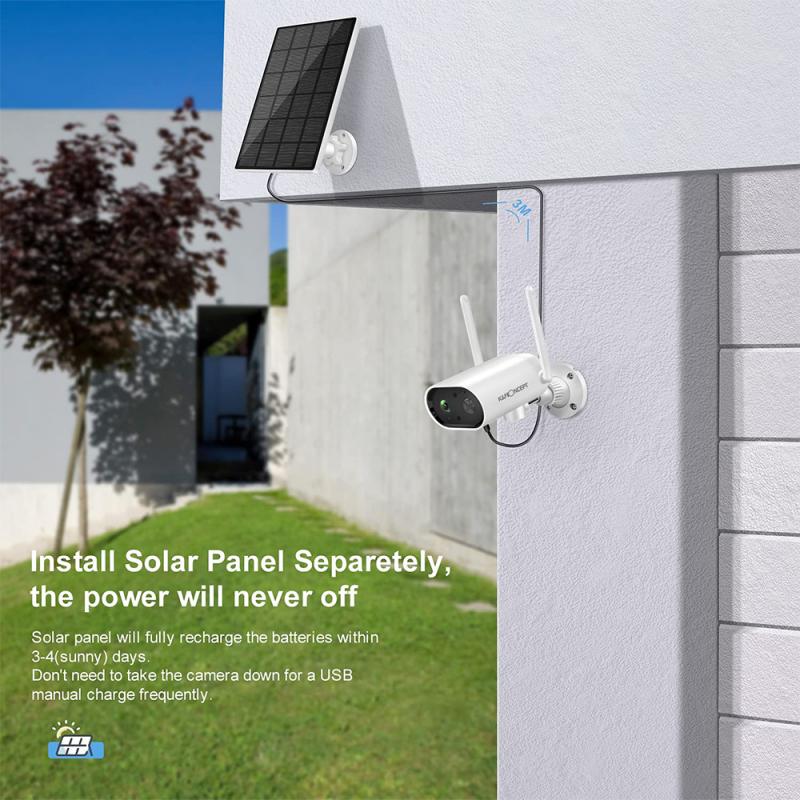
solar panels are a great way to power security cameras because they are affordable, durable, and require minimal maintenance.
- other than the cost of solar panels themselves, solar panels basically provide free energy.
- while generators may run out of gas and other power sources might be susceptible to power outages, solar power is as close to unlimited power as you can get.
- as long as the solar panels are positioned optimally, the camera will automatically charge when the sun is out.
- solar-powered models operate indefinitely in sunlight but depend on adequate sun exposure.
solar power is an option, but a bad one. a few days to a week of low-light weather will land most solar-powered cameras in a coma.
- beware: cameras powered by solar energy depend on a sunny climate, making them highly unreliable and unsuitable for commercial-grade surveillance in regions like new england.
- solar-powered security cameras for commercial use face limitations like dependence on sunny days and insufficient power backup during extended low-light periods.
- solar options reduce charging but depend on sunlight.
Existing Wiring And Doorbells
- the more you know: technically, doorbell cameras aren’t “wireless” cameras.
- they must draw power either from a battery or from a home’s wiring, so they are either “wired” or “wire-free.”
- provide continuous power to battery doorbell cameras.
- doorbell camerasdetect, record, and chat with visitors using wired or battery doorbells.
Continuous Recording And Power
- yes, some wireless cameras can be set to record continuously, but this will quickly fill local microsd storage.
- in contrast, wire-free cameras include their own batteries, but as a result, they can’t provide continuous recording, since this would use up the battery quickly.
- in fully wire-free cameras, battery life depends heavily on usage — motion-triggered cameras can last several months on a single charge, while cameras set to continuous recording drain much faster.
- most manufacturers recommend recharging or replacing batteries every one to six months depending on activity levels.
Power Source Considerations
- powering wireless security cameras may seem like a daunting task, but it's just a matter of understanding your options and choosing what best fits your needs.
- businesses should consider the proximity of power sources to camera locations, maintenance requirements for battery-powered cameras, and the reliability of the power supply, ensuring it aligns with their specific security needs and setup.
- businesses can ensure efficient power management for wireless security cameras by choosing the right power source based on camera location, considering maintenance needs for battery-powered options, and opting for professional installation and regular system monitoring.
- professional installation is recommended for business-grade wireless security cameras to ensure optimal placement, efficient setup, proper programming, and integration with existing security systems.
Wireless Compared With Wired Power
- wired security cameras transmit video and receive power through physical cables (coaxial for analog or ethernet for ip), while wireless cameras communicate via radio frequencies without permanent cables.
- wired cameras use permanent physical connections for video transmission and power.
- traditional analog wired cameras require separate coaxial and power cables, while modern ip cameras use ethernet with power over ethernet (poe) combining both functions.
- wired systems offer continuous power and guaranteed connectivity without signal degradation.
- poe provides continuous power; batteries require regular charging (~2-6 months); solar options reduce charging but depend on sunlight.
- poe cameras fail during power outages unless backed by uninterruptible power supplies (ups).
- battery-powered wireless cameras continue operating, providing emergency monitoring capability.