What Do You Use Binoculars For?
2026-06-26 00:49:29
0 Comments
Bird Watching And Wildlife
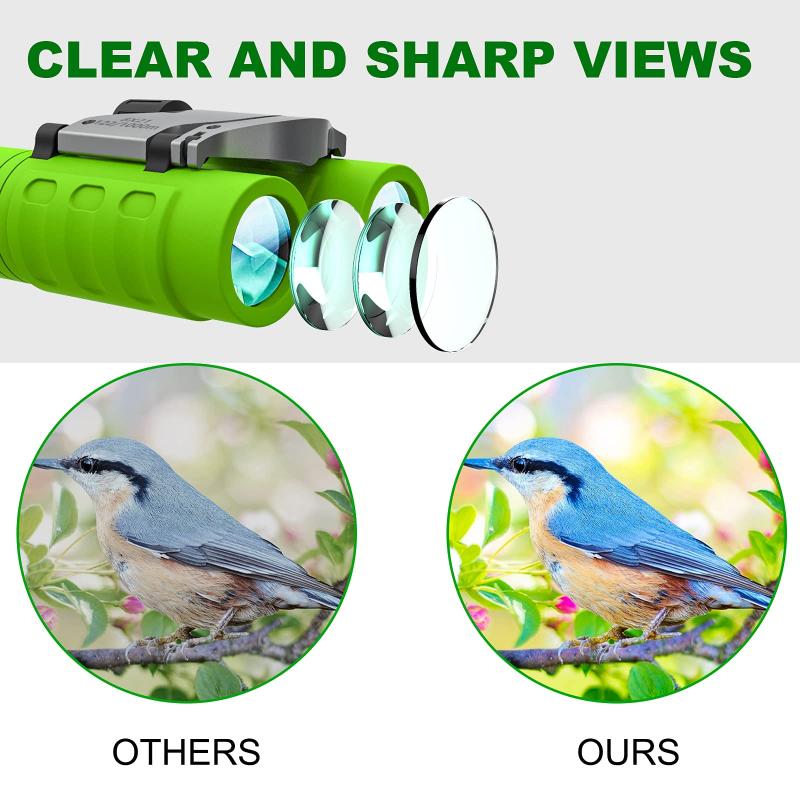
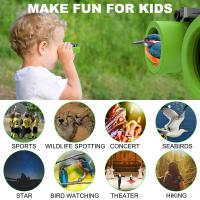
- with binoculars, you can closely observe wild birds and their behavior to your heart’s content.
- binoculars allow you to experience breathtaking landscapes and observe birds and wildlife up close—without disturbing them.
- to find a bird, it is best to start by looking for movement with your naked eyes so you have a full field of vision.
- once you see a bird that you want to look at more closely, don’t take your eyes off it.
- raise the binoculars to your eyes while keeping your sight focused on the bird.
- this will make it much easier to find the bird through your binoculars.
- with the bird in view, adjust the center focus by turning it left and right until the bird is clear.
Nature Watching And Outdoor Exploring
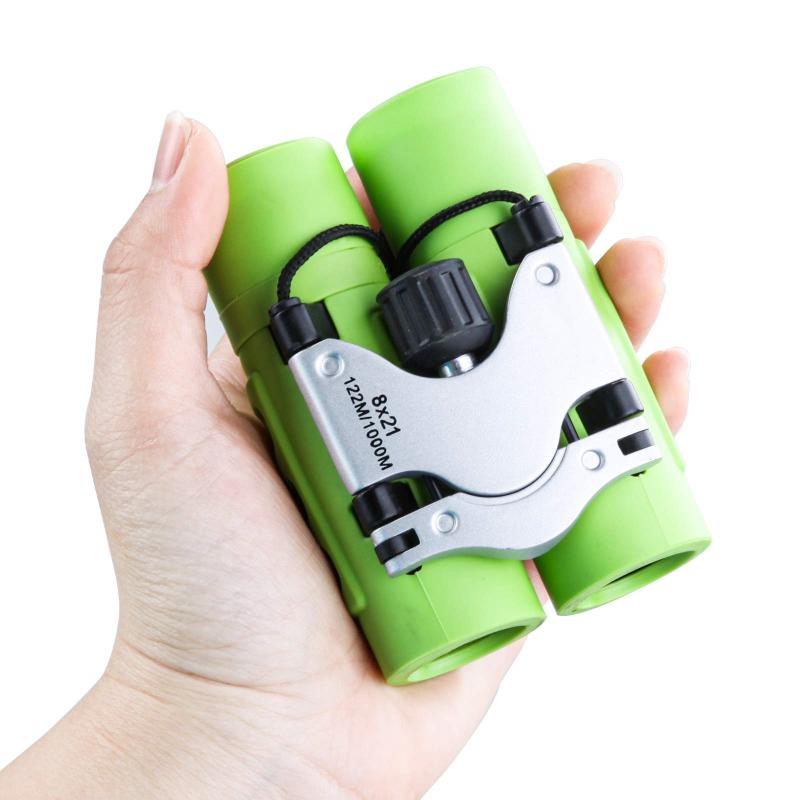
- binoculars are incredible tools for naturalists and outdoor explorers.
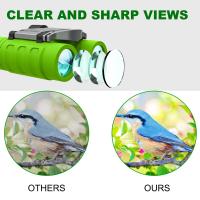
- while simply holding them up to your eyes may get you close, these tips for proper binocular use will help you have sharper and more clear visuals.
- you'll be surprised after following our suggestions how much better you can notice the world around you!
- in addition to nature watching, you can also enjoy viewing historical buildings and breathtaking scenery.
- binoculars can show us all sorts of new and different worlds all around us.
- choose the right binoculars for the scene you wish to observe and you can make new discoveries or simply find something new for yourself to enjoy.
- good optics let you see things that were formerly invisible.
Stargazing And Astronomy
- you can clearly view distant galaxies and star clusters that appear as no more than barely visible specks of light to the naked eye.
- see the moon, planets, and constellations more clearly than with the naked eye.
- the 15x70s are fun even in my garbage skies when the milky way is up.
- my binoculars are used mostly for astronomy.
- from my sky, all the messier objects are fun to seek out with my binoculars.
- over the years, my binoculars have provided some great views of comets.
- there’s no better way for a beginner to learn the sky than with binoculars.
- i use binoculars for at least 50% of my astro-observing.
Travel, Landscapes, And Scenery
- outdoors / travel
- in addition to nature watching, you can also enjoy viewing historical buildings and breathtaking scenery.
- i've used my lower power ones for some daytime stuff birds and landscapes.
- at the moment i don't do any stargazing at all and only use them during the day for birding and viewing the landscape on hikes or simply through the living room window.
- my two most common daytime uses are viewing wildlife (mostly but not always birds) and distant scenery.
- i love binoculars for terrestrial viewing: landscapes of course, but also individual trees, flowers on distant blooming trees, birds in trees or in flight, deer, people, cars, planes, you name it!
Sports, Concerts, Theater, And Stage Performances
- spectator sports / concerts / theater
- with binoculars, you can enjoy weekend amusements with an even greater sense of being part of the action.
- sitting far from the action? with a pair of binoculars, you’ll experience the race or match as if you were in the front row.
- by the way, nobody yet has noted that binoculars are great for stage performances and sporting events.
- i use them for bird and wildlife watching, sporting events, hunting and general distance viewing.
Museums, Architecture, And Close Details
- museums
- taking the time to view paintings and sculptures up close allows you to gain a deeper understanding of the artwork.
- besides birding, i use my binoculars to observe the night sky, help navigate my boat, check out the architecture of buildings, look for mammals in wilderness, look at insects, look at details of objects in a museum, and check out the condition of my roof.
- to look at birds, bugs, animals, stars, scenery, architectural features, paintings in museums, moss on the roof, the milky way, etc.
Hiking, Hunting, Marine, And Navigation
- use binoculars to get a better overview of the terrain, spot landmarks, and plan your route when hiking or hunting.
- marine binoculars help you navigate safely and detect weather changes in time.
- besides birding, i use my binoculars to observe the night sky, help navigate my boat, check out the architecture of buildings, look for mammals in wilderness, look at insects, look at details of objects in a museum, and check out the condition of my roof.
- binoculars allow you to experience breathtaking landscapes and observe birds and wildlife up close—without disturbing them.
Family Outings And Surroundings
- let kids use binoculars to spot animals, boats, and landmarks—turning every trip into a playful and educational adventure.
- binoculars let you observe wildlife or monitor movement in your garden, campsite, or summer house from a safe distance.
- i mostly use them while walking my dog in the forest to spot birds & other wildlife.
- papilios in the living room to look into the garden and at the bugs, another larger set (11x80) on a tripod for extended looks at the sky, and some image-stabilized for grab & go sky gazing.
- i use binoculars every day for observing birds, clouds, insects and of course for astronomy when the weather allows.
- in between meetings, i take a look to the garden and trees to relax my eyes from the strain caused by the screen.
How To Adjust Binoculars To Your Eyes
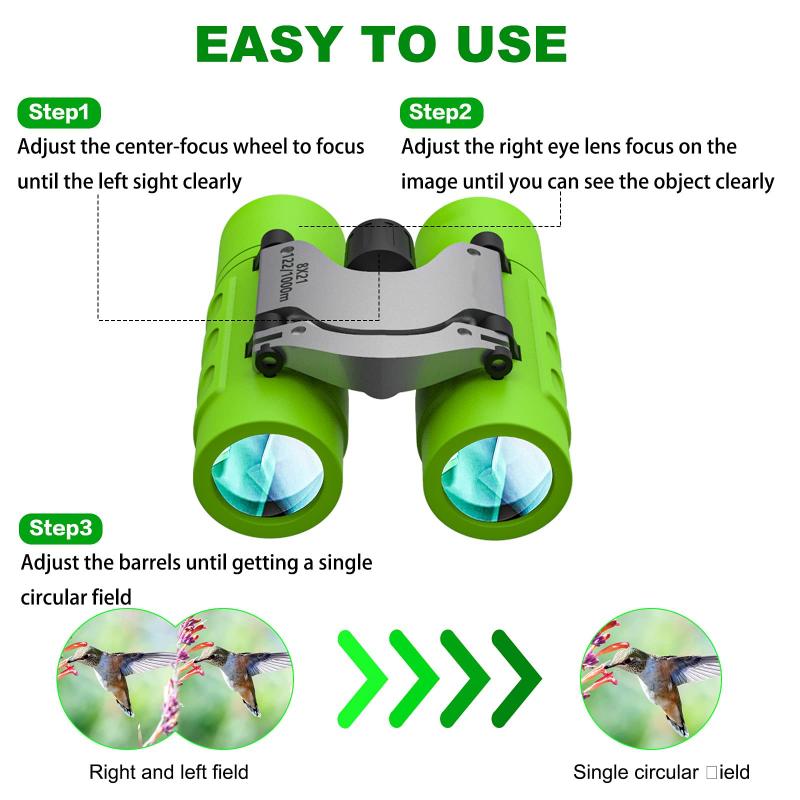
to get the clearest images out of your binoculars, you’ll need to adjust them to your eyes. to do this, find a sign or another object that doesn’t move, and stand about 30 ft away from it. then follow these steps:
- adjust the eye cups
- most binoculars have adjustable eye cups on each eyepiece. these eye cups should be down if you wear glasses, up if you do not.
- adjust the width
- binoculars have two eyepieces connected by a center hinge. the eyepieces can move in and out to change how far apart they are. you want to set your eyepieces to match your eyes. to do this, first spread the eyepieces as far apart as they will go, then put the binoculars up to your eyes. move the eyepieces together until you see the two circles in your view merge into one.
- set the focus
- all binoculars have a focus wheel, usually in the middle, which changes the focus of both eyepieces at once. you can use this wheel to focus your binoculars every time you look at a new bird.
Using Binoculars With Glasses
- most binoculars have adjustable eye cups on each eyepiece. these eye cups should be down if you wear glasses, up if you do not.
- what is the purpose of this? the eyecups exist to position your eyes at the correct distance from the lenses.
- if you are not wearing glasses, you should leave them in the extended, “out” position; if you are wearing glasses, you should turn them “in” or fold them down so that your eyes are not held too far away from the lens.
- plenty of people that wear glasses use binoculars, shouldn't you just not extend the eye cups?
- birding - for glasses look at good eye relief. it’ll simply take some practice
- i also wear glasses, first of all make sure the eye cups are not extended.
- second, not all binoculars works well with glasses.
- most modern bins have enough eye relief to accommodate use with glasses.
- adjusting the eye cups is the key to keeping your glasses on.
Focus Wheel And Diopter Ring
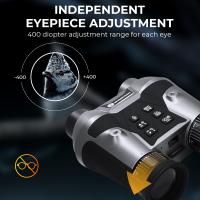
- in addition to the focus wheel, most binoculars also have a diopter ring, which is a smaller adjustment wheel that adjusts a single eyepiece (usually the right one).
- often the diopter is found on the eyepiece itself.
- the diopter allows you to set the binoculars for your particular eyes, and you need to set it only once.
- turn both the diopter and the focus wheel counter-clockwise until they stop.
- now, cover the right eyepiece (or the one with the diopter adjustment ring).
- looking through the left eyepiece with your left eye, turn the focus wheel until the sign comes into focus.
- get it as sharp as you can.
- next, cover the left eyepiece and look at the sign using only the right eyepiece.
- the sign will probably be a tiny bit blurry, so turn the diopter adjustment ring until it comes into focus.
- from now on, to focus something, you’ll only need to turn the focus wheel.
Magnification And Lens Diameter
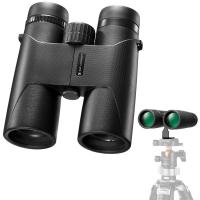
- you will find that binoculars are described by a combination of two numbers: 8x50, 10x25, etc.
- the first number is the magnification of the object when looking through the binoculars.
- the second number is the diameter in millimeters of the objective lens.
- larger diameters let in more light and the image will be brighter and you’ll be able to see more detail.
- for birding, a magnification of 7 or 8 is ideal.
- the lens diameter should be between 25 and 40.
- special features include good close focus and a wide field of view.
Leave your comment
Note: HTML is not translated!