How Long Can A Surveillance Camera Record?
How long security cameras record and keep footage
How long security cameras record and keep footage in schools and businesses varies based on storage capacity, the number of cameras, business size, video quality, and legal requirements.
Some businesses need only a few days of recordings, while others must retain footage for several months or even years.
Typically, most security camera footage is retained for a period of 7 to 90 days.
Generally, security camera footage lasts from three months to one year based on cases. the old footage is deleted automatically to create space for new recordings.
The average security camera stores footage for 30 to 90 days. this is very common for retailers, car dealerships, hotels, and any business. however, you can still store footage for longer periods but this can be expensive and less useful since older footage may not be needed anymore.
Most businesses keep camera footage for 30 to 90 days. however, industries like banks and casinos can keep footage for a minimum of 6 months due to industry regulations and standards.
Retention periods
- Short-term retention periods span anywhere from 24 hours to two weeks. Small businesses and residential security systems with limited storage space, where monitoring activities is the primary concern, commonly use this approach.
- Short-term retention periods usually suffice in low-risk environments, particularly when there are no legal requirements to store recordings longer.
- Typically, mid-term retention periods cover 30 to 90 days. to account for potential events or disputes, businesses like office buildings and retail stores choose this duration to access footage for an extended period.
- Additionally, some state and industry regulations mandate businesses—especially in finance, hospitality, and healthcare sectors—to save footage within this range. bigger companies with greater storage space pick mid-term retention periods for sufficient security coverage.
- Long-term retention periods occur from six months to one year. this is typical for organizations in high-security environments, like financial institutions, government agencies, casinos, and healthcare facilities.
- Plus, this duration aligns with regulatory compliance for these industries. some organizations may save footage for years if it involves an ongoing legal case, insurance claim, or audit.
Storage capacity and overwriting
- Most surveillance systems will simply record until their storage is full, then overwrite the oldest footage.
- How long that takes generally depends on three factors: the amount of storage in the system, the number of cameras, and the various inter-related quality settings (resolution, frame rate, compression type and level, etc.).
- The higher the video quality, the more space it takes, and the sooner video is overwritten.
- Retention time, then, is more often based on storage cost, rather than a specific time frame.
- Many customers will specify a minimum amount of time they want to keep video - 30 or 60 days is common - because that's the amount of time it often takes for issues to be reported.
- 60 days' retention takes twice as much storage as 30 days, and customers often don't want to spend the extra "if they don't have to".
- Specific events may be exported and stored separately indefinitely, but that typically takes very little space relative to the rotating storage.
Factors that affect how long footage is stored
A cctv camera consumes a lot of bandwidth and storage space. most storage devices come with a 1tb hard disk. moreover, the cctv camera storage requirement can change according to individual and business requirements.
Note that each security camera is different and storage space too. a few businesses and financial institutions have a large amount of storage capacity. choose the best surveillance camera for storing your footage, as the factors like camera frames, resolution, camera model and audio affect the storage.
Moreover, the security camera storage capacity depends on several factors like:
- number of cameras installed operating on nvr or dvr
- storage method used for the cctv camera
- the application used for the security camera storage
- additional device installed
- the in-built capacity of the cctv camera
- 24*7 recording schedule
- government mandate / regulations of footage storage
Few cameras record the footage each minute. a few others may record if the motion is detected. these are mainly the video doorbells. cctv cameras are mostly picked because they work as 24*7 surveillance systems. these factors play a role in the footage period.
Storage options
Security camera footage can be stored in various locations, depending on the system and configuration. the three common storage options are:
- Cloud storage
- Many modern security camera systems offer cloud storage solutions. footage is uploaded and stored on remote servers, providing accessibility from anywhere with an internet connection.
- Modern ip cameras come with cloud storage. users can store videos in the cloud with the help of a strong internet connection. the wireless connectivity using 4g and 5g can help keep the footage without electricity.
- NVR/ DVR
- Nvrs and dvrs are dedicated devices designed for video storage. nvrs are commonly used with ip cameras and store digital footage, while dvrs are compatible with analog cameras and store footage in a digital format. these devices are typically installed on-site and offer local access to stored footage.
- SD card storage
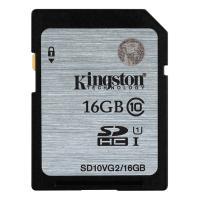
- Some security cameras have built-in sd card slots for local storage. the footage is stored directly on the camera's sd card.
- This option is useful for standalone cameras or situations where continuous internet access might be challenging. however, sd card storage has limitations in terms of capacity, and once the card is full, new footage may overwrite old footage.
- Many modern cctv cameras come with in-built storage memory. the storage is quite limited, so an sd card becomes necessary. you can save the particular footage on your sd card. along with video servers, they prove helpful as a backup system.
Retention time for each storage
- Cloud storage often comes with subscription plans that offer different durations. common options include 7, 14, 30, 60,or 90 days of retention.
- Nvrs and dvrs typically allow users to customize retention periods. it can range from a few days to several months, depending on the storage capacity of the device and the settings configured by the user.
- The retention time on an sd card is limited by its capacity and the camera's recording settings. it ranges from a few days to one month.
Nvr, typically retain footage for a set duration, often ranging from 7 to 30 days, with some high-capacity systems capable of storing footage for months. conversely, cloud-based systems offer storage through subscription plans, where basic tiers may retain footage for a limited number of days, while premium tiers extend this duration to several weeks or months.
Many systems employ motion-activated recording to conserve storage, adjusting retention based on motion frequency. continuous recording systems, however, with no reliance on motion, necessitate larger storage capacities and offer shorter retention periods. upon reaching storage limits, some systems overwrite older footage automatically, while others require manual deletion.
24/7 recording and motion detection
- Hdd drives store cctv footage 24*7, as these drives need to be active all the time.
- These surveillance hard drives are designed to write operations.
- These hard drives write the data 90% of the time and 10% of the playback data.
- Few cameras record the footage each minute.
- A few others may record if the motion is detected.
- Cctv cameras are mostly picked because they work as 24*7 surveillance systems.
Legal requirements and separate backups
Compliance with legal and regulatory mandates further influences retention periods, varying based on jurisdiction and establishment type. for instance, financial institutions, like banks, might be obligated to store footage for six months or more, while casinos could be required to keep footage for up to a year.
Enforcement agencies use this footage as proof. most government agencies have made it mandatory to notify customers or passers-by that they are under “camera surveillance” near the particular shop, stores, shopping malls, etc.
However, if the owners want to retain a particular security camera footage, they can always backup older footage, for future reference. even if the live footage gets removed/overwritten, you will still have the proof saved in the backup.
- Yes, most security cameras often delete old footage automatically (when the storage capacity is reached) to make space for new recordings.
- This process is called overwriting or loop recording.
- This largely depends on the system’s retention policies, legal obligations, security protocols, operational requirements, and whether the footage has been deleted or overwritten.