What Is The Zoom On Binoculars?
If you’re looking at binoculars and see numbers like 8x42, 10x50, or 20-60x70, the “zoom” part can be confusing at first. In everyday speech, people often use zoom to mean “how much closer things look.” With binoculars, the more accurate word is magnification.
The first number tells you the magnification.
So:
- 8x42 binoculars make things look about 8 times closer
- 10x50 binoculars make things look about 10 times closer
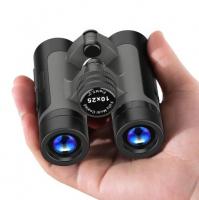
- 12x25 binoculars make things look about 12 times closer
- 20-60x70 binoculars have adjustable magnification from 20x to 60x
That first number is what most people mean when they ask about zoom.
What does 8x or 10x actually mean?
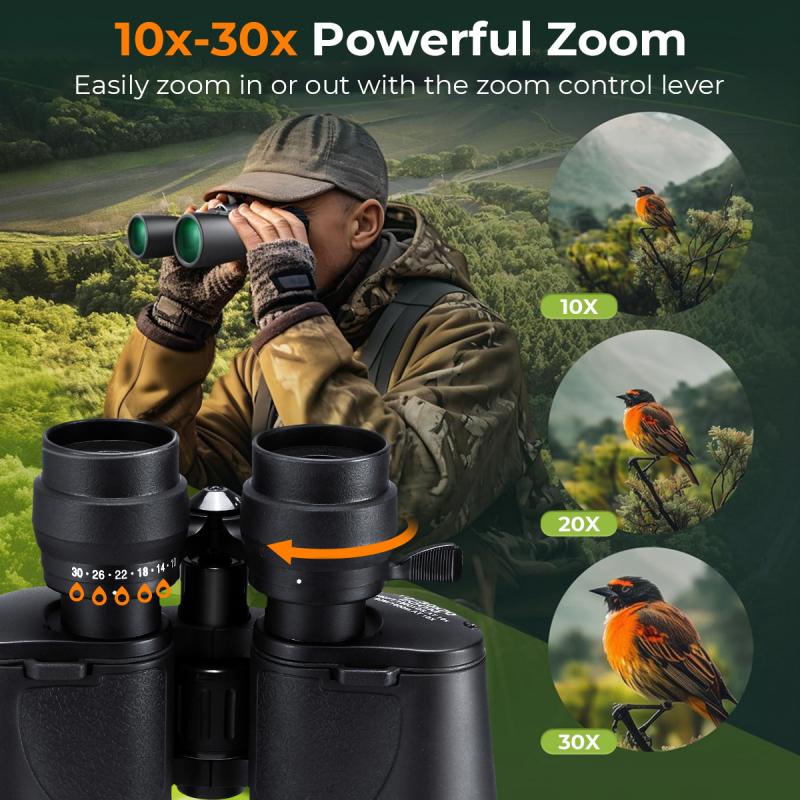
If you use 10x binoculars, an object 100 metres away appears roughly as if it were 10 metres away with the naked eye.
That does not mean the image becomes magically sharper or brighter. It only means the image is enlarged. The quality of the glass, lens size, coatings, stability, and light conditions still matter a lot.
This is why a cheap pair of very high-powered binoculars can look worse than a good pair of lower-powered ones. More magnification is not automatically better.
In real use, 8x and 10x are the most common magnifications because they strike a good balance between reach, brightness, field of view, and hand steadiness.
The second number is not zoom
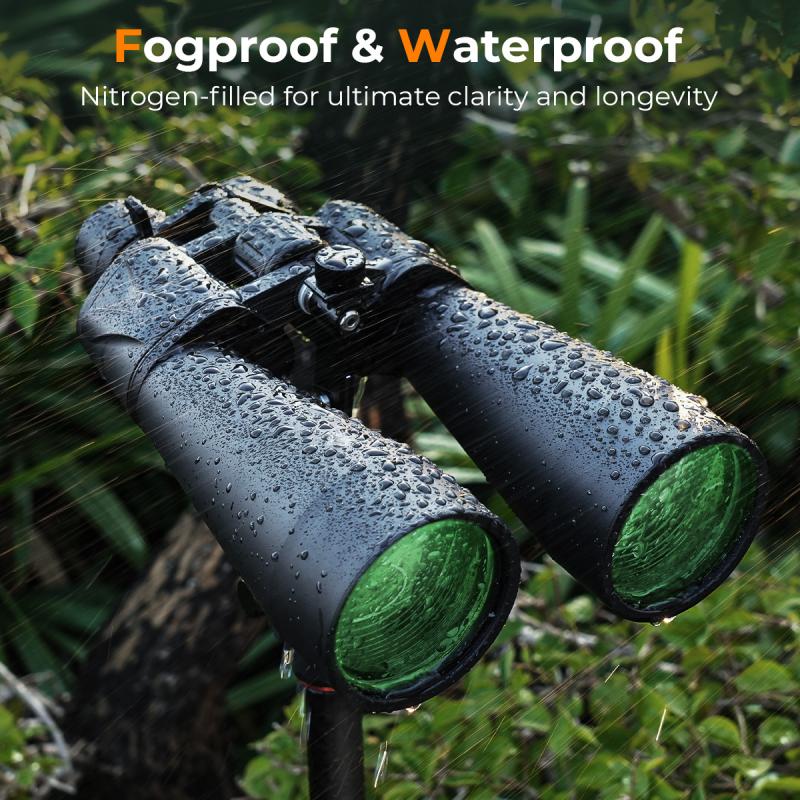
In a binocular marking like 10x50, the 50 refers to the diameter of the front lenses in millimetres. These are called the objective lenses.
So 10x50 means:
- 10x magnification
- 50 mm objective lenses
Larger objective lenses collect more light, which can help in dim conditions such as dawn, dusk, woodland, or astronomy. But they also make the binoculars bigger and heavier.
A compact pair like 10x25 may fit in a jacket pocket, but it will usually look dimmer and be less comfortable to use than a full-size 10x42 or 10x50.
Fixed magnification vs zoom binoculars
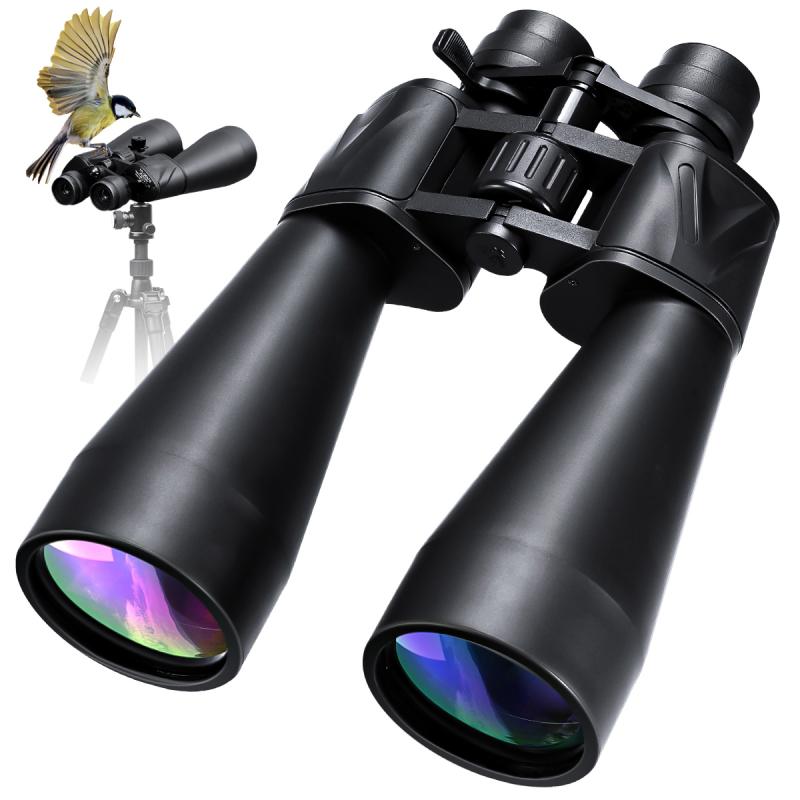
Most binoculars are fixed magnification. An 8x42 is always 8x. A 10x50 is always 10x.
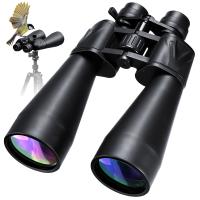
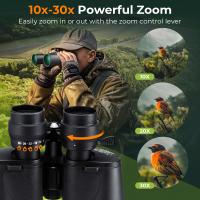
Some binoculars are sold as zoom binoculars, with markings like:
- 10-30x50
- 8-24x50
- 20-60x70
These let you change magnification using a lever or wheel, a bit like zooming in and out on a camera lens.
At first, zoom binoculars sound ideal. One pair that covers low and high power? Convenient. In practice, they come with trade-offs.
Zoom binoculars often have:
- a narrower field of view
- reduced brightness at higher magnification
- more image shake
- softer image quality compared with good fixed-power binoculars
- more mechanical complexity
- more difficulty keeping both barrels perfectly aligned
That does not mean all zoom binoculars are useless. Some are fine for casual long-distance viewing, ships, landscapes, or occasional tripod use. But for birdwatching, hiking, wildlife watching, travel, and general use, a good fixed-power binocular is usually easier to live with.
Why high zoom is harder to use than people expect
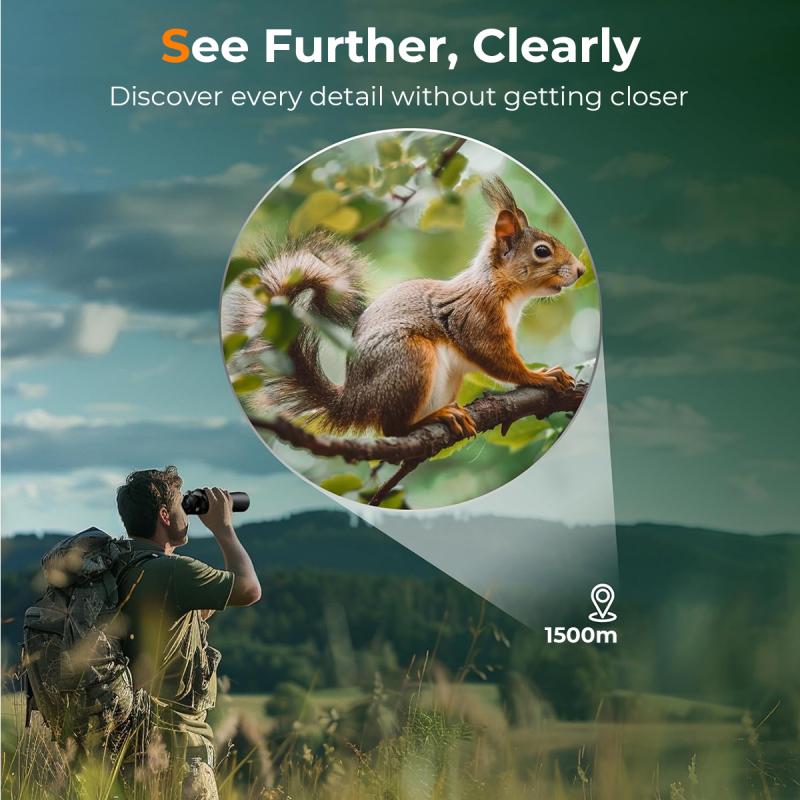
Beginners often assume that 20x must be twice as good as 10x. On paper, it gets you closer. In your hands, it can be frustrating.
The higher the magnification, the more your hand movement is magnified too. At 8x, most people can hold binoculars fairly steady. At 10x, many people are still fine, though some shake becomes noticeable. At 12x, hand shake is obvious for a lot of users. At 15x and above, a tripod or solid support starts to become very useful.
This matters more than people expect. A slightly smaller image that stays steady often shows more detail than a larger image that jitters around.
For example, if you’re watching a bird in a tree, 8x binoculars may let you quickly find it, follow it, and see colour and movement clearly. With 16x binoculars, the bird may be bigger, but the narrow view and hand shake can make it harder to locate and keep in sight.
The same applies to sports, concerts, hiking, and wildlife. High magnification sounds impressive until you’re trying to track something moving.
Field of view matters as much as zoom
The more you zoom in, the less of the scene you usually see.
This is called field of view. It describes how wide an area you can see through the binoculars.
Lower magnification binoculars usually show a wider view. That makes them easier for:
- following birds or animals
- scanning landscapes
- watching sports
- using from a moving boat
- finding objects quickly
- sharing binoculars with beginners
Higher magnification narrows the view. That can be useful for distant details, but it also makes the binoculars feel less relaxed. You spend more time searching and correcting your aim.
This is one reason 8x binoculars are so popular with birdwatchers. They don’t bring things quite as close as 10x, but they are steadier and often easier to use for long periods.
What zoom should you choose?
For most people, the safest choices are simple.
8x binoculars are excellent for general use, birdwatching, woodland, travel, hiking, and anyone who values a steady image. They are forgiving and comfortable.
10x binoculars are better if you want a bit more reach for open country, coastlines, wildlife at distance, or casual astronomy. They show more detail when held steady, but they can feel shakier than 8x.
12x binoculars can work well for long-distance viewing, but they are not as relaxed for handheld use. Some people like them; others find them tiring.
15x and higher usually makes more sense with a tripod, monopod, window mount, or image stabilization. These are more specialist tools.
If you’re buying your first decent pair and don’t have a specific use in mind, 8x42 or 10x42 is usually a much better choice than a high-zoom model.
What about binoculars that say 30x, 60x, or 100x?
Be careful with very high numbers, especially on cheap binoculars.
You may see compact binoculars advertised with claims like 60x60, 100x, or even higher. Many of these claims are exaggerated or misleading. A small handheld binocular cannot realistically deliver a bright, sharp, steady image at extreme magnification.
At high power, you need:
- very good optics
- large objective lenses
- precise alignment
- stable mounting
- enough light
- careful focusing
Without those, the image may be dim, shaky, narrow, and soft. The big number on the box can look exciting, but it often leads to disappointment.
For serious high-magnification viewing, many people move to a spotting scope rather than binoculars. A spotting scope on a tripod is much better suited to 20x, 30x, 40x, or more.
Does more magnification show more detail?
Only up to a point.
Magnification makes the image larger, but detail depends on optical quality and steadiness. If the lenses are poor, the prisms are misaligned, or the binoculars are shaking, extra magnification just enlarges the flaws.
A good 8x42 can show more usable detail than a poor 20x50. This is especially true in low light or when looking at moving subjects.
I’ve seen plenty of people buy powerful binoculars for wildlife, then struggle to find animals in the view. They often end up borrowing someone’s modest 8x or 10x pair and immediately find them easier. The difference is not just magnification. It’s usability.
How zoom affects brightness
Higher magnification usually makes the image appear dimmer, especially if the objective lenses are not large enough.
A simple way to understand this is the exit pupil, which is found by dividing the objective lens size by the magnification.
For example:
- 8x42 gives an exit pupil of about 5.25 mm
- 10x42 gives about 4.2 mm
- 10x25 gives 2.5 mm
- 20x50 gives 2.5 mm
A larger exit pupil generally feels brighter and easier on the eyes, especially in dim conditions. This is one reason an 8x42 often feels more relaxed than a compact 10x25, even if the 10x has more magnification.
In bright daylight, small binoculars can work fine. At dusk, in woods, or under cloudy skies, the difference becomes much more obvious.
Are zoom binoculars good for astronomy?
For casual moon viewing, some zoom binoculars can be fun, especially if mounted on a tripod. But for handheld astronomy, fixed-power binoculars are usually better.
A classic astronomy binocular is 10x50. It gathers a useful amount of light, gives decent magnification, and can still be handheld by many people for short periods. For more power, such as 15x70 or 20x80, a tripod becomes close to essential.
With stars, shake is very noticeable. A tiny movement makes points of light jump around, so high magnification becomes tiring quickly.
The best zoom is the one you can actually hold steady
If you remember one thing, make it this: binocular zoom is not just about how close the subject appears. It affects steadiness, brightness, field of view, comfort, and how easy the binoculars are to use.
For normal handheld use:
- choose 8x for steadiness and ease
- choose 10x for a bit more reach
- be cautious with 12x and above
- avoid chasing huge magnification numbers on cheap models
- consider a tripod or spotting scope for serious long-distance viewing
A modest, clear, steady pair of binoculars will usually be more satisfying than a powerful pair that is dim, shaky, and hard to aim. In real use, that matters far more than the biggest zoom number printed on the box.