Binoculars That Can See In The Dark?
If you’re looking for binoculars that can see in the dark, the first thing to know is this: there isn’t one single “dark vision” technology. Some binoculars amplify tiny amounts of available light. Some use infrared light that your eyes can’t see. Others detect heat instead of light. They all get marketed as night vision, but they behave very differently once you’re actually outside.
I’ve seen a lot of people buy the wrong kind because the product photos make every model look like military-grade equipment. Then they try to identify wildlife at the back of a field, watch a campsite, or see across a lake, and the image is either grainy, washed out, or completely useless beyond short range. The right choice depends less on the word “night vision” and more on what you’re trying to see, how far away it is, and whether you need detail or just detection.
What “seeing in the dark” really means

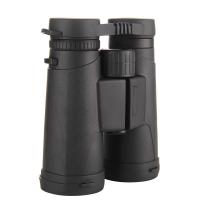
Regular binoculars don’t create vision in darkness. A good pair of standard 7x50 or 10x50 binoculars can work surprisingly well at dusk, under moonlight, or for stargazing because the large objective lenses gather more light than your eyes alone. But once you’re in true darkness — under trees, inside a barn, on a moonless trail — normal binoculars hit a wall.
Night vision binoculars solve that in one of three ways:
Traditional image intensifier night vision takes existing light from the moon, stars, or distant buildings and amplifies it. This is the classic green night vision look, though some newer units use white phosphor.
Digital night vision uses a camera sensor and a screen. It often needs an infrared illuminator to work well in full darkness. These are common in consumer night vision binoculars because they’re cheaper and can record photos or video.
Thermal binoculars detect heat signatures. They don’t need light at all. Animals, people, vehicles, and warm objects stand out even in total darkness, fog, or brush. The trade-off is that you won’t see normal visual detail the same way.
Those differences matter a lot in real use.
Digital night vision binoculars: the most common choice
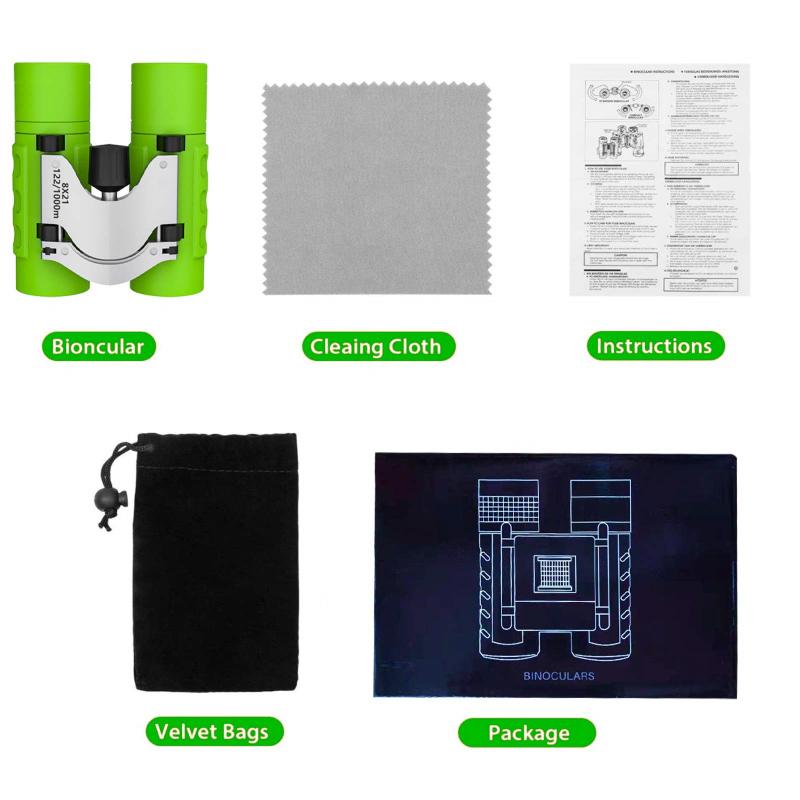
Most affordable “binoculars that can see in the dark” are digital night vision binoculars. They usually look like bulky binoculars with a small screen inside, buttons on top, an infrared light, and a memory card slot.
For casual use, they can be genuinely useful. Around a backyard, campsite, farm, dock, or short trail, a decent digital night vision binocular lets you see raccoons, deer, gates, sheds, fence lines, boats, and people moving around at night. Many models also let you take photos or video, which is handy if you’re monitoring wildlife or checking what’s been visiting a property.
The catch is range. Marketing claims can be optimistic. A box might say “see up to 300 meters,” but that often means detecting something reflective or obvious under ideal conditions. Identifying an animal clearly at that distance is a different story. In real use, budget digital models are often most comfortable inside 50 to 100 yards, sometimes less if there’s no moonlight and you’re relying only on the built-in infrared light.
The built-in infrared illuminator is basically an invisible flashlight, though some animals may still notice the faint red glow from certain units. It works well at shorter distances, but it can bounce off branches, tall grass, fog, rain, dust, or nearby walls and wash out the image. If you’ve ever used high beams in fog, it’s a similar problem.
Digital night vision also has a screen glow. Your face may be lit up slightly while using it, and your own natural night vision can be ruined after looking into the display. That doesn’t matter much in a backyard, but hunters, security users, and anyone trying to stay discreet should know it.
Traditional night vision: better image, higher cost
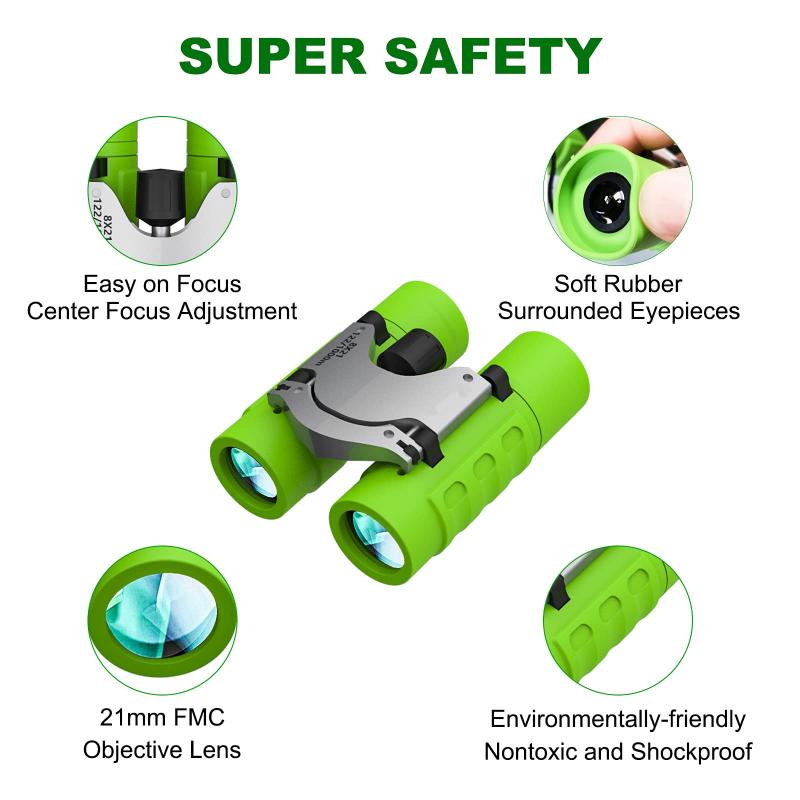
Image intensifier night vision is what many people imagine when they think of serious night vision equipment. It can be excellent, especially higher-generation gear. Good Gen 2 or Gen 3 night vision can give a much more natural, responsive view than cheap digital units, especially when you’re moving, scanning, or trying to judge depth.
The downside is price. Real image intensifier night vision can get expensive fast. Cheap “Gen 1” units still exist, but they often have narrow fields of view, distortion around the edges, and limited practical range. They can be fun, but they’re not magic.
A quality intensifier unit is better if you need to navigate, observe for long periods, or see without constantly blasting infrared light. It’s also usually better for situations where delay matters. Digital systems can have a little lag, and while that may not bother you when watching wildlife from a porch, it becomes annoying if you’re walking through uneven ground.
There’s also care involved. Intensifier tubes don’t like bright light. Many modern devices have protection features, but pointing older or cheaper night vision at headlights, bright porch lights, or daylight can damage them. If you want something the whole family can pass around casually, digital is usually more forgiving.
Thermal binoculars: best for finding animals or people
Thermal is a different tool entirely. If your main goal is to spot living things in darkness, thermal can feel almost unfair. A deer in a tree line, a person walking across a field, a dog hiding behind shrubs, or a hog in tall grass may show up quickly because of heat contrast.
Thermal binoculars don’t care whether there’s moonlight. They can work in total darkness, and they often outperform night vision when the target is partly hidden by brush. For search and rescue, farm security, predator control, and wildlife spotting, thermal is often the most effective option.
But thermal is not ideal for reading signs, recognizing faces at distance, seeing color, judging fine detail, or enjoying a natural-looking view. You may know there’s an animal at 200 yards, but not always what species it is unless the sensor is good, the range is reasonable, and you have experience interpreting shapes and movement.
Thermal is also expensive. Entry-level thermal devices can detect heat, but lower-resolution sensors produce blocky images. For real identification rather than simple detection, resolution matters a lot.
Don’t overlook regular low-light binoculars
If your use case is more “see better at dusk” than “see in total darkness,” standard binoculars may be the better buy. A good 7x50, 8x42, or 10x50 binocular from a reputable optics brand can be excellent for twilight wildlife, boating, astronomy, and general outdoor use.
For stargazing, night vision binoculars are usually not what most beginners need. A standard 10x50 binocular on a dark night can show star clusters, the Moon, Jupiter’s moons, and plenty of sky detail. Digital night vision may add noise, reduce natural color, and feel less satisfying for astronomy unless you’re using specialized equipment.
For boating or marine use, 7x50 binoculars are popular because they’re bright, steady, and easier to hold on a moving platform. Night vision may help in certain situations, but it won’t replace radar, navigation lights, charts, or common sense on the water.
What to look for before buying
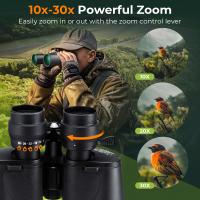
Magnification is one of the most misunderstood specs. Bigger is not always better. At night, high magnification makes the image shakier, narrows your field of view, and makes it harder to find moving targets. Many practical night vision binoculars sit somewhere around 3x to 6x optical magnification. Digital zoom sounds impressive, but it often just enlarges a grainy image.
Pay close attention to the infrared illuminator on digital models. Adjustable IR brightness is useful because full power can wash out close objects. Some units allow an external IR illuminator, which can dramatically improve range, though it adds bulk and drains more battery.
Battery life matters more than people expect. Night vision eats power, especially with infrared running. Rechargeable internal batteries are convenient, but replaceable batteries are better for long nights away from outlets. If you’re using the binoculars for camping, security, or farm work, carry spares or a power bank.
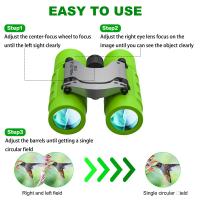
Focus controls should be easy to use in gloves. Many cheaper night vision binoculars require separate focusing for the objective lens and the eyepiece. That’s normal, but if the controls are stiff or tiny, it gets annoying fast in the dark.
Weather resistance is worth checking carefully. “Water resistant” does not always mean you can use the unit in steady rain. If you’ll be outdoors often, look for a real IP rating and don’t assume a rubberized body means waterproof.
Also consider the display. Some digital binoculars have a bright internal screen that can cause eye fatigue after a while. If you’re sharing with kids or older users, comfort matters. A slightly lower-spec model with simple controls can be more enjoyable than a feature-packed one nobody can operate without the manual.
Common mistakes people make
The biggest mistake is expecting a budget digital night vision binocular to perform like military gear. A $150 unit can be useful around a property, but it will not give crisp, long-range detail in pitch black conditions.
Another mistake is using too much infrared light up close. If a tree trunk, fence post, or wall is nearby, the IR can reflect back and make the whole image look blown out. Turn the IR down, change your angle, or step into a more open spot.
People also forget that glass blocks a lot of infrared. Trying to use digital night vision through a house window often gives poor results because the IR reflects off the glass. If you’re watching a backyard, turn off the IR and rely on ambient light, or observe from outside.
Finally, don’t judge performance only from indoor testing. Night vision devices often look terrible inside a room with reflective walls and close objects. Try them outdoors in the kind of place you actually plan to use them.
Which type should you buy?
For backyard wildlife, camping, casual security, or checking property at night, a decent digital night vision binocular is usually the sensible starting point. It’s affordable, easy to use, and often includes recording.
For serious nighttime navigation, professional use, or a more natural image, traditional image intensifier night vision is better, but expect to spend much more for quality.
For finding animals, people, or heat sources in complete darkness, thermal is the strongest tool. It’s especially useful on farms, large properties, wooded edges, and search situations. Just remember that detection and identification are not the same thing.
For dusk, moonlight, boating, or astronomy, don’t dismiss ordinary binoculars. A well-made low-light binocular can be more pleasant, more durable, and more useful than cheap electronic night vision if you don’t need to see in total darkness.
The best “binoculars that can see in the dark” are the ones matched to the job. If you want to watch raccoons near the garden, you don’t need a thermal system that costs more than a used car. If you need to locate animals across a dark pasture, a cheap digital unit may disappoint you. Start with the distance, the level of darkness, and whether you need to identify details or simply detect movement. Everything else becomes much easier from there.