Why You Need A Dash Cam?
If you've driven at all since the start of the COVID-19 pandemic, you've likely noticed that American roads have become more chaotic. According to AAA, road deaths skyrocketed by 17% over pre-pandemic trends, resulting in 17,000 more fatalities than would be expected over the period of May 2020 to December 2022. Although numbers for 2023 slightly declined, road accident fatalities are still vastly up compared to a decade ago. With the possibility of a crash higher than it's been in years, the ability to prove that someone wronged you in traffic can help immensely with after-the-fact court cases and insurance claims. A dashcam is a straightforward solution for this anxiety.
What a Dash Cam Is and How It Works
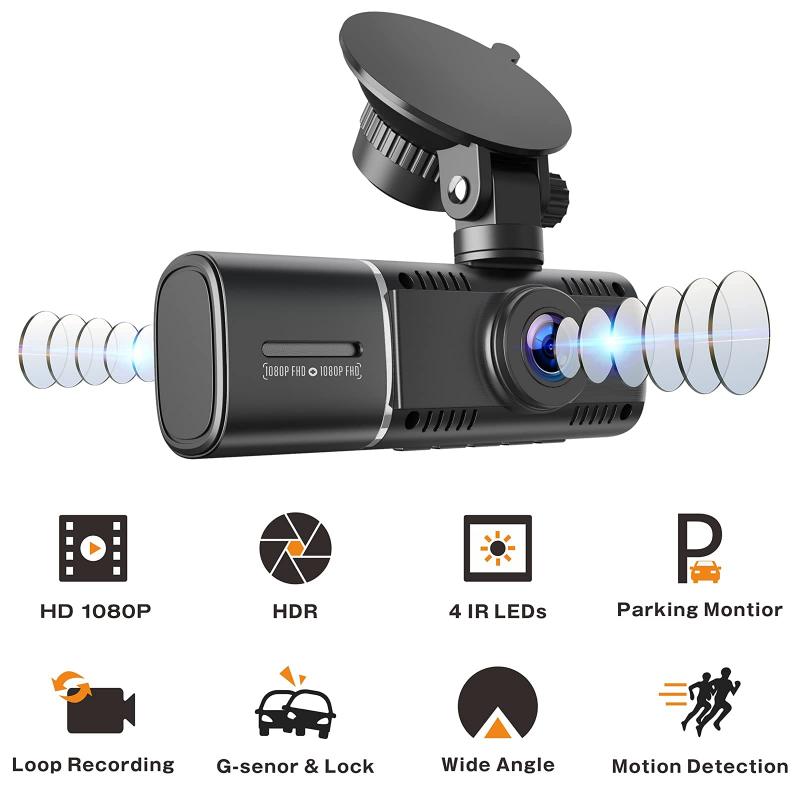
Dashcams are physically similar to webcams or phone cameras. They contain a small sensor and record video, but instead of putting it on the internet or uploading to a computer, they save it locally to a microSD card inside the dashcam itself. Most dashcams are set up so that whenever the car is running, they record and store footage.
Some dashcams additionally can be wired directly into the car so they can record footage even when the car isn't on. Usually, these dashcams activate if motion or a loud noise is detected, in the hopes of capturing someone running into your parked car or attempting to steal it. Generally, dashcams are aimed out the front window, although some drivers also aim one out the rear window.
The dash cams tested by Consumer Reports cost between $30 and $400. You mount them to your car's dashboard or windshield using a suction cup mount or adhesive strips. Recordings are stored on a microSD card, which you typically need to buy separately. Some dash cams have a display to view footage, a number of models have a smartphone app you use instead, while other dashcams let you see the video in either location.
Proving Fault in Accidents and Insurance Claims
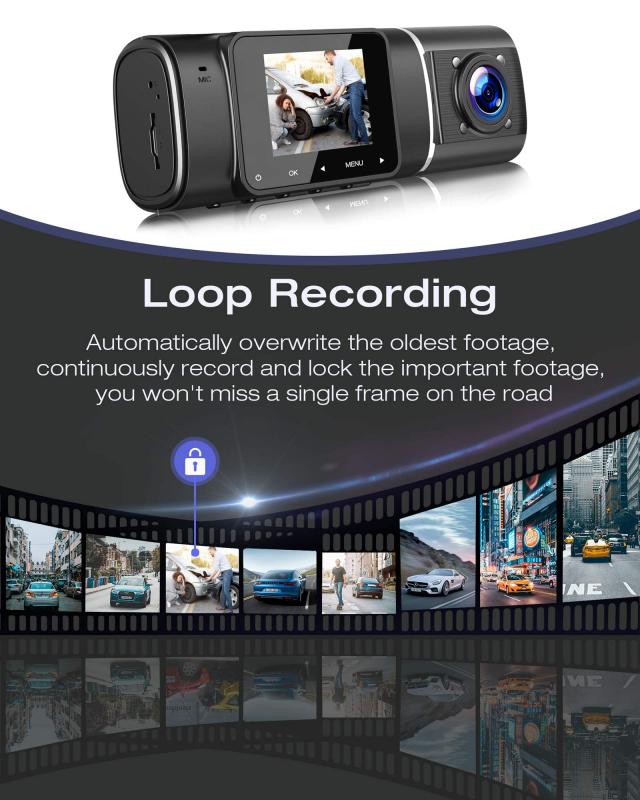
The general motivation behind installing dashcams is that they offer a sense of security and proof-of-fault in an accident. They are, in essence, a constant witness that can attest to who's to blame in a multi-car accident. If you are in a car accident, you can use the footage from your dashcam as evidence for insurance claims and, oftentimes, police reports, which can save you thousands of dollars in insurance costs if it prevents you from being falsely faulted for an accident.
- A truck sideswiped one driver on the interstate. The truck driver claimed the other driver moved into his lane. After showing the officer the video from a rear dashcam, which clearly showed the truck moving into the lane, the truck driver was ticketed for failing to maintain his lane. Without the dashcam, it would have been a he-said/he-said situation with no other witnesses, and the driver would have probably been forced to run the claim through his auto insurance with a $500 deductible. The dashcam saved him $500 and possibly a ticket.
- A driver had someone reverse into them while stationary. Without the dashcam footage, they probably wouldn't have convinced the other driver's insurance they weren't at fault — the other driver changed their story after the incident to say they were already moving when the first driver "hit" them.
- A lady hit one driver's car and said he ran the red light. The camera proved otherwise. Her insurance paid for everything — it didn't cost him a penny.
- In one case, someone put their car in reverse on the freeway and slammed into the vehicle behind them to mimic the impact of a rear-end collision. Without witnesses, the driver behind would almost certainly have been considered at-fault. The attempt was foiled by the dashcam, which captured the obvious scam.
- A coworker was pulling into a parking lot and the car ahead came to a stop, then reversed and smashed into them, claiming the coworker had rear-ended them. There were no witnesses, and the coworker was found to be at fault. A dashcam would have saved them.
Protection Against Insurance Fraud
Although it is a sad truth, fraudulent insurance claims happen all over the country and are becoming more popular with criminals. The main reason people make fraudulent insurance claims is to get money out of the other person through insurance. Having a dash cam means you can prevent anyone from making a fraudulent claim about you, as you'll have direct proof of the incident.
Insurance scams are a problem, and having a dashcam as a witness is helpful. In one case, a friend stopped at a red light behind a minivan, which then threw it into reverse and smashed into the car. Luckily a person was walking by and ran up to be a witness — otherwise the friend would've been at fault for rear-ending the minivan. A few minutes later, the same minivan driver tried the same maneuver on somebody else.
In another case, a driver's ex was in a minor at-fault accident where the person she hit was claiming tens of thousands of dollars in medical bills. The dashcam footage turned that into a small token amount the insurance gave just to resolve the matter.
Deterring Theft and Monitoring Parked Vehicles
- Surveillance mode
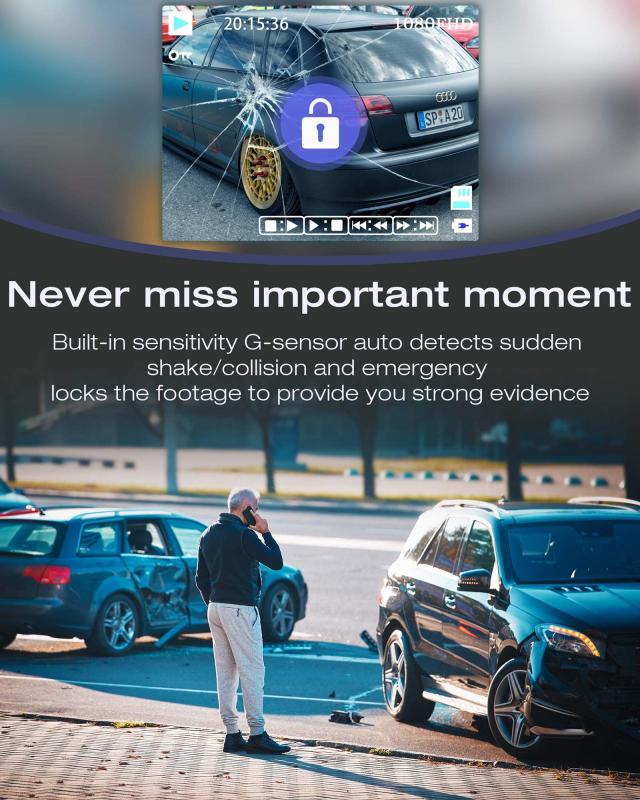
- Some dash cams have a surveillance mode that turns on even when the car hasn't been turned on. Some advanced dash cams have the capabilities to turn on when your car is knocked when in park, giving you a better chance of catching culprits who damage your car and don't stay to let you know what happened.
- Theft deterrence
- If someone is looking to steal a car, a dash cam acts as a deterrent. A potential thief would be less likely to take the risk of stealing your vehicle if they saw a dash cam in the front or rear window.
- Hit-and-run documentation
- A dashcam that records if it detects motion, even when the car is off, can help police track down hit-and-run drivers. In one real case, someone stole a car and the dual cam recorded the road in front and the interior — it recorded the thieves driving to their own house, providing the prosecuting attorney with impressive evidence.
- Mechanic and service monitoring
- One driver's dashcam captured a technician taking their car drag racing while it was in for an oil change. The video was submitted to the service manager, the tech was fired, and the owner received free maintenance. Another driver's footage showed mechanics bad-mouthing their car.
Promoting Safer Driving Habits
It has helped drivers be better on the road. One driver used to drive 10–20 mph over the limit, all the time, everywhere. After installing cams in all their cars, they limited it to about 10% over, which ends up being 3–5 mph. In their mind, they envisioned reviewing footage of an accident and didn't want to be on film obviously flying down the road — so it made them a safer driver and a better member of the community.
It has also helped drivers recognize their own mistakes. After reviewing some footage, one driver realized that other drivers weren't always the ones at fault — the dashcam could be used against you in an accident too. It's worth remembering that the dashcam records everything, including the moments where you may be in the wrong.
Costs and Installation Considerations
- There's the cost of the dashcam itself — generally around $100 for low-end models to $500 for high-resolution, high-frame-rate ones.
- The cost of the microSD card is usually additional, ranging from around $30 to hundreds of dollars depending on storage size and write speed.
- Most often, people plug a dashcam into their cigarette lighter for power, and some dashcams can draw power from a car's USB port. But when you turn off the car, the dashcam stops working.
- The solution is to install a hardwire kit. These hardwire your dash cam to your car's fuse block so it can receive power from the car battery and keep recording even when the car is off. If you want to use your dash cam only while driving, a hardwire kit isn't necessary.
- Hardwiring your dash cam could cause it to kill your car battery. Some dash cams will go into a sleep mode after a certain amount of time to prevent this, and some may shut down completely when the battery voltage gets too low. If your car will be parked for many days, you should disconnect the dash cam.
- Cable management can be an annoyance. Additionally, if the dashcam isn't hardwired in and instead relies on a cigarette lighter/12V power port, it can slowly drain the battery if it is a model that doesn't automatically power down when the car is off.
- A dashcam might make your car slightly more vulnerable to smash-and-grab theft if it appears too obvious and easy to steal.
Insurance, Legal, and Privacy Considerations
You do not need to inform your insurance company if you get a dashcam. Unfortunately, a dashcam will not lower your insurance rates — its cost savings come in the form of preventing premium hikes after a not-at-fault accident, by providing evidence the crash was another driver's fault, not yours. Dash cam footage is stored locally and erased after a certain time frame, so your dashcam won't share your driving habits automatically with your insurance company.
If you want to enable audio recording on your dash cam, you'll need to know whether your state is a one-party consent or two-party consent state. In one-party consent states, only one person — you — needs to know that a recording is taking place. But in two-party consent states, all parties need to provide consent any time a recording of a conversation takes place.
You have the right to record the actions of law enforcement officers as long as you are not interfering with their work and you are recording events that are plainly visible in public spaces. That said, if you live in a two-party consent state, you're recording audio of the incident, and there happen to be bystanders in the recording who are not members of law enforcement, you would need the bystanders' consent to record them.
While dashcams may deter some thieves, they may also paradoxically encourage some to steal the dashcam itself. If theft deterrence is your sole goal, a dashcam may not be a wise choice. Some cars — such as Teslas — record video constantly through their driver-assistance cameras, which make a dedicated dashcam redundant. The cumulative costs in traffic fines and hiked insurance rates from a wrongly-faulted accident will quickly make even the most expensive dashcam an excellent investment, if the situation ever arises. It is better to have one and never need it than to not have one and need the footage in an accident.