What Is The Best Waterproof Action Camera?
From snowy slopes to churning whitewater, if you want a camera that can go anywhere and record amazing video, an action camera is the best option. For any activity, you can capture great-looking photos and videos that you can share with family, friends, and the world. The best waterproof action camera depends on your needs — for top image quality and stabilization, premium models from brands like DJI and GoPro are strong choices. If you want immersive footage, a 360° camera like the Insta360 X5 is ideal. The right camera comes down to your diving style, budget, and preferred features.
Top Waterproof Action Cameras at a Glance
Here is how the leading 2026 action cameras compare across key specs. Prices are approximate US MSRP or street prices as of June 2026 and will vary by retailer and bundle.
- GoPro Hero13 Black
- Sensor: 1/1.9″ | Max Video: 5.3k/60 | Waterproof (no housing): 10m / 33ft | Weight: 157g | Price: $399 | Best for: Best overall
- DJI Osmo Action 6
- Sensor: 1/1.1″ | Max Video: 8k/30 | Waterproof (no housing): 20m / 65ft | Weight: 149g | Price: $379 | Best for: Low light and video
- DJI Osmo Action 5 Pro
- Sensor: 1/1.3″ | Max Video: 4k/120 | Waterproof (no housing): 20m / 65ft | Weight: 146g | Price: $319 | Best for: Best value
- Insta360 Ace Pro 2
- Sensor: 1/1.3″ (Leica) | Max Video: 8k/30 | Waterproof (no housing): 12m / 39ft | Weight: 177g | Price: $390 | Best for: Content creators
- GoPro Mission 1 Pro
- Sensor: 1″ | Max Video: 8k/60 | Waterproof (no housing): 20m / 66ft | Weight: 207g | Price: $699 | Best for: Best image quality
- Insta360 X5
- Sensor: Dual 1/1.28″ | Max Video: 8k/30 (360) | Waterproof (no housing): 15m / 49ft | Weight: 200g | Price: $550 | Best for: 360-degree
- Insta360 Go 3S
- Waterproof: 33ft without case, 196ft (60m) with dive case | Best for: Vlogging, compact POV
- Akaso Brave 7 LE
- Sensor: 1/2.3″ | Max Video: 4k/30 | Waterproof: 1m body (40m housing) | Weight: 127g | Price: $140 | Best for: Ultra-budget
GoPro Hero13 Black
GoPro pretty much invented the action camera category, and the Hero13 Black is why they're still the default choice for most people. The headline features are the HB-series interchangeable lenses, which are new to this generation. You can swap between an ultra-wide, macro, anamorphic, and ND filter lens, and the camera automatically detects which one is attached and adjusts its settings.
The 1/1.9″ sensor behind an f/2.8 lens captures 5.3k/60fps video and 27mp photos. Slow motion is available up to 400fps at 720p (called Burst Slo-Mo), 360fps at 900p, or 120fps at 5.3k for short bursts. HyperSmooth 6.0 is still the standout for stabilisation in chaotic scenarios — the 360 horizon lock keeps your footage level even if the camera rotates completely.
The camera is waterproof to 10 metres (33 feet) without a housing. Battery life is around 90 minutes at 4k/30fps with the new 1900mAh Enduro battery. You get GPS, HLG HDR video in 10-bit colour, voice control, and WiFi 6 for faster transfers. The accessory ecosystem is massive, both official GoPro gear and thousands of third-party options.
- Excellent video quality of 5.3k at 60fps with HDR
- HyperSmooth 6.0 stabilization handles underwater motion capably
- Wide 177-degree field of view captures more of the dive
- Massive ecosystem of GoPro accessories with more mounts, lenses, and housings than any other action cam
- Limited depth without housing; requires a case for diving beyond 33 feet (10m)
- Subscription-based editing app GoPro Quik requires a paid plan for full features
- Heavy use drains battery power quickly, especially in cold water
DJI Osmo Action 6
DJI has been making excellent action cameras for years and the Osmo Action 6 is their most impressive yet. The variable aperture (f/2.0 to f/4.0) is the first on any action camera. In practice, this means the camera can let in more light in dark conditions (f/2.0) or stop down for sharper footage in bright light (f/4.0).
The 1/1.1″ sensor is large, at roughly 38mp, second in this lineup only to the 1-inch sensor in GoPro's Mission 1. That's a square sensor, which means the camera captures a wider frame and you can crop into any aspect ratio (16:9, 9:16 for social, 4:3, etc.) in post. Video resolution goes all the way up to 8k at 30fps. For most shooting you'll sit at 4k/120, which gives you smooth, croppable footage and lovely slow motion. There's a Supernight mode for low-light video up to 4k/60fps.
Waterproofing to 20 metres (65 feet) without a case is the best of any camera on this list. Battery life at up to 4 hours is roughly double what you get from a GoPro. There's also 50gb of internal storage, so you can shoot even if you forget your memory card. The DJI OsmoAudio system lets you connect DJI microphone transmitters directly to the camera without a receiver, which is very useful for vlogging.

DJI Osmo Action 5 Pro
The DJI Osmo Action 5 Pro remains one of the best value action cameras available. You still get a large 1/1.3″ sensor (40mp), f/2.8 aperture, 4k/120fps video, excellent RockSteady 3.0 stabilisation, dual OLED screens, and waterproofing to 20 metres without a case. Battery life is around 4 hours, matching the Action 6.
What you miss compared to the Action 6 is the variable aperture and the slightly larger sensor. In practice, unless you're shooting a lot of low-light footage or you specifically want the aperture control, the Action 5 Pro does 90% of what the Action 6 does for significantly less money. It features a color temperature sensor that automatically adjusts white balance underwater — unlike its competitors, the Osmo Action 5 can dive up to 66 feet (20m) without a housing, making it ideal for many recreational dives.
- Depth rating of 66 feet (20m) means many divers won't need the additional dive case
- Has an internal storage of 48gb in case you forget an SD card
- Great front screen for selfies
- Can add FIT files or connect to sports app for on-screen data
- Underwater footage is over-contrasted and over-saturated
- Resolution is limited to 4k
Insta360 Ace Pro 2
If your primary use for an action camera is creating content for YouTube, TikTok, or social media, the Insta360 Ace Pro 2 is built for that workflow. The headline spec is 8k/30fps video. The 1/1.3″ sensor is co-engineered with Leica, and combined with Insta360's dual AI chip system (one chip for image processing, one for overall performance), the image processing is excellent. The PureVideo mode is particularly effective for low-light shooting, using AI to reduce noise in real time.
The 2.5″ flip-up touchscreen is the best screen design on any action camera. Flip it up and it becomes a front-facing screen for vlogging; leave it down and it's a standard rear display. Photo resolution tops out at 50mp. The camera is waterproof to 12 metres (39 feet) without housing. With its dive case, it can go as deep as 196 feet (60m). One thing to be aware of for serious video work: the Ace Pro 2 records its i-log footage in 8-bit, not 10-bit.
- Can film up to 8k
- The rear screen can flip up for selfie mode
- Produces great footage in a range of scenarios
- The front screen is matrix only, so no selfie screen when in a dive case
- Prone to overheating when filming in 8k
GoPro Mission 1 Pro
GoPro shipped the Mission 1 and Mission 1 Pro at the end of May 2026, and they're the most capable cameras the company has ever put in an action body. The headline is the 1-inch, 50mp sensor, which is physically larger than the sensor in any other mainstream action camera, including the DJI Osmo Action 6. A bigger sensor gathers more light, and that means cleaner images and better detail, especially as the light drops.
The Mission 1 Pro shoots 8k at up to 60fps, 8k open gate in 4:3 for reframing, and 4k at up to 240fps for slow motion. It's waterproof to 20 metres (66 feet) without a housing, it takes the standard GoPro mounts you may already own, and battery life on the Pro is rated at around 5 hours — the best of anything here. The one practical catch is storage: there's no internal storage, so it's microSD only, where the DJI Osmo Action 6 gives you 50gb built in. At $699, this is not the camera for casual users.
Insta360 X5
Most action cameras capture what's in front of them. The Insta360 X5 captures everything, in every direction, all at once. The X5 uses dual 1/1.28″ sensors to record 8k 360-degree video at 30fps, or 5.7k at 60fps. That's a lot of resolution, and it means you can shoot first and decide on framing afterwards. The Insta360 app lets you "reframe" the 360-degree footage into a traditional flat video, choosing exactly which angle and crop you want after the fact. You can also shoot with a single lens for traditional 4k footage if you prefer.
The camera supports replaceable lenses, which is new for 360 cameras. It's waterproof to 15 metres (49 feet) without housing, or 60 metres (197 feet) with the optional dive case. 360-degree cameras are a different way of shooting — you'll need to learn the reframing workflow, and file sizes are large. But if you want to capture every angle of a moment and have the creative freedom to choose your shot later in editing, the X5 is the best way to do it.
Insta360 Go 3S
The Insta360 Go 3S isn't just any action camera — it's a marvel in miniature engineering. The Go 3S brings something special to the table with its magnetic mini camera and the transformative action pod. This setup not only makes it more robust, but also acts as a charger and adds a live preview touchscreen. The camera itself is submersible up to 33 feet (10m), and up to 196 feet (60m) with a dive case.
- Great for vlogging
- Very small and versatile
- Has an internal storage
- Insta360's great editing app
- Not really designed for divers
What to Look for When Choosing a Waterproof Action Camera
The single biggest difference between a cheap action camera and an expensive one is image stabilisation. GoPro's HyperSmooth and DJI's RockSteady turn shaky handheld footage into something that looks like it was shot on a gimbal. The flagship GoPro, DJI, and Insta360 models are a clear step ahead of budget cameras, and they also do a better job of keeping the horizon level when you tilt the camera.
- Waterproof depth rating: Most action cameras are waterproof to 33–60 feet (10–18 meters) without a housing. This is fine for snorkeling, but not for scuba diving. For deeper dives, you'll need a dive housing rated to at least 100–130 feet (30–40 meters). Check that rated depth before you buy, and remember it assumes the doors are properly closed and the seals are clean.
- Video resolution and frame rate: Look for at least 4k at 60fps. This delivers sharp, smooth underwater footage. Higher resolutions like 5.3k or 8k are useful for editing and cropping but aren't essential for most divers. Higher frame rates are only worth it if you want slow motion.
- Stabilisation: If you only care about one spec, make it this one. Budget cameras have improved a lot here, but the flagship GoPro, DJI, and Insta360 models are still a clear step ahead.
- Battery life: Action camera batteries are small, and shooting 4k or high frame rates drains them fast, often in well under an hour. The cameras can also overheat and shut down during long continuous recording. Plan for it: buy two or three spare batteries and carry a way to charge on the go. The DJI Osmo Action 5 Pro and Action 6 are the exceptions, lasting up to 4 hours, and the GoPro Mission 1 Pro lasts around 5 hours.
- Field of view: Action cameras shoot with a very wide angle of view, which makes point-of-view footage feel immersive, but it also stretches anything near the edges of the frame. Most cameras now let you switch between wide and linear modes; the linear modes remove a lot of that fisheye look.
- Accessories and mounting: GoPro's mounting system is the de facto standard, and both DJI and Insta360 work with it. Factor in the cost of the mounts you actually need, plus spare batteries and a fast memory card, when you set your budget.
Improving Color in Underwater Footage
To improve color in underwater footage, use a red or magenta filter to restore warm tones, especially in blue water. Setting a manual white balance (if your camera allows it) can also help achieve more natural colors. For deeper dives, adding underwater video lights brings back lost color and contrast. You can further enhance your footage by adjusting color during post-production.
The DJI Osmo Action cameras have an additional color temperature sensor to do white balance adjustment. While it's not perfect, it yields very good results even at 20m, so there's no need for a red filter — which also means more light. GoPro cameras tend to do fine until 10m in clear water, but require a physical filter after 10m to compensate for the blue/green shift. White balance needs to be locked; a setting around 4500K is commonly used. Whatever camera you pick, editing skills and software matter significantly — underwater photography requires editing to look like how it was to your eyes.
Essential Accessories for Underwater Action Cameras
- Fast memory cards: For 4k video, you need a card that supports write speeds of at least 80 to 100 megabits per second. A capacity of at least 64gb is recommended. A UHS-I rated card is the minimum; UHS-II cards are faster but most action cameras don't benefit from the extra speed.
- Floating hand grip: A floating hand grip is close to essential. Drop your camera in the sea without one and it sinks. Drop it with a floating grip and it bobs on the surface where you can grab it.
- Spare batteries: Nearly every camera on the market has removable batteries, so if your battery runs low, you can swap to a fresh one and keep recording.
- Dive housing: For deeper dives, a dedicated dive housing rated for the depth is required. All major action cameras can be attached to larger housings for deeper underwater use.
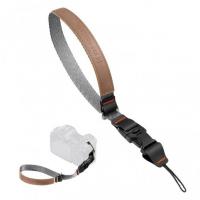
- Mounts: Head strap, chest strap, and tube mounts for a bike or pole are among the most common. Figure out which mounts will meet your requirements before your adventure.