What Binoculars To Buy For Bird Watching?
Binoculars are an essential tool for birders, but with so many models on the market, it can be daunting to find the perfect pair. Professional ornithologists and dedicated birders have put a wide array of optics to the test, rating models on a 1 to 10 scale for a variety of factors, including clarity, brightness, color rendition, and eye relief.
Magnification and Aperture: Finding the Right Specs
Most birders prefer 7- or 8-power binoculars because they're bright and have a wide field of view, making it easier to find birds and to follow them in flight. Optics with objective lenses larger than 42 mm are heavier, and those smaller than 30 mm, while lightweight, aren't bright enough to show detail in poor light.
- For beginners, 8x zoom is great. Anything higher will be somewhat hard to handle and not shake while watching, and will typically have less eye relief.
- When you get used to binoculars and handling them, you can go up to 10x or 10.5x. It's very rare to see people use 12x free-handed.
- For aperture, 42 mm is a great compromise, as it will allow for a nice eye relief, even if you're not so young, because our pupil ability to adapt its diameter goes severely down with age.
- An 8x42 or 8x40 combination will give you the best results for birding, generally speaking — field of view, bright picture, ease of use — all critical for following fast-moving birds.
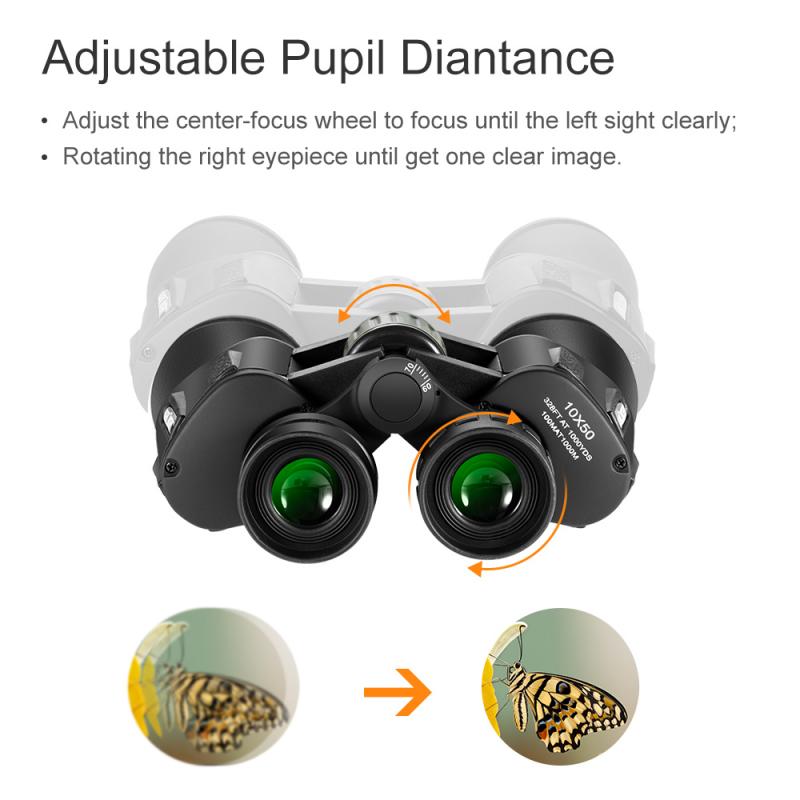
- If you'd still like to have 10x or more, go for a 50 mm aperture, but that's heavy.
- With a tripod you can go a lot higher in magnification, but for that you'll typically buy a monocular (spotting scope).
You usually get a wider field of view with an 8-power binocular than you do with the same model in 10 power. A wider field of view makes it easier to spot a songbird among the branches or a seabird on the waves. This is especially important in visually complex situations such as forest birding.
Price Tiers and What to Expect
Binoculars are available across a wide range of price categories. While choosing a pair ultimately comes down to personal preference, top picks in each price category deliver crisp, colorful images. There is a huge difference in quality between $100 binoculars and $3,000 binoculars, but you'll still be able to go birdwatching with all of them. You can always upgrade later.
- Budget tier
- Budget tier binoculars are especially good in situations such as watching bird feeders. Birds are at medium to close range, out in the open, not moving around too much, and generally in strong light. If this describes your typical birdwatching setup, there may be no clear reason to spend more.
- Mid-range tier
- The mid-range tier typically offers binoculars that are sharp most or all the way across the image, handle challenging light, have a wider field of view, and focus smoothly and quickly. If you find yourself looking at birds in the distance, peering into backlit treetops, tracking birds as they flit through cluttered spaces, or needing to change focus in an instant, then spending a bit more is likely to make a noticeable improvement.
- High-end tier
- If you never look through high-end glass, you'll be content with the lower price range, but once you get hooked on high-end glass, it's hard to go back. The pinnacle of binocular optics includes Leica, Swarovski, and Zeiss — optically, all three are superb.
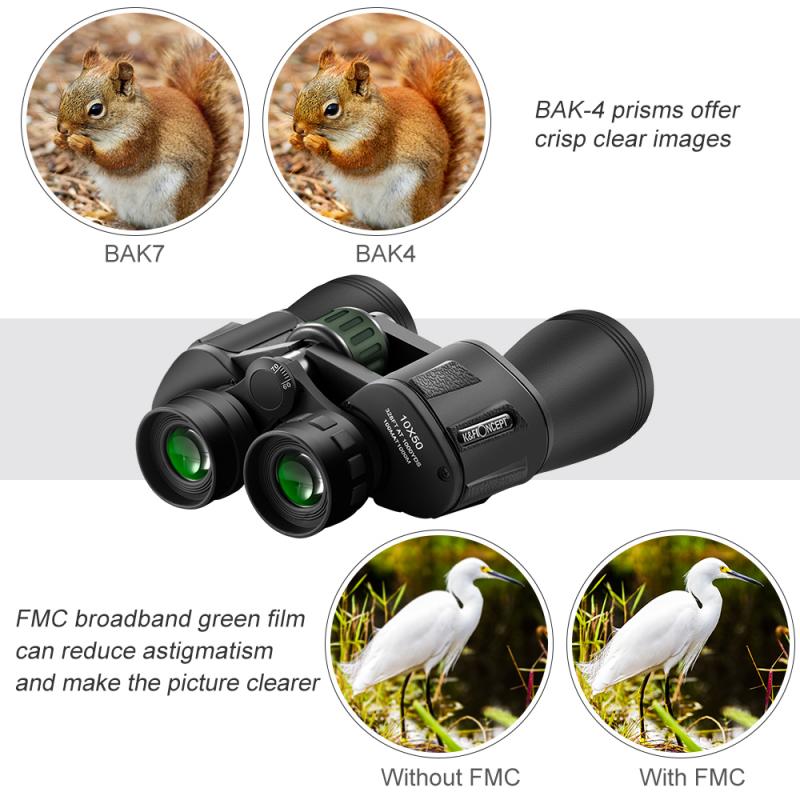
Recommended Models by Price Range
The following binoculars have been fully tested and reviewed and are recommended as great bird-spotting binoculars:
- Celestron Trailseeker ED 8x42 — At the mid-level price range, one of the best value for money binoculars in their class. Highlights include dielectric coated, phase corrected prisms, ED glass lenses for extremely low levels of color fringing, a fully waterproof and nitrogen-purged lightweight magnesium chassis. Overall top pick in the Cornell Lab affordable 8x42 review.
- Hawke Frontier 8x42 ED X — Mid-to-high end binoculars with a magnesium housing, metal eyepieces and focus wheel, fully multi-coated ED glass lenses with water-repellent coatings, and phase corrected, dielectrically coated prisms. The field of view is phenomenal as is the image quality and brightness.
- Vortex Diamondback HD — A high-quality binocular with the best warranty a person could imagine. For around $200, it's a binocular that performs more like binoculars in the $400-plus price class, with very good optical quality and a wider field of view than anything comparable at its price.
- Swarovski NL Pure 8x42 — Best money could buy. The NL Pure has the widest field of view of any top binocular and is stunning from the moment you meet it. The shape seems made to fit your hand.
- Zeiss SFL 8x40 — Close second best among top-tier binoculars. High-quality optics, the right size, comfortable to carry and look through. Several used options in the $1,300–$1,500 range.
- Zeiss Terra 8x42 or Nikon M7 8x42 — Decent for the lower mid-range, in the $250–$400 price range.
- Celestron Nature ED — Glass every bit as good as the Terras and M7s for half the price.
- Nikon Monarch — A great glass that won't break the bank, with excellent customer service.
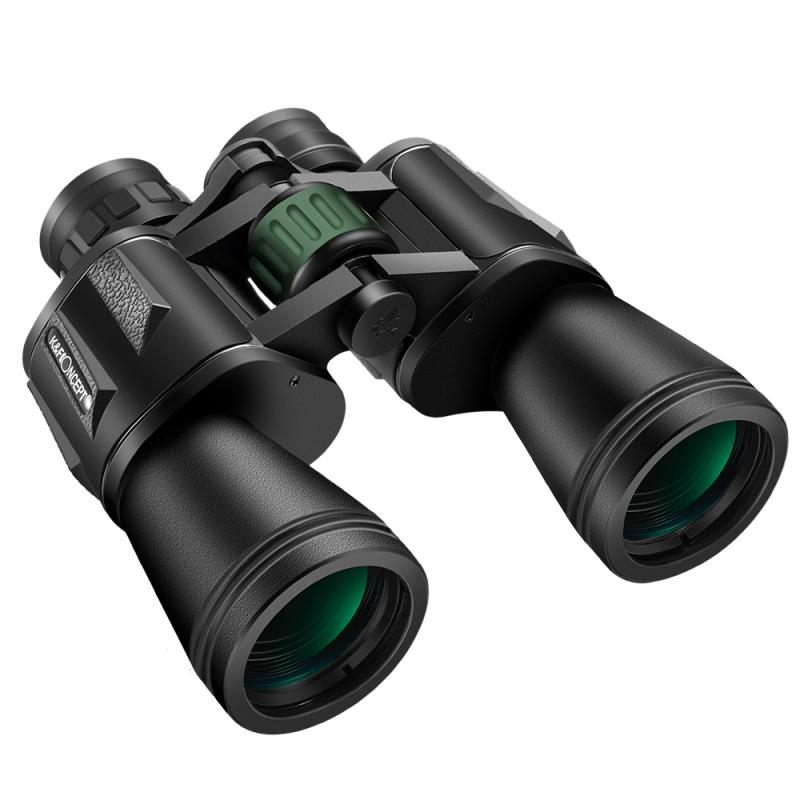
Key Optical Features to Check
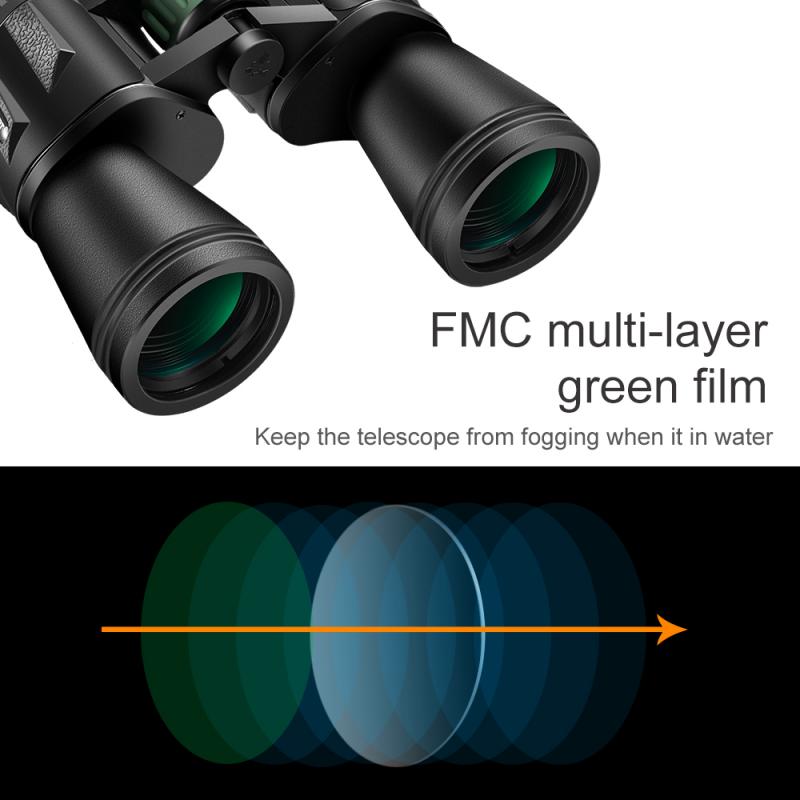
- Prism type and coatings: Look for BAK-4 roof prisms with phase correction and dielectric coatings. Multilayer coating achieves 99.5% light transmission per surface — compared to 96% with no coating — which means significantly more light reaches your eye across all lens and prism surfaces.
- ED glass: Extra-low dispersion glass in the lenses helps produce extremely low levels of color fringing (chromatic aberration).
- Eye relief: Important for glasses wearers — a binocular should let you see the whole image. Some binoculars cause loss of the outer part of the image for a person wearing glasses.
- Waterproofing and nitrogen purging: A fully waterproof and nitrogen-purged body protects against moisture and internal fogging.
- Field of view: A wider field of view makes it easier to find and follow birds, especially in visually complex situations such as forest birding.
- Body material: Magnesium alloy chassis offer a lightweight and compact build with durability.
What to Check Before Buying
If you get to try binoculars before buying, make sure to check for chromatic aberrations and to have a sharp image even on the far sides of the field of view. The best thing is to go into a sporting goods store — or hit a vendor booth at a birding festival — and try out a lot of different magnification and size combinations and pick the one that you like.
For the sake of consistency, most reviewers test 8x42 or similarly sized optics, as this is the most popular and versatile choice for most kinds of birdwatching. More binoculars are ruined by bad cleaning technique than by being dropped, so learning the right way to clean your binoculars is also important for making them last.