Can You Use Metal Detector To Find Gold?
Metal detecting has been practiced since the early 20th century, and the technology has made great strides since the first detectors were invented. With today's advanced, lightweight machines and the sky-high prices of gold, detecting has potential not only as a fun hobby, but a great side hustle. Considering that gold is currently valued at $2,310 per ounce (as of June 7th, 2024), finding some buried treasure sounds better than ever.
The question of whether metal detectors can effectively detect gold is a common consideration for many people interested in metal detection. From hobbyists searching the beach to prospectors navigating different terrains, these devices uncover many hidden treasures. Finding gold with a metal detector is rooted in understanding the science behind these devices.
How Metal Detectors Work
Every metal detector uses a principle called electromagnetism. These devices transmit an electromagnetic field through a coil. When the field encounters a metal object, the detector picks up its magnetic field and signals to the user that it has detected an object.
Another key aspect of metal detectors is their ability to detect all types of metals: ferrous and non-ferrous. Ferrous metals are magnetic and are found in items like nails, screws, iron, and aluminum objects. Non-ferrous metals like gold, silver, bronze, and coins aren't magnetic. High-quality metal detectors have different program selections and adjustable sensitivity settings based on the types of targets you are seeking.
If you actually display the basic metal detector signal as a spectrogram, you can identify the various metals you are detecting. However, because iron is often in greater abundance around gold, those signals can saturate the signals that gold displays. Many metal detectors now have filters to try and remove those signals. Gold has one RF pattern, silver another, iron another.
Advanced Detection Technologies
Two common types of technology used in gold detectors are Very Low Frequency (VLF) and Pulse Induction (PI). On most newer detectors, you can set a range of values that the machine will detect. The issue is that this doesn't account for other variables such as:
- The size of the object
- The object's orientation in the ground
- The object's depth
- The composition of the soil
A piece of gold that rings up a certain value above ground might ring up a very different value underground. Other metals subjected to the same variables may ring up in your preferred range despite not being what you're looking for. There is not a metal detector that will only alert you to gold.
Key Factors in Gold Detection
Gold detection is influenced by various factors including the detector's technology, its program selection, sensitivity levels, and environmental conditions. Since smaller size nuggets are more common to find, prospectors should use a metal detector with good sensitivity adjustments and the ability to operate at different programs. Several factors determine a metal detector's effectiveness in finding gold:
- Technology type
- VLF and PI technologies offer different strengths for detecting gold in various terrain and soil conditions.
- Program selection
- Some metal detectors come with different modes, such as all-metal, custom, coins, and zero, to optimize the search for specific types of metal. The all-metal mode might be used to detect a wide range of metal objects, while more specialized modes are fine-tuned to detect gold.
- Sensitivity levels
- Someone using a metal detector will set their device with program selection to show they are looking for gold and a sensitivity level that focuses on certain target sizes.
- Environmental conditions
- The terrain and soil composition directly affect detector performance. Saltwater can help break down metals, making objects easier to detect.
Gold Detection in Different Environments
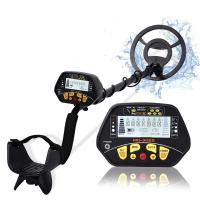
For those searching for gold in wet environments like beaches or streams, a waterproof metal detector is ideal. Several detectors are submersible to 10 feet underwater, enhancing the likelihood of discovering gold in shallow water. These detectors resist corrosion and ensure that moisture doesn't compromise their functionality.
Beaches all around the world are ripe for the scanning of potentially valuable artifacts. Treasure Coast, for example, has been a draw for beachcombers and scuba divers for decades. In 1715, a group of loot-laden Spanish ships known as the Treasure Fleet were sunk by a hurricane. Treasure from the fleet was first recovered off the coast in the early 1960s, and precious metal relics like gold coins are still found to this day.

Tips for Finding Gold Nuggets and Small Targets
The search coil is an important component when detecting gold. Key considerations include:
- A small mono coil might be more effective for locating small gold coins in shallow ground due to its greater sensitivity.
- However, these smaller coils don't cover as much ground or search as deeply as larger coils.
- It's important to focus on pure gold detection and understand the specific sensitivity and discrimination settings for detecting gold.
- Think about the best environments for improving detection accuracy.
- Small nuggets and gold deposits can be missed if the metal detector isn't used properly.
- It's helpful to reference user guides and manuals for your metal detector so you are confident with adjusting its settings before a search.
Pretty much everyone wants to find just gold, and there's no substitute for luck and a whole lot of experience. The detector is only a piece of the puzzle. Take the time to understand the environment and the capabilities of your metal detector before beginning your journey.
Recommended Gold Detectors
When gold prospecting, there is one device that stands out: the Garrett Goldmaster 24k. This gold detector is super sensitive, has a 48 kHz frequency power, and includes 10 sensitivity levels that ensure excellent detection of this metal. No matter what type of environment you're navigating, you can employ certain types of discrimination to focus more on gold and enhance your metal-detecting experience.
In the journey to finding objects like gold rings and coins, having the right equipment is crucial. Whether you're a beginner or an experienced user looking for a reliable tool, the right metal detector can detect all types of metals, enhancing the overall experience of prospecting. Gold detectors are available in the following technology types:
- Pulse Induction (PI) — suited for severely mineralized ground
- VLF (Very Low Frequency) — suited to identify even tiny gold in mild to moderate mineralized soil
- VLF Single Frequency — targeted for specific prospecting environments
Available detector configurations also vary by waterproofing: non-waterproof (coil only) and waterproof IP68 submersible to 10 ft / 3 m options exist for prospectors working near or in water.