How Many Legs A Tripod Have?
Many people assume the answer is obvious, yet the question "how many legs does a tripod have" opens a window into understanding why tripods are designed the way they are. Cameras need stable support, and the number of legs plays a critical role in stability, portability, and ease of use.
A tripod has 3 legs. Tripods aren't just for photographers; they're handy tools loved by photographers, videographers, content creators, and even astronomers. All about sharpness and framing, tripods allow you to take multiple shots of the same scene. Understanding their design is key to picking the right one.
The Science Behind Why Tripods Have Three Legs
In 3 dimensional space the least number of points needed to determine a plane is 3. So wherever 3 legs are placed, it becomes a plane, meaning tripods are mathematically stable on any surface in our observable world.
Three legs determines a plane, as we learned in geometry. If it had 4, 5, or 10 legs, it would not be called a tripod. The number of legs is kind of in the name. They're called "tripods" because "tri" like in the word "triple" means three, so a similar device with more legs wouldn't be called a "tripod."
One leg would be pointless since the idea is to make the camera stand perfectly still and stable by itself. Three is sufficient and relatively manageable even if you only have one hand free.
Tripod Leg Materials
- Aluminum
- Cheaper and very strong. A little heavier, so maybe not the best for long hikes. Good for studio shots, pictures you take near a road, and anyone on a budget.
- Carbon Fiber
- Much lighter and great at stopping vibrations. It costs more and can crack if hit hard. Good for travel, hiking, and anyone who wants to carry less weight.
Camera Support Types Compared
The number of legs on a camera support system determines how it performs in different shooting scenarios. Below is a comparison of the main support types:
- Monopod (1 leg): Used for sports and events. Easy to move around; helps with heavy cameras. Cannot stand by itself.
- Bipod (2 legs): Not common in photography. Steadier than a monopod. Cannot stand by itself; you still have to hold it.
- Tripod (3 legs): Used for landscapes and videos. The most stable on any ground; holds the camera for you. Slower to set up; bigger and heavier.
- Quadpod (4 legs): Used for huge movie cameras and industrial gear. Can hold extremely heavy gear on a flat floor. Heavy, slow, and wobbles on uneven ground.
Common Types of Tripods
There are various types of tripod available to photographers. Some tripods are suitable for many types of uses, whereas others are more suited to more specific uses. For example, a studio photographer will choose a different tripod than a bird photographer.
- Regular Tripods: Standard three-leg design, used for landscapes and video work. The most stable on any ground and holds the camera for you.
- Monopods: A single-leg support used in sports and events. Easy to move around and helps with heavy cameras, but cannot stand by itself.
- Travel Tripods: Designed for portability. Carbon fiber options are much lighter and great at stopping vibrations, making them ideal for travel and hiking.
- Professional Studio Tripods: Typically aluminum construction — cheaper and very strong. Suited for studio shots and pictures taken near a road.
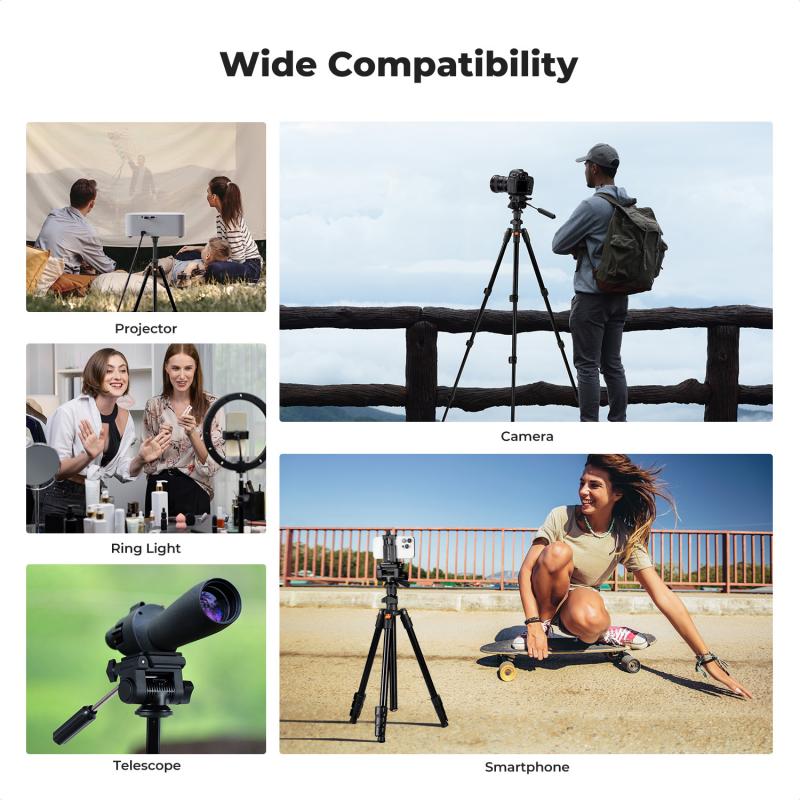
- Smartphone Tripods: Designed for mobile filmmaking, compatible with phone mounts and grips.
Adjustable-Leg and Fixed-Leg Tripods
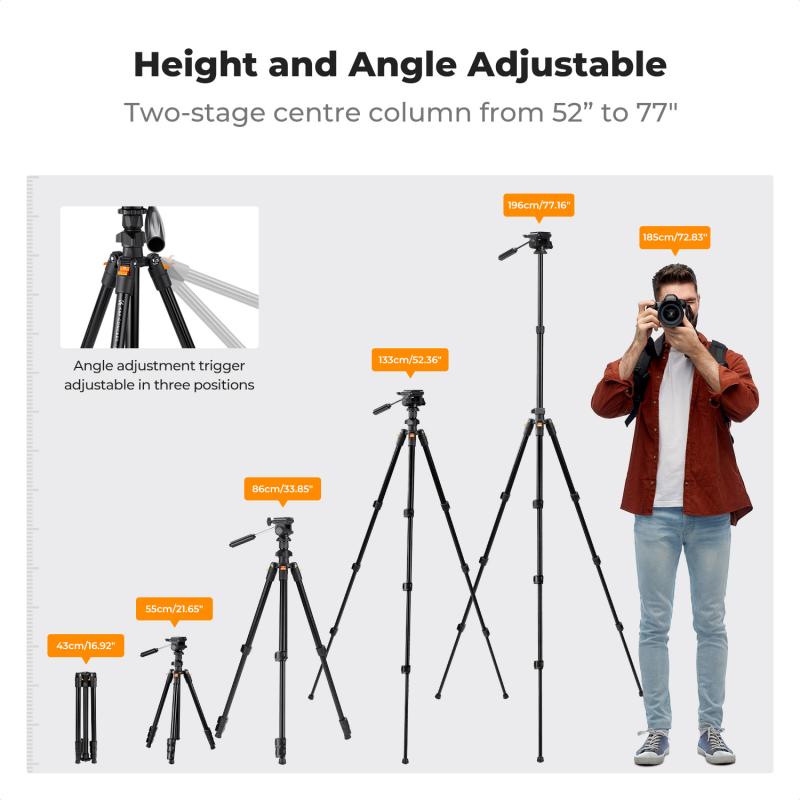
Key lesson: choose legs that are long enough and provide the flexibility you need for the styles of photography you enjoy. Some tripods are suitable for many types of uses, whereas others are more suited to more specific uses.
- Adjustable-Leg Tripods
- Allow flexible height adjustments for both low-angle and elevated shots. This versatility exceeds conventional fixed designs and is perfect for a variety of shooting needs.
- Fixed-Leg Tripods
- Simpler in construction and typically more compact. Better suited to controlled environments where height adjustment is not a primary concern.
The Four-Leg Alternative: Quadropod System
The quadropod is an innovative four-leg tripod system designed for photographers and videographers who demand stability and versatility. With interchangeable legs and two different tripod shoulders, the quadropod sets a new standard for customizable tripod configurations.
The quadropod allows you to easily personalize your tripod with various leg options to suit different environments and shooting needs. Whether you need robust support for outdoor shoots or lightweight legs for indoor sessions — the choice is yours.
- QP-BC shoulder: With a 27cm center column, ideal for standard height adjustments and also includes a short center column for low-angle shots, perfect for ground-level photography.
- QP V shoulder: This variable shoulder enables you to use the quadropod as either a four-leg tripod or a traditional three-leg tripod, giving you the flexibility to adapt effortlessly to different scenarios.
Thanks to its unique 4x 90° leg distribution, the quadropod system offers much greater tipping stability. Unlike three-leg tripods, which have a 120° angle between legs, the quadropod's four symmetric angles create a more secure base — ideal for uneven or inclined terrain. The quadropod's four-leg design provides exceptional stability, tipping safety, and improved vibration control — especially on uneven terrain.
Tripod Head and Stability
Key lesson: match your tripod to the camera, lenses, and types of photography you enjoy. Make sure your camera is steady and secure when mounted and will not easily fall if the tripod is knocked slightly.
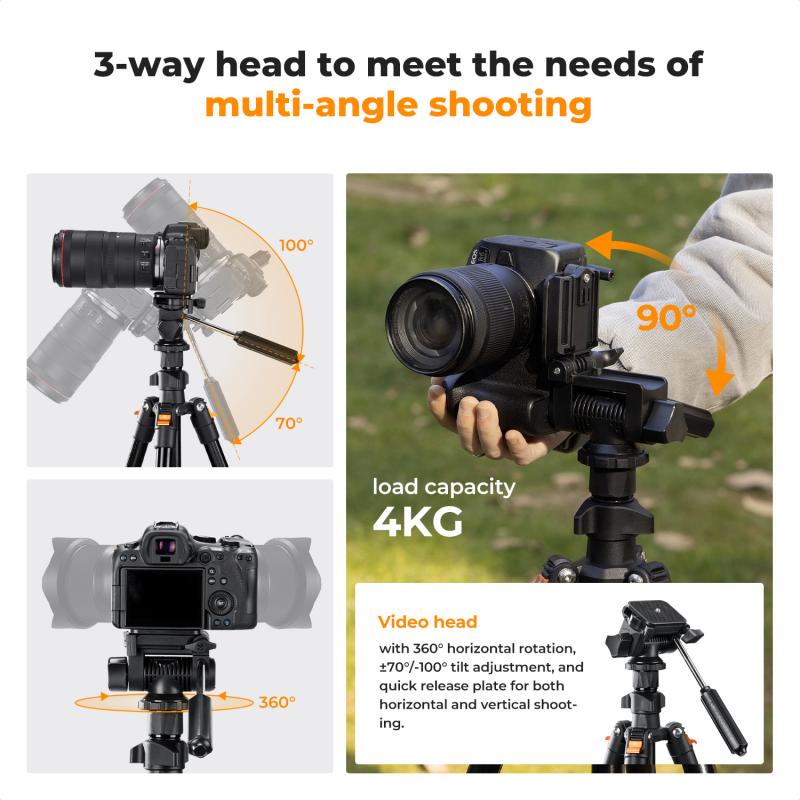
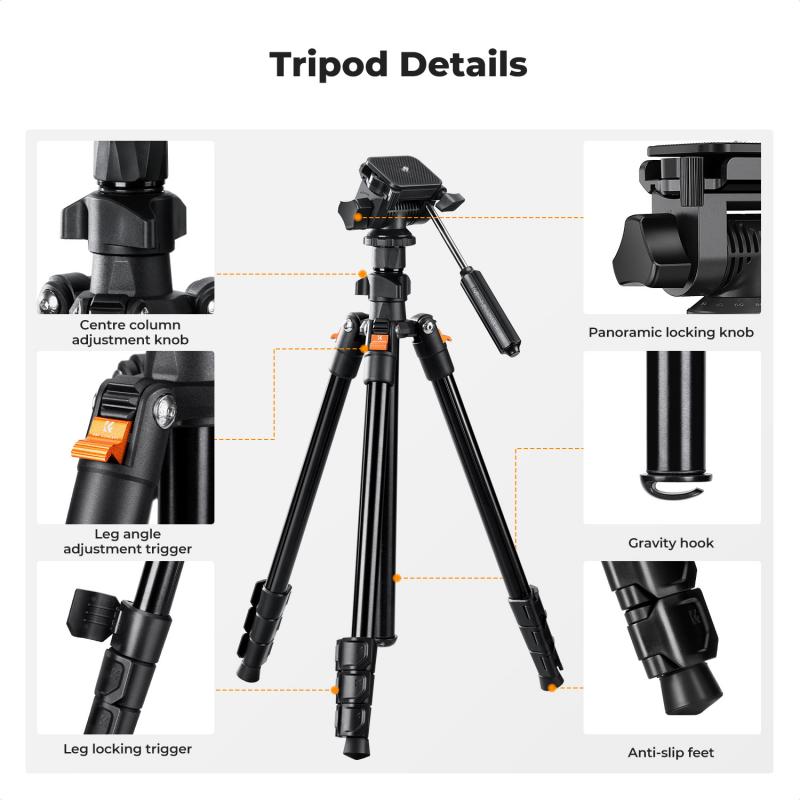
A good tripod head is an essential tool. A cheap, ineffective head that does not hold the weight of your camera and lens will drift and is practically useless. Having the right head for your camera and the style of photography you like makes life more enjoyable.
Tripods are one of the safer photography gadgets to buy used because they're simple devices and it's easy to tell if they're in good working order or not.