Can You Use A Telescope As Binoculars?
Binoculars and telescopes are both optical instruments designed to make distant objects appear closer, but they serve different purposes and are built around different design principles. Understanding whether you can use a telescope as binoculars requires examining how each instrument works, what they are designed for, and where their practical limitations lie.
What Makes Binoculars Different from a Telescope
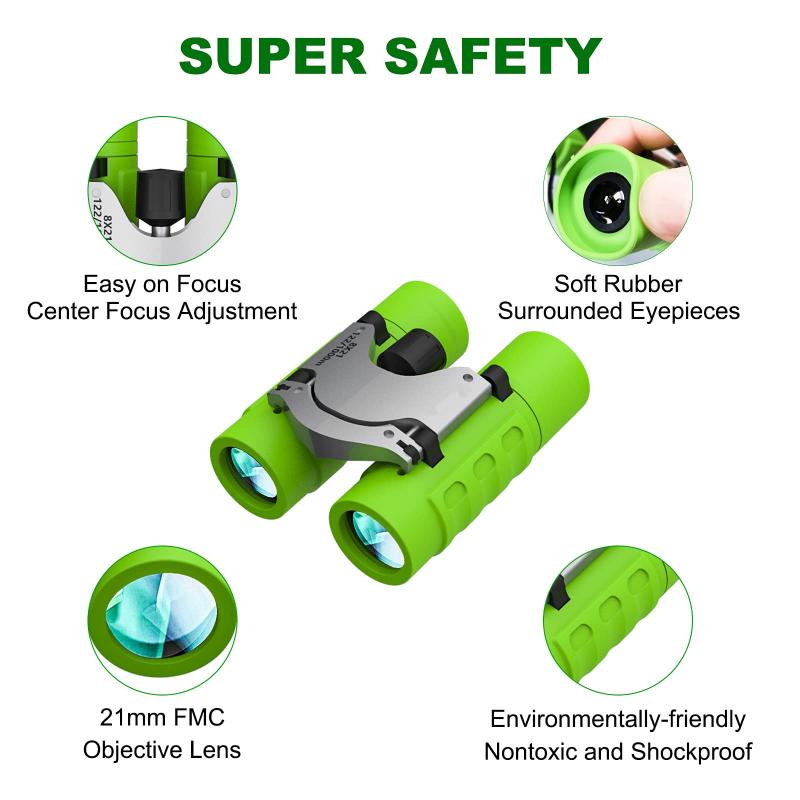
The term "binocular" derives from the Latin "bi" meaning two, and "ocula" meaning eyes. Binoculars are essentially two parallel telescopic tubes with prisms, permitting a three-dimensional vision and designed for handheld use with both eyes simultaneously. A single telescope has only one eyepiece, which means it does not qualify as a binocular by definition. As one explanation puts it: "you'd need two telescopes tied side-by-side to make a binocular, one magnifier for each eye."
- Traditional telescopes have only one eyepiece, enabling more detailed observation but with a restricted field of view.
- Binoculars use two eyepieces, creating a broader and more involved field of vision.
- Telescopes most commonly include lenses and mirrors to collect and focus light; binoculars typically employ individual lenses that are simpler and less powerful in magnification and light-gathering.
- Some telescopes produce an inverted or laterally reversed image. Binoculars use prisms to correct this, showing the sky upright and right-sided.
Can a Telescope Be Used as Binoculars
A single telescope cannot function as binoculars on its own. However, there are devices called binoviewers — a telescope attachment with two eyepieces — that allow binocular viewing through a single telescope. Additionally, two telescopes placed side by side in a cradle device, known as a binoscope or reverse binoculars, have been built and used by observers. Examples include dual Celestron C11 setups and large APM double telescopes in the 100mm, 120mm, and 150mm aperture range.
Most telescopes can also be used for terrestrial viewings such as bird watching, scenery, sports, or wildlife viewing. Users can take pictures of different scenic views, wildlife, and nature in general. Even though situations such as observing birds are not the primary intention of a telescope, it can still be done. However, being able to do something does not always mean it is the best idea — it depends on the situation.
In a nutshell, yes, you could turn a telescope towards objects here on earth instead of a pair of binoculars, and it would work, but for best results and easiest performance, use binoculars instead.
Binocular Summation in Dual-Telescope Setups
When two telescopes are used together in a binoscope arrangement, using both eyes provides the benefit of something called "binocular summation." This produces several observable effects:
- The image will appear brighter, roughly as bright as a telescope of 1.4x the aperture.
- At the same magnification, things will appear bigger when using both eyes.
- The visual acuity of the observer will be greatly improved — they will see more detail using both eyes than using one.
- Visual noise will be reduced.
- At high power, floaters will be minimized.
- The observer will be more relaxed.
However, two telescopes together will not have any greater resolving power than a single aperture of the same size. The contrast transfer of two telescopes will be no better than a single scope of the same aperture. The larger aperture single telescope will still provide a brighter image to one eye than the smaller binocular telescope will to one or both eyes combined, and will have much better resolution and contrast transfer.
When to Use Binoculars Instead of a Telescope
A good rule of thumb is that if you plan on moving your device around, binoculars are the wiser choice. It can be extremely troublesome to set up and take down a telescope, and with constant movement, this can be a challenge. Binoculars are particularly well suited for:
- Hiking, hunting, golfing, and sailing
- Bird watching and nature observation
- Casual stargazing and wide-field sky surveys
- Learning the night sky and star hopping
- Quick, spontaneous observing sessions
With binoculars you can relax and observe large celestial objects in the context of their surroundings. Binoculars offer a 5–6° field of view, while a telescope with a 2" eyepiece manages only around 2° — less than half the field of view of binoculars. Star clusters like the Pleiades and Hyades can only be enjoyed in their entirety with binoculars. Looking through a telescope is like looking through a straw: you can only see a tiny piece of the sky at a time, which makes locating and identifying objects more challenging.
When to Use a Telescope Instead of Binoculars
Although binoculars may seem like the more practical choice, telescopes are what astronomy — and specifically studying space and its celestial objects — was designed for. Even though our planet is rotating round the clock, the rotation is still steady enough that the observer can make necessary adjustments. Telescopes are also used with tripods, keeping the image perfectly stable.
- Planetary surface detail
- No details are visible on planets through binoculars — the image is far too small. Planets and craters on the surface of the moon are the domain of telescopes, requiring a lot of magnification to see details.
- Faint deep sky objects
- Objects that depend on a large aperture's light-gathering capability give the telescope a significant advantage over binoculars.
- Resolving globular clusters
- If you want to resolve individual stars within globular clusters, an actual telescope is needed.
- High-power double star splitting
- A binocular telescope of 10" will not split doubles that are closer than what a single telescope of the same aperture can resolve, as binoculars do not improve raw resolving power beyond a single aperture of equal size.
Recommended Binocular Sizes for Astronomy
For handheld astronomy, 8x40 to 10x50 are the usual recommended sizes. Being handheld means that you don't need to also pack a tripod or mount. For astronomy, 10x50 porro prism binoculars are considered the top choice. Due to their higher magnification and weight, they are not as easy to hold steady as an 8x42 roof prism model, but resting on a tripod or other surface they show a lot of detail in star clusters such as the Pleiades or Praesepe. With a 5mm exit pupil, even suburban skies are no problem.
- 8x42 roof prism: Compact, easy to transport and hold, not susceptible to image-shake, suitable for light-polluted suburban skies. Top tip if also using for nature-watching.
- 10x50 porro prism: Top choice for astronomy; heavier but excellent on a tripod; 5mm exit pupil works under suburban skies.
- 12x50 porro prism: More detail, but hand-held observing is barely possible; requires a tripod adapter.
- 15x70 or larger: Large binoculars collecting significantly more light; always used with a tripod; some have 45° or 90° angled eyepieces for comfortable zenith viewing.
More than 10x magnification is generally not practical for hand-held use for most observers — the gain in detail is rendered unusable by the difficulty in holding the image steady. A magnification of 10x can still be hand-held, but even the slightest hand trembling leads to a shaky image. An adapter to attach binoculars to a photographic tripod is the solution for higher magnifications.
Objects Visible Through Binoculars
With 10x50 binoculars, the following objects have been successfully observed by amateur astronomers:
- Pleiades star cluster M45 — dozens of glittering stars, framed by the tender blue of the bright main stars
- Orion Sword, including the Orion Nebula M42 as a fuzzy patch at center
- Hyades star cluster
- Jupiter with its four Galilean moons
- The Moon, with a view having a 3D effect
- Beehive Cluster M44 (Praesepe) — dissolves into individual stars through binoculars
- Double star Mizar and Alcor in Ursa Major
- Andromeda Galaxy and bright nebulae
- Brighter comets and asteroids
- Sunspots (with the appropriate filter)
You can see every planet with binoculars, but they only appear as bright or dim dots. You can observe many deep sky objects, but because of the low magnification you can't see very much detail. Roaming across the Milky Way with binoculars on a warm summer night is described as one of the most wonderful experiences in amateur astronomy. Binoculars open up a few hundred thousand more stars and the bright deep sky objects visible to the naked eye.