How Do Metal Detector Work?
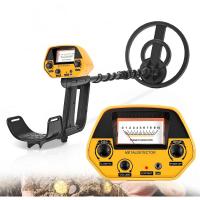
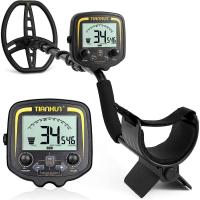
Metal detectors work by transmitting an electromagnetic field from the search coil into the ground. Metal objects within the electromagnetic field will become energised and retransmit an electromagnetic field of their own. The detector then picks up that field and alerts the operator.
Metal detection is the process of using electronic systems to sense the presence of physical metal contaminants. Metal detectors "see" magnetic and/or conductive physical contaminants as something that disrupts a controlled magnetic field.
Electromagnetic Search Coils and the Transmitter Field
Metal detectors use electromagnetic search coils to generate a magnetic field that penetrates the ground. When this field interacts with metal objects, it produces a response signal that the detector's circuitry can recognise and use to pinpoint the object's location.
Metal detectors have two primary elements for sensing metal: transmitter and receiver coils. Imagine the transmitter field as a patterned group of lines. When a metal contaminant passes through the field, it disrupts the pattern:
- A magnetic contaminant will create a new path for the field to follow and change the direction of the field lines.
- A conductive contaminant will create eddy currents that repel the magnetic field lines.
- In either case, the receiver coil detects the geometric distortion of the transmitter field and triggers an alarm.
The detector has two coils. One coil produces a varying magnetic field. This magnetic field produces an electric current in any conductive object. Then the transmit coil cuts off and the receive coil is amplified. The electric current in the metallic object produces a magnetic field, which varies as resistance fades the current. This varying magnetic field causes an electric current in the receive coil, which the meter detects and makes a sound.

Eddy Currents in Metal Detection
Eddy current is a term for the electric current created in a metal by a magnetic field. When a metal detector's magnetic field interacts with a metal object, it induces small circular electric currents (eddy currents) in the metal, which create their own magnetic fields and can be detected by the receiver coil.
- Different sizes, shapes, textures, and materials of objects can disrupt the magnetic field.
- When a metal object, like a gold ring, is detected, it changes the constant magnetic field and creates an opposing field, much like how waves interact.
- Larger metal pieces and those with more iron produce stronger currents.
- Detectors use alerts, pins, or sounds to indicate these disruptions.
The transmitter coil induces or "turns on" the magnetic field. The receiver coil is the "listening" coil, tuned to identify when the current that is created is interrupted. The coil that induces the magnetic field and the separate coil that listens to the disruption in the field can be thought of as echolocation by bats — the bat creates a sound and then the ear listens for the disruption.

Types of Metal Detectors
- VLF Detector (Very Low Frequency)
- The most common type. VLF metal detectors operate on two distinct coils: the transmitter coil, which produces the electromagnetic field, and the receiver coil, which detects any changes in this field due to the presence of metal. When a metallic object interferes with the electromagnetic field, it affects the frequency range, which is detected by the receiver coil.
- PI Detector (Pulse Induction)
- Primarily used for its detection depth capabilities. Instead of continuous waves, PI detectors send short bursts of pulses. They then measure the duration it takes for the pulse to fade away. The presence of metal will cause a delay in this decay, signaling a find. PI detectors are seen in most walk-through detectors.
- Multi-IQ
- A metal detecting technology that sends out multiple search frequencies at once. Low frequencies are better at finding bigger, deeper objects. High frequencies are better at picking up small or thin targets close to the surface. By using a full range of frequencies together, Multi-IQ gives the best of both worlds at the same time, making it more accurate in finding a wider variety of targets and more reliable in tough conditions like mineralised ground or wet sand.

Metal Detection Frequencies
Frequency is an indication of how often a radio wave oscillates in one second, expressed in hertz (Hz). If a given wave repeats itself 12 times per second, its frequency is 12 Hz. A wave that repeats itself 15,000 times per second has a frequency of 15 kHz (kilohertz).
Traditional metal detectors are optimized to give the best detection using a single-tone frequency signal for the transmitter field. They discriminate product from metal by looking at the amplitude of the receiver signal and a small shift of the receiver signal relative to the transmitter field. This shift is called phase angle and is measured in degrees.
- Ferrous material is best detected at lower frequencies, because product signals are smaller at low frequencies.
- Stainless steel is more easily detected at high frequencies, although product signals are also larger at higher frequencies.
- Operation at a single frequency will always require balancing the detection target and product effect.
- A four-frequency system could run a low frequency range like 35, 75, 150, and 300 kHz, or a higher range such as 75, 150, 300, and 600 kHz based on requirements for detecting ferrous or non-ferrous metals.
Detection frequencies are chosen either manually or automatically when a product is run for the first time. This process is called "product teach." Optimal detection parameters for the product are stored in the metal detector's product memory and automatically recalled when the product is run again.

Types of Metals Detected
Metal detectors have the ability to detect a wide range of metals, each with its own unique properties and characteristics.
- Ferrous Metals
- Ferrous metals contain iron and are strongly magnetic, making them easier to detect. Common examples include iron, steel, and nickel. Ferrous metals exhibit magnetic and conductive properties.
- Non-Ferrous Metals
- Non-ferrous metals (e.g. aluminum, copper, tin, brass) are conductive but non-magnetic, making them more difficult to detect. Aluminum and gold have lower resistance than a magnetic metal like iron and are easier to detect. The detection capability largely depends on the metal detector's frequency, calibration, and the metal's size and shape.
- Stainless Steel
- Stainless steel has low conductivity and very low magnetism; it is the most difficult to detect. Many metal detectors find stainless steel difficult to detect, especially when it's smaller in size. Stainless steel has low magnetic permeability, meaning it doesn't allow magnetic fields to pass through it as easily as other metals.
Target Identification and Ground Balancing
Advanced detectors analyse the type of metal by measuring its conductivity and magnetic properties. This process assigns a target ID, helping users tell the difference between valuable finds such as coins and less-desirable items like bottle caps.
Since metals are made of different materials, detectors have creatively created "target IDs" to help read the returned frequencies to distinguish what may be buried underground. A frequency is simply how many waves occur within a second, so 1 Hz frequency is 1 wave per second (in detectors, it is typically reported as kHz, so 1,000 Hz per second).
Metal detectors adapt to different soil conditions through ground balancing, which reduces interference from natural minerals. This helps maintain accurate detection, even in challenging environments such as beaches or highly mineralised ground. Moisture, salt, and metalized packaging can cause field distortion as they are all mildly conductive; iron-rich foods like fortified cereals can mimic the field distortion of a contaminant as well. These influences are referred to as "product effects."
Security Applications of Metal Detectors
Metal detectors have a wide range of functions that are used in various aspects of daily life, especially in security settings.
- Airport Security: Walk-through metal detectors at airports play a crucial role in identifying concealed metallic objects, from potentially harmful weapons to harmless personal items. Handheld metal detectors serve to refine the search, pinpointing the exact location of metallic objects.
- Security and Law Enforcement: Metal detectors are capable of detecting weapons and other potentially harmful metal objects, ensuring the safety of individuals in places like airports, public venues, and government buildings.
- Event Security: Metal detectors at entry points serve as the first line of defense at concerts, sports games, political rallies, and public gatherings, helping to deter and detect potential threats.
- School Security: Many institutions are incorporating metal detectors in their security protocols, aiming to protect students, faculty, and staff from potential threats.
The synergy of the VLF and PI detectors is extremely beneficial. The VLF's ability to discriminate between metal types ensures the team doesn't waste time on irrelevant finds, while the PI's depth detection capabilities ensure no evidence remains overlooked.
History of Metal Detectors
The concept of metal detection can be traced back to the late 19th century. In an attempt to save the life of President Garfield after an assassination attempt, Alexander Graham Bell devised an early metal detector. While the device failed to locate the bullet lodged in the president, it was a pivotal moment that set the foundation for the future of metal detection.
Fast-forward to the 20th century, when technological advances led to the creation of more sophisticated devices with greater detection and accuracy. The original patent from Garrett was followed up in 1987 by Robert Podhraskywith digital signal processing. Because security operations and airport security have become crucial tools in the modern world, metal detectors have become indispensable.