What Is The Best Camera Tripod To Buy?
Stability, Functionality, Weight—and Yes, Price
Choosing a tripod can be agonizing. The good news? You don’t need to empty your wallet to get one.
What you want depend on how heavy a tripod you want to carry and how much money you have.
The lighter tripods are usually more expensive, as it costs money to develop and build something with as little material as possible, that still doesn't break if you switch your nifty-fifty for a 200mm lens.
Some photographers might prioritize stability and features if carrying their tripods typically shorter distances, others may prefer portability for more remote shoots.
There are exceptional tripods that utilize carbon, yet there are also many top-notch options that are made with aluminum. What's best for you will depend on your budget and performance demands.
- It’s crucial that you get a tripod that can support your camera gear, but you might not need as high a weight capacity as you might think.
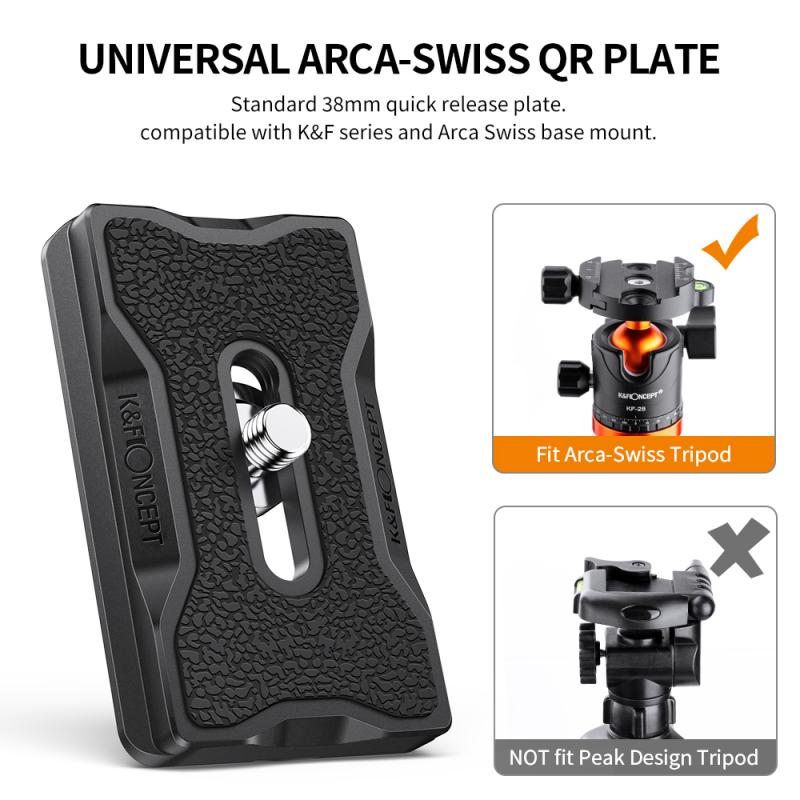
- Quick release plates are a favorite of ours and is fortunately the most common system you'll find.
- Arca-Swiss plates come with many of the tripods in our review, which are great for compatibility.
- Ball heads allow for quick and easy angle adjustments.
Travel, Landscapes, and Overhead Shooting
I’m not sure how people are advising you without knowing what you shoot.
- For travel you want one that fits inside your checked luggage.
- For photography when shooting stuff overhead some people like a taller tripod so you can look through the EVF.
- Taller is also helpful when on a slope.
- For landscapes some people like really short tripods that are barely off the ground.
- Astrophotography. These are usually short, but very sturdy.
The best travel tripod for your next trip must balance portability, durability, and weight.
From highly portable tripods to more feature-rich models, there is an ideal option for every sort of photographer.
If you want to make your tripod a little more stable, compact the first section of the legs, which is usually the thinnest and wobbliest.
Also, use a remote control (or a timer) to take photos, especially when using a timed exposure. Pressing the shutter button yourself introduces shake/vibration into the camera.
Load Rating and Stability
Suggestions in the here are good already, id just say avoid raising the center column and let the claws work. That’s usually the moment things start wobbling.
Just avoid anything marketed as “travel”, they fall over too easily. I killed a lens this way before.
- All of these tripod options have hooks under the main post, which provides more stability as you add more weight.
- Look for this feature if you buy a lightweight tripod.
- Lockable shoulder joints allow you to flip out the legs for a variety of adjustable heights.
- There are various shoulder lock locations and release types, though they all are typically near the top of the leg, closest to the head.
- Cam actions like this are quick, but it can take some practice to get comfy doing this with one hand.
It is exceptionally easy to use, stable, versatile, and durable.
With secure locks, dependable joints, and robust legs, the tripod can handle even the roughest of roads.
For those on long hikes with camera and large telephotos doing wildlife or even just telephoto landscapes I recommend a heavy duty binocular harness that you can wear around and on your shoulders with camera and lens hanging down on your chest for a fast pick up and capture.
Carbon Fiber and Aluminum
We generally prefer carbon fiber since it's lighter, but there are some great aluminum tripods that are more affordable.
There are exceptional tripods that utilize carbon, yet there are also many top-notch options that are made with aluminum.
- Carbon fiber
- The lighter tripods are usually more expensive.
- Aluminum
- You want a high-end tripod for half the money of a carbon fiber kit.
- Travel
- Models offer great performance in a package that weighs under 2 pounds.
- Height
- You want a really tall tripod that folds down surprisingly small for easy stowage.
It’s a clever design, incorporating the best of heavy-duty tripods and travel tripods.
Performance is outstanding, with excellent rigidity, even at maximum extension.
It’s aluminum but only about half the price or less of similar carbon fiber kits.
Tripod Height
Selecting the right tripod height
| Your height | Ideal tripod height |
|---|---|
| 5'2" (157cm) | 48in (121cm) |
| 5'4" (162cm) | 50in (127cm) |
| 5'6" (167cm) | 52in (135cm) |
| 5'8" (172cm) | 54in (138cm) |
| 5'10" (178cm) | 56in (141cm) |
| 6' (183cm) | 58in (147cm) |
| 6'2" (186cm) | 61in (155cm) |
| 6'4" (193cm) | 63in (160cm) |
You want to shoot as high as 181cm.
At full height, you can put your camera 60 inches (152.4 centimeters) off the ground, near the high end of our data.
5-section legs enable compact stowage and a good maximum height, no center column enables ultra-low-level shooting.
Used Tripods and Long-Term Use
I have purchased one new tripod in my thirty year career, I have purchased a couple used tripods that have served me well for less than half the price.
Be smart, know the capacity of your kit and spend your money wisely.
- Tripods are a pretty great thing to purchase used, and you can knock quite a few hundred off the price by doing so!!
- It’s one of the safer things to buy used!
- Some of them simply weren’t sturdy enough, others were too heavy or inconvenient, some weren’t durable, and some were fantastic.
- I finally invested in a high quality tripod, and it has lasted the test of time.
Buy the best, cry once, buy mediocre, cry a few times and spend more money...
There are plenty of youtube videos reviewing the various tripods. I would recommend that you check out the big brands, see what you are willing to pay for what kind of specs, then watch those reviews to see if it's really worth it.