What To Put Under A Microscope?
When exploring what to put under a microscope, the best starting point is everyday items you already have at home. A drop of pond water, some backyard dirt suspended in water, and soap bubbles made from soapy water are classic choices. Dust, dirt, pollen, food, printed paper (magazine, newspaper), household paper (kitchen towel, facial tissue, toilet paper), fabric, dead insects, and hair (human or pet) are all excellent candidates. Sometimes what you think will be exciting turns out to be boring, and other stuff that seems ho-hum turns out to look out of this world.
Biological Samples from Around the House
Some of the most accessible and visually striking specimens come from everyday biological sources:
- Your own saliva — it is always fun to check, and quite intriguing under the lens
- A swab of the bottom of the cat box
- Ear wax and used bathwater — true biology that reveals surprising detail
- Bread mold or the black mold found on walls
- A drop of pond water — dark field patch stop reveals a whole world of critters swimming frantically
- Backyard dirt suspended in water
- Dryer lint, though not nearly as exciting as other options
Some people keep jars of water with microbes specifically for repeated viewing. You need to be careful about pathogenic microbes, though. Watch a video on what to expect before and after viewing your own biological samples.
Plant and Organic Material
- Plant tissue sectioned as thin as possible with a razor blade — do simple staining on it for best results
- Pollen grains
- Finely ground cannabis (kief) — from the catch section of a grinder, this shows trichomes and identifiable plant pieces even under a cheap USB coin microscope
- Tomatoes have trichomes and sticky material on their leaves worth examining
- Bread mold
With a compound microscope, you are generally limited to looking at things that are translucent, like pond water, or very thin slices of things that are otherwise opaque. Making these thin sections takes some patience and a lot of trial and error, but you can see the internal structure and details of things like plants.
Household and Manufactured Objects
- A burned-out incandescent light bulb — break the bulb and place the filament on a slide to see it up close
- Printed circuit boards
- Printed paper such as magazines and newspapers
- Fabric samples
- The burr on a sharpened blade — a semi-cheap compound microscope does a surprisingly good job
- Dead insects — fruit fly compound eyes, for example, show iridescent patterns that are incredible at close range
- Hair, both human and pet
Pond Water and Microorganisms
Pond water is one of the most rewarding things to put under a microscope. Under an Olympus BH-2 at 100x and then 400x, pond water reveals a remarkable variety of living creatures. Documented pond water specimens include:
- Rotifers
- One-eyed rotifers munching on food, with dorsal antennae serving as sensory organs for possibly chemical and touch senses
- Lacrymaria
- Predatory microorganisms captured eating other microbes
- Flatworms
- Visible at various zoom levels in standard pond water samples
- Collotheca and Heliozoa
- Featured in compiled footage of microbes and micro-animals eating each other
- Coastal sediment creatures
- Scraping sediment off a coastal rock can reveal entirely unidentified-looking creatures that are mind-blowing in appearance

Slide Preparation Tips
Many things made of small particles or fibers look better if they are immersed in a clear organic liquid, such as rubbing alcohol, nail polish remover, or vegetable oil. This improves resolution and reduces glare. It is best to use a cover slip — not only that, with a cover slip, you can make the slide last for weeks or longer by preventing evaporation. To do this, place a narrow bead of sealant such as glue, petroleum jelly, silicone rubber, or candle wax around the edge of the cover slip. Wear thin plastic gloves to prevent fingerprints.
Always start with the cover slip near the lens, and then lower the stage until your sample comes into focus. Otherwise, you might damage the lens. Slides are fairly cheap for compound scopes — around 10 cents or so for a slide and a cover slip.
Compound vs. Stereo Microscope Considerations
- With a compound microscope, you are limited to translucent or very thinly sliced specimens; a top light source such as an LED flashlight works well for otherwise opaque items at low power
- A stereo microscope works well for opaque objects and does not require slides
- Look for a microscope that has both a top and bottom light that you can turn on individually or together
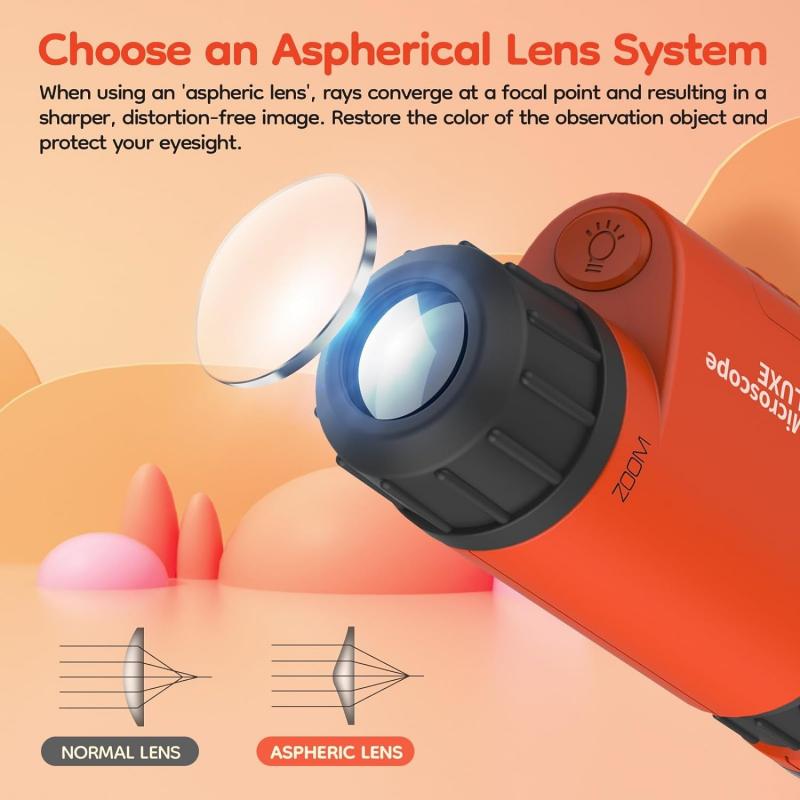
- A model with zoom capability or multiple magnification objectives via a rotating nosepiece is preferable to one requiring eyepiece swaps, as high-power eyepieces can be difficult to use
- You can use a compound microscope to see some of the same things as a stereo microscope, but only at the lowest power objectives
A cheap USB coin microscope can still get some pretty nice shots of items like cannabis kief. Even with a lower-end scope, you get to some really cool stuff because of the biology involved. Walking past things and wondering — a sink stain from a fallen apple, tree blight, or sediment scraped from a rock — often leads to the most surprising discoveries.