A Microscope Can Have One Lens?
What Is a Microscope
A microscope is an instrument that can be used to observe small objects, even cells. The image of an object is magnified through at least one lens in the microscope. This lens bends light toward the eye and makes an object appear larger than it actually is.
Some microscopes use a single lens to magnify objects, while others use multiple lenses. A microscope is a tool designed to magnify very small objects. It allows us to see things that are too tiny to be observed with the naked eye. Microscopes are commonly used in laboratories, hospitals, and classrooms.
The Simple Microscope: Single-Lens Design
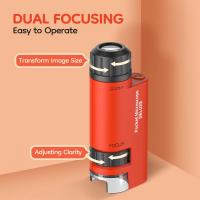
The simple microscope consists of a single lens traditionally called a loupe. The most familiar present-day example is a reading or magnifying glass. Present-day higher-magnification lenses are often made with two glass elements that produce a colour-corrected image.
- A simple microscope is a basic optical tool. Light bends through the lens, so the image seems larger.
- Simple microscopes make objects about 2x to 20x bigger.
- Because the design is simple, they are light, low-cost, and easy to carry.
- They don't need much setup and are useful for everyday use.
- A simple microscope has just a single convex lens. When you place an object in front of it, the lens makes things look bigger.
The working of a simple microscope can be explained using the simple microscope formula: M = 1 + D / F. In this formula, M means magnifying power, D means the least distance of clear vision, and F means the focal length of the lens. If the focal length is shorter, the magnifying power increases. This makes the object look larger through the lens.
The Compound Microscope: Multi-Lens System
Compound microscopes build on simple ones. They use two lenses to make things look bigger. One lens, the objective, first makes the image larger. Then the eyepiece takes over, making it even bigger. Zoom goes from 40x to 1000x. This helps catch small details clearly.
Compound microscope works in two magnification steps. First, light passes through the condenser and reaches the specimen. The objective lens then makes a larger image of the object. The eyepiece lens makes the image appear larger to the viewer. Compound microscopes provide clearer and more detailed images.
Compound microscopes can have up to four objective lenses of different magnifications, and the microscope can be adjusted to choose the magnification that best suits the viewer's needs. The total magnification that a certain combination of lenses provides is determined by multiplying the magnifications of the eyepiece and the objective lens being used. For example, if both the eyepiece and the objective lens magnify an object ten times, the object would appear one hundred times larger.
Lens Structure and Optical Design Compared
- Simple Microscope Lens Structure
- A simple microscope has just a single convex lens. It is easy to use and keep clean. Light bends through it so the image seems larger. The design is compact and requires minimal setup.
- Compound Microscope Lens Structure
- A compound microscope uses multiple lenses. The objective lens is closer to the object being observed. The eyepiece, also called an ocular, is the lens or set of lenses through which a person can see an image created by another set of lenses. This system of many lenses improves image quality and detail, producing clearer, sharper images.
- Convex Lens Principle
- A convex lens is a curved piece of glass or plastic shaped so as to focus or spread light rays that pass through it. Both sides of the lens are curved outwards. When light reflects off of an object being viewed under the microscope and passes through the lens, it bends towards the eye. This makes the object look bigger than it actually is.
- Magnification Calculation
- The total magnification is found by multiplying the objective lens magnification by the eyepiece lens magnification. The combined power of a compound microscope is higher than that of a simple microscope.
Applications of Simple Microscopes
Simple microscopes are used in many daily tasks. They can be quite handy for quickly and easily viewing small objects.
- Students make use of them in their classrooms to understand the concept of magnification.
- Jewellers make use of them to check small gemstones and pieces of jewellery.
- Watch repair workers make use of them to view small machine parts.
- In the fields of farming and biology, they help see small insects and plant parts.
Applications of Compound Microscopes in Research
Compound microscopes are important in scientific research. They help scientists study microorganisms, bacteria, and cells closely.
- Researchers use compound microscopes to see cell structures and tissues in biology labs.
- Medical labs use them to study blood samples and microorganisms.
- They are also used in forensic science to examine very small evidence samples.
- The dissecting microscope provides a lower magnification than the compound microscope, but produces a three-dimensional image. This makes the dissecting microscope good for viewing objects that are larger than a few cells but too small to see in detail with the human eye.
- The compound microscope is typically used for observing objects at the cellular level.
Key Differences in Performance
Both microscopes are useful, but their performance is different. Simple microscopes are easy to use and cost less. They are good for basic observation work. Their magnification and image clarity are limited. Compound microscopes are advanced tools. They give higher magnification, better resolution, and improved lighting systems. These features make them suitable for laboratory work and professional research.
- A simple microscope is useful for general purposes; a compound microscope is designed for scientific purposes.
- Simple microscopes offer approximately 2x to 20x magnification; compound microscopes offer 40x to 1000x magnification.
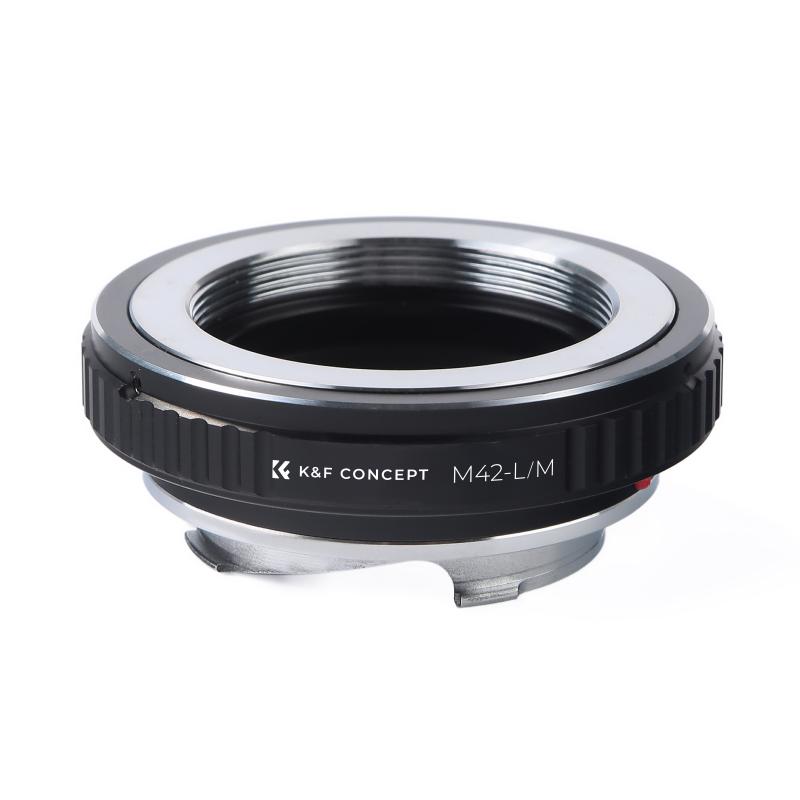
- Open systems using microscope lenses directly on a camera are optimized for looking at opaque 3D subjects, while most microscopes are optimized for looking at flat transparent ones.
- Advantages of a full microscope include an integrated illumination and focusing system optimized for objects typically less than 10 mm in maximum dimension.
- Advantages of open systems include easier positioning of 3D specimens and the ability to illuminate from any angle not blocked by the objective.
- The choice between these microscopes depends on the level of detail the user needs.