Can A Monocular Telescope Be Used For Stargazing?
are monocular telescopes any good for stargazing?
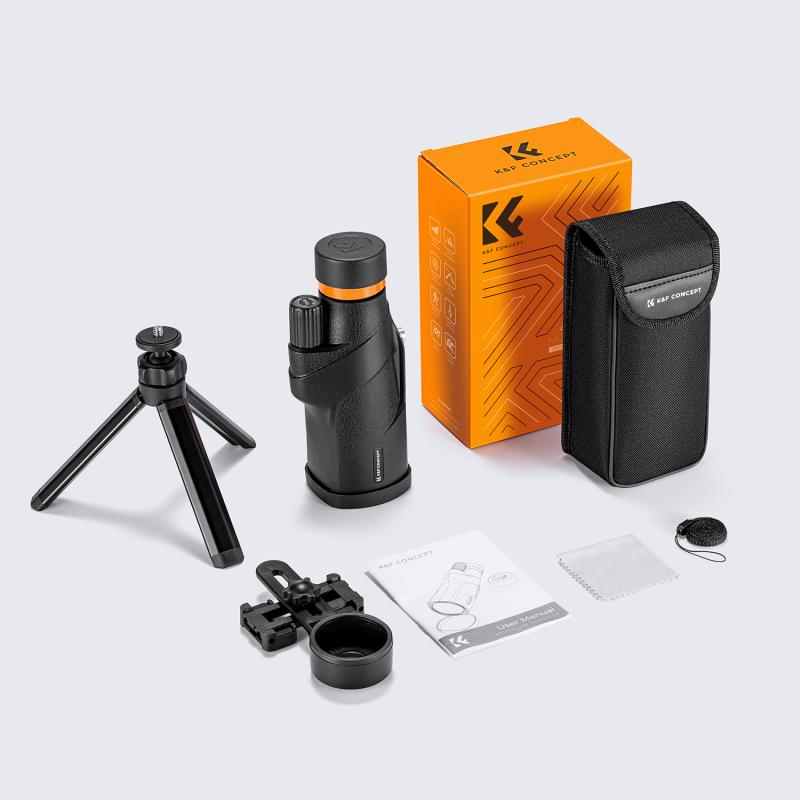
are monocular telescopes any good for stargazing? while monocular telescopes may not offer the same magnification and large apertures as traditional astronomical telescopes, they can still be effective tools for stargazing, especially for beginners or casual observers. their compact size and ease of use make them accessible for individuals who might find astronomical telescopes intimidating or cumbersome.
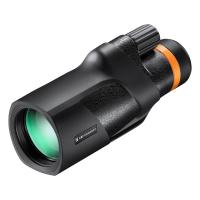
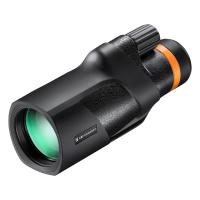
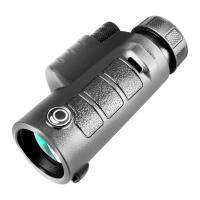
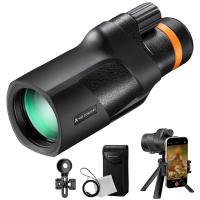
a monocular telescope is a single-lens optical instrument designed to magnify distant objects, much like a telescope or a pair of binoculars. however, unlike binoculars that provide a binocular view, a monocular telescope offers a singular view through one eyepiece. this design makes monocular telescopes compact, lightweight, and easy to carry, making them a popular choice for outdoor activities like hiking, wildlife observation, and now, stargazing.
absolutely!
if you have a mount, that would make it better. the biggest problem with stargazing with monoculars and binoculars is that most of them are held by hand and that makes them unstable.
but for now, to stabilize your view, set your monocular and hand on a railing and use the surface to stabilize.
what can be seen with a monocular or binoculars?
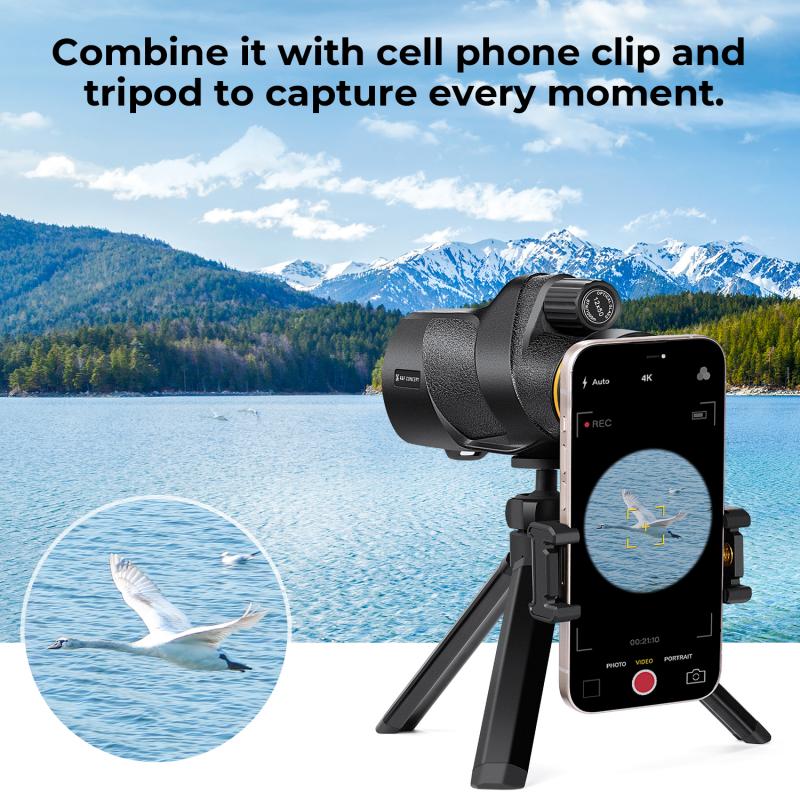
- you can see the five visible planets with your eyes, so watching a planet doesn’t require anything more.
- with a large monocular or binoculars you will using an instrument that may be a bit better than galileo used to make his discoveries.
- binoculars are a bit easier to use hand held than a monocular or spotting scope.
- you will be able to see the large moons of jupiter and saturn as tiny points of light.
- watch them for a few days and it is clear that they circle their planet.
- with higher power binoculars you may be able to notice a bulge at the saturn’s side is are caused by the rings, but you will not be able really see them as separate from the planet.
if you use a pair of binoculars or a small telescope, you can see up to four moons, which appear like tiny stars, on either side of the big planet.
not the best for astronomy, but monoculars are an inexpensive, lightweight, flexible option for youth to enjoy and begin in astronomy. functional for brighter deep sky objects, jupiter’s moons and of course, lunar craters.
limitations for the night sky
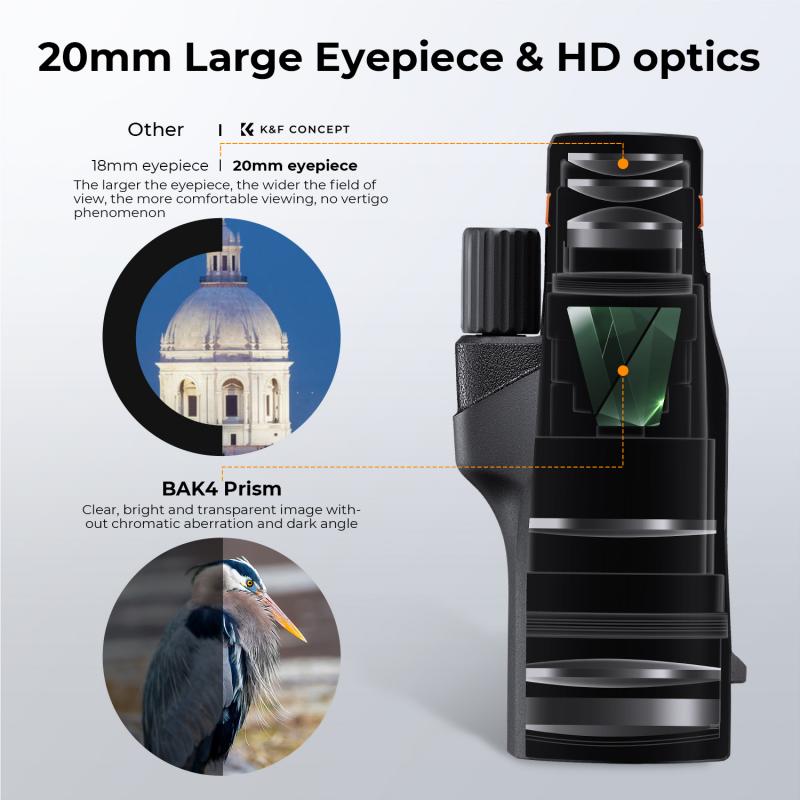
- monoculars are more difficult to hold steady than binoculars. were you thinking about some sort of mount?
- a monocular doesn't work well on the night sky, even for adults.
- a mounted telescope or spotting scope would be better.
- but a spotting scope is of mixed use on the night sky.
- the spotting scope has a 45 degree diagonal and a very short tripod. it would be difficult to look at anything more than 30 degrees above the horizon.
- it seems better for terrestrial use than astronomy.
you can't hold it steady, and your brain sees much more with both eyes working, moreso for terrestrial viewing that astronomy where one eye seems to work better
to start to see detail, however, you need a telescope for two reasons: aperture and focal length.
mounting and stability
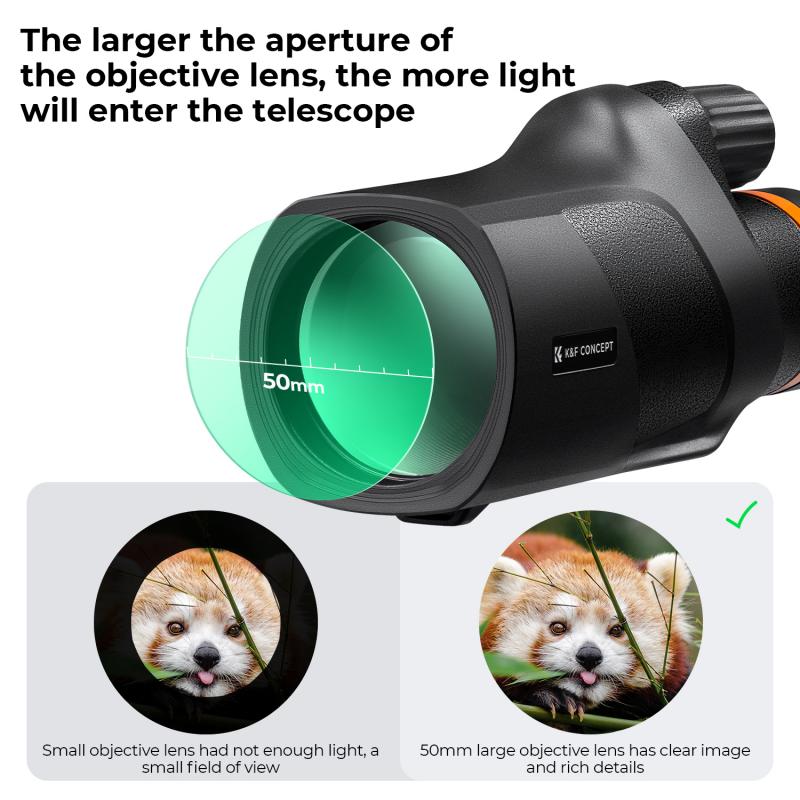
- if you have a mount, that would make it better.
- the biggest problem with stargazing with monoculars and binoculars is that most of them are held by hand and that makes them unstable.
- if you do have a mount, then the object that you are watching will slowly drift out of the view as the earth rotates.
- the mounts that most stargazers get are for convenience.
- with the addition of a simple tracking motor a telescope or monocular can follow an object for several hours without adjustment.
- for nature watching, and altazimuth is the way to go as it is the cheapest, simplest and easiest to use. it will stabilize the image, but will not track.
- at higher resolutions, stars and planets will leave the viewfinder quickly.
- some high end monoculars have interchangeable lenses just like telescopes.
- the only issue is that when you get above 40 power, you cannot use your hand to stabilize the image and will lose it easily.
how to choose a monocular telescope for stargazing
when selecting the best monocular telescope for stargazing, consider the following factors:
- magnification
- look for a monocular telescope with moderate to high magnification, typically between 8x to 12x. higher magnification allows for detailed views of celestial objects like the moon and planets.
- objective lens diameter
- a larger objective lens diameter lets in more light, resulting in brighter and clearer images. aim for an objective lens diameter of at least 40mm for decent stargazing performance.
- lens coating
- opt for a monocular telescope with fully coated or multi-coated lenses. these coatings enhance light transmission and reduce glare, resulting in better image quality.
- portability
- since stargazing often involves moving to different locations for better views, choose a lightweight and compact monocular telescope that you can easily carry with you.
- stability
- consider using a tripod or a monopod to stabilize the monocular telescope during stargazing sessions. a steady view is essential, especially when observing faint celestial objects.
monoculars and binoculars for stargazing
binoculars are optical devices that feature two parallel lenses or sets of lenses. they allow users to see objects with both eyes, providing depth perception and a wide field of view. binoculars are favored for activities such as birdwatching, wildlife observation, hunting, sports events, and stargazing.
monoculars, on the other hand, are compact optical devices that use a single lens system. they are ideal for one-eye viewing and are loved for their portability and convenience. monoculars are often used for hiking, camping, hunting, and casual observation.
- for stargazing: binoculars excel in stargazing due to their ability to create a detailed and immersive view of the night sky.
- they capture a larger portion of the cosmos, providing better context for celestial observations.
- many stargazers prefer them over monoculars for these reasons.
- for moments when portability is key, monoculars emerge as the better choice.
- their compact size and light weight make them easy to carry and convenient for quick views.
- if space and weight are essential considerations, monoculars are advantageous.
astronomy binocular sizes and optics
there’s no doubt that under a dark starry sky, astronomy with a simple pair of handheld binoculars can be one of the most pleasurable ways of enjoying this hobby: it’s simple and immediate.
for astronomy, though, your pupil is bigger in the dark, so you can benefit from the extra light gathered by bigger objectives.
- binocular sizes are generally quoted as magnification x objective lens size in millimetres, so that 10x50 means 50mm objectives with a ten times magnification.
- apart from looking at the moon, no binocular with lenses smaller than 30mm are much use for astronomy and 40-50mm are better.
- lenses in the 50-60mm range may make the binoculars too heavy to hold for long, but may just be worth it in terms of the brighter images you get and the fainter stars and nebulae you can see.
- light gathering power is a function of the area of the lens, so 56mm objectives gather twice as much light as 40mm objectives.
- in short, 10x50 is an ideal binocular size ideal for a beginner, but you might eventually find that the effort of using say 12x50s or 15x56s is worth it for the more involving views you get.
optical quality and coatings
- good optical quality is very important.
- a good easy test of overall optical quality, as with telescopes, is focus snap – best focus should be easy to obtain, crisp and definite.
- if you find yourself fiddling around trying to get best focus, buy a different pair.
- modern binoculars should have multi-coatings.
- these mean that they transmit a lot more light to your eye and this makes a big difference for astronomy.
- reflect a bright light in the objectives: the reflection should look dim purplish or greenish and the best coatings make the lenses almost disappear.
- point the binocular to one side of a strong light source – a streetlamp or the moon, not the sun - to check for internal reflections which are annoying and reduce contrast.
- avoid zoom binoculars as these are typically poor optically.
practical use for beginners and travel
- monoculars are an inexpensive, lightweight, flexible option for youth to enjoy and begin in astronomy.
- if interest persists, can always upgrade later to pricier binos.
- also great to have for hiking, camping, and vacationing to view wildlife and scenery, tripling the fun!
- if you only want to use them for astronomy and not for daytime stuff like birds, 7x50, 10x50, and bigger (plus a tripod) start to sound much more appealing.
- if you're after wider views then i'd suggest binoculars over monoculars.
- they tend to be suited more to great wide angle viewing, can give a pseudostereoscopic effect and decent 2nd hand ones cost hardly anything.
- also if you mount them i'd suggest a monopod for binoculars, that way they move with you, rather than bouncing around on a tripod when you're trying to get a stable view.